
Allergy Relief Calculator
Your Allergy Profile
Your Relief Estimate
Tips for Better Results
When your nose won’t stop running, sneezing won’t quit, and your eyes itch like crazy, you’ve probably reached for an oral antihistamine. But what if the solution isn’t in your pill bottle - it’s in your nose?
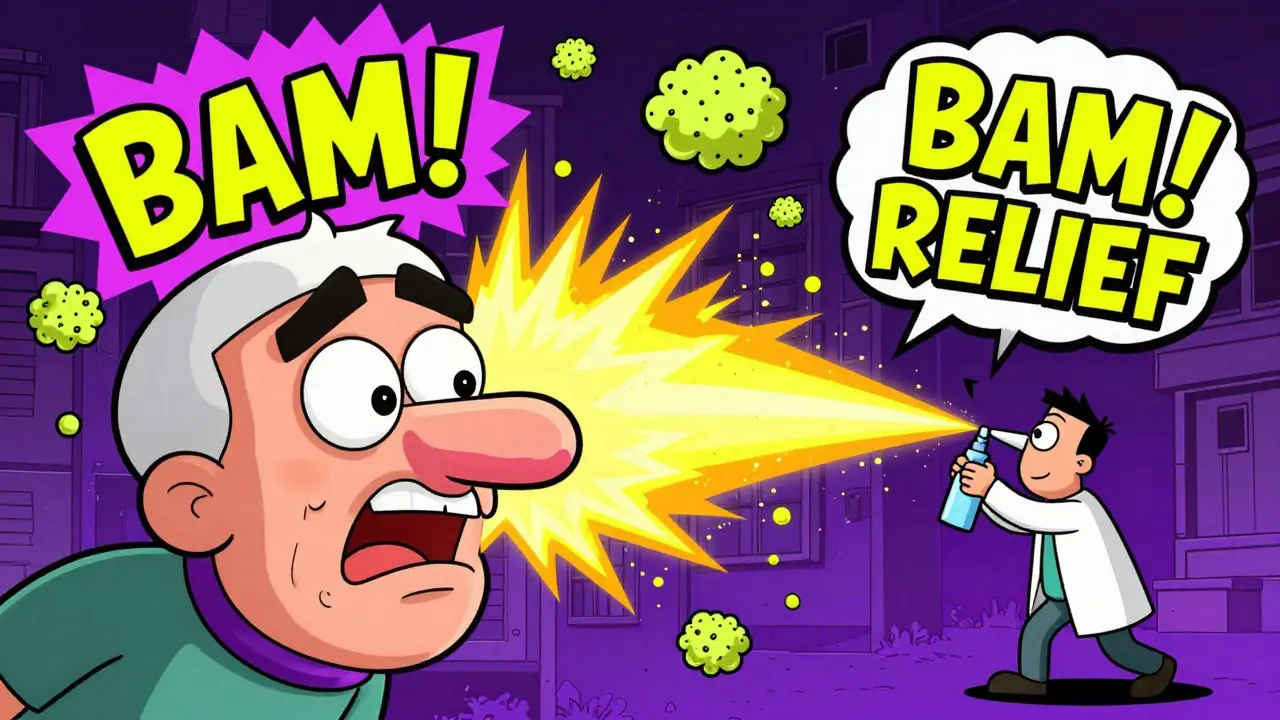
Nasal antihistamine sprays are designed to target allergy symptoms right where they start: inside the nasal passages. Unlike pills that circulate through your whole body, these sprays deliver medication directly to the source. That means faster relief for runny noses, sneezing, and nasal itching - with less drowsiness than oral options.
How Nasal Antihistamine Sprays Work
Allergies happen when your body mistakes harmless things - like pollen or pet dander - for invaders. In response, it releases histamine. That chemical triggers inflammation, mucus production, and itching. Oral antihistamines block histamine in your bloodstream, but they can’t stop it at the source. Nasal sprays do.
Active ingredients like azelastine (found in Astepro and Astelin) and olopatadine (in Patanase) bind to histamine receptors in your nose. They don’t just block histamine - they also stabilize mast cells, the very cells that release histamine in the first place. This dual action makes them especially good at stopping runny noses.
Most people feel relief within 15 to 30 minutes. The effects last about 12 hours, so two sprays per nostril, once or twice daily, is usually enough. Unlike steroid sprays like Flonase or Nasacort, which take days to build up, nasal antihistamines work fast. That’s why they’re often used for sudden flare-ups - like a walk through a field of ragweed or a day with high pollen counts.
Benefits: Why They’re a Game-Changer for Many
For people whose main allergy symptom is a runny nose, nasal antihistamine sprays can be life-changing. According to clinical studies, they reduce symptoms by 70-80% compared to placebo. That’s better than many oral antihistamines when it comes to nasal discharge.
They’re also less likely to cause drowsiness. While oral antihistamines like diphenhydramine (Benadryl) or even cetirizine (Zyrtec) can make you sleepy, nasal sprays rarely do. That’s because they don’t cross the blood-brain barrier in significant amounts. You can drive, work, or care for kids without feeling foggy.
Another advantage? They’re targeted. You’re not flooding your whole system with medication. That means fewer side effects like dry mouth, constipation, or urinary retention - common with older oral antihistamines.
And now, with Astepro available over-the-counter since 2014, you don’t need a prescription. That’s made them more accessible than ever. A 30-day supply costs $25-$35, which is less than half the price of many prescription nasal sprays.
Side Effects: What You Need to Know
They’re not perfect. The most common complaint? A bitter taste. About 30-40% of users report it, and it’s strong enough that some stop using the spray altogether. It happens because the liquid drips down the back of your throat. The fix? Don’t swallow right after spraying. Wait a few minutes. Drink water or orange juice afterward - citrus helps mask the taste.
Another issue: nasal burning or stinging. Around 25% of first-time users feel it. It’s usually temporary and fades after a few days. To reduce it, try using a saline nasal spray 15 minutes before applying the antihistamine. Moisturizing your nose first cuts irritation by nearly 40%.
Some people get nosebleeds. That’s rare - about 15% of users - and usually happens if you aim the spray straight at the center of your nose (the septum). The trick? Point the nozzle toward the outer wall of your nostril, toward your ear. Tilt your head slightly forward. Breathe gently through your nose as you spray. Don’t sniff hard - that just pushes the medicine into your throat.
Headaches and dry mouth are less common, but they happen. If you’re using the spray for more than a few weeks and notice worsening symptoms, talk to your doctor. It could be an allergic reaction to the spray itself.

How They Compare to Other Treatments
Let’s put nasal antihistamines in context.
Oral antihistamines (like Claritin or Zyrtec) work systemically. They’re good for itchy eyes and skin, but they don’t stop nasal symptoms as well. And they’re more likely to make you sleepy.
Corticosteroid sprays (Flonase, Nasacort) are the gold standard for long-term allergy control. They reduce inflammation, which helps with congestion and swelling. But they take 3-4 days to kick in. If you need fast relief, they’re not enough alone.
Decongestant sprays (like Afrin) give instant relief - but only for a few days. Use them longer, and your nose gets worse. That’s called rebound congestion. They’re not a solution - just a temporary fix.
Nasal antihistamines? They’re the middle ground. Fast like decongestants, targeted like steroids, but without the rebound risk. Many doctors recommend using them together with a steroid spray. One for quick relief, one for long-term control. That combo tackles 90%+ of allergy symptoms.
Who Should Use Them
These sprays are ideal if:
- Your main symptom is a runny nose or sneezing
- You want fast relief without drowsiness
- You’ve tried oral antihistamines and they didn’t cut it
- You’re allergic to pollen, dust mites, or pet dander
They’re less effective for year-round allergies (perennial rhinitis). Studies show about 55% symptom reduction for those, compared to 70% for seasonal allergies. If your allergies are constant, a steroid spray might still be your best bet.
They’re safe for adults and teens. Children under 12 should only use them if prescribed. Pregnant women should check with their doctor - though azelastine is generally considered low-risk.

How to Use Them Right
Using these sprays correctly makes a huge difference. Here’s how:
- Shake the bottle well before each use.
- Prime the pump: press it 5-6 times until you see a fine mist.
- Tilt your head slightly forward - don’t lean back.
- Insert the nozzle into one nostril, point it toward the outer wall (not the middle).
- Breathe in gently through your nose as you press the pump.
- Don’t sniff hard or blow your nose right after.
- Repeat for the other nostril.
- Avoid eating or drinking for 10 minutes after.
Wipe the nozzle with a clean tissue after each use. Don’t rinse it with water - that can damage the pump. Store it at room temperature.
What’s New and Coming
Manufacturers are working hard to fix the bitter taste. In June 2023, the FDA approved a new azelastine formula with encapsulated flavoring. In trials, it cut taste-related dropouts from 28% to just 12%. That’s a big deal.
There’s also a once-daily olopatadine spray in late-stage trials. If approved, it could improve adherence - right now, many people forget the second daily dose.
And combination sprays like Dymista (azelastine + fluticasone) are gaining traction. They deliver both fast relief and long-term control in one bottle. For people with moderate to severe allergies, they’re becoming a go-to.
Final Thoughts
Nasal antihistamine sprays aren’t for everyone. But if your allergies are mostly about the nose - the dripping, the sneezing, the itching - they’re one of the most effective tools you’ve probably never tried.
They’re fast, targeted, and surprisingly affordable. The taste and initial sting? Annoying, yes. But temporary. And with the right technique, you can minimize both.
Don’t give up after the first few uses. Stick with it for at least three days. Most people see real improvement by day four. And if you’re still struggling? Talk to your doctor about combining it with a steroid spray. Together, they’re a powerhouse.
For millions of people with seasonal allergies, this small bottle might be the missing piece.




Comments
Ajay Krishna
February 26, 2026 AT 16:41 PMNasal sprays changed my life. Used to rely on Benadryl and crash by 3 PM. Now I use Astepro in the morning and go hard at work without feeling like a zombie. The taste? Yeah, it’s gross at first. But I learned to lean forward, breathe gentle, and wait 10 minutes before sipping water. Works like magic. Seriously, if you’ve got seasonal junk, try this before reaching for pills again.
Charity Hanson
February 28, 2026 AT 15:19 PMThis is so true!! I used to think nasal sprays were for snobs with too much money. Then I tried it during pollen season and boom-no more crying at my desk. The bitter taste? Totally worth it. I drink orange juice after and pretend I’m sipping a mimosa. 😊
Sneha Mahapatra
March 2, 2026 AT 07:36 AMThere’s something deeply poetic about targeting the source instead of the symptom. We treat our bodies like broken machines to be patched from afar, yet here’s a simple spray-humble, direct, quiet-that honors the body’s architecture. It doesn’t flood. It doesn’t beg. It simply… meets the problem where it lives. Maybe healing isn’t always loud. Maybe sometimes, it’s just a mist.
Full Scale Webmaster
March 2, 2026 AT 10:40 AMLet me tell you something the pharma companies don’t want you to know. These sprays? They’re not really about allergies. They’re a gateway. First they get you hooked on the spray, then they upsell you the combo pack with steroid spray, then the ‘premium’ nasal rinse kit. I’ve been tracking the ads-every time someone posts about relief, within 48 hours, a sponsored post pops up for Dymista. And don’t get me started on the FDA approval of that ‘encapsulated flavoring’-they’re not fixing the taste. They’re making sure we keep buying. It’s all about retention. They don’t want you cured. They want you subscribed.
And why do you think it’s OTC now? Because they already got enough people addicted to the idea of quick relief. Now they’re just monetizing the habit. I used to trust doctors. Now I trust my nose. And my nose says: stop trusting the bottle.
Byron Duvall
March 2, 2026 AT 16:39 PMThey say it’s fast acting but I’ve heard rumors the real active ingredient is a placebo mixed with government-approved flavor masking. I’ve been using this for 3 weeks and my nose still runs. Coincidence? Or are they hiding the truth? Why does the bottle say ‘azelastine’ but the website says ‘proprietary blend’? I’m not stupid. I’ve seen the videos. This isn’t medicine. It’s a marketing stunt wrapped in a nasal pump.
Lisa Fremder
March 3, 2026 AT 19:54 PMWhy are we letting Big Pharma dictate how we treat our noses? I’ve been using saline rinse and a neti pot since 2018. No chemicals. No taste. No nonsense. This whole spray thing feels like a luxury scam for people who don’t want to do the work. We used to just blow our noses. Now we need a $30 bottle and a 7-step ritual. Pathetic.
Katherine Farmer
March 3, 2026 AT 22:48 PMIt’s amusing how the article frames this as a ‘game-changer’ when it’s merely a slightly more refined version of a 1990s pharmaceutical workaround. The ‘dual action’ claim? Redundant. Mast cell stabilization is not unique to azelastine-it’s been documented since the 80s. And the ‘less drowsiness’? Compared to diphenhydramine, yes. But compared to loratadine? Barely. The real innovation here is the packaging and the OTC rebranding. You’re paying for convenience, not efficacy. And the bitter taste? That’s not a side effect-it’s nature’s way of saying: ‘This isn’t meant to be swallowed.’
Also, why is no one talking about the environmental impact of 12 million single-use plastic pumps annually? But sure, let’s keep pretending this is a health revolution.
Justin Ransburg
March 5, 2026 AT 20:30 PMJust wanted to say thank you for this incredibly clear breakdown. I’ve been struggling with seasonal allergies for years and never realized how much I was doing wrong with the spray. I was aiming straight up, sniffing hard, and wondering why it didn’t work. Now I’m doing it right-tilted forward, outer wall, gentle breath. Day 2 already feels better. I even started using saline before, like you said. It’s such a small change, but wow. This is the kind of practical, science-backed advice we need more of. Keep sharing gems like this.
Angel Wolfe
March 6, 2026 AT 10:59 AMSo let me get this straight. You’re telling me the government lets companies spray chemicals up my nose and calls it medicine but if I use a neti pot with Himalayan salt I’m some kind of hippie? This is America. We have a right to clean air and clean sinuses. I don’t need some lab-made mist. I need freedom. I need truth. I need to know what’s really in that bottle. I’ve seen the patents. They’re not just blocking histamine-they’re tracking usage. That’s why they want you to use it twice a day. So they can monitor your nasal patterns. It’s not about allergies. It’s about surveillance. And they’re selling it as relief. Wake up.
Sophia Rafiq
March 8, 2026 AT 06:49 AMBeen using this for 2 months. Taste still sucks. But my sneezing? Gone. My eyes don’t itch anymore. I’m not gonna lie-the first week was rough. Felt like I swallowed a lemon rind. But now? I just do the thing: lean, spray, wait, sip. Works. No drama. No hype. Just… works. Also, the saline trick? Game. Changer.
Noah Cline
March 8, 2026 AT 20:30 PMPerennial rhinitis response rate is 55%? That’s statistically insignificant. The 70-80% efficacy cited is based on intention-to-treat analysis with poor blinding. And the ‘less drowsiness’ claim? That’s relative to first-gen antihistamines. Compared to fexofenadine? No difference. The real advantage is pharmacokinetics-local concentration, low systemic absorption. But the article oversells it. Also, the ‘one bottle’ combo spray? That’s not innovation-it’s patent evergreening. They’re just bundling two drugs to extend exclusivity. Read the FDA briefing docs. The clinical benefit is marginal.
bill cook
March 10, 2026 AT 07:38 AMOkay but have you tried using this after you’ve already had a full-blown allergic reaction? Like, after your eyes are swollen and you’re crying in the grocery store? It’s too late. You need emergency Benadryl and a nap. This spray is just a ‘maybe next time’ thing. I’ve been using it for a year. It’s not a miracle. It’s a bandaid. And the taste? I gagged so hard I almost threw up. I’m done.