
Steroid Bone Loss Calculator
Steroid Bone Loss Calculator
Calculate your expected bone density loss and fracture risk based on your steroid dosage and duration
When you're on long-term corticosteroids - whether for lupus, rheumatoid arthritis, asthma, or another autoimmune condition - your body is fighting inflammation. But while these drugs save lives, they also quietly weaken your bones. Corticosteroid-induced osteoporosis isn't a slow, inevitable side effect. It’s fast, dangerous, and often preventable - if you know what to do.
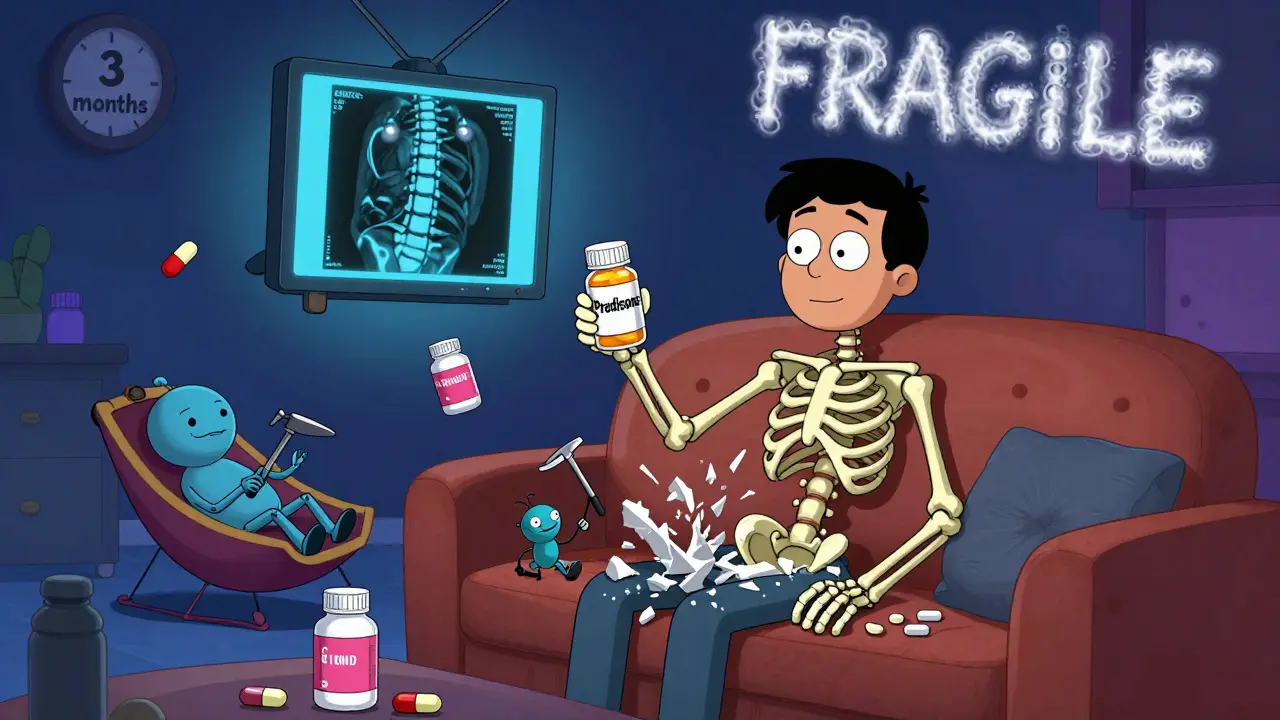
Within just three to six months of starting daily prednisone at 2.5 mg or higher, bone loss begins. Some people lose 5% to 15% of their bone density in the first year. That’s not just a number - it’s a real, measurable spike in fracture risk. One in two people on long-term steroids will suffer a fracture. And most of them never saw it coming.
Why Steroids Eat Your Bones
It’s not just about calcium. Corticosteroids like prednisone mess with your bones at the cellular level. They shut down the cells that build bone - osteoblasts - and keep the cells that break it down - osteoclasts - working longer than they should. The result? Your skeleton is being dismantled faster than it can be rebuilt.
Here’s the hidden part: your gut stops absorbing calcium as well. Your kidneys start flushing it out. Your muscles get weaker, so even walking doesn’t help your bones like it used to. And here’s the kicker - steroids make your bones less responsive to weight-bearing activity. That means even if you’re walking daily, you’re getting only about 75% of the bone-strengthening benefit you normally would.
Studies show that for every extra milligram of prednisone you take per day, you lose 1.4% more bone density in your spine each year. At 7.5 mg or more, your fracture risk doubles. And if you’re over 50, male, or have a history of fractures, you’re already in the danger zone - even if you feel fine.
What You Must Do Right Now
The good news? You don’t have to wait for a fracture to happen. Prevention starts on day one of steroid therapy - not after your spine collapses.
1. Get your bone density tested
Don’t wait for pain. Get a DEXA scan at the start of your steroid treatment and again every one to two years. This isn’t optional. Only 31% of people on long-term steroids get this test - but it’s the only way to know if your bones are crumbling.
2. Take the right amount of calcium and vitamin D
Forget the vague advice. You need 1,000 to 1,200 mg of calcium daily. That’s about three servings of dairy, plus a supplement if needed. And vitamin D? 800 to 1,000 IU daily. Lower doses (like 400 IU) won’t cut it. In one study, people who took 1,000 mg calcium and 500 IU vitamin D lost 0.72% of bone density per year - while those who took nothing lost 2%.
3. Move your body - but move smart
Walking, stair climbing, light weights - these aren’t just for fitness. They’re bone medicine. Aim for 30 minutes most days. But if you’re already frail or have had a fracture, talk to a physiotherapist. High-impact sports? Avoid them. Balance training? Essential. Falls cause most fractures in people with brittle bones.
4. Quit smoking and limit alcohol
Smoking cuts your fracture risk by 25-30% if you stop. One drink a day? Fine. Three or more? You’re doubling your risk. Alcohol interferes with calcium balance and bone healing. It’s not a lifestyle choice - it’s a bone killer when you’re on steroids.
When Medication Is Necessary
If your bone density is already low - T-score of -2.5 or worse - or you’ve had a fracture, supplements alone won’t cut it. You need stronger tools.
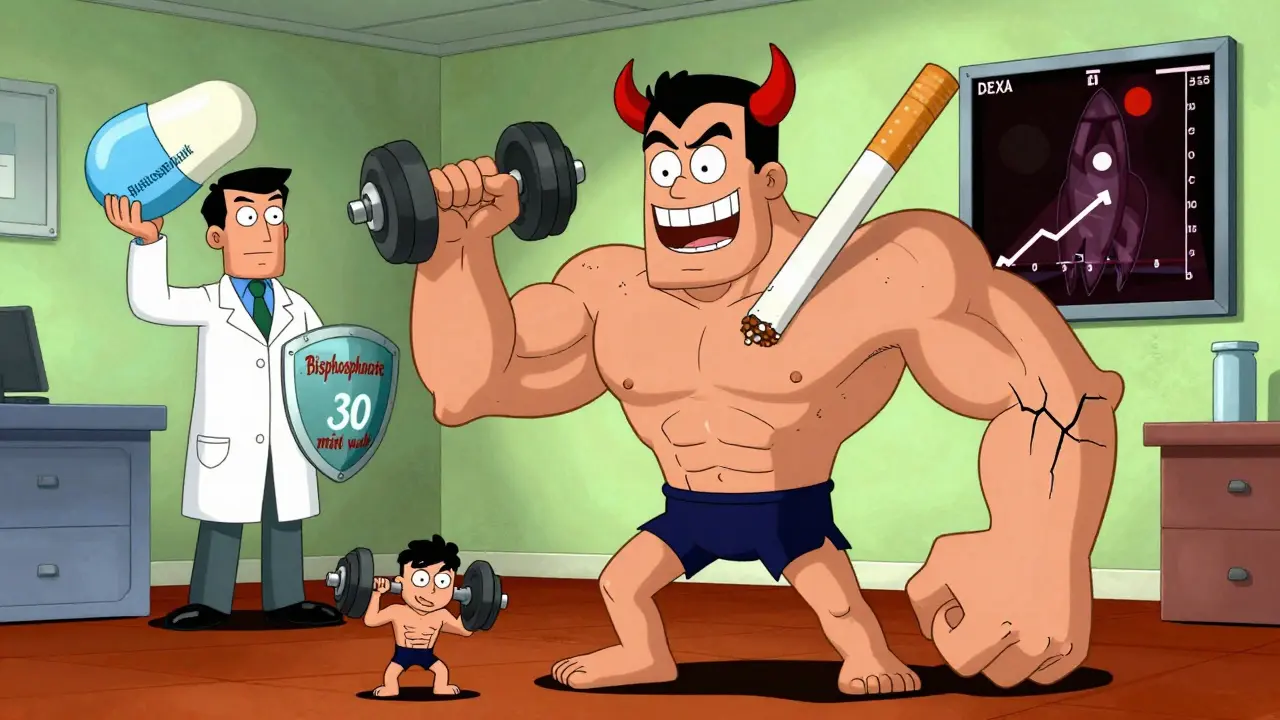
Bisphosphonates - like risedronate or alendronate - are the first-line treatment. They reduce spine fractures by 70% and other fractures by 41%. Risedronate 5 mg daily or 35 mg weekly is the most studied for steroid users. Side effects? A quarter of people get stomach upset. Take it on an empty stomach with plain water. Stay upright for 30 minutes after. That’s how you avoid esophageal irritation.
Zoledronic acid is an annual IV infusion. No pills. No daily routine. It boosts spine bone density by 4.5% in a year - while placebo groups barely move. Great if you struggle with daily meds.
Denosumab is a shot every six months. It increases spine density by 7% in a year. But you must keep taking it. Stop it suddenly, and you risk rapid bone loss.
Teriparatide is the strongest option. It’s a daily injection that actually rebuilds bone. It increases spine density by 9.1% in a year - more than double what bisphosphonates do. Used for severe cases: T-score ≤-2.5, multiple fractures, or failed other treatments. It’s expensive and limited to two years of use, but for some, it’s life-changing.
The Big Gap: Why Most People Still Get Fractured
Here’s the ugly truth: even though we’ve known how to prevent this for decades, most people still don’t get the care they need.
Only 62% of steroid users get any kind of prevention - counseling, supplements, or a bone scan. Men? Only 44% get help. Women? 76%. That’s a gap that shouldn’t exist.
Why? Because doctors don’t always talk about it. Patients think, “It’s just steroids - I’ll just live with it.” Or they’re told, “Your bones will be fine.” That’s not just wrong - it’s dangerous.
One study found that only 15% of people on long-term steroids get full, guideline-based care. That means 85% are flying blind.
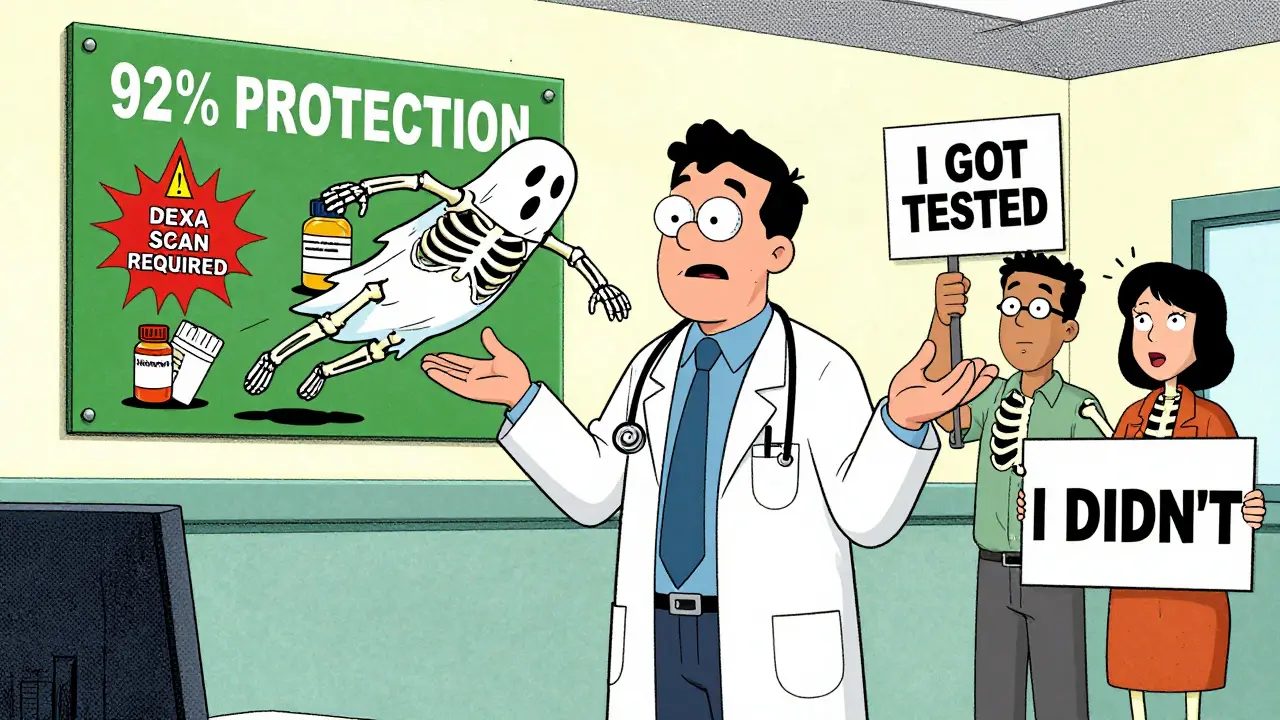
But there’s hope. In the U.S. Veterans Affairs system, when clinics added automatic alerts in their electronic records - popping up when a patient got a 3-month steroid prescription - prevention rates jumped from 40% to 92%. Pharmacist-led education programs boosted adherence from 35% to 85%. Simple systems work.
What You Can Do Today
You don’t need a specialist to start. Here’s your action plan:
- Ask your doctor for a DEXA scan - now, not later.
- Calculate your daily calcium: food + supplement = 1,000-1,200 mg.
- Take 800-1,000 IU of vitamin D daily.
- Walk 30 minutes, five days a week. Add light weights if you can.
- Stop smoking. Cut alcohol to one drink a day or less.
- If your dose is 7.5 mg prednisone or higher, ask about bisphosphonates.
- Ask your pharmacist to review your meds - they catch interactions you might miss.
And if your doctor says, “You’re fine,” ask: “What’s my T-score? Have I had a bone density test? What’s my fracture risk?” If they can’t answer, get a second opinion.
This isn’t about being scared of steroids. It’s about using them safely. You’re not powerless. Your bones aren’t doomed. You have control - if you act now.
What Happens If You Do Nothing?
Half of all steroid-related fractures happen in the first year. A spine fracture can mean chronic pain, loss of height, and difficulty breathing. A hip fracture? One in five people die within a year. Many never walk again.
And once you break a bone on steroids, your risk of another fracture skyrockets. It’s not a one-time event - it’s a cascade.
The earlier you start prevention, the better your outcome. Waiting until you’re in pain? Too late.
There’s no magic pill. But there are proven steps. Do them. Your future self will thank you.
Can I stop my steroids to protect my bones?
No. Stopping steroids abruptly can be life-threatening if you have an autoimmune condition. The goal isn’t to stop them - it’s to use the lowest effective dose for the shortest time possible, while protecting your bones at the same time. Work with your doctor to find the minimum dose that controls your condition.
Is dairy the best source of calcium?
Dairy is one of the easiest ways to get calcium - a cup of milk has about 300 mg. But if you’re lactose intolerant or vegan, you can get enough from fortified plant milks, tofu made with calcium sulfate, canned sardines or salmon with bones, kale, broccoli, and calcium supplements. The total daily amount matters more than the source.
Do I need to take calcium and vitamin D forever?
As long as you’re on corticosteroids, yes. Even after you stop, if your bone density is low, you may need to continue. Your doctor will decide based on follow-up scans. Stopping supplements too soon can undo all your progress.
Are bisphosphonates safe for long-term use?
Yes, for most people. The biggest risk is jawbone issues or atypical femur fractures - but these are extremely rare, happening in less than 1 in 1,000 users after five years. The risk of breaking a hip or spine without treatment is far higher. Your doctor will monitor you and may suggest a “drug holiday” after 3-5 years if your bone density improves.
Can exercise reverse bone loss from steroids?
Exercise alone won’t reverse it - but combined with calcium, vitamin D, and medication, it helps. Weight-bearing and resistance training stimulate bone growth and improve balance to prevent falls. Even small gains in strength can cut your fracture risk. It’s not a cure, but it’s essential support.
Why do men get less prevention than women?
There’s a myth that osteoporosis only affects women. But men on long-term steroids lose bone just as fast - and often have worse outcomes because they’re diagnosed later. Doctors are less likely to screen men, and men are less likely to ask about bone health. That’s changing, but the gap remains. If you’re a man on steroids, push for a bone scan - your risk is real.
How do I know if my treatment is working?
You’ll know through follow-up DEXA scans. Bone density usually stops declining within 6-12 months of starting treatment. Some people even gain 3-8% density in a year. If your bone density keeps dropping despite treatment, your doctor may switch your medication or adjust your dose.
If you’re on long-term steroids, you’re not alone - but you’re not powerless either. The science is clear. The tools exist. The time to act is now - before the next fall, before the next pain, before the next diagnosis.

Comments
Leonard Shit
January 7, 2026 AT 08:47 AMJust started prednisone last month. Didn't know bone loss could be this fast. Thanks for the wake-up call.
Cam Jane
January 8, 2026 AT 19:11 PMAs a physical therapist who works with autoimmune patients, I see this all the time. People think "I feel fine" means "bones are fine" - nope. The real win is catching it before the first fall. Walking 30 minutes a day with light ankle weights? Game-changer. And vitamin D isn't optional - if your levels are below 50 ng/mL, you're playing Russian roulette with your spine. Get tested. Move. Supplement. Repeat. You've got this.
Ashley S
January 10, 2026 AT 05:25 AMWow, another doctor post pretending they’re saving lives. Meanwhile, my rheumatologist never mentioned any of this until I broke my wrist. Thanks for the guilt trip.
Jeane Hendrix
January 11, 2026 AT 15:46 PMSo if I’m on 5mg prednisone daily and my DEXA shows T-score -1.8, am I in the "pre-fracture zone" or just "moderately doomed"? Also, is calcium citrate better than carbonate if I’m on PPIs? Asking for a friend who’s terrified but too tired to google properly.
Tom Swinton
January 12, 2026 AT 16:02 PMI’ve been on steroids for 11 years now - 7.5 mg daily - and I’ve done every single thing on this list. DEXA every year, calcium + D3, daily walks with dumbbells, zero alcohol, quit smoking 8 years ago. I’ve lost only 1.2% bone density total. It’s not magic. It’s discipline. And yes, it’s exhausting. But I’m still standing. My spine hasn’t collapsed. I can still lift my grandkids. This isn’t just advice - it’s survival. If you’re reading this and you’re on steroids? Don’t wait for the pain. Start today. Your future self is begging you.
Katie Schoen
January 13, 2026 AT 07:11 AMLove how this post doesn’t sugarcoat it. Also, the VA system thing? Genius. Why aren’t all clinics doing this? Someone should make a Chrome extension that auto-populates bone health reminders when a steroid script is filled.
Beth Templeton
January 13, 2026 AT 21:33 PMDenosumab stops working if you miss a dose. Bisphosphonates cause jaw necrosis. Teriparatide costs $20k. So what’s the real solution? Don’t take steroids.
Ryan Barr
January 13, 2026 AT 22:16 PMMost of this is basic physiology. The real issue is systemic neglect in rheumatology care. Not rocket science.
Lily Lilyy
January 14, 2026 AT 01:49 AMYou’re not alone. I’m 42, on prednisone for lupus, and I cried reading this because I finally felt seen. I started walking every morning with my dog. I take my calcium like it’s my job. I’m not cured - but I’m fighting. And that’s enough for today.
Molly McLane
January 15, 2026 AT 01:14 AMFor anyone worried about dairy: fortified oat milk has 350mg per cup. Tofu with calcium sulfate? 200-400mg per half-cup. Broccoli? Not enough alone, but it helps. And if you’re vegan - talk to a dietitian who actually knows bone health. Not just any vegan influencer.
Matt Beck
January 16, 2026 AT 16:34 PMLife is a series of trade-offs 🤷♂️ We take steroids to live. We take calcium to not die in a pile of broken bones. It’s not about perfection. It’s about showing up. Even if you only do 3 of these things? You’re ahead of 80% of people. Keep going.
Kiran Plaha
January 18, 2026 AT 06:54 AMMy father was on steroids for 15 years. He never got a scan. Broke his hip at 68. Never walked again. This post saved me from making the same mistake. Thank you.
Venkataramanan Viswanathan
January 19, 2026 AT 20:34 PMIn India, most patients are unaware of steroid-induced osteoporosis. Doctors rarely screen. Supplements are expensive. We need awareness campaigns. This information should be translated into regional languages. Thank you for writing this.
Tiffany Adjei - Opong
January 21, 2026 AT 05:23 AMWait - so if I take teriparatide, I can’t take bisphosphonates later? And if I stop denosumab, I lose bone faster than before? So we’re just swapping one risk for another? This feels like medical Russian roulette with a side of corporate greed.
Gabrielle Panchev
January 22, 2026 AT 12:17 PMBut what if you’re on 20mg of prednisone? And you’re 70? And you have COPD? And your kidneys are failing? And your insurance won’t cover the DEXA? And your doctor says "just take the pill"? This post is great for people who have access to care - but for the rest of us? It’s just another reminder of how broken the system is.