
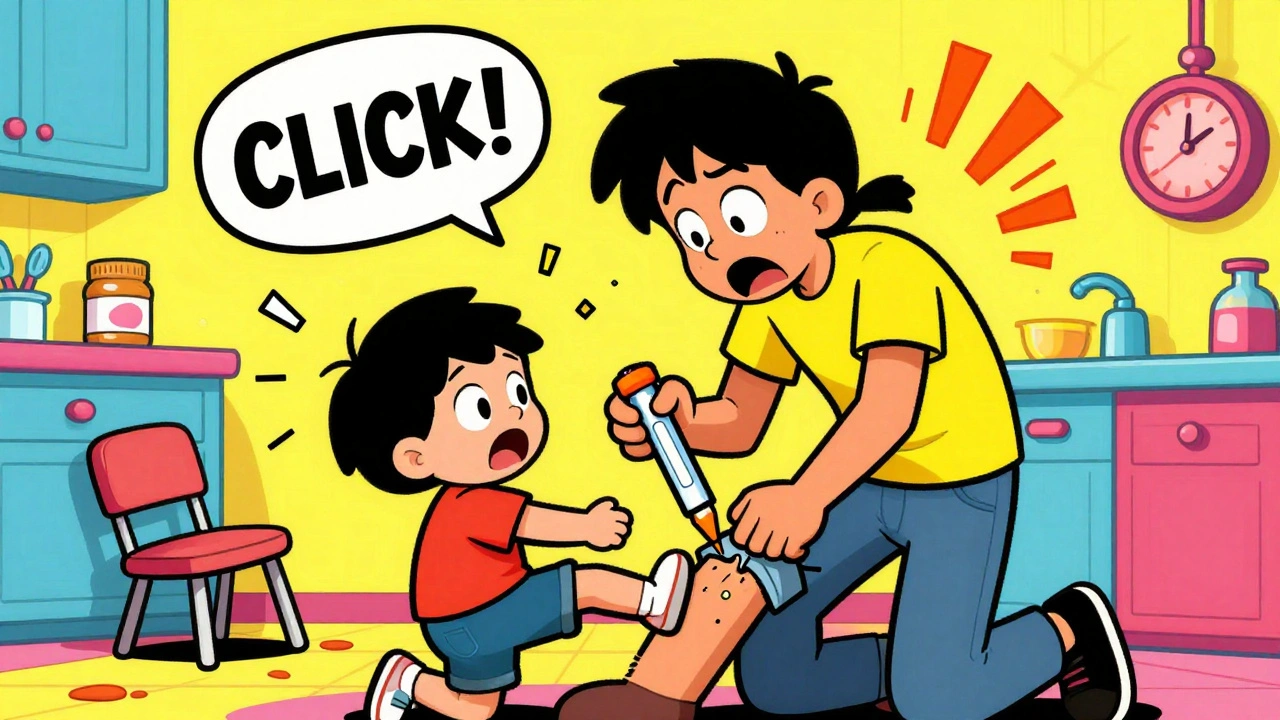
When someone is having a severe allergic reaction, every second counts. Anaphylaxis can turn a mild allergy into a life-or-death situation in under five minutes. The only thing that can stop it? Epinephrine. But if you’ve never used an epinephrine auto-injector before, the thought of giving yourself or someone else a shot in the middle of a crisis can be terrifying. The good news? It’s simple. And if you know exactly what to do, you can save a life.
What Happens During Anaphylaxis
Anaphylaxis isn’t just a bad rash or a stuffy nose. It’s your body going into full shock. Your airways swell, your blood pressure drops, your heart races, and you might feel like you’re choking or dying. Common triggers include peanuts, shellfish, bee stings, latex, or certain medications. Symptoms can come on fast: hives, swelling of the lips or tongue, wheezing, dizziness, vomiting, or passing out.
Antihistamines like Benadryl won’t cut it. They might help with itching, but they do nothing to stop the body’s collapse. Only epinephrine can reverse the reaction. It tightens blood vessels to raise blood pressure, opens up airways, and helps the heart keep pumping. Delaying it increases the risk of death by up to 75%. The American Academy of Allergy, Asthma & Immunology says: give epinephrine at the first sign of trouble - not after, not if you’re not sure, but right now.
Which Auto-Injector Do You Have?
You’re not just holding a pen. You’re holding a lifesaving device. The most common brands are EpiPen, Auvi-Q, Adrenaclick, and the newer Neffy nasal spray. Each works differently.
- EpiPen is the most widely used. It has a bright orange tip that pops out when activated. It delivers either 0.15mg (for kids under 66 lbs) or 0.3mg (for adults and older kids).
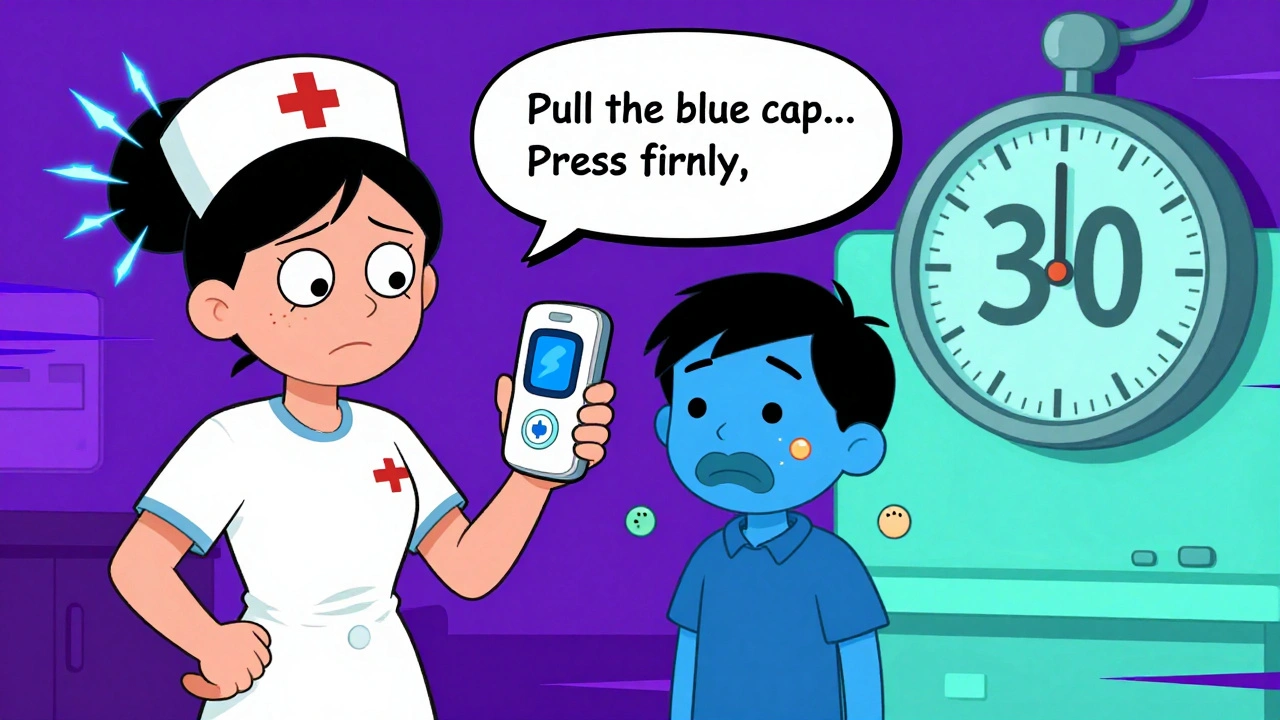
- Auvi-Q talks to you. It gives step-by-step voice instructions - “Pull the blue safety cap,” “Press firmly against the thigh.” This helps when panic sets in.
- Adrenaclick is cheaper but requires two steps: remove the gray cap, then press the black end to activate the needle. It’s less intuitive.
- Neffy is the first needle-free option. You spray it into one nostril. It works for 81% of severe reactions, but 32% of people don’t use it right in practice.
Know which one you have. Check the label. Practice with a trainer device (they come in different colors and don’t have medicine). If you’re unsure, ask your doctor for a demo. Don’t wait until there’s an emergency to figure it out.
Step-by-Step: How to Use It
There’s no room for hesitation. Here’s what to do - in order.
- Recognize the signs. Swelling, trouble breathing, feeling faint, hives, nausea, or confusion? Don’t wait for all of them. If you suspect anaphylaxis, act immediately.
- Call 911. Even if you give epinephrine, you still need emergency help. Anaphylaxis can come back hours later (called a biphasic reaction). The first dose might not be enough.
- Remove the safety cap. For EpiPen and Auvi-Q, that’s the blue cap. For Adrenaclick, it’s the gray one. Don’t hesitate - this is the first step most people forget.
- Place the injector against the outer thigh. You can inject through clothing. Jeans, leggings, shorts - it doesn’t matter. The thick muscle there absorbs the medicine fastest. Avoid the buttocks, arms, or stomach.
- Push hard until you hear a click. Hold it firmly against the thigh. Don’t tap it. Don’t wiggle it. Push down hard and hold for 3 seconds. For Auvi-Q, listen for the voice prompt: “Injection complete.” For EpiPen, you’ll feel a click and see the orange tip extend. That means it worked.
- Keep holding for 3 seconds. This is where most people mess up. You think the click means it’s done. But the medicine needs those full 3 seconds to fully deliver. If you pull off too soon, you might get only half the dose.
- Remove and massage the area. After 3 seconds, pull the injector away. Rub the injection site for 10 seconds. This helps the medicine absorb faster.
- Call 911 again if you haven’t. If someone else is helping, make sure they’re calling. Don’t assume they did.
What to Do After the Injection
Epinephrine works fast - usually within minutes. But it doesn’t last long. That’s why you need to get to a hospital, even if you feel better.
While waiting for help:
- Have the person lie flat on their back. If they’re vomiting or having trouble breathing, turn them on their side - this keeps the airway open.
- Don’t let them stand or walk. Even if they say they’re fine. Their blood pressure could crash suddenly.
- Loosen tight clothing. Remove any jewelry around the neck if swelling is happening.
- Give a second dose if symptoms don’t improve after 5-10 minutes. Yes, you can use a second injector. Many people carry two for this exact reason.
Side effects from epinephrine? They’re normal. You might feel your heart pounding, your hands shaking, or get anxious. These last 5 to 15 minutes. They’re not dangerous. They mean the medicine is working. The real danger is not using it at all.
Training and Practice Matter
Here’s the hard truth: only 42% of people who have anaphylaxis actually get epinephrine in time. Why? Because most people don’t know how to use the device.
Studies show:
- 37% of EpiPen users make a mistake during an emergency - like not removing the cap or injecting into the wrong spot.
- 61% don’t hold the device long enough.
- 72% of school nurses report mistakes during training drills - often forgetting the safety cap.
Practice with a trainer device every few months. Use it on your thigh. Go through the motions. Get your family, friends, teachers, or coworkers to watch. Make sure they know where you keep it and how to use it.
If you have a child with allergies, practice on a stuffed animal. Let them hold the trainer. Make it routine. The more familiar it is, the less panic you’ll feel when it’s real.
Storage and Expiration
Epinephrine doesn’t last forever. It breaks down in heat and light. Don’t leave it in your car. Don’t keep it in a hot bathroom. Store it at room temperature - between 59°F and 86°F. Keep it in its original case to protect it from light.
Check the expiration date every time you get a refill. Most devices expire after 12 to 18 months. Replace them on time. If you’re out of date, use it anyway if there’s no other option. A past-due injector is better than nothing.
Some insurance plans cover replacements. If cost is an issue, ask your doctor about patient assistance programs. Auvi-Q helps cover 94% of users. Adrenaclick costs under $200 cash. EpiPen is expensive - but generics and coupons can cut the price in half.
What If You’re Not Sure?
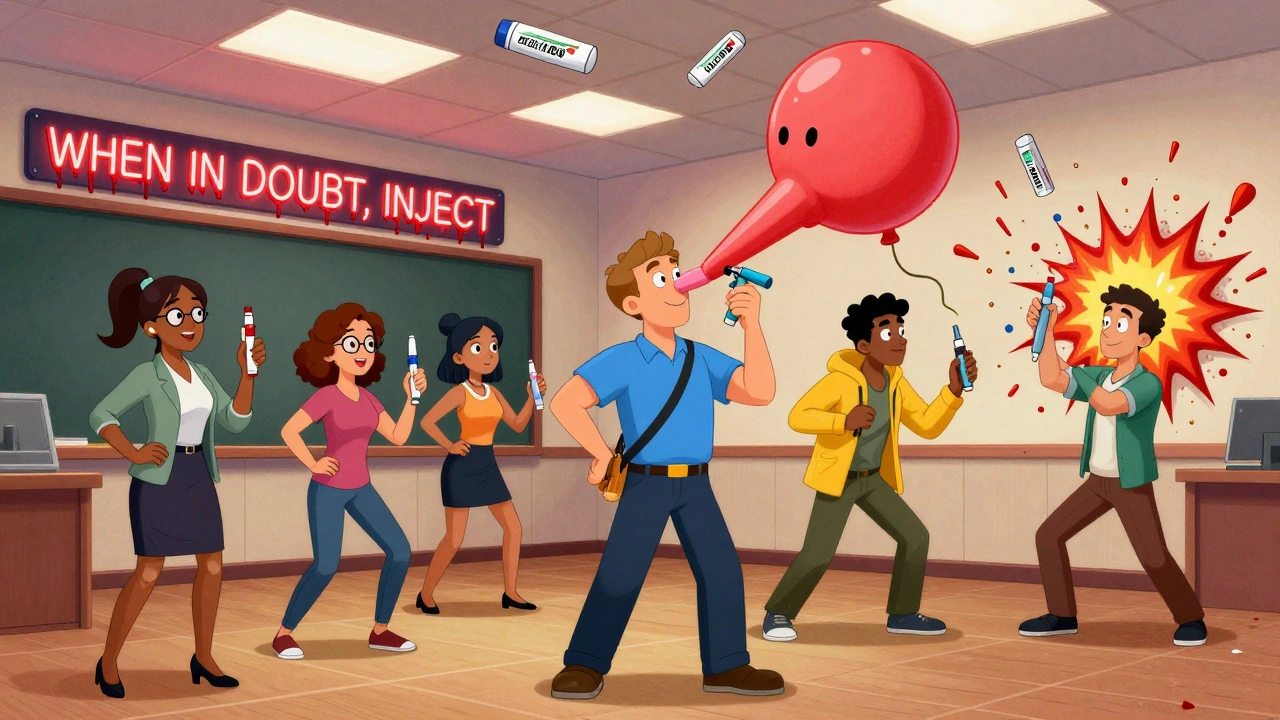
You don’t need to be a doctor to know when to use it. If someone has symptoms like trouble breathing, swelling of the face or throat, or feels like they’re going to pass out - give epinephrine. Don’t wait for a diagnosis. Don’t call the allergist first. Don’t give Benadryl and wait to see what happens.
One study found that people who waited for symptoms to get worse before using epinephrine were three times more likely to need a second dose or end up in intensive care. The rule is simple: when in doubt, inject.
Real Stories, Real Results
A mom on Reddit shared how her 8-year-old had a peanut reaction at school. The nurse grabbed the EpiPen, but didn’t know how to use it. The child’s teacher, who had practiced with a trainer last month, stepped in. She pulled the cap, pressed the thigh, held for three seconds. The child stopped wheezing in 90 seconds. They were at the hospital in 12 minutes. No ICU. No ventilator. Just a kid who got help in time.
Another user said his daughter had a bee sting. He panicked. He fumbled with the Auvi-Q. But the voice said: “Press firmly.” He did. The voice said: “Injection complete.” He didn’t have to remember anything. His daughter is alive today because the device talked him through it.
These aren’t rare cases. They happen every day. And they’re preventable.
Final Reminder
Epinephrine auto-injectors are not optional. They’re essential. Like a fire extinguisher in your home. You hope you never need it. But if you do, you better know where it is - and how to use it.
Keep one with you. Keep one at work. Keep one in your kid’s backpack. Make sure your spouse, your teacher, your coach, your best friend - they all know how to use it. Practice every few months. Check the date. Replace it on time.
Anaphylaxis doesn’t ask for permission. It doesn’t wait for you to be ready. But you can be ready for it. And that makes all the difference.


Comments
ian septian
December 9, 2025 AT 13:51 PMJust keep one in your glovebox. I did last summer when my buddy got stung at the lake. He was blue, I pulled the cap, pressed, held three seconds. He breathed again. No drama.
Larry Lieberman
December 10, 2025 AT 00:26 AMI used to think epinephrine was overkill until my niece went into anaphylaxis at daycare 🤯 The Auvi-Q talked her teacher through it. Voice. Instructions. No panic. Now I carry two. And I make everyone in my family practice with the trainer. 🧠💉
Jennifer Blandford
December 10, 2025 AT 17:47 PMOMG. I cried reading this. My daughter’s first reaction was at a birthday party. I was holding her, screaming for Benadryl, and the mom just grabbed the EpiPen like it was a flashlight. She didn’t hesitate. She didn’t ask. She just DID. And now my kid is alive because someone knew how to use it. I tell everyone I meet. This isn’t medical advice. This is survival. 💪❤️
Stacy Tolbert
December 11, 2025 AT 03:04 AMI’m so tired of people saying ‘just carry Benadryl.’ I’ve been in the ER twice because someone waited. Twice. The first time, I thought I was having a panic attack. The second time, I was too scared to inject myself. Don’t be me. Don’t wait. Inject. Then call 911. Then scream. Then cry. Then live.
Ryan Brady
December 12, 2025 AT 09:52 AMThis whole thing is just woke medical nonsense. You people are scared of everything. My kid ate peanuts his whole life. Never had a problem. Why are we turning every little itch into a national emergency? 🇺🇸
Delaine Kiara
December 13, 2025 AT 04:00 AMOkay but let’s be real - most people don’t even know which end is the needle. I watched a nurse at a school drill last month. She put the EpiPen on the kid’s stomach. The kid was crying. The nurse was panicking. And the school had a $5000 stock of these things. 🤦♀️ You can’t just hand someone a device and assume they’ll know what to do. You have to train like it’s a fire drill. Every. Single. Year. And if you’re using Adrenaclick? You’re asking for trouble. That thing is a nightmare.
Noah Raines
December 14, 2025 AT 13:47 PMI used to be lazy too. Then my sister almost died. Now I have one in my wallet, my gym bag, my kid’s backpack, and my car. I even got my coworkers to do a 5-minute demo at lunch. No one’s gonna die on my watch because someone forgot the cap. 🤝💉
Gilbert Lacasandile
December 14, 2025 AT 19:27 PMI just wanted to say thanks for posting this. My dad has a peanut allergy and he’s 72. He’s scared to use his EpiPen because he thinks he’ll hurt himself. I showed him the trainer video last week. He practiced on his leg with me. He said it felt like holding a pen. He’s not scared anymore. That’s worth more than any article.