
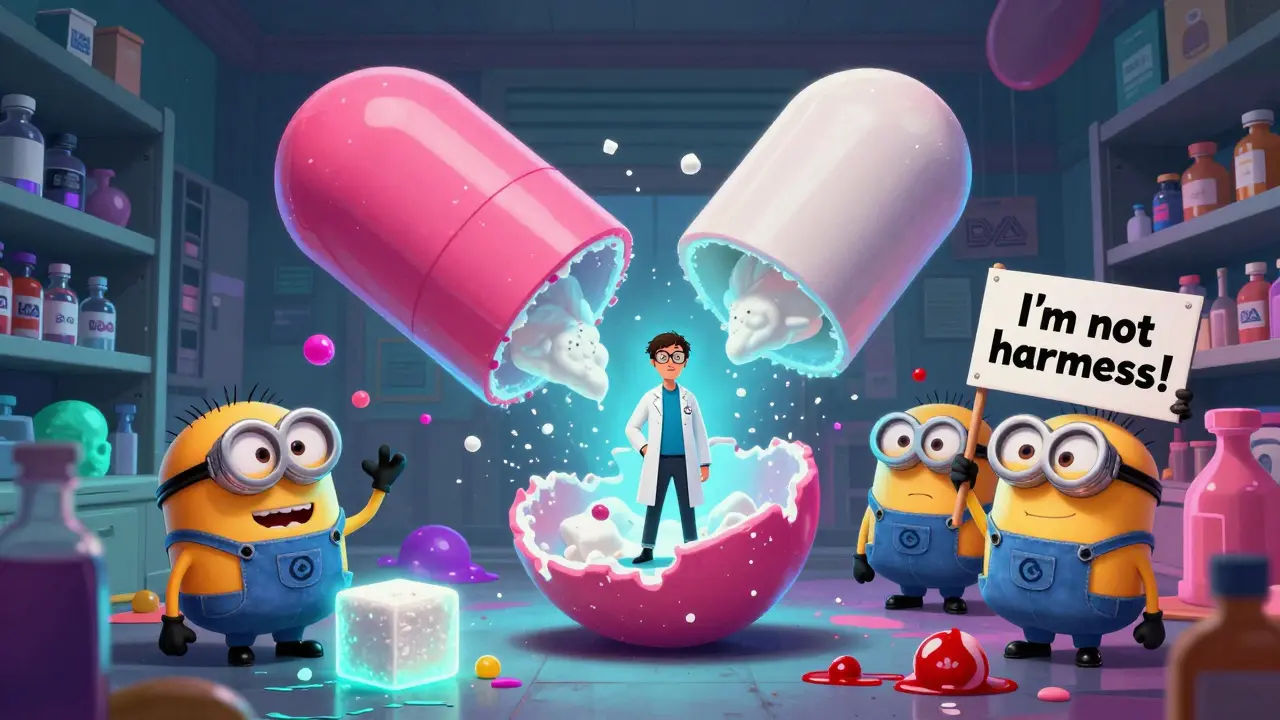
When you pick up a pill from the pharmacy, you’re not just getting one thing. You’re getting two very different kinds of ingredients - and only one of them is meant to treat your condition. The rest? They’re there for reasons you might never think about. But those so-called "inactive" ingredients can affect how well your medicine works, whether you have side effects, and even if you can take it at all.
What’s actually in your pill?
The active ingredient is the part of the medicine that does the job. If you’re taking acetaminophen for a headache, that’s the active ingredient. Ibuprofen for swelling? That’s the active one too. These are the compounds that interact with your body’s biology - blocking pain signals, lowering blood pressure, killing bacteria. They’re carefully tested, approved, and dosed to produce a specific effect. But here’s the catch: most pills aren’t just pure active ingredient. A single 500mg acetaminophen tablet might contain only 500mg of the drug. The rest? That’s inactive ingredients, also called excipients. They make up 90% or more of the tablet’s weight. And they’re not just filler. They’re essential to making the medicine work - and safe to take.Why do inactive ingredients even exist?
Think of a tablet like a house. The active ingredient is the person living inside. But without walls, a roof, or electricity, that person can’t survive. Inactive ingredients are the structure. - Fillers like lactose or microcrystalline cellulose give bulk. If you only needed 5mg of a powerful drug, you couldn’t swallow a tiny speck. Fillers make it a manageable size. - Binders like gelatin or povidone hold the powder together so the tablet doesn’t crumble. - Lubricants like magnesium stearate keep the medicine from sticking to the machines during manufacturing. - Coatings help you swallow it, protect it from stomach acid, or make it release slowly over time. - Preservatives like parabens stop mold or bacteria from growing in liquid medicines. - Flavors and colors make it easier to take - especially for kids or people who hate the taste of medicine. The FDA requires all these ingredients to be "generally recognized as safe" (GRAS). But that doesn’t mean they’re harmless to everyone."Inactive" doesn’t mean harmless
A 2021 study from the University of California, San Francisco, and Novartis shook up the pharmaceutical world. Researchers tested 639 FDA-approved inactive ingredients against over 3,000 human proteins. They found that 14% of these "inactive" substances had biological activity - meaning they could interact with your body in unexpected ways. Some color additives like D&C Red 7 calcium lake and preservatives like propyl gallate showed strong binding to proteins involved in inflammation, metabolism, and even cancer pathways. These weren’t just random hits - they happened at concentrations you’d actually find in a pill. This isn’t about panic. Most of these interactions are weak and unlikely to cause harm in healthy people. But for someone on multiple medications, with a chronic illness, or a sensitive immune system, even small biological effects can add up. And it’s not just about new discoveries. Lactose - a common filler - affects about 65% of the global population who are lactose intolerant. If you’re taking a pill with lactose and get bloated, gassy, or have diarrhea, it’s not the active ingredient causing it. It’s the "inactive" one.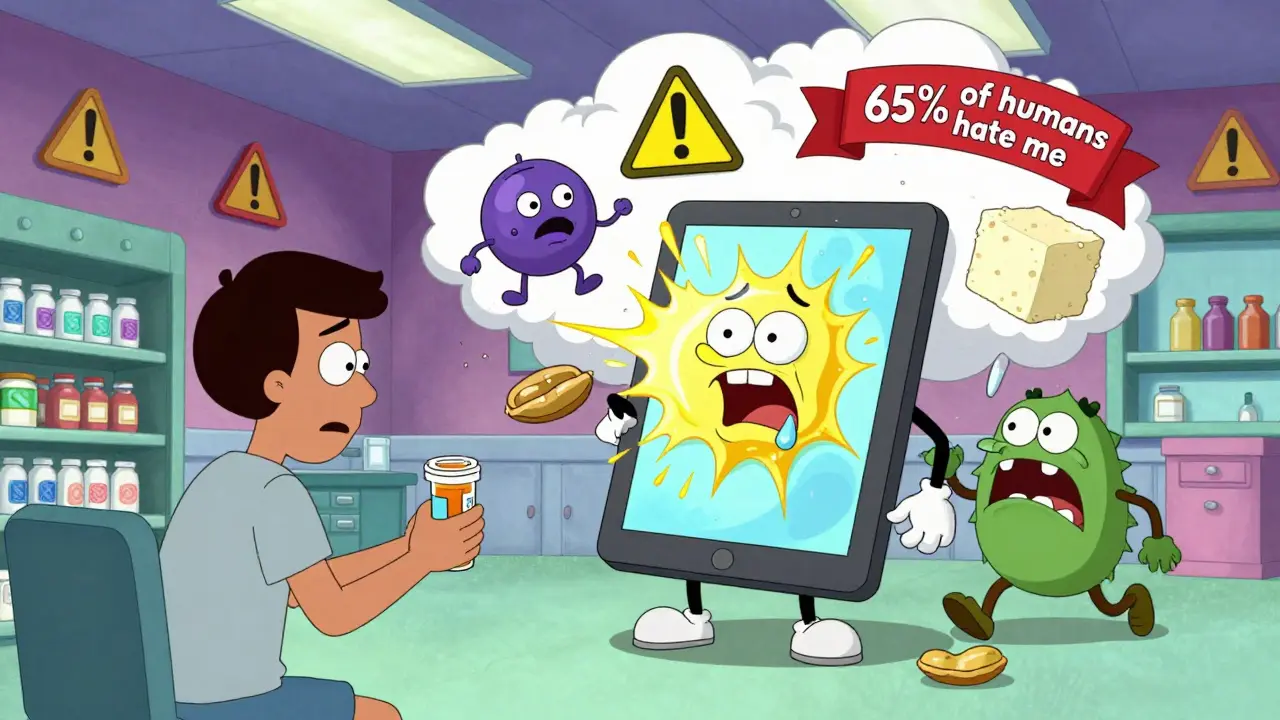
What about allergies and sensitivities?
Inactive ingredients are behind many medication reactions that get mislabeled as "allergies to the drug." - Gluten: Some tablets use wheat starch. For someone with celiac disease, even trace amounts can trigger an immune response. About 1 in 100 people have this condition. - Sulfites: Used in some injectable medications, sulfites can cause breathing problems in people with asthma. Around 8% of asthmatics are sensitive to them. - Dyes: Yellow No. 5 (tartrazine) has been linked to hives and asthma in sensitive individuals. The FDA requires it to be listed, but many people don’t know to look for it. - Alcohol: In liquid cough syrups or mouthwashes, alcohol can be an active ingredient (antiseptic) or inactive (solvent). Either way, it matters if you’re pregnant, recovering from addiction, or on certain medications. The FDA’s Adverse Event Reporting System shows that about 0.5% of all drug reactions are tied to inactive ingredients. That might sound small, but with billions of prescriptions filled each year, that’s tens of thousands of people experiencing side effects that could’ve been avoided.Why your pharmacist might switch your medication
You might think all versions of a drug are the same. But that’s not true. Generic versions of the same drug can have different inactive ingredients. A generic version of levothyroxine (for thyroid) might use corn starch instead of lactose. Another might use a different coating that changes how fast it’s absorbed. In 2022, 22% of medication switches by pharmacists were due to concerns about inactive ingredients - not the active one. Someone might have switched from one brand of metformin to another because the first one contained a dye that caused skin rashes. Or a patient with a peanut allergy was moved off a capsule with peanut oil as a solvent. Your pharmacist is trained to spot these differences. If you’ve had a reaction to a medication before, tell them. Ask: "Is this the same as the one I took before?" They can check the inactive ingredients using the FDA’s Inactive Ingredient Database.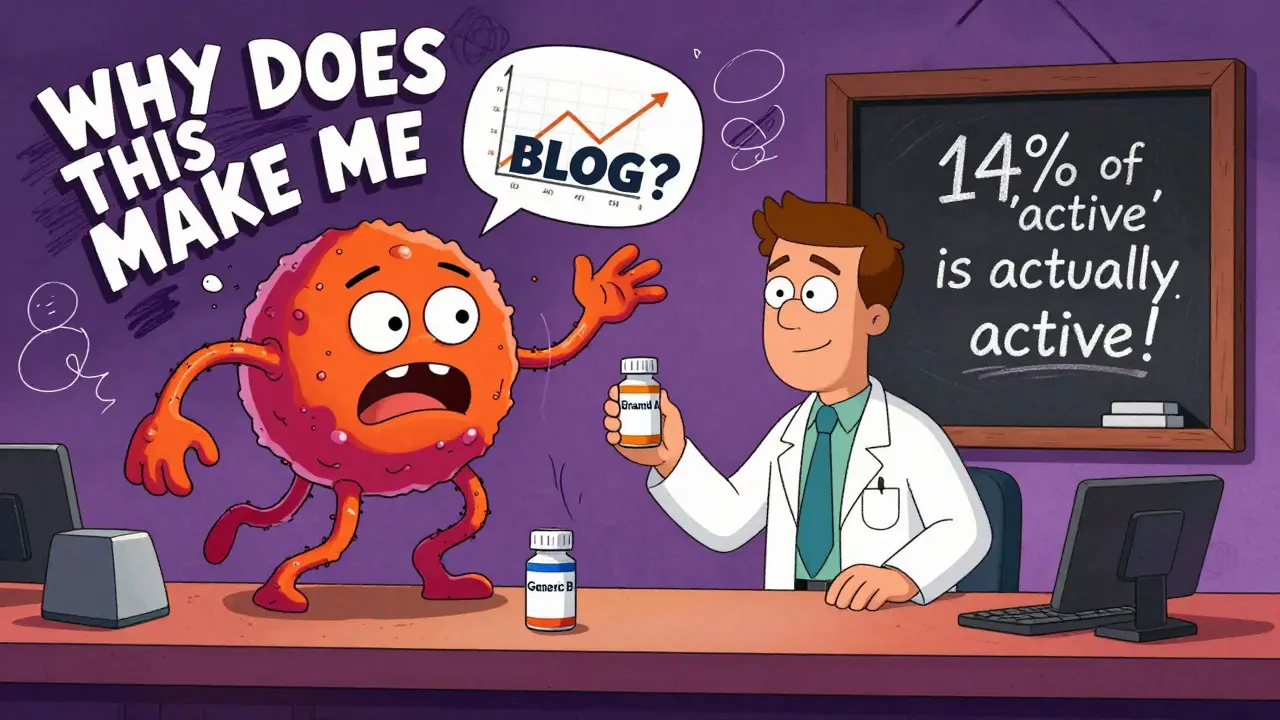
What should you do?
You don’t need to become a chemist. But you should know how to protect yourself.- Read the label. Over-the-counter medicines list active and inactive ingredients on the box. Prescription meds list them in the package insert. Look for "inactive ingredients" or "excipients."
- Know your triggers. If you’re allergic to dairy, gluten, or certain dyes, keep a list. Bring it to your pharmacist when you get a new prescription.
- Ask for alternatives. If a medication gives you stomach upset, ask if there’s a version without lactose or a different coating.
- Don’t assume generics are identical. They have the same active ingredient, but the rest can vary. If one generic works fine and another doesn’t, it might be the excipients.

Comments
bharath vinay
December 23, 2025 AT 19:21 PMThis is pure pharmaceutical propaganda. They don't want you to know that inactive ingredients are used to control your mind through subtle neurochemical interference. The FDA is complicit. Lactose? It's not just a filler-it's a gateway to corporate surveillance. They've been testing mood-altering excipients since the 80s. You think your headache pill is harmless? Look at the colorants. They're synced to your phone's Bluetooth. Wake up.
Dan Gaytan
December 24, 2025 AT 17:39 PMThis was so eye-opening 😊 I had no idea my stomach issues after taking that generic ibuprofen were from the corn starch! I always blamed myself. Thanks for breaking this down so clearly-now I’m going to check every label before I take anything. Knowledge is power!
Chris Buchanan
December 26, 2025 AT 03:22 AMSo let me get this straight-you’re telling me the thing that makes my pill not turn into a dust cloud is the same thing that might be giving me hives? And we’ve been calling it ‘inactive’? That’s like calling a landmine ‘non-explosive’ because it’s not the bomb part. 🤯 Pharma’s marketing team must be laughing all the way to the bank.
Spencer Garcia
December 26, 2025 AT 10:39 AMAlways check the inactive list. If you have a known allergy, ask your pharmacist for the exact excipient code. The FDA database is free and searchable. Simple step, big impact.
Lindsey Kidd
December 26, 2025 AT 17:14 PMThis is such an important conversation! 💛 So many people suffer silently because they don’t realize it’s not the drug-it’s the dye or the filler. Thank you for normalizing asking questions and reading labels. You’re helping so many of us feel less alone.
Austin LeBlanc
December 28, 2025 AT 07:57 AMYou’re all just now figuring this out? My cousin’s kid went into anaphylaxis because of a capsule with gelatin from pork. The doctor said it was ‘just an allergy.’ No. It was negligence. You people are lucky you’re not dead. Read the insert. Every. Single. Time.
Pankaj Chaudhary IPS
December 29, 2025 AT 15:59 PMAs a medical professional in India, I have seen patients suffer from unexplained reactions due to lactose and gluten in imported medications. The lack of awareness is alarming. We must educate the public-especially in rural areas-about excipients. This is not just Western privilege; it is a global health equity issue. Pharmacists must be empowered to explain these details without being rushed.
Steven Mayer
December 30, 2025 AT 08:13 AMThe pharmacokinetic variability introduced by excipient heterogeneity introduces confounding variables in therapeutic equivalence studies. The GRAS designation is a regulatory artifact, not a biological guarantee. Bioavailability shifts of up to 18% have been documented between generic formulations due to polymorphic excipient interactions-particularly with enteric coatings and surfactant systems. This is not anecdotal; it is statistically significant in pooled meta-analyses.
Charles Barry
January 1, 2026 AT 00:59 AMThey’re lying to you. The entire pharmaceutical industry is a pyramid scheme built on placebo fillers and fear. The FDA doesn’t test excipients for long-term epigenetic effects because they’re paid off by Big Pharma. That ‘safety’ you think you have? It’s a marketing brochure. The real active ingredient in your pill isn’t acetaminophen-it’s compliance. They want you docile. They want you dependent. And they’re using your own body’s chemistry to make you forget you’re being poisoned.