
Drug Interaction Checker
Check Your Medications
Enter your medications and click "Check for Interactions" to see potential dangers.
5-5-5 Rule: Your Safety Checklist
Before buying any supplement or OTC medication:
- Spend 5 minutes Googling the product
- Spend 5 minutes checking the FDA database
- Spend 5 minutes asking your pharmacist
Pharmacists see dangerous interactions daily. They're your best resource for safety.
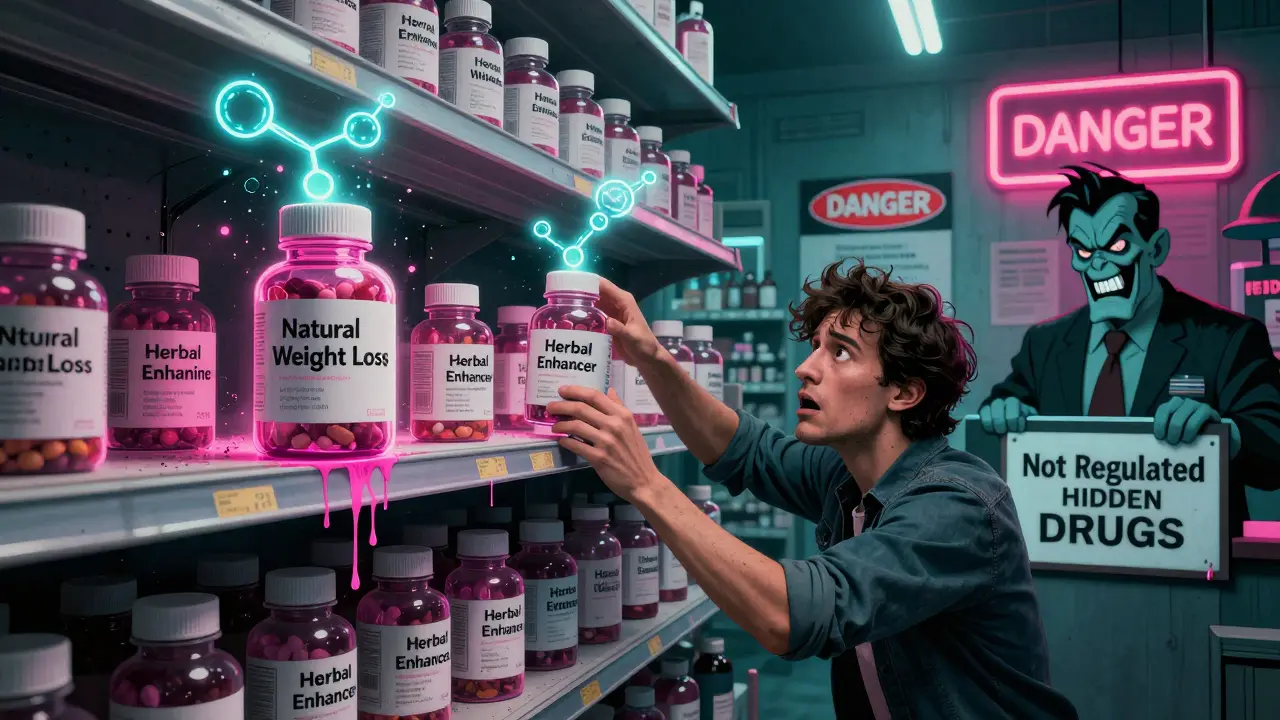
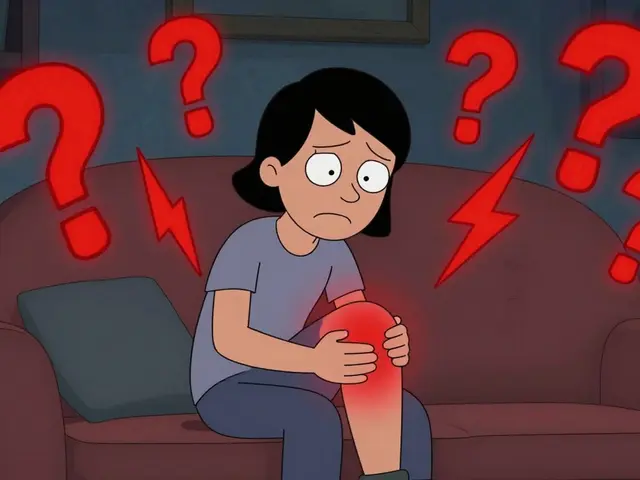
Every year, millions of Americans reach for over-the-counter (OTC) meds without a second thought. A headache? Grab ibuprofen. Trouble sleeping? Diphenhydramine. Want to lose weight or boost performance? There’s a supplement for that. But here’s the scary truth: many of these products contain hidden ingredients that could land you in the ER.
What’s Really in Your Supplement Bottle?
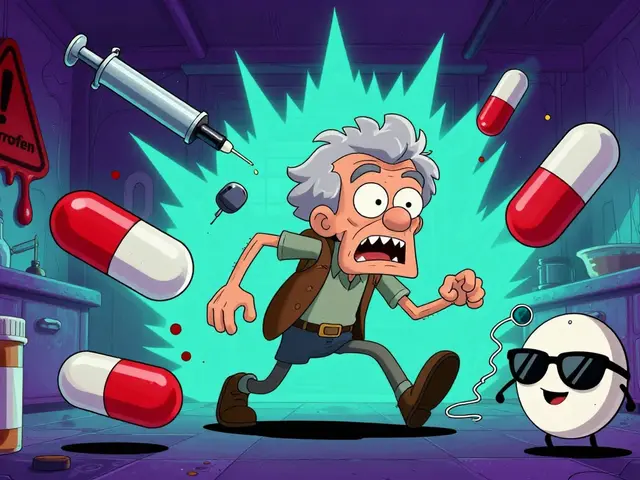
You might think you’re buying a "natural" weight loss pill or an "herbal" sexual enhancer. But between 2007 and 2021, the FDA found over 1,000 dietary supplements laced with prescription drugs. These aren’t accidental mistakes-they’re deliberate frauds. Manufacturers add banned or dangerous pharmaceuticals to make their products work faster, then hide them on the label to avoid regulation.Sibutramine, for example, was pulled from the market in 2010 because it raised the risk of heart attack and stroke by 16%. Yet, it still shows up in weight loss supplements. Phenolphthalein, a laxative linked to cancer, was banned in 1999 but continues to appear in slimming pills. Sexual enhancement products? Nearly 87% of them contain sildenafil (the active ingredient in Viagra) or tadalafil (Cialis)-drugs that require a prescription for a reason.
And it gets worse. A 2019 NIH study found that 20.2% of contaminated products had multiple hidden drugs. Some pills contained six different pharmaceuticals. One product marketed for joint pain had six unapproved ingredients. That’s not a supplement. That’s a chemical cocktail.
Why This Is So Dangerous
The biggest risk isn’t just the hidden drug itself-it’s what happens when it mixes with something else you’re taking.Let’s say you’re on blood pressure medication. You take a "natural" weight loss pill that contains sibutramine. Your blood pressure spikes. You don’t know why. You think you’re fine. But now you’re at risk of stroke or heart attack. Or worse-you’re on diabetes medication and take a supplement with hidden stimulants that skyrocket your blood sugar. No warning. No label. Just chaos.
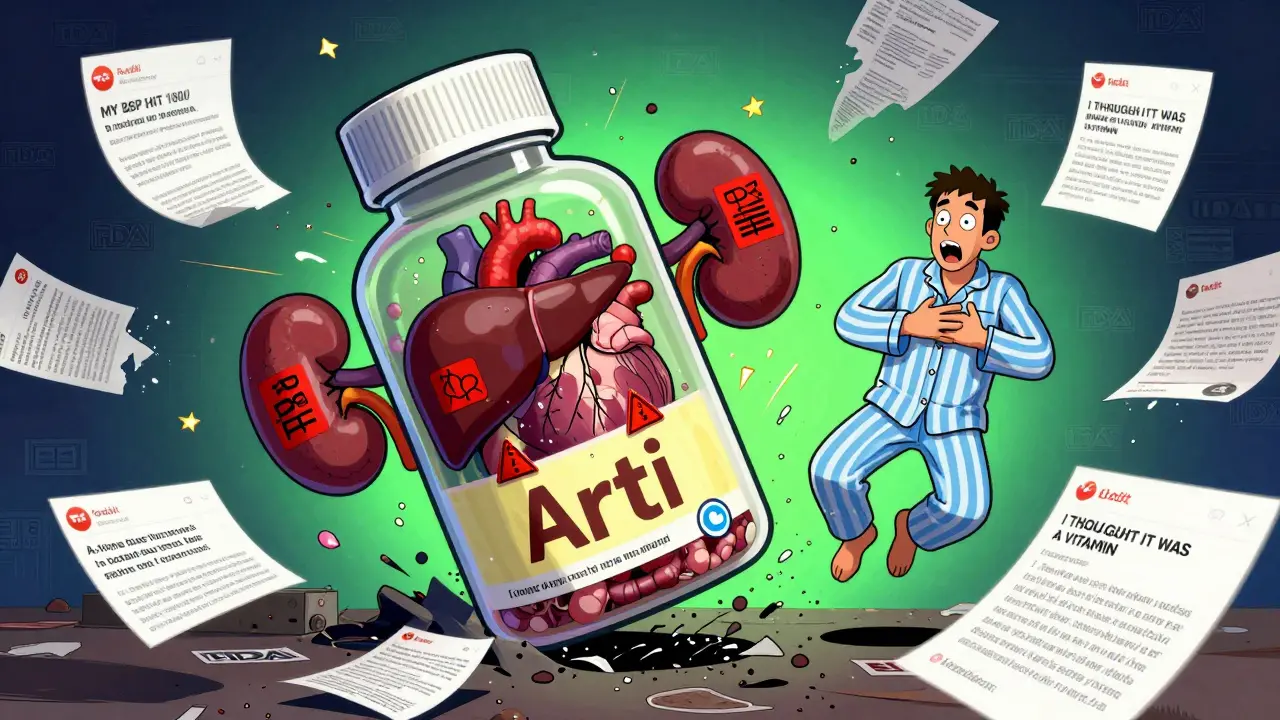
The FDA has documented over 30 serious cases tied to products labeled "Artri" or "Ortiga." People ended up in the hospital with internal bleeding, liver failure, and acute kidney damage. One man had a prolonged erection for over 12 hours-a medical emergency called priapism that can cause permanent tissue damage. He didn’t know the pill he bought online had tadalafil in it.
And it’s not just supplements. Even common OTC painkillers like ibuprofen or naproxen carry serious risks. They cause around 100,000 hospitalizations and 16,500 deaths every year in the U.S. alone. Add in hidden ingredients, and that number could climb.
Real People, Real Consequences
Reddit threads are full of stories like this: "I took a "natural" weight loss pill and my blood pressure hit 180/110." Later, independent testing confirmed it had sibutramine. Another user wrote: "I thought I was just taking a vitamin, but I ended up in the ER with a racing heart and chest pain."The "Benadryl challenge" on social media showed how dangerous ignorance can be. Teens were taking massive doses of diphenhydramine (the sleepy pill in Benadryl) to hallucinate. Three died. Dozens were hospitalized with seizures, confusion, and heart rhythm problems.
Consumer Reports collected 273 adverse event reports between 2015 and 2020. The most common complaints? Unexplained rapid heartbeat, severe nausea, allergic reactions to unknown substances. People didn’t know what they were taking. And doctors didn’t know either.
Who’s Really in Charge?
Here’s the broken system: Under the Dietary Supplement Health and Education Act of 1994, supplement makers don’t need FDA approval before selling. They’re responsible for safety-but there’s no enforcement. The FDA only steps in after people get hurt.The FDA has just 17 full-time staff dedicated to overseeing the entire $44.4 billion supplement industry. Meanwhile, 58% of U.S. adults take supplements regularly. Only 0.3% of adverse events are reported to the FDA. That means for every case that gets documented, hundreds go unnoticed.
Third-party testing groups like USP, NSF International, and ConsumerLab.com exist to fill the gap. They test products for contaminants, label accuracy, and actual ingredient levels. But they’re voluntary. And most brands don’t pay for them.
How to Protect Yourself
You can’t trust labels. But you can take control.- Check the FDA’s Health Fraud Product Database before buying any supplement. Search by product name or company. If it’s listed, avoid it. If it’s not listed, that doesn’t mean it’s safe-but it’s a start.
- Look for third-party seals like USP, NSF, or ConsumerLab.com on the bottle. These mean independent testing happened.
- Use the 5-5-5 Rule: Spend 5 minutes Googling the product, 5 minutes checking the FDA database, and 5 minutes asking your pharmacist. Pharmacists see these cases every day.
- Never trust "all-natural" claims for sexual enhancement or weight loss. If it works too fast, it’s probably laced with drugs.
- Keep a full medication list-all prescriptions, OTCs, vitamins, and supplements. Bring it to every doctor visit. Studies show 63% of dangerous drug interactions happen because patients didn’t mention their supplements.
- Avoid products with vague ingredients like "proprietary blends" or "herbal extracts." If they won’t tell you the exact amount, they’re hiding something.
Who’s Most at Risk?
The elderly are especially vulnerable. On average, they take 4.9 prescription medications plus supplements. That’s a recipe for deadly interactions. A single hidden ingredient in a supplement can turn a routine drug into a life-threatening one.Adolescents are another high-risk group. Social media challenges normalize overdose. What starts as "just one pill" can end in emergency surgery or death.
And let’s not forget people with chronic conditions. Diabetics, heart patients, those on blood thinners-anyone managing a serious health issue is playing Russian roulette with unlabeled supplements.
The Bigger Picture
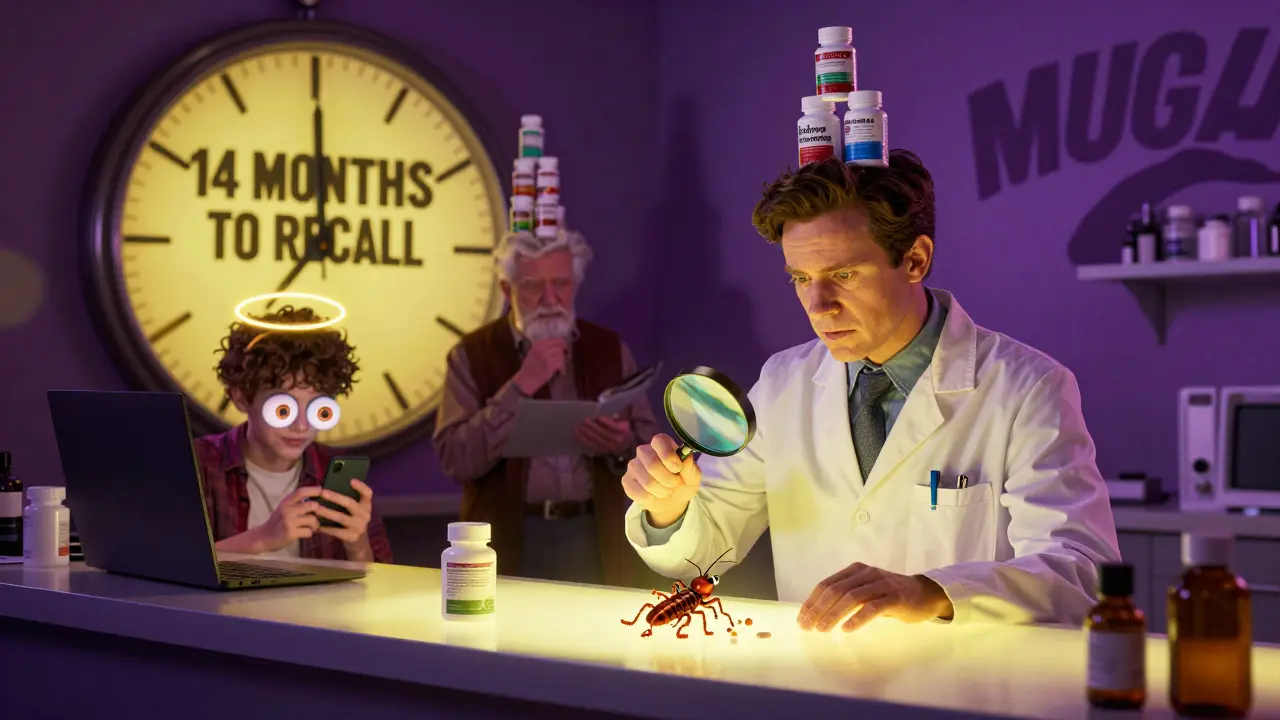
The supplement industry is growing fast. Global revenue hit $55.5 billion in 2022 and is projected to hit $88.2 billion by 2028. But regulation hasn’t kept up. The FDA’s average time to remove a dangerous product from the market? 14 months. Meanwhile, 15-20% more contaminated products hit the market every year.There’s hope. A 2023 bill in Congress (H.R. 2509) would require mandatory adverse event reporting and give the FDA more power to act. But until then, you’re the only line of defense.
Bottom Line
OTC meds and supplements aren’t harmless. They’re powerful chemicals. And if you don’t know what’s in them, you’re gambling with your health. Don’t assume safety because it’s sold on a shelf. Don’t trust marketing. Don’t ignore red flags.Do your homework. Check the database. Talk to your pharmacist. Keep a list. Your life might depend on it.
Are OTC medications safer than prescription drugs?
No. OTC medications are not inherently safer. Many contain the same active ingredients as prescription drugs, just in lower doses. But unlike prescriptions, OTCs and supplements aren’t reviewed by the FDA before sale. Hidden ingredients, incorrect dosing, and dangerous interactions make them just as risky-sometimes more so.
Can I trust supplements with "natural" or "herbal" on the label?
No. "Natural" doesn’t mean safe or pure. In fact, 73% of weight loss supplements making "miraculous" claims contain hidden pharmaceuticals, and 87% of sexual enhancement products have undisclosed sildenafil or tadalafil. These labels are marketing tools, not safety guarantees.
What should I do if I think a supplement made me sick?
Stop using the product immediately. Contact your doctor and report the reaction to the FDA through their MedWatch system. Save the bottle and packaging-this helps regulators track dangerous products. You can also report to Consumer Reports’ Adverse Event Database. Your report could help prevent others from getting hurt.
Why don’t more people know about these hidden ingredients?
Because the system is designed to hide them. Manufacturers aren’t required to list pharmaceuticals if they’re added as "contaminants" or buried in "proprietary blends." The FDA only acts after reports come in-and only 0.3% of adverse events are reported. Most consumers never see the FDA’s Health Fraud Product Database. It’s not a secret; it’s a blind spot.
Can pharmacists really help with OTC safety?
Yes-more than you think. Pharmacists are trained to spot dangerous interactions. They see what doctors don’t: patients who take 10 supplements and 5 prescriptions without telling anyone. A 5-minute chat with a pharmacist before buying an OTC product can prevent hospitalization. Ask them to check your current meds against the new product. It’s free, fast, and life-saving.
Is there a list of safe supplement brands?
There’s no official list, but brands with third-party verification seals (USP, NSF, ConsumerLab.com) are far more likely to be clean. These organizations test for contaminants, accurate dosing, and label truthfulness. Look for their logo on the bottle. If it’s not there, assume the worst.
Do all OTC pain relievers carry the same risks?
NSAIDs like ibuprofen and naproxen all carry similar risks: stomach ulcers, kidney damage, heart attack, and stroke. The risk increases with long-term use, high doses, and when combined with other medications. Even "mild" OTC painkillers can be dangerous if you have kidney disease, high blood pressure, or are taking blood thinners. Always check with a doctor before using them daily.
Why do companies add hidden drugs to supplements?
Because it works-and it’s profitable. A supplement with sildenafil sells faster than one without. It gives customers quick results, leading to repeat sales. The FDA can’t catch every product, and penalties are often too small to deter fraud. For some manufacturers, the risk of getting caught is lower than the profit from selling a dangerous product.
Comments
Hariom Sharma
February 20, 2026 AT 13:44 PMBro, I just bought some weight loss pills from a guy on Instagram last month. Thought they were 'Ayurvedic' and '100% natural'-turns out, they had sibutramine. My heart was racing for 3 days. I didn’t even know what that was until I read this. Thanks for the wake-up call. Now I check every supplement on the FDA database. Also, my grandma in Delhi started taking 'herbal' joint pills-same story. We’re all just guessing out here.
Nina Catherine
February 21, 2026 AT 17:36 PMOMG I DIDNT KNOW THIS!! I’ve been taking that 'natural energy booster' for months 😳 I thought it was just caffeine and ginseng but now I’m paranoid!! I’m gonna go check the bottle right now-hope I didn’t accidentally ingest tadalafil 😭 my boyfriend’s gonna kill me if I did 😅
Taylor Mead
February 23, 2026 AT 16:20 PMKinda wild how we treat supplements like candy. I used to take pre-workout every morning-no idea what was in it. Now I only buy stuff with NSF or USP on the label. Honestly, the fact that the FDA only has 17 people watching this whole $44 billion industry is insane. We’re basically trusting random guys on Amazon to not poison us. And yeah, pharmacists? Total underrated heroes. Just asked mine to check my stack last week. Saved me from a bad interaction with my blood pressure med.
Ashley Paashuis
February 24, 2026 AT 12:38 PMWhile this information is critically important, I would like to emphasize the role of healthcare providers in patient education. Many individuals, particularly older adults, are unaware that their supplements interact with prescribed medications. In clinical practice, we frequently encounter patients who are on five or more medications and believe their 'vitamins' are harmless. A structured, routine review of supplement use during every visit-not just when a problem arises-could prevent countless adverse events. Pharmacists, nurses, and primary care physicians must be empowered to ask these questions systematically.
Davis teo
February 26, 2026 AT 03:58 AMMY BOYFRIEND TOOK ONE OF THOSE "NATURAL" SEX PILLS AND SPENT 17 HOURS IN THE ER 😭 I THOUGHT HE WAS JUST BEING A DORK UNTIL THE DOCTOR SAID "THIS ISN’T A SEXUAL DYSFUNCTION ISSUE, THIS IS A TOXICITY EMERGENCY". I’M STILL SCARED. HE’S FINE NOW BUT I’M TAKING THE BOTTLE AND THROWING IT IN A VOLCANO. WHY DO PEOPLE EVEN SELL THIS STUFF??
Danielle Gerrish
February 28, 2026 AT 03:37 AMLet me tell you what happened to my cousin. She’s 68, diabetic, on metformin, and took this "miracle weight loss tea" from a woman at her yoga studio. Said it was "ancient Chinese wisdom." Three days later, she collapsed at the grocery store. Turns out the tea had hidden metformin AND a stimulant that spiked her blood sugar. She was in the hospital for a week. Her kidneys are permanently damaged. And the company? Still selling it online under a new name. The FDA didn’t act for 8 months. Meanwhile, people are dying while bureaucrats wait for paperwork. This isn’t negligence-it’s a crime. And we’re all just scrolling past it.
Liam Crean
February 28, 2026 AT 20:03 PMHad a similar experience. Took a "joint support" pill after a bad back flare-up. Didn’t think twice. Two weeks later, my liver enzymes were through the roof. Turned out the bottle had 4 unlisted pharmaceuticals. No one told me. No warning label. Just a pretty bottle with "all-natural" printed in fancy font. Now I only buy from pharmacies, not Amazon. And I always ask my pharmacist. It takes 5 minutes. Could save your life.
Benjamin Fox
February 28, 2026 AT 21:18 PMUSA IS THE ONLY COUNTRY WHERE YOU CAN BUY POISON IN A GUMMY BEAR FORM AND CALL IT A "SUPPLEMENT" 🇺🇸🔥 GET YOUR FACTS STRAIGHT OR GET OUT 🤡
John Cena
March 2, 2026 AT 00:06 AMYeah, this is real. I work at a pharmacy. Every week, someone brings in a supplement they bought online and says, 'I think it made me sick.' We test the pills sometimes. Half the time, they’re loaded with stuff that’s not even legal in the U.S. The saddest part? People are proud they found 'the one that works.' They don’t want to hear it’s dangerous. They just want to feel better. We’re not just fighting bad products-we’re fighting hope.