
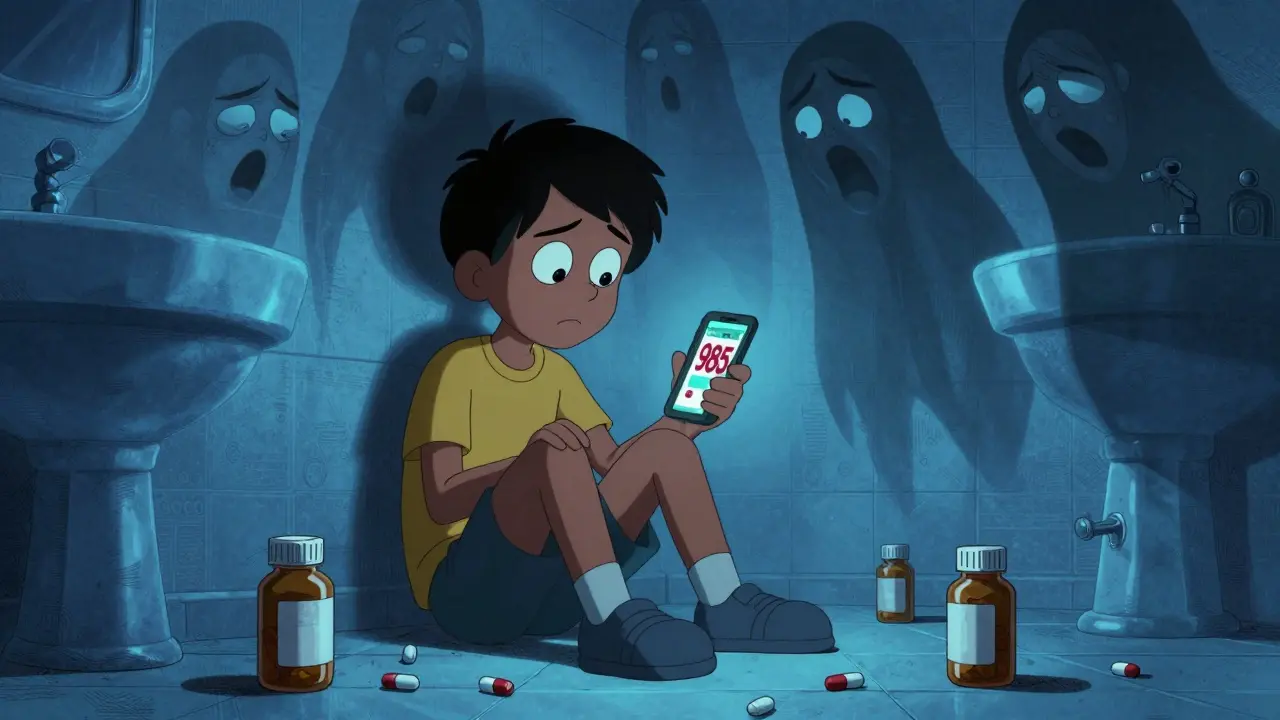
When someone takes too many pills on purpose, it’s not just a medical emergency-it’s a cry for help. Intentional overdose is one of the most common ways people attempt suicide, especially among teens and middle-aged adults. It’s often not about wanting to die, but about wanting the pain to stop. The good news? Help exists. The bad news? Too many people can’t reach it in time.
Why Intentional Overdose Happens
People don’t choose overdose because they’re reckless. They choose it because it feels accessible. A bottle of painkillers in the medicine cabinet. A few extra antidepressants saved from last month. A handful of pills bought online. These aren’t dramatic acts-they’re quiet, desperate decisions made in moments of unbearable emotional pain. According to the CDC, overdose accounts for 15-20% of all suicide deaths in the U.S. That’s thousands of lives each year. And while overall overdose numbers have dropped since 2023, that decline is mostly from accidental drug poisonings-not intentional suicide attempts. The real crisis? People are still using pills to end their suffering, and too few have access to someone who can talk them out of it. Adolescents are especially vulnerable. In 2024, 10.1% of teens reported serious thoughts of suicide. Many of them had depression that made daily life impossible. They didn’t have a therapist. They didn’t have a parent who noticed. So they turned to what was easiest: the medicine cabinet.What Makes Overdose Different from Other Suicide Methods
Firearms are the most lethal method-90% of attempts end in death. Hanging is close behind. But overdose? It’s not the most deadly. It’s the most reachable. People choose it because:- They think it’s “painless” (it’s not-acetaminophen can cause liver failure over hours)
- They believe they can control the outcome (they often can’t)
- They don’t want to scare anyone or make a scene
- They’ve seen it portrayed as a “quiet” way out in movies or online forums
The Crisis Resources That Actually Work
If you’re reading this because you’re in pain, or because you care about someone who is-here’s what you need to know. The 988 Suicide & Crisis Lifeline is the most important resource in the U.S. Dial or text 988. It’s free, confidential, and available 24/7. In 2024, it handled over 4.7 million contacts-a 32% jump from the year before. That means more people are reaching out. But staffing hasn’t kept up. Wait times rose from 2.4 minutes in 2022 to 5.7 minutes in 2024. That’s too long when someone is on the edge. Still, people survive because of 988. One caller, 'AnxietySurvivor89' on Reddit, said: “I called after taking too many pills. The counselor stayed on the line until EMS arrived 18 minutes later. That probably saved my life.” Crisis Text Line (text HOME to 741741) is another lifeline. It handled 3.2 million conversations in 2024, with responses averaging under 40 seconds. For teens who hate talking on the phone, this can be the only way they reach out. SAMHSA’s National Helpline (1-800-662-4357) connects people to local treatment centers for substance use and mental health. It’s not a crisis line-but if you’re alive after an overdose and need long-term help, this is where you start.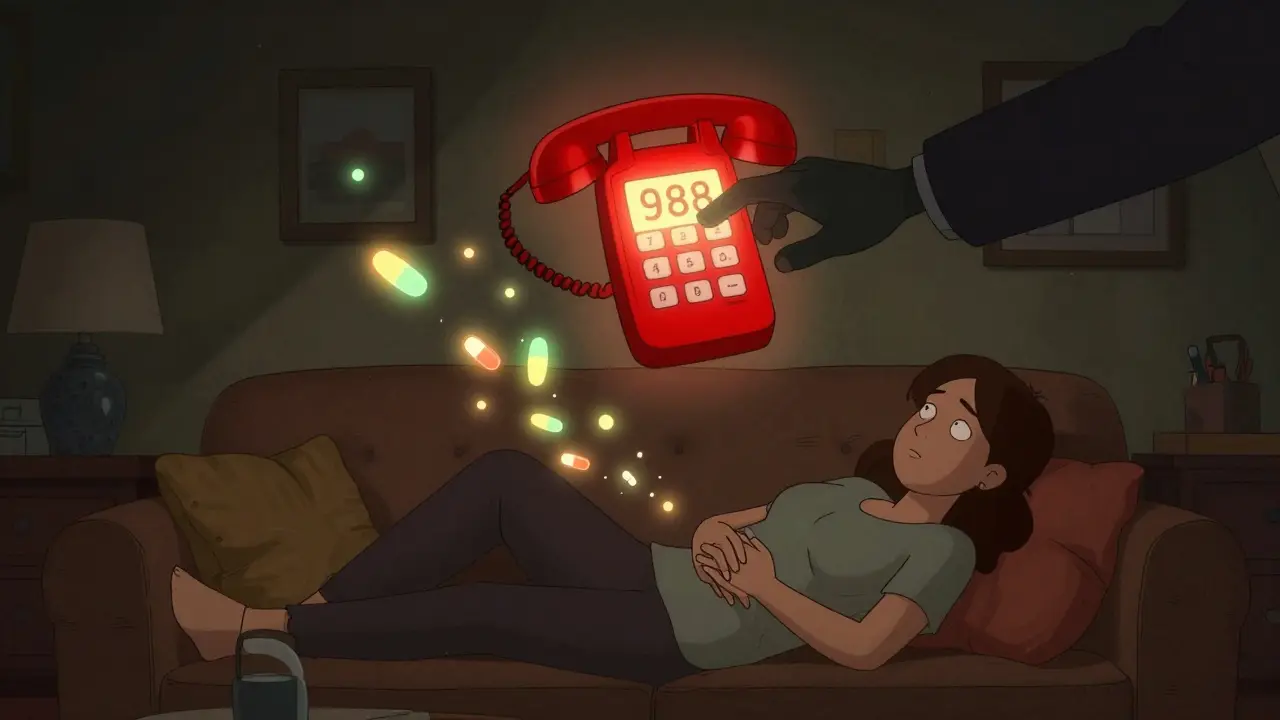
The System Is Broken-But Not Hopeless
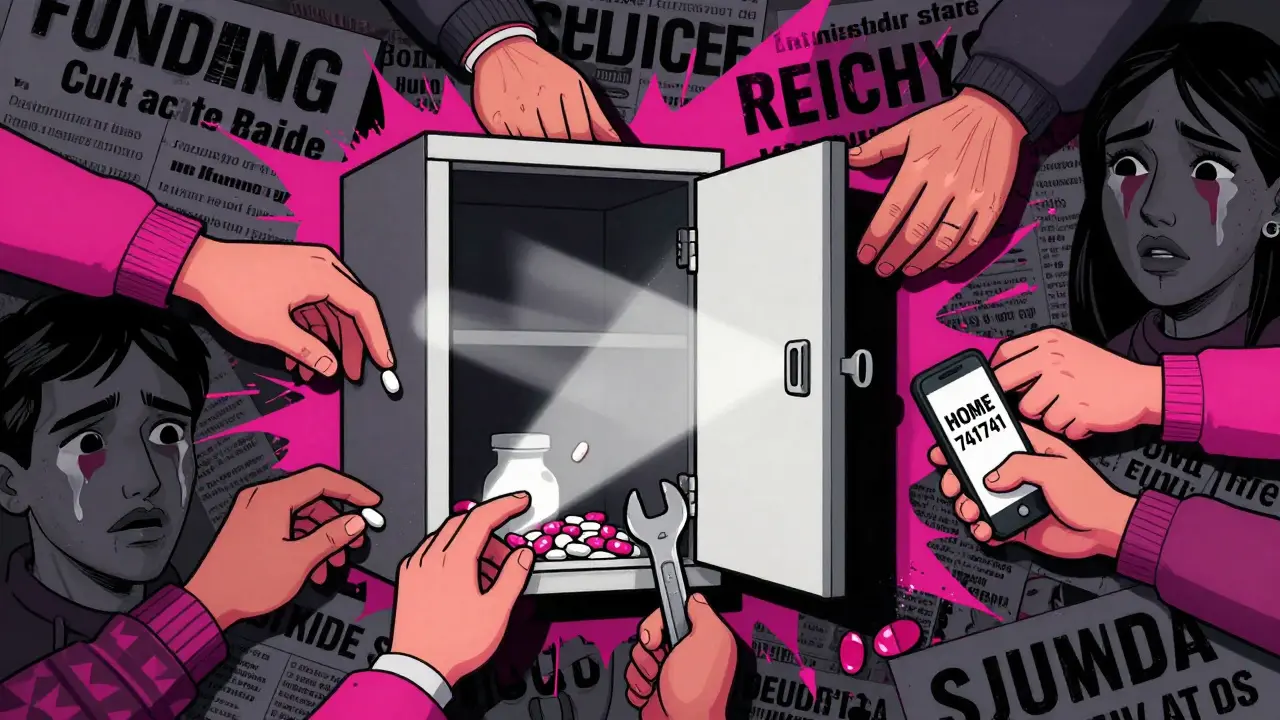
Here’s the ugly truth: 1 in 4 adults with mental illness can’t get the care they need. There are 320 people for every one mental health provider. In rural areas, that number is worse. And now, federal funding is being slashed. SAMHSA’s proposed budget cut for 2026? $1.07 billion. That’s not a number-it’s 27,000 lives lost last year. That’s what the decline in overdose deaths represented. And without funding, we’re heading back. Experts agree: the solution isn’t just more crisis lines. It’s better access to therapy, more community support, economic stability, and early intervention. A 2023 study found that raising the minimum wage reduced suicide attempts by 15.4%. Another found that school-based mental health programs cut teen suicide attempts by 22%. But right now, the only thing standing between someone and death is a phone call. And if that call doesn’t get answered fast enough? The consequences are permanent.What You Can Do Right Now
If you’re struggling:- Call or text 988. Don’t wait until it’s “worse.”
- Text HOME to 741741 if talking feels impossible.
- Keep a list of emergency contacts on your phone-even if you don’t think you’ll use it.
- Don’t keep pills or alcohol where you can reach them in a crisis. Lock them up or give them to someone you trust.
- Ask directly: “Are you thinking about killing yourself?” It doesn’t plant the idea-it opens the door.
- Don’t leave them alone. Stay with them until help arrives.
- Call 988 for guidance. They’ll tell you what to do.
- Remove access to lethal means. Pills, knives, belts, guns-get them out of the house.
Why This Isn’t Just a Mental Health Issue
We treat suicide like it’s a personal failure. But it’s not. It’s a public health crisis shaped by poverty, isolation, lack of care, and stigma. Black and American Indian/Alaska Native communities have the highest rates of fatal overdose deaths. Rural areas have 25% higher suicide rates than cities. Teens can’t access care without parental consent. People who need help the most are the ones least likely to get it. The decline in overdose deaths since 2023 proves we can fix this. But only if we fund it. Only if we train more responders. Only if we stop treating mental health like a luxury.Final Thought: You Are Not a Burden
If you’re reading this because you’re in pain-please know this: you are not a burden. You are not weak. You are not broken. You’re someone who’s been carrying too much for too long. And you deserve help. Not tomorrow. Not next week. Right now. The 988 line isn’t magic. The counselors aren’t superheroes. But they’re trained. They’re there. And they won’t judge you. Call. Text. Reach out. Even if you’re scared. Even if you think no one cares. Someone does. And they’re waiting to hear from you.What should I do if someone I know tries to overdose?
Call 911 immediately. Then call 988 for guidance. Do not leave the person alone. If possible, remove any remaining pills or substances. Stay calm and provide as much information as you can to emergency responders, including what was taken and when. Even if they seem fine, internal damage can take hours to show up.
Is the 988 lifeline really confidential?
Yes. 988 is completely confidential unless there’s an immediate risk of harm to yourself or others. Counselors won’t share your name, location, or conversation with police unless you’re in active danger and they need to send help. Most calls result in no police involvement-just support.
Can teens call 988 without parental consent?
Yes. Teens can call or text 988 without permission from a parent or guardian. Counselors are trained to handle minors with care, and they won’t automatically notify parents unless the teen is in immediate danger and no safer option exists. Privacy is a priority.
What if I’m not suicidal but I think about overdose sometimes?
Thinking about it doesn’t mean you’ll act on it-but it does mean you’re in pain. That pain matters. You don’t need to be “at your worst” to reach out. 988 and Crisis Text Line are for anyone who’s struggling, even if they’re not ready to end their life. Talking early can prevent things from getting worse.
Are there free or low-cost therapy options if I can’t afford it?
Yes. SAMHSA’s National Helpline (1-800-662-4357) can connect you to free or sliding-scale clinics. Community health centers, university counseling programs, and online platforms like Open Path Collective offer therapy for as little as $30-$60 per session. You don’t need insurance to get help.
Why did overdose deaths go down? Does that mean suicide is getting better?
The drop in overdose deaths since 2023 is mostly due to fewer accidental overdoses from drugs like fentanyl-not fewer intentional suicide attempts. Suicide by overdose hasn’t declined at the same rate. The progress we’ve seen came from better access to naloxone, harm reduction programs, and crisis services. But without sustained funding, that progress could vanish.
Comments
Patrick Roth
January 22, 2026 AT 11:27 AMLet’s be real-988 is a band-aid on a gunshot wound. The real problem is we’ve outsourced mental health to a phone line because we don’t want to fund actual care. I’ve seen people wait 12 minutes on hold while their heart’s pounding. That’s not a lifeline-that’s a delay tactic. We need more therapists, not more hotlines that get buried under calls from people who just need someone to say, ‘I hear you.’
Liberty C
January 22, 2026 AT 21:38 PMAnyone who thinks overdosing is ‘quiet’ or ‘painless’ has never watched someone go into acetaminophen-induced hepatic failure. It’s not dramatic like a gunshot-it’s slow, ugly, and the hospital staff treat you like a nuisance. And don’t get me started on how ‘confidential’ 988 is-cops show up anyway if you’re under 18 or on Medicaid. They call it ‘intervention.’ I call it state-sponsored trauma.
shivani acharya
January 23, 2026 AT 10:25 AMOh wow, another feel-good PSA from the mental health industrial complex. Let me guess-next they’ll tell us to ‘just breathe’ and ‘trust the process.’ Meanwhile, the same people who run these helplines are the ones voting to cut SNAP, Medicaid, and housing vouchers. You think someone’s thinking about pills because they’re ‘emotionally overwhelmed’? No. They’re thinking about pills because their rent’s due, their kid’s in foster care, and their therapist quit because they couldn’t afford to keep practicing. This isn’t mental health-it’s capitalism with a warm blanket.
And don’t even get me started on ‘Crisis Text Line.’ You think a 14-year-old texting ‘HOME’ to some overworked AI-trained intern in Ohio is gonna fix the fact that their school doesn’t have a counselor? That’s not support. That’s performative charity.
They want us to believe this is about ‘access’? Access to what? A 15-minute chat with someone who’s paid $15/hour to repeat ‘I’m here for you’ while your liver shuts down? Wake up. The system doesn’t want you alive-it wants you quiet.
Lauren Wall
January 24, 2026 AT 08:34 AMLock up your meds. It’s that simple.
Ryan Riesterer
January 24, 2026 AT 21:40 PMStatistically, the reduction in overdose mortality since 2023 is largely attributable to the increased distribution of naloxone and harm reduction infrastructure-not decreased intent. The data on intentional suicide attempts via pharmaceuticals remains statistically stable, with a slight uptick in adolescents aged 15–19. The disconnect lies in the misattribution of causality in public discourse. Access to care remains the primary modifiable variable, yet policy responses remain reactive rather than structural.
Mike P
January 26, 2026 AT 16:00 PMLook, I get it-people are hurting. But you can’t fix a nation’s mental health crisis by handing out phone numbers. We’ve got a military budget that could fund every therapist in America five times over, but we’re letting people die because ‘it’s not a priority.’ This isn’t about ‘stigma’-it’s about greed. The insurance companies don’t want you healed, they want you on pills forever. And the politicians? They don’t care unless a celebrity dies. Wake the hell up.
And yeah, 988? I called it once. Got transferred three times, then a guy said ‘I’m sorry, we’re at capacity.’ I hung up. I didn’t need help-I needed a system that doesn’t treat human pain like a customer service ticket.
Jasmine Bryant
January 28, 2026 AT 02:16 AMJust wanted to add-I’m a nurse in ER and we see this every week. People come in after taking 20 Advil and 10 Tylenol because they ‘couldn’t take it anymore.’ They’re not trying to die-they’re trying to make the pain stop. And the worst part? They’re always SO sorry afterward. Like they’re apologizing for being human. If you’re reading this and thinking ‘I’m not worthy of help’-you are. Even if you’re scared. Even if you feel broken. You’re not alone.
Also, if you’re worried about someone, just ask. ‘Are you thinking about hurting yourself?’ It doesn’t make it worse. It makes it real. And sometimes, that’s all someone needs to say out loud.
Brenda King
January 28, 2026 AT 08:32 AMI’ve been where you are. I took 30 pills once. Didn’t die. Woke up in ICU with my mom crying and a social worker asking if I wanted to talk. I said no. But I called 988 two weeks later. And then again. And then I found a sliding-scale therapist who didn’t judge me for being ‘weak.’
It’s not magic. It’s not easy. But you don’t have to do it alone. Even if you don’t believe it right now-you’re worth the effort. I promise.
Keith Helm
January 29, 2026 AT 05:45 AMIt is imperative that individuals in distress be advised to immediately contact emergency services without delay. The utilization of non-emergency helplines may result in suboptimal outcomes when acute medical intervention is required. A structured protocol must be followed to ensure public safety.
Daphne Mallari - Tolentino
January 29, 2026 AT 21:21 PMWhile the sentiment behind this piece is commendable, it is deeply problematic to equate pharmaceutical overdose with emotional distress without acknowledging the moral and societal decay that permits such behavior to be normalized as a coping mechanism. This is not a public health crisis-it is a crisis of character.
Neil Ellis
January 31, 2026 AT 15:34 PMI’ve lived in five countries and seen how mental health is handled differently everywhere. In Japan, they have ‘kodokushi’-people dying alone, unnoticed. In Sweden, therapy’s covered like a tooth cleaning. Here? We wait for someone to collapse before we care.
But here’s the thing-I’ve met people who called 988 and walked away with a new reason to live. Not because of a miracle. Because someone listened. And that’s enough. Keep calling. Keep reaching. You’re not a burden. You’re a human being who deserves to be heard.
Alec Amiri
February 1, 2026 AT 11:42 AMOkay but let’s be honest-90% of people who try this are just doing it for attention. They don’t want to die, they want someone to finally notice. And guess what? It works. Until it doesn’t. And then we get another headline and another ‘thoughts and prayers’ tweet.
Stop glorifying it. Stop treating it like a cry for help. It’s a cry for control. And if you’re gonna do it, at least do it right. Don’t waste everyone’s time with a half-assed attempt.
Lana Kabulova
February 1, 2026 AT 21:16 PMSo what’s the solution? More funding? More helplines? More pamphlets? We’ve been here before. The CDC says 15-20% of suicides are overdoses-that’s 20,000 people a year. But we’re not talking about the root causes. We’re talking about pills and phone numbers. What about the fact that 40% of people who attempt suicide have been evicted in the past year? What about the fact that the average wait time for a therapist in rural America is 11 weeks? We’re putting bandages on a hemorrhage and calling it healthcare.
And don’t even get me started on ‘school-based programs’-we’re teaching kids to journal but not how to fight for healthcare as a right. This isn’t about ‘reaching out’-it’s about demanding change. Or are we just going to keep handing out 988 stickers like they’re candy?
Rob Sims
February 2, 2026 AT 17:47 PMOh wow, another ‘you’re not alone’ speech. I’ve seen this movie. Someone takes pills, gets rescued, then posts a TikTok about ‘healing.’ Meanwhile, their parents are still emotionally abusive, their job is soul-crushing, and their insurance won’t cover therapy after 6 sessions.
Here’s the truth: 988 doesn’t fix your life. It just delays the inevitable. And if you’re still alive after this? Congrats. Now you get to deal with the liver damage, the PTSD from the ER, and the shame of being ‘that person.’
Maybe instead of telling people to ‘call,’ we should stop making life so damn unbearable in the first place.