
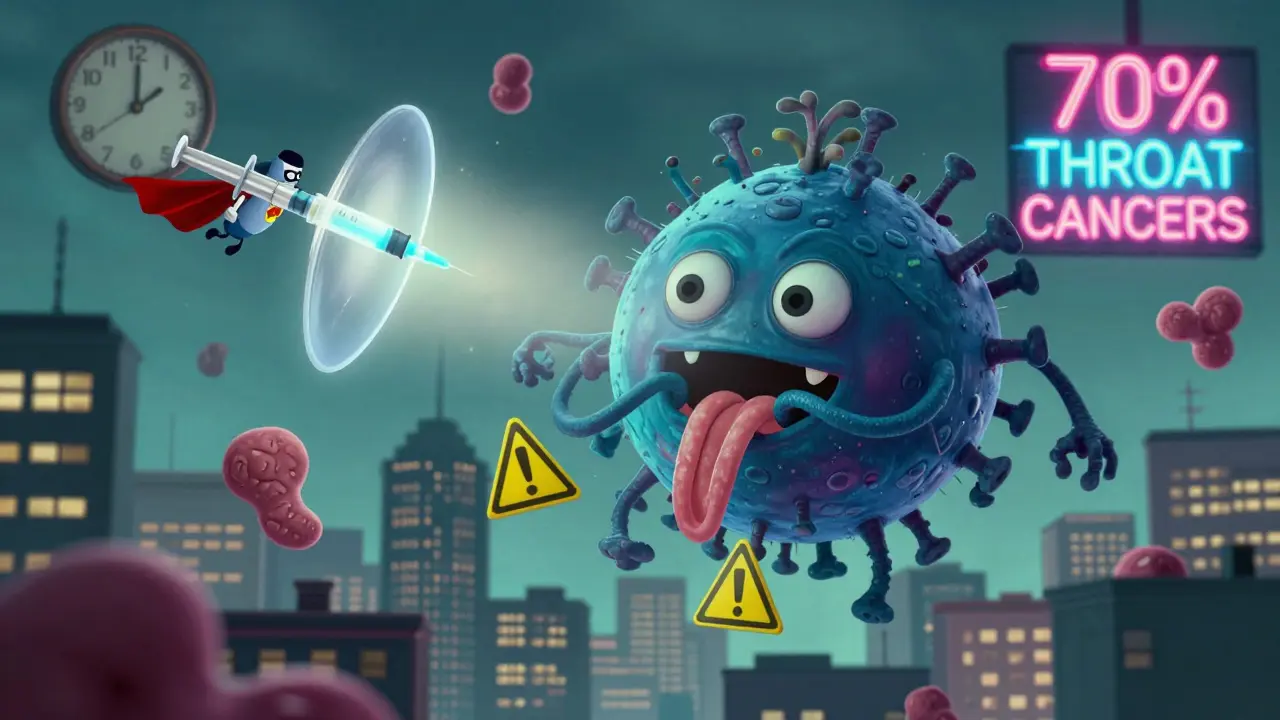
Most people don’t realize that a common virus can lead to cancer. Human papillomavirus, or HPV, is spread through skin-to-skin contact during sex. It’s so common that nearly all sexually active people get it at some point. But while most infections go away on their own, some stick around - and those can cause cancer. In the U.S., HPV causes about 38,000 cancer cases every year. The big ones? Throat cancer, anal cancer, and cervical cancer. And here’s the twist: throat and anal cancers are rising, while cervical cancer is falling. Why? Because we have the tools to stop this. We just aren’t using them enough.
Throat Cancer: The Silent Rise
For decades, cervical cancer was the main HPV-related cancer we worried about. Now, throat cancer - specifically oropharyngeal cancer, which affects the back of the throat, tonsils, and base of the tongue - has taken the lead. In men, it’s the most common HPV-linked cancer. About 70% of these cases are caused by HPV type 16, the same strain linked to most cervical cancers.
Why is this happening? The virus spreads through oral sex. It doesn’t show symptoms for years. By the time someone notices a sore throat that won’t go away, a lump in the neck, or trouble swallowing, it’s often advanced. Men over 40 are most at risk, especially those who smoke or drink. But even healthy, non-smoking men are getting diagnosed. A 2022 study found that 80% of HPV-related throat cancers occur in men. And the number keeps climbing. Since 2001, rates have gone up by nearly 3% every year.
Unlike cervical cancer, there’s no screening test for throat cancer. No Pap smear. No routine checkup. That means prevention is everything. And the only proven way to prevent it? Vaccination before exposure.
Anal Cancer: More Common Than You Think
Anal cancer is another growing concern. HPV causes 91% of all anal cancers. It’s not just linked to anal sex - the virus can spread through any genital contact. People with weakened immune systems, like those with HIV, are at higher risk. But even healthy individuals can develop it.
The symptoms are easy to miss: bleeding, pain, itching, or a lump near the anus. Many people ignore them, thinking it’s hemorrhoids. By the time they see a doctor, the cancer may have spread. In the U.S., about 4,300 new cases are diagnosed each year. Rates have been rising slowly but steadily since the early 2000s.
One scary fact: anal cancer is more common in women than cervical cancer in some age groups. And unlike cervical cancer, there’s no widespread screening program. Pap tests for anal cancer exist, but they’re not routine. So again, prevention is the only real defense.
The Vaccine That Works - But Isn’t Used Enough
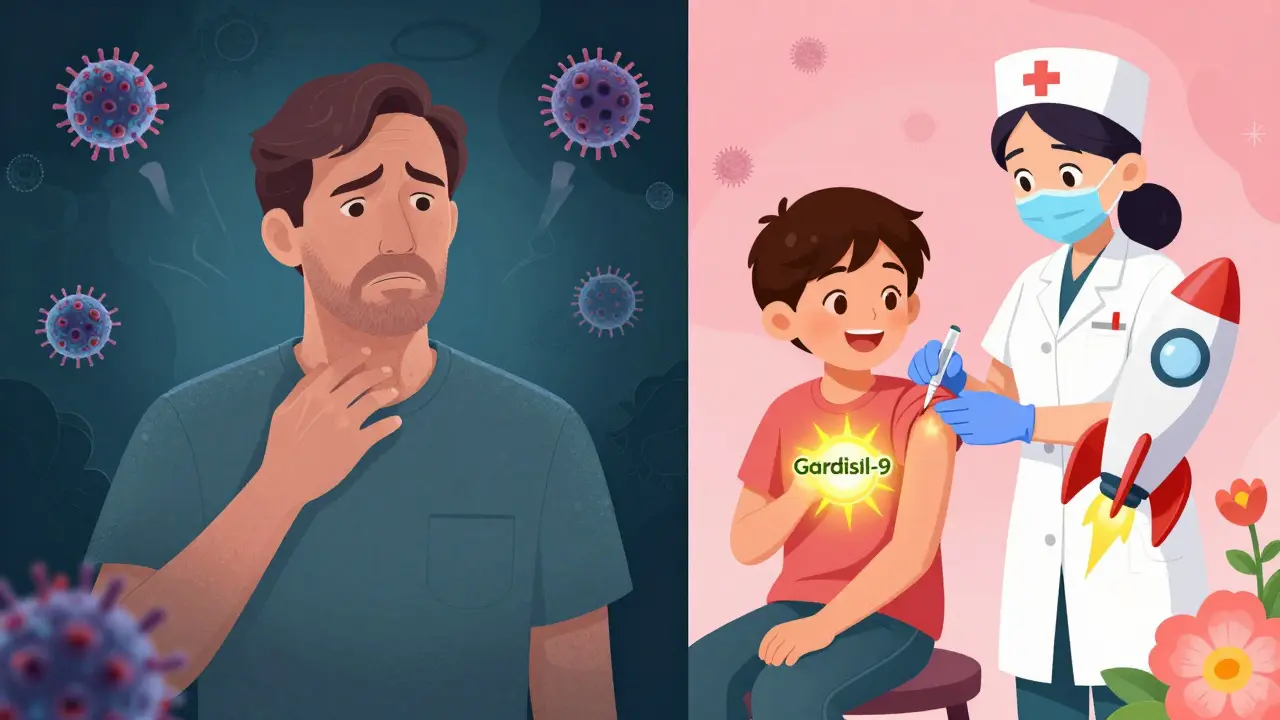
The HPV vaccine is one of the most effective cancer prevention tools ever created. Gardasil-9, the only vaccine used in the U.S., protects against nine strains of HPV, including types 16 and 18 that cause 90% of HPV-related cancers. It prevents not just cervical cancer, but throat, anal, vaginal, vulvar, and penile cancers too.
The CDC recommends vaccination at age 11 or 12. That’s because the immune response is strongest before exposure. But the vaccine works up to age 26. Adults 27 to 45 can still get it - if they talk to their doctor first. The catch? Only 65% of teens in the U.S. have completed the full series. That’s not enough. Experts say we need 80% coverage to truly make a dent.
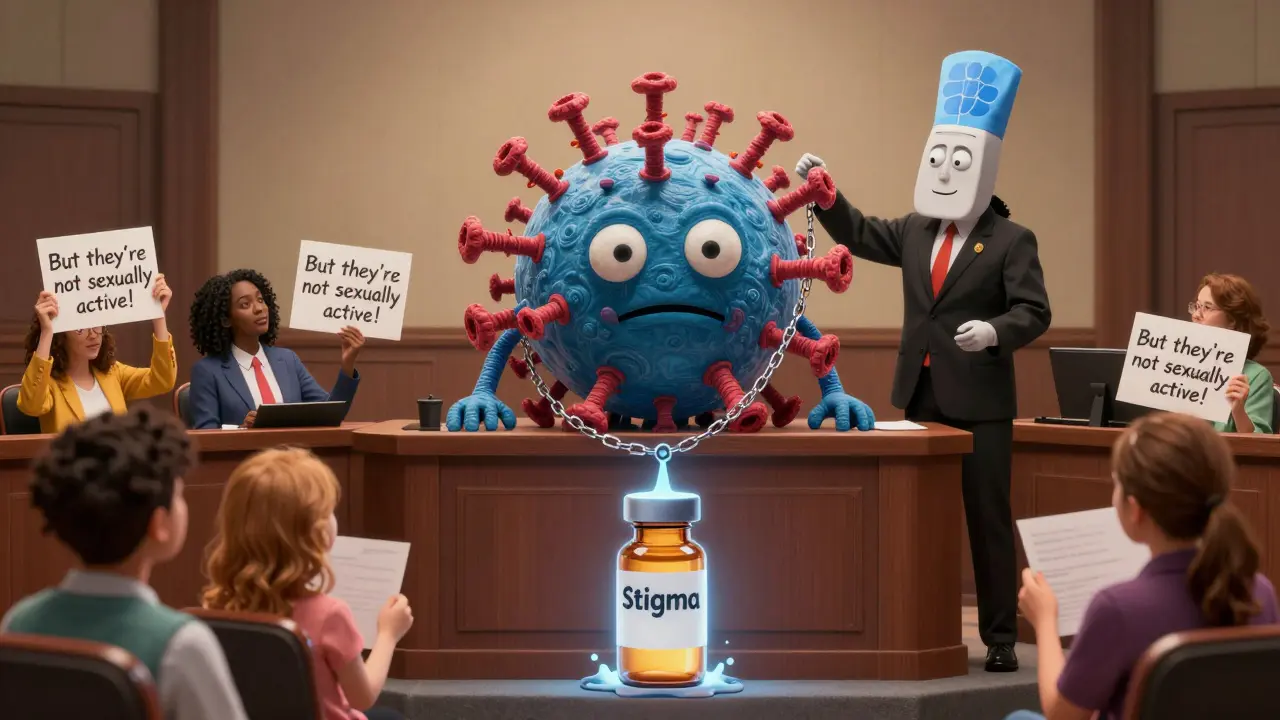
Why aren’t more people getting vaccinated? Some parents worry about safety. Others think their child isn’t sexually active. But HPV isn’t about behavior - it’s about biology. Almost everyone gets it. The vaccine doesn’t encourage sex. It prevents cancer. In Rhode Island, a school-based vaccination program boosted coverage from 53% to 84% in six years. High-grade cervical lesions dropped by 22%. That’s proof it works.
Screening for Cervical Cancer - But Not the Others
For cervical cancer, we have a clear path: testing. Women aged 25 to 65 should get a primary HPV test every five years. Or, if that’s not available, a Pap test every three years. Co-testing (Pap and HPV together) every five years is also an option. These tests catch precancerous changes before they turn into cancer. That’s why cervical cancer rates have dropped by over 60% in the last 40 years.
But for throat and anal cancers? No screening. No routine check. No early detection. That’s why vaccination is even more critical for these cancers. If you’re not getting the vaccine, you’re relying on luck - not science.
Cost, Stigma, and the Hidden Burden
HPV-related cancers don’t just cost money - they cost lives. The average treatment for throat cancer runs over $198,000. Anal cancer costs about $135,000. Many patients lose their jobs. Some need feeding tubes. Others lose their voice. One survivor told a support group he spent six months on a feeding tube and still can’t swallow normally. Another said she couldn’t have children after treatment.
And then there’s the stigma. People feel ashamed. They think they did something wrong. But HPV is like the flu - you catch it, and most people never know. It’s not a punishment. It’s a virus. And the shame stops people from getting tested, vaccinated, or even talking about it.
What You Can Do Right Now
- If you’re 11-12: Get the vaccine. Two doses, six months apart. That’s it.
- If you’re 13-26 and never got it: Still time. Three doses if you start after 15. Talk to your doctor.
- If you’re 27-45: Talk to your doctor. You might still benefit.
- If you’re a parent: Don’t wait. Don’t wait until they’re older. Don’t wait until they’re “ready.” The vaccine works best before they’re exposed.
- If you’re a woman 25-65: Get your HPV test every five years. Don’t skip it.
It’s not about fear. It’s about facts. HPV causes cancer. We have a vaccine. We have testing for one type. We don’t have screening for the others. So we protect what we can.
Why This Matters Now
By 2035, throat cancer could become the most common HPV-related cancer overall - even more than cervical cancer. That’s not a prediction. It’s a projection based on current trends. We’re seeing it happen. The virus isn’t going away. But we can stop it from turning into cancer.
The tools are here. The science is clear. The only thing missing is action.

Comments
Bryan Woody
March 21, 2026 AT 15:20 PMSo let me get this straight - we’ve got a vaccine that prevents like 90% of HPV cancers and we’re treating it like it’s a new fad diet? People are still waiting for their kid to ‘be ready’? Bro. The virus doesn’t care about your timing. It shows up uninvited, throws a party in your throat, and then years later you’re on a feeding tube wondering why you didn’t just get two shots when you were 12. It’s not rocket science. It’s biology. And we’re failing at basic biology.
shannon kozee
March 22, 2026 AT 08:53 AMCervical cancer screening works. That’s why rates dropped. But throat cancer? No test. No warning. Just silence until it’s too late. Vaccination isn’t optional anymore. It’s the only thing standing between you and a lifetime of swallowing issues, surgeries, and shame.
Sandy Wells
March 22, 2026 AT 21:28 PMI mean I guess it’s good there’s a vaccine but honestly I’m just tired of being told what to do about my body. Like I get it. But why does it have to be so loud?
Natali Shevchenko
March 22, 2026 AT 23:52 PMIt’s strange how we treat viruses like moral failures instead of biological inevitabilities. HPV doesn’t judge. It doesn’t care if you’re married, celibate, or in a polyamorous relationship. It just spreads. And we’ve built this whole culture around guilt and silence instead of science and prevention. We’re not just failing to vaccinate - we’re failing to reframe the narrative. The shame isn’t yours. It’s the system’s.
Shaun Wakashige
March 24, 2026 AT 23:12 PMvaccine good lol 🤷♂️
Desiree LaPointe
March 25, 2026 AT 11:44 AMAh yes, the great HPV vaccination crusade - where parents are guilt-tripped into turning their 11-year-olds into walking immunization pamphlets. How noble. How utterly condescending. We’ve turned a medical intervention into a cultural performance. And yet, somehow, the only people who actually benefit are the ones who never needed the vaccine in the first place - because they were never sexually active. Meanwhile, the real at-risk population? The 30-somethings who got infected before the vaccine existed? Still left in the dark. We’re solving imaginary problems while ignoring the ones that are real.
matthew runcie
March 27, 2026 AT 09:51 AMI got the vaccine at 28. My doc said it wasn’t necessary but I figured why not. Best decision I ever made. No drama. No drama. Just peace of mind.
Johny Prayogi
March 29, 2026 AT 07:02 AMI got the vaccine at 25 and my mom still thinks I’m ‘promoting sex’ 🤦♂️😂 but honestly? I’d rather have a boring conversation with her than a biopsy. 🙌
Paul Cuccurullo
March 30, 2026 AT 13:58 PMThe tragedy here isn’t the rising rates - it’s the silence. We’ve created a world where a virus that causes cancer is whispered about in hushed tones, as if speaking its name invites it into the room. We vaccinate children for measles, mumps, polio - all of them. But HPV? We treat it like a taboo. And yet, it’s the one that’s killing more men than cervical cancer ever did. We don’t need more awareness. We need more courage.
Solomon Kindie
March 30, 2026 AT 19:10 PMvaccine is a corporate scam to sell more shots the real issue is the glyphosate in our food and the 5g networks that weaken our immune systems lol
Jackie Tucker
March 31, 2026 AT 23:37 PMOh look, another public health campaign dressed up as a moral imperative. We’ve turned prevention into a performance art piece. ‘Get the shot before you’re exposed!’ - as if exposure is a moral failing. The truth? We’re not failing because people are ignorant. We’re failing because we refuse to acknowledge that sexual health is not a checklist. It’s a continuum. And until we stop treating people like data points, we’ll keep losing the same battles with the same slogans.
Nicole James
April 2, 2026 AT 16:14 PMI read somewhere that the HPV vaccine was developed using aborted fetal tissue... and the FDA approved it despite knowing it causes autoimmune disorders in 1 in 1000... they just don't tell you that. And why? Because Big Pharma owns Congress. And they're not worried about cancer - they're worried about profit. So don't get the shot. Don't trust the system. Your body is your temple.