
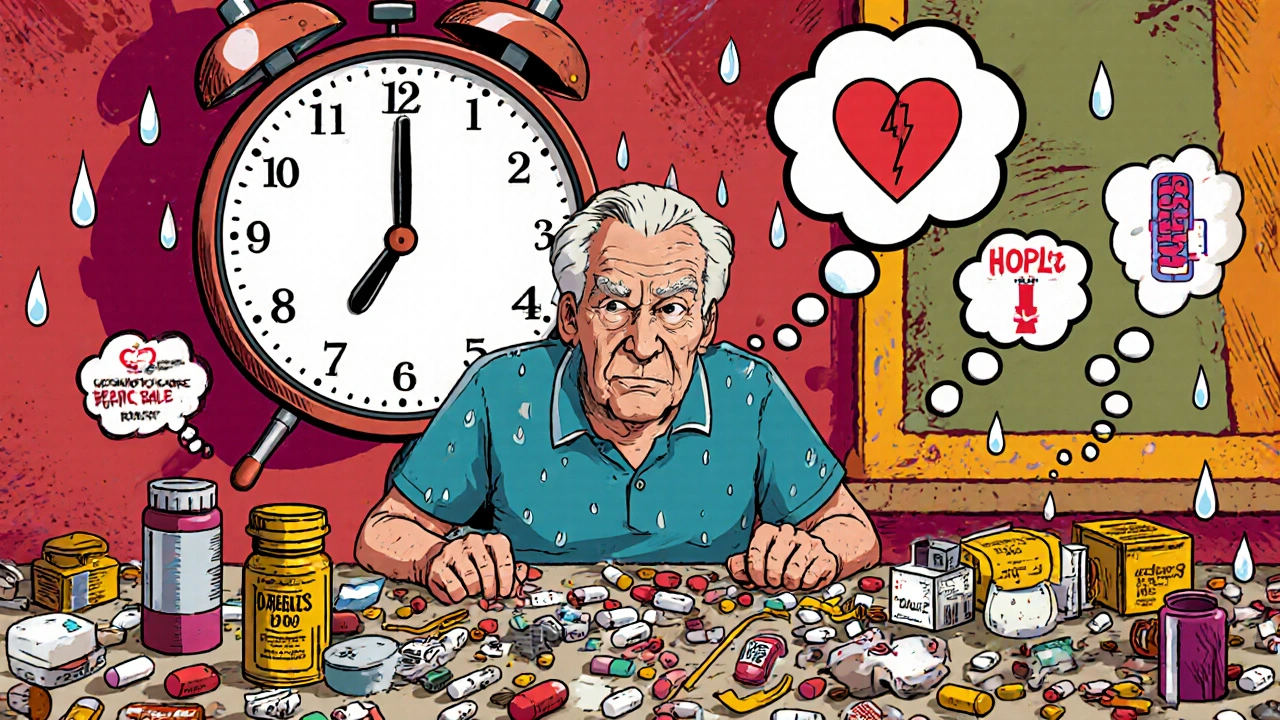
Every morning, millions of seniors face the same daunting task: sorting through a handful of pills, trying to remember which one does what, and hoping they didn’t miss one. For many, it’s not just a chore-it’s a daily stressor that leads to skipped doses, hospital visits, and worsening health. This is pill burden-the overwhelming number of medications a person must take each day. And for older adults managing multiple chronic conditions like high blood pressure, diabetes, or heart disease, it’s a real and growing problem.
Why Pill Burden Matters More Than You Think
Pill burden isn’t just about having too many pills on the counter. It’s about what happens when the system gets too complicated. A 2023 study found that seniors taking five or more medications daily are nearly twice as likely to miss doses compared to those taking fewer. Missed doses don’t just mean symptoms come back-they can trigger heart attacks, strokes, or emergency room trips. In fact, poor medication adherence is linked to 125,000 preventable deaths in the U.S. every year, and seniors make up the majority of those cases. The problem gets worse when prescriptions come from different doctors. One prescribes a blood pressure pill, another adds a cholesterol drug, and a third adds a diabetes tablet. Before long, someone’s morning routine includes six or seven pills. That’s not just inconvenient-it’s dangerous.What Are Combination Medications?
Combination medications, also called fixed-dose combinations (FDCs) or single-pill combinations (SPCs), are exactly what they sound like: two or more drugs rolled into one tablet. Instead of taking separate pills for high blood pressure and high cholesterol, you might take one pill that contains both. These aren’t new-some have been around for over a decade-but their use is growing fast, especially for older adults. The most common types are for heart disease and hypertension. For example, a single pill might combine an ACE inhibitor and a diuretic-two drugs that work together to lower blood pressure. Others combine a statin with a blood thinner, or a metformin with a DPP-4 inhibitor for type 2 diabetes. These combinations aren’t random. They’re designed based on clinical evidence showing that the drugs work well together and are safe when taken in the same pill.How Combination Pills Improve Adherence
The data is clear: fewer pills mean better adherence. A major 2007 meta-analysis published in the American Journal of Medicine found that patients on combination pills were 26% more likely to stick to their regimen than those taking the same drugs separately. That’s not a small number-it’s life-changing. Why? Because simplicity works. When you go from seven pills to three, you’re less likely to forget. You’re less likely to get confused. You’re less likely to feel overwhelmed. A 2022 review by the European Society of Cardiology showed that patients on single-pill combinations stayed on their treatment 30% longer than those on multiple pills. That’s not just about taking your medicine-it’s about staying healthy. And it’s not just about numbers. Real people say it makes a difference. One 72-year-old woman in Bristol told her pharmacist, “I used to spend 20 minutes every morning sorting my pills. Now I just take one. I actually remember to take them.” That’s the kind of quiet win that doesn’t show up in clinical trials-but it matters more than you think.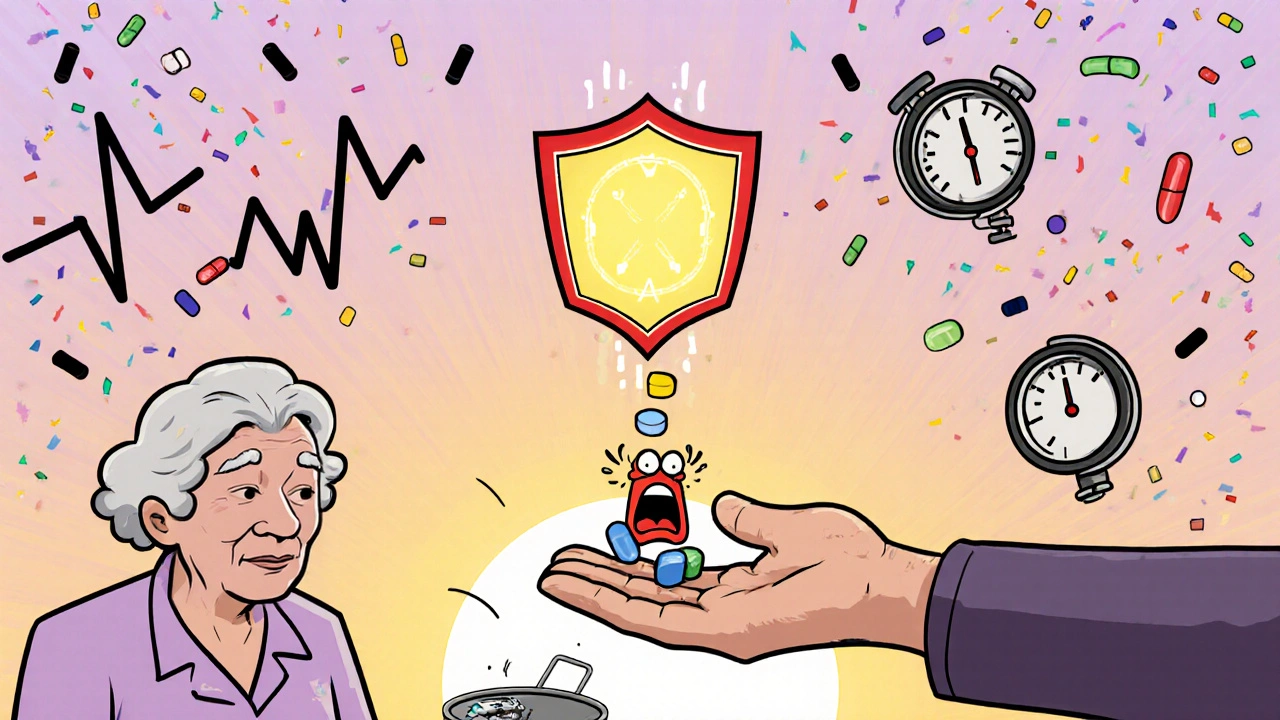
Real Benefits: Blood Pressure, Cost, and Daily Life
For hypertension alone, the benefits are measurable. A 2023 analysis in the European Journal of Cardiology Practice found that patients on single-pill combinations had, on average, a 3.99 mmHg lower systolic blood pressure after 12 weeks compared to those taking the same drugs separately. That might sound small, but in real terms, it means a 20% lower risk of stroke and a 15% lower risk of heart attack over five years. Cost is another big factor. While a combination pill might cost more upfront, it often saves money overall. Fewer pills mean fewer prescriptions to refill, lower co-pays, and less time spent at the pharmacy. Caregivers also benefit-less time managing medications means less stress and fewer errors. One study showed that families using combination pills saved an average of £120 a year on pharmacy trips and missed-work hours. And let’s not forget cognitive load. For seniors with memory issues, dementia, or even just fatigue, the mental effort of tracking multiple medications can be exhausting. A single pill reduces that burden dramatically. The CDC recommends combination medications as a key tool in reducing medication complexity-not just for clinical reasons, but for human ones too.When Combination Pills Don’t Work
Combination pills aren’t magic. They have limits. The biggest one? Rigidity. Once you’re on a combination pill, you can’t easily adjust the dose of one drug without changing the whole pill. That’s a problem if your blood pressure drops too low, or if you develop a side effect from one component. For example, if you’re on a pill that combines amlodipine and lisinopril, and you start getting swollen ankles from the amlodipine, you can’t just cut the dose in half-you’d have to switch back to separate pills. That’s why doctors usually start with single agents first, especially if you’re new to treatment. Combination pills work best for people who’ve already been stabilized on their individual drugs and just need a simpler routine. They’re also not ideal for people who need frequent dose changes. If you’re recovering from surgery, dealing with kidney issues, or have unstable health, sticking with separate pills gives your doctor more control. And sometimes, the combination just isn’t right for you. Not all drugs can be safely combined. Some have different absorption rates or interact poorly in the same tablet. That’s why you never switch to a combination pill without your doctor’s approval.
How to Talk to Your Doctor About Combination Pills
If you’re taking three or more pills a day, ask your doctor or pharmacist: “Could any of these be combined?” Don’t wait for them to bring it up-most don’t unless you ask. Be ready with this info:- A list of every medication you take, including over-the-counter and supplements
- Any side effects you’ve noticed
- How often you miss doses
- What’s hardest about taking your meds (cost? timing? confusion?)





Comments
Pranab Daulagupu
November 30, 2025 AT 07:36 AMCombination meds are a game-changer for polypharmacy. FDCs reduce pill burden, improve adherence, and cut down on drug-drug interaction risks. The pharmacokinetic synergy in SPCs like amlodipine/valsartan or metformin/sitagliptin is clinically validated. This isn't just convenience-it's precision medicine for aging populations.
Barbara McClelland
December 1, 2025 AT 18:35 PMI love this post! My mom switched to a combo pill for BP and diabetes last year and she actually remembers to take it now 😊 She used to hide pills in her purse and forget them at home. Now she just grabs one in the morning and feels so much less overwhelmed. Seriously, if you're juggling 5+ meds, ask your doc about this!
Alexander Levin
December 2, 2025 AT 00:29 AMBig Pharma’s way to lock you in. 😏 One pill = one profit center. They don’t care if you can’t adjust doses. They just want you hooked. Also, why do they always combine the most expensive drugs? Coincidence? I think not.
Ady Young
December 3, 2025 AT 14:57 PMMy grandpa’s on a statin + aspirin combo now and it’s made a huge difference. He used to get so frustrated with his pill organizer-spilled half the week’s meds once. Now he just takes one. I’ve been pushing my aunt to ask her cardiologist about a combo for her hypertension and diabetes. It’s not just about fewer pills-it’s about fewer mistakes.
Travis Freeman
December 5, 2025 AT 07:08 AMThis reminds me of something my cousin in India told me-his dad used to take 8 pills a day until they switched to a triple combo for BP, cholesterol, and glucose. He said it felt like his dad got his life back. In cultures where family caregivers are stretched thin, these pills aren’t just medical-they’re emotional lifelines.
Sean Slevin
December 6, 2025 AT 08:20 AMLet’s be real… the system is broken… why do we even have to manage this many pills in the first place?!?! It’s like the medical-industrial complex built a Rube Goldberg machine just to make sure we’re all confused, anxious, and dependent… and then they sell us the ‘solution’… and we cheer… because we’re tired… and scared… and nobody told us we could ask for better…
Chris Taylor
December 8, 2025 AT 07:24 AMMy mom’s pharmacist did a free med review and found two duplicates she didn’t even know about. Then they switched her to a combo pill. She cried. Not from sadness-from relief. It’s not glamorous, but this stuff saves lives. Just ask your pharmacist. Seriously.
Melissa Michaels
December 9, 2025 AT 13:51 PMWhile combination medications improve adherence, clinicians must ensure appropriate patient selection. Dose titration flexibility is compromised and renal/hepatic function must be monitored closely. The CDC guidelines recommend individualized assessment prior to prescribing fixed-dose combinations, particularly in elderly patients with multimorbidity
Nathan Brown
December 10, 2025 AT 15:13 PMIt’s funny how we call this ‘simplification’… but really we’re just compressing complexity into one little tablet. We’re not fixing the root problem-overprescribing. We’re just making it prettier. Still… I’ll take one pill over seven any day. My grandma’s dementia made her forget which color pill was which. Now she just takes the white one. That’s dignity. And that’s worth something.
Matthew Stanford
December 11, 2025 AT 16:04 PMJust wanted to say thank you for writing this. My sister’s a nurse in a rural clinic and she sees this every day. Seniors skipping meds because it’s too hard. I told her about the polypill trials-she said they’re already seeing better outcomes in the pilot programs. We need more of this. Not just for health-but for peace. A quiet morning without pill chaos… that’s a gift.