
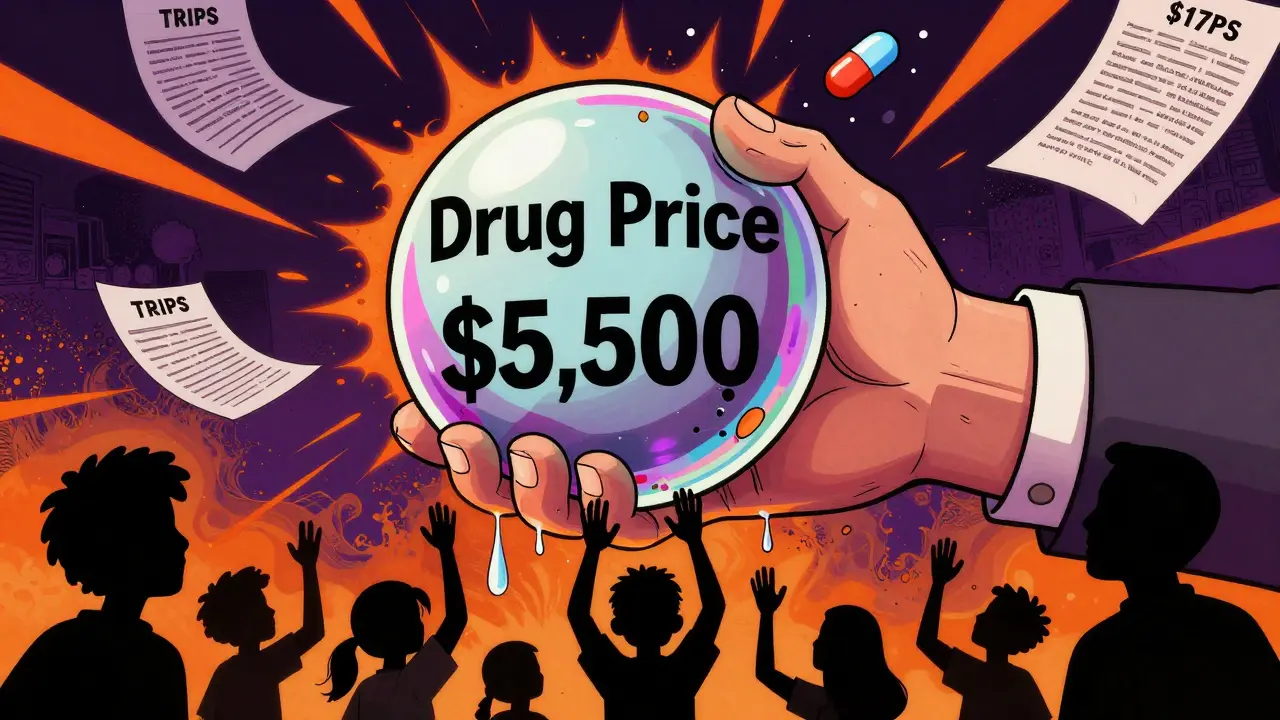
What is compulsory licensing, and why does it matter?
Compulsory licensing is a legal tool that lets a government allow someone else to make or use a patented product-like a medicine or vaccine-without the patent holder’s permission. It doesn’t take away the patent. The owner still gets paid. But it breaks the monopoly so that life-saving drugs can be made cheaper and faster when people need them most.
This isn’t some radical idea. It’s written into international law. The TRIPS Agreement is the global rulebook for intellectual property, adopted by the World Trade Organization in 1994, which explicitly permits compulsory licensing under certain conditions. Countries have used it for decades-not to punish drug companies, but to save lives.
When do governments use it?
Compulsory licensing kicks in during emergencies. Think pandemics, public health crises, or when a medicine is priced so high that no one can afford it.
During the HIV/AIDS crisis in the early 2000s, countries like Thailand issued compulsory licenses for antiretroviral drugs, cutting the price of lopinavir/ritonavir from $1,200 to $230 per year. In Brazil, a license for efavirenz dropped the cost from $1.55 to just $0.48 per tablet. These weren’t acts of hostility. They were acts of necessity.
The COVID-19 pandemic triggered over 40 countries to consider or issue compulsory licenses for vaccines, tests, and treatments. Canada, Germany, and Israel moved quickly. Others, like the U.S., stayed mostly silent-except for government use under existing laws.
It’s not just for viruses. Compulsory licenses have also been used for cancer drugs, heart medications, and even agricultural chemicals when food security is at risk.
How does it work legally?
Every country has its own rules, but they all follow the same basic framework from the TRIPS Agreement. Here’s what’s required:
- The government must authorize the license.
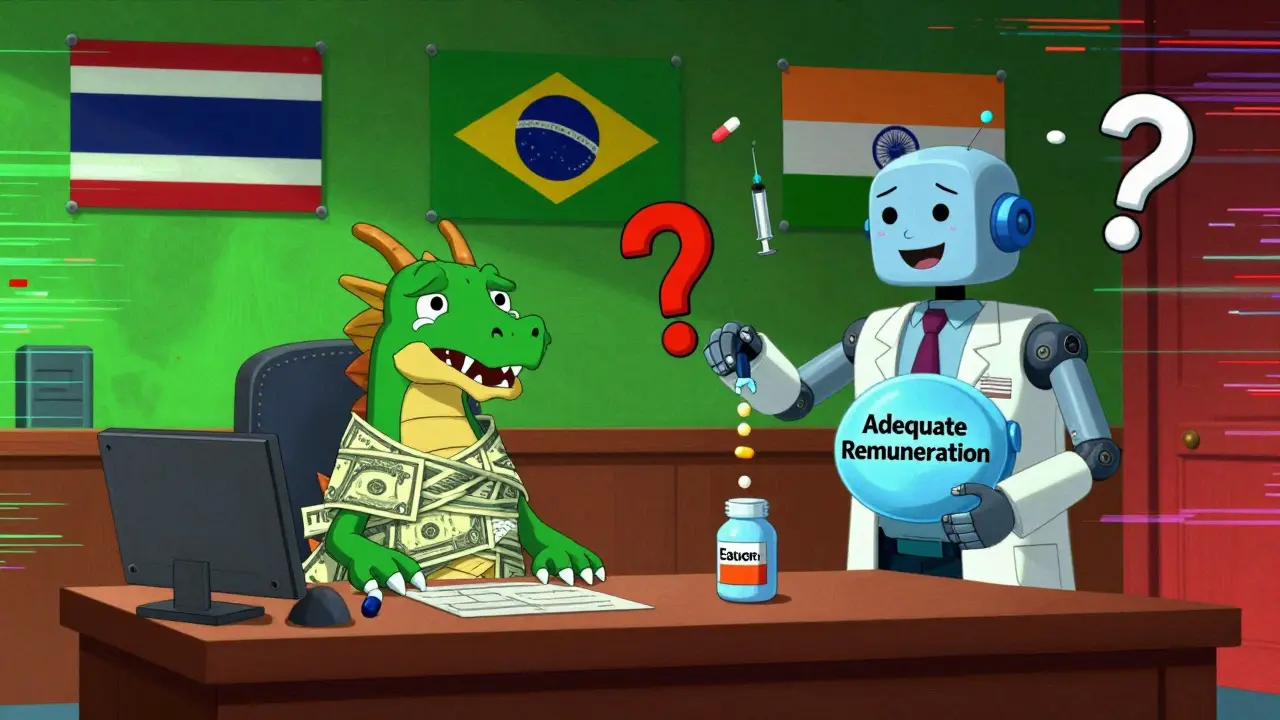
- The patent holder must get paid-"adequate remuneration," as the law says.
- The product can mostly only be made for the domestic market.
- Before issuing a license, the government usually has to try to negotiate with the patent holder first.
But there’s a big exception: extreme urgency. If a disease is spreading fast and people are dying, the negotiation step can be skipped. That’s what happened in Thailand and Brazil. That’s what many countries did during COVID-19.
In the United States , compulsory licensing isn’t common, but it exists in three forms: Section 1498 lets the federal government use any patent without permission (if it pays); Bayh-Dole Act lets the government force licensing of federally funded inventions; and the Clean Air Act allows it for environmental tech. Yet since 1945, the U.S. has issued only about 10 compulsory licenses-almost all for military or government use.
In contrast, India has issued 22 compulsory licenses since 2005, mostly for cancer drugs. In 2012, it forced Bayer to license Nexavar, a kidney cancer drug, after the company refused to lower its price of $5,500 per month. The generic version cost $175.
Who benefits-and who loses?
Who wins? Patients. Governments. Generic drugmakers.
Teva Pharmaceutical reported $3.2 billion in extra revenue between 2015 and 2020 from producing drugs under compulsory licenses. Low- and middle-income countries saved billions. UNAIDS found that compulsory licensing helped slash the price of first-line HIV drugs by 92% globally over two decades.
Who loses? Mostly, the companies holding the patents. When India issued its license for Nexavar, Bayer’s stock dropped 10%. The IFPMA claims each compulsory license announcement causes an average 8.2% drop in stock prices for affected firms. Some argue this chills innovation.
But here’s the twist: the threat of compulsory licensing often works better than the license itself. Dr. Brook Baker found that since 2000, 90% of HIV drug price cuts in poor countries happened because companies feared a license would be issued-not because one was. In other words, the mere possibility of a license forces companies to negotiate lower prices voluntarily.
Why don’t more countries use it?
Many countries have the law on the books but never use it. Germany has had the legal right since 1970 but has never issued a single compulsory license for medicine. The UK, Canada, and Australia have similar records.
Why? Three reasons:
- Pressure from the U.S. The U.S. government has listed countries that issue compulsory licenses on its "Priority Watch List" under the Special 301 Report. While no country has been punished with trade sanctions since 2012, the threat lingers.
- Legal complexity. Filing for a compulsory license isn’t simple. It takes lawyers, technical experts, and years. In the U.S., resolving a Section 1498 case takes an average of 2.7 years. In India, it takes 18-24 months.
- Lack of capacity. The WHO says 60% of low- and middle-income countries don’t have the legal or technical staff to run the process properly. They know the law exists-but they don’t know how to use it.
What’s changing now?
The world is moving faster. In June 2022, the WTO agreed to a temporary waiver for COVID-19 vaccine patents, allowing developing countries to produce them without permission until 2027. But so far, only 12 facilities in 8 countries have actually started making vaccines under it.
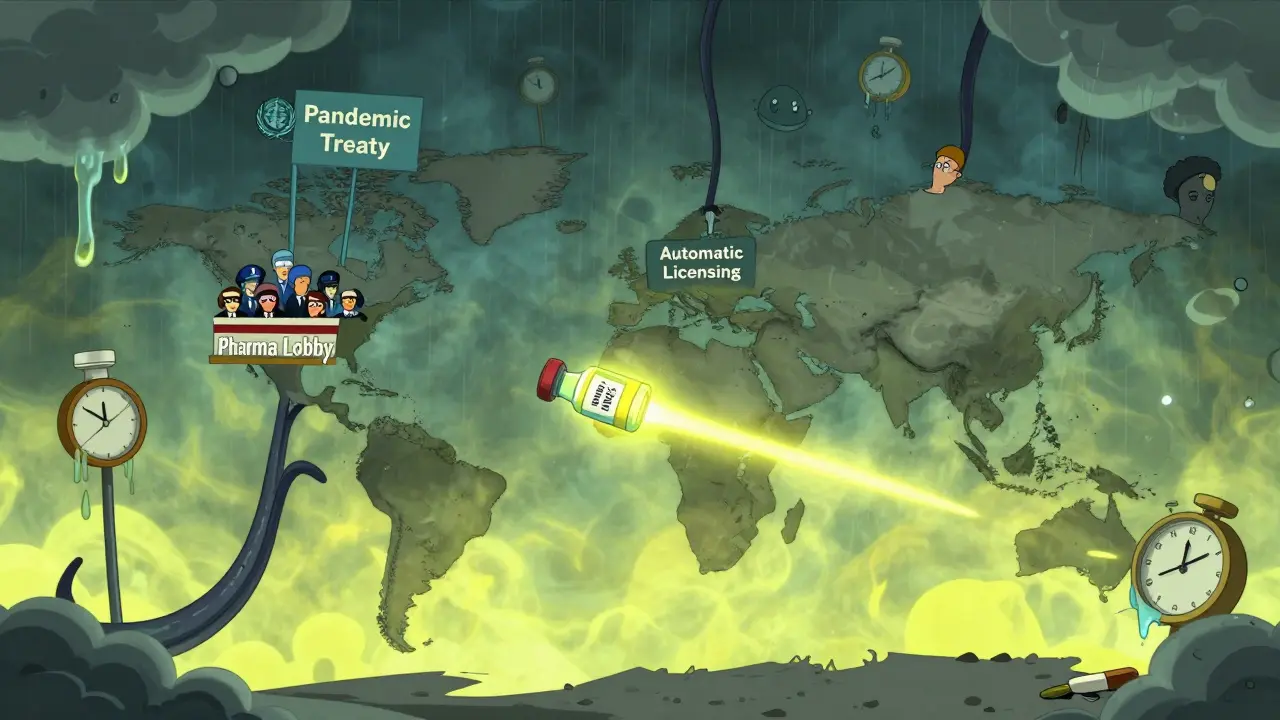
Meanwhile, the European Union proposed new rules in 2023 requiring patent holders to offer licensing terms within 30 days-or risk automatic compulsory licensing. That’s a major shift. No more dragging out negotiations.
And the WHO is drafting a new Pandemic Treaty that would make compulsory licensing automatic during declared global health emergencies. If it passes, no country will need to ask permission again.
Experts predict a 40% rise in compulsory licensing between 2023 and 2028-driven by antimicrobial resistance, climate-related health risks, and the growing cost of chronic disease treatments.
Is it fair?
It’s not about being anti-patent. It’s about balance.
Patents exist to reward innovation. But when a patent blocks a child from getting medicine, the system has failed. Compulsory licensing isn’t a weapon. It’s a safety valve.
The data shows it works. Prices drop by 65-90% in most cases. Lives are saved. Companies still make money-just not monopoly profits.
And if you’re worried about innovation? Look at the numbers. The U.S. and EU still produce 80% of the world’s new drugs. Compulsory licensing hasn’t stopped them. It’s just made sure those drugs reach the people who need them.
What’s next?
Compulsory licensing is becoming more targeted. Future licenses will likely focus on specific diseases-like tuberculosis, malaria, or rare cancers-and only during emergencies. The era of broad, open-ended licenses is fading.
But one thing won’t change: when a public health crisis hits, governments will still have the right-and the duty-to act.
Is compulsory licensing the same as stealing a patent?
No. Compulsory licensing doesn’t take away the patent. The patent holder still owns the rights. The government just allows someone else to make the product under strict conditions-and the patent owner must be paid "adequate remuneration." It’s a legal override, not theft.
Can any country issue a compulsory license?
Yes, any WTO member can. The TRIPS Agreement allows it. But not all countries have the legal framework or political will to do so. Some, like the U.S., have the law but rarely use it. Others, like India and Brazil, have used it regularly for public health.
Do compulsory licenses hurt innovation?
Studies show mixed results. One 2018 study found a 15-20% drop in pharmaceutical R&D investment in countries with frequent licenses. But the same study noted that most innovation still comes from high-income countries with strong patent systems. The bigger effect is often price pressure: companies lower prices voluntarily to avoid licenses. That’s not killing innovation-it’s making it more responsible.
Can a company sue if it gets a compulsory license?
Yes. Companies often challenge compulsory licenses in court. Bayer sued India over the Nexavar license and won some legal points, but the license stayed in place. Courts usually rule that if the government followed TRIPS rules-offered payment, proved public need-the license stands.
How is "adequate remuneration" determined?
It varies. In the U.S., courts use the "Georgia-Pacific factors," which consider 15 things like royalty rates for similar licenses. In India, the formula is often 6% of net sales. In Brazil, it’s negotiated based on production cost plus a small profit margin. The goal isn’t to maximize profit-it’s to be fair.
Can a country export drugs made under a compulsory license?
Yes, but only under special rules. The WTO’s 2005 amendment allows countries without manufacturing capacity to import medicines made under compulsory license. Only Canada has used this so far-to send HIV drugs to Rwanda in 2012. It’s a complex process, but it exists.
Why hasn’t the U.S. used compulsory licensing for drugs?
The U.S. has the legal tools-Section 1498, Bayh-Dole-but political pressure from pharmaceutical lobbyists and fear of trade retaliation have kept it from using them for public health. The government has used it for military tech, but rarely for medicines. Public demand and legal challenges may change that.

Comments
Constantine Vigderman
December 16, 2025 AT 09:12 AMThis is wild lol. I had no idea countries could just say 'hey we need this drug cheaper' and the pharma co. has to comply. 🤯 I thought patents were sacred. Guess not. #LifeSaver
Cole Newman
December 17, 2025 AT 05:35 AMYou guys are missing the point. This is socialism in disguise. If you let governments override patents, you kill innovation. Who’s gonna spend $2 billion developing a new drug if some bureaucrat in New Delhi can just copy it? 😤
Casey Mellish
December 18, 2025 AT 23:53 PMFascinating read. Australia has the legal framework but hasn’t used it since the 1980s. We’re too scared of US trade threats. Meanwhile, India’s saving thousands with generic HIV meds. Moral clarity > corporate lobbying. 🇮🇳💪
Tyrone Marshall
December 19, 2025 AT 11:18 AMIt’s not about taking from the rich to give to the poor. It’s about recognizing that human life has a higher value than quarterly earnings. Patents are meant to incentivize innovation, not create life-or-death monopolies. When a child dies because a pill costs $5,000, the system isn’t broken-it’s immoral.
Emily Haworth
December 20, 2025 AT 18:58 PMThis is all a setup. Big Pharma and the WHO are in bed together. The 'pandemic treaty' is just a backdoor to control global medicine. 🕵️♀️ They want to force everyone to use their generic versions. Who’s really behind this? 🤔
Tom Zerkoff
December 22, 2025 AT 09:05 AMThe TRIPS Agreement explicitly permits compulsory licensing under Article 31. The legal basis is unambiguous. Furthermore, the WTO’s 2005 Amendment to Article 31bis facilitates exportation to nations lacking manufacturing capacity. The operational challenges are administrative, not juridical.
Yatendra S
December 23, 2025 AT 22:07 PMI think... maybe... the real problem is not licensing... but how we measure 'adequate remuneration'. If a drug costs $5000 to make and sells for $5500... is 6% fair? Or is the real issue that we let corporations set prices like they're auctioning art? 🤔
Himmat Singh
December 24, 2025 AT 23:12 PMIt is a fallacy to assert that compulsory licensing does not diminish innovation. Empirical data from the Journal of Health Economics demonstrates a statistically significant correlation between the frequency of compulsory licenses and reduced R&D expenditure in middle-income nations. The argument that 'companies lower prices voluntarily' is a post hoc rationalization.
kevin moranga
December 26, 2025 AT 11:13 AMHonestly, I used to think this was crazy... until my cousin couldn’t afford her cancer med and had to wait 6 months. Then I saw the price drop from $12k to $200 after India issued the license. I don’t care if Big Pharma gets mad. I care that people live. We’ve got to stop letting profit decide who gets to breathe. 💙
Scott Butler
December 28, 2025 AT 09:44 AMAmerica doesn't need this. We lead the world in medical innovation. Let other countries play with their cheap generics. We build the drugs. They steal the recipes. That's not fairness. That's free-riding.
Emma Sbarge
December 30, 2025 AT 03:06 AMI don't trust this. The U.S. has Section 1498 for military use, but never for drugs. Why? Because it's dangerous. Once you open this door, who's next? Solar panels? AI algorithms? Next thing you know, the government's printing your iPhone.
Deborah Andrich
December 30, 2025 AT 15:35 PMThis isn't about who wins or loses. It's about who gets to live. I've seen people choose between insulin and rent. I've seen parents cry because the medicine is out of reach. If a patent stands in the way of a child's next breath, then the patent is wrong. Not the law. Not the system. The patent.