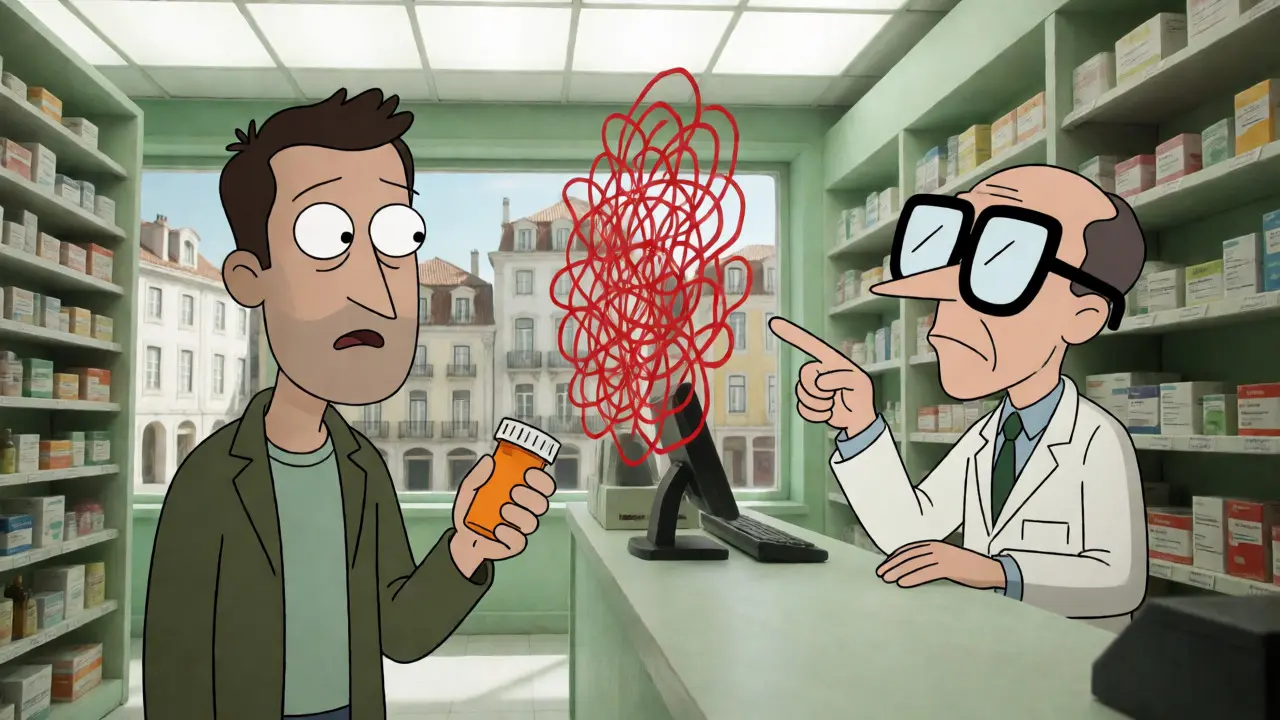
You’re three weeks into your sabbatical in Lisbon, and the bottle of blood pressure meds is nearly empty. You head to a local pharmacy, only to be told they can’t fill it because your American prescription isn’t recognized here. Sound familiar? It’s a scenario that catches thousands of expats and frequent travelers off guard every year. The harsh reality is that there is no global "universal" prescription system. Moving your medical care across borders isn’t as simple as forwarding an email; it involves navigating a fragmented web of national laws, safety protocols, and bureaucratic hurdles.
Whether you are moving permanently or just taking a long trip, understanding how prescription transfers work-or don’t work-can save you from running out of essential medication in a foreign country. This guide breaks down the practical steps, legal nuances, and regional differences you need to know to keep your treatment uninterrupted.
The Myth of the Global Transfer
First, let’s bust a common misconception: pharmacies do not typically "transfer" prescriptions internationally the way they do domestically within a single country. In the United States, for example, the Drug Enforcement Administration (DEA) allows for one-time electronic transfers of controlled substance prescriptions between registered pharmacies. But this rule stops at the border. There is no central database connecting a CVS in New York with a Boots in London or a Shoppers Drug Mart in Toronto.
Instead of a direct transfer, what usually happens is a process of re-validation. You aren’t moving a file; you are proving your medical history to a new provider in a new jurisdiction. This distinction matters because it changes your strategy. You shouldn’t ask your home pharmacist to "send" your script abroad. Instead, you need to prepare documentation that allows a doctor or pharmacist in your destination country to legally issue a new prescription based on your existing needs.
Navigating the European Union’s Mutual Recognition
If you are traveling within the European Union, you have the best-case scenario. The EU operates under a framework of mutual recognition, meaning a prescription issued in France is technically valid in Germany, Spain, or Italy. However, "technically valid" comes with big asterisks.
- Generic Names Matter: Your prescription must list the drug by its International Nonproprietary Name (INN), not the brand name. If you take "Lipitor," write "Atorvastatin." Pharmacists in other countries may not recognize your local brand names.
- Availability Gaps: Just because the prescription is valid doesn’t mean the drug exists there. Some medications available in the UK might not be approved for sale in Portugal yet.
- No Standard Form: While the EU recommends specific details (dosage, strength, quantity), there is no single standardized paper form accepted universally. A handwritten note from your doctor often works better than a rigid official slip if it contains all required data.
For EU citizens, success rates for filling prescriptions in neighboring member states are high-around 87% according to recent Eurobarometer surveys. But once you step outside the bloc, this ease vanishes instantly.
The US-Canada Corridor: Why Direct Transfers Fail
Americans often assume that because Canada is right next door, transferring scripts should be easy. It’s not. Canadian provincial health authorities require that any medication dispensed be backed by a prescription authorized by a Canadian practitioner. A U.S. doctor’s signature alone isn’t enough for a Canadian pharmacy to hand over the goods.
This leads to a process called "cosigning." Here’s how it actually works:
- You send your original U.S. prescription and medical history to a Canadian pharmacy or telehealth service.
- A licensed Canadian physician reviews your records remotely.
- If satisfied, the Canadian doctor issues a new Canadian prescription.
- The Canadian pharmacy fills it.
This isn’t a transfer; it’s a re-prescription. Many U.S. pharmacists will refuse to "transfer" your script to Canada because their systems literally cannot link to a foreign pharmacy. Don’t waste time arguing with your local pharmacist about sending files north. Focus instead on finding a Canadian provider who accepts international referrals.
Strict Borders: China, Japan, and the Middle East
Traveling to Asia or the Middle East requires a different level of preparation. These regions often view foreign prescriptions with suspicion due to varying standards of medical practice and concerns about counterfeit drugs. In countries like China and Japan, bringing in certain medications without prior approval can result in confiscation or fines at customs.
To handle prescriptions in these strict jurisdictions, you generally need more than just the pill bottle. You should carry:
- A Letter of Medical Necessity: Signed by your doctor, stating your diagnosis, the specific medication, dosage, and why you need it while traveling.
- Original Prescriptions: Physical copies, not just photos on your phone.
- Customs Declarations: Check if your specific drug (especially opioids or stimulants) requires a special import permit before you even leave home.
MedAire, a global health security firm, notes that nearly half of travelers to these regions face access issues simply because they didn’t have the correct paperwork ready. Start this process at least two weeks before departure.
Legal Gray Areas: Personal Importation vs. Transfer
It’s crucial to understand the difference between transferring a prescription and importing medication. Under U.S. federal law (21 U.S. Code § 384), personal importation of prescription drugs is technically prohibited. The FDA has broad discretion to enforce this, but in practice, they often allow individuals to bring in up to a 90-day supply for personal use, provided the drug isn’t controlled and is for a condition not readily treatable in the U.S.
| Feature | Domestic (e.g., US-to-US) | International (e.g., US-to-EU) |
|---|---|---|
| Mechanism | Electronic file transfer between pharmacies | New prescription issued by local doctor/pharmacist review |
| Controlled Substances | Allowed (one-time transfer per DEA rules) | Often restricted or banned entirely |
| Documentation | Minimal (pharmacy-to-pharmacy record) | Extensive (Doctor’s letter, translation, ID) |
| Timeframe | Immediate | Days to Weeks (requires review) |
Conversely, if you are a foreign national visiting the U.S., you can typically bring a 90-day supply of your own meds. But if you plan to stay longer, you’ll need to see a U.S. doctor to get a local prescription. You cannot simply mail your ongoing supply from home indefinitely without risking customs seizure.
Step-by-Step Strategy for Smooth Transitions
So, how do you actually make this happen? Follow this checklist to minimize stress.
1. Consult Your Doctor Early
Don’t wait until you’re packing. Ask your physician for a generic-name prescription and a detailed medical summary. Ensure they sign a letter explaining your condition and treatment plan. If you take controlled substances, verify if your destination country lists them as illegal or strictly regulated.
2. Research Destination Rules
Check the embassy website of your destination country. Look for "medication import restrictions." For example, codeine is legal in many places but restricted in others. Knowing this prevents you from arriving with contraband.
3. Identify Local Providers
If you are moving, find a local doctor or clinic before you arrive. Many private clinics offer expedited services for foreigners. If you are just traveling, locate English-speaking pharmacies near your accommodation.
4. Prepare Digital and Physical Copies
Scan everything. Keep digital copies on your phone and cloud storage, but always carry physical originals. Customs agents and pharmacists often prefer seeing the real document.
5. Budget for Extra Costs
Re-prescribing costs money. You may pay for a consultation, a new prescription fee, and potentially higher drug prices if your insurance doesn’t cover international care. Factor this into your travel budget.
What About Controlled Substances?
This is the biggest headache for travelers. The DEA regulates controlled substances tightly within the U.S., but internationally, treaties like the Single Convention on Narcotic Drugs govern movement. Bringing opioids, benzodiazepines, or ADHD medications across borders often requires a Schengen certificate (for Europe) or specific government permits (for Asia).
If you rely on controlled meds, do not attempt to fly with more than 30 days’ supply unless you have explicit written permission from the destination country’s health authority. Being caught with undeclared controlled substances can lead to arrest, not just confiscation.
Frequently Asked Questions
Can I just show my pill bottle to a foreign pharmacist?
Usually, no. Most countries require a valid prescription from a locally licensed practitioner. A pill bottle proves you have the drug, but it doesn’t prove you are currently prescribed it by a doctor recognized in that country. Always carry a doctor’s letter.
Do I need to translate my prescription?
If you are traveling to a non-English speaking country, yes. A certified translation of your prescription and doctor’s letter is often required. Using generic drug names (like ibuprofen instead of Advil) helps bridge the language gap, but full documents should still be translated.
Will my US health insurance cover prescriptions abroad?
Rarely. Most domestic US plans offer little to no coverage for routine prescriptions purchased overseas. You will likely pay out-of-pocket. Consider purchasing travel medical insurance that includes outpatient care if you anticipate needing new prescriptions.
How much medication can I bring into the USA?
The FDA generally allows a 90-day supply for personal use if the drug is not controlled and is for a serious condition where treatment isn't available in the US. However, this is discretionary. Always declare your medications at customs to avoid issues.
Can I transfer a prescription from Canada to the US?
Direct transfers are difficult. US pharmacies typically won't accept a Canadian prescription directly. You usually need to see a US doctor to get a new US prescription, which can then be filled at a US pharmacy.
Final Thoughts
Managing prescriptions across borders is less about technology and more about communication. The key is to treat your medication like a passport: ensure it’s valid, documented, and compliant with local laws. By preparing your documentation in advance and understanding that "transfer" often means "re-prescribe," you can navigate international healthcare with confidence rather than confusion. Don’t leave your health to chance when you cross a border.