
If you live with irritable bowel syndrome (IBS), you’ve probably tried everything: dietary changes, stress management, prescription meds - and still, the cramps, bloating, and urgency won’t quit. Enter peppermint oil. Not the candy kind. Not the tea. But enteric-coated peppermint oil capsules, backed by over 40 years of clinical research and now recommended by major medical societies. This isn’t folk medicine. It’s one of the few natural treatments for IBS with solid, repeatable evidence.
How Peppermint Oil Actually Works
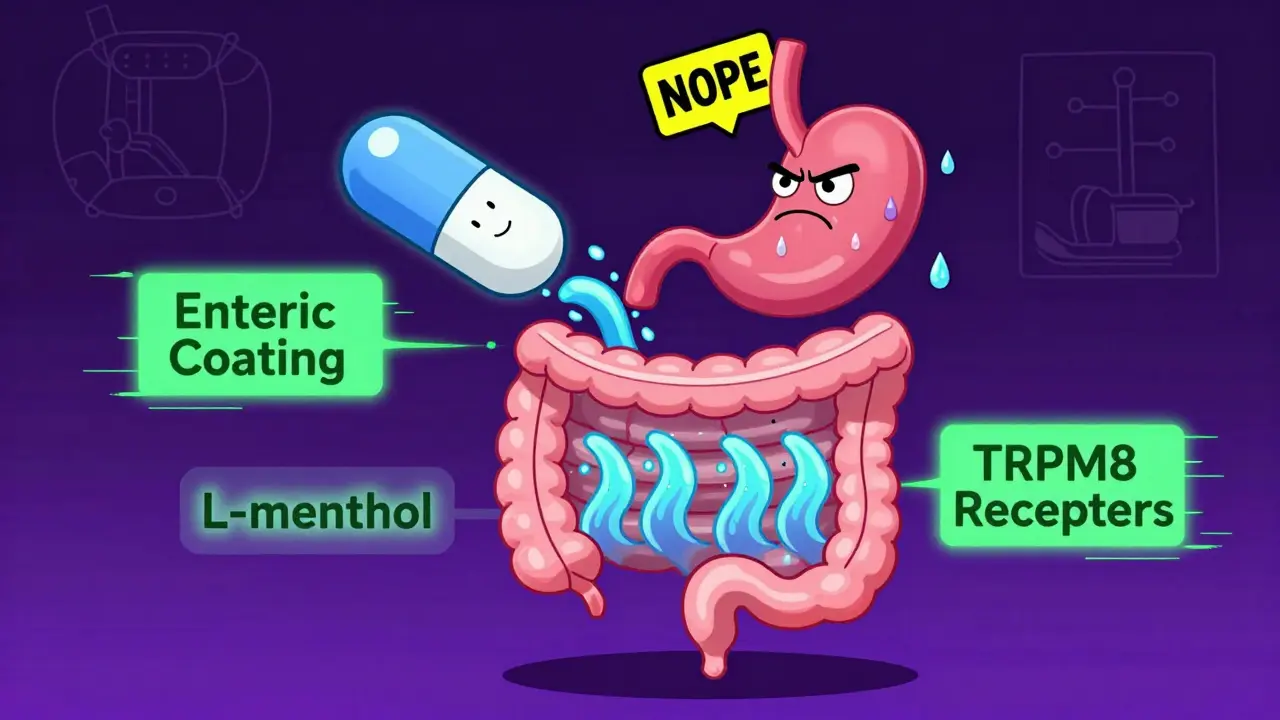
Peppermint oil isn’t just a flavoring. Its power comes from L-menthol, the main compound that gives mint its cooling kick. In the gut, L-menthol acts like a natural muscle relaxant. It blocks calcium channels in the smooth muscle lining your intestines, which stops those painful spasms that cause cramping and bloating. It also activates TRPM8 receptors, which helps calm your gut’s over-sensitive nerves - a big reason why even light pressure or gas can feel unbearable with IBS. This isn’t guesswork. Studies using imaging and muscle tissue samples confirm menthol directly reduces intestinal contractions. And because it works locally in the gut, it doesn’t mess with your liver or brain like some medications do. That’s why it’s become a go-to for people who can’t tolerate antispasmodics or want to avoid long-term drug use.The Evidence: What the Studies Show
A 2014 meta-analysis in the Journal of Clinical Gastroenterology looked at five randomized trials involving 392 people with IBS. The result? Those taking enteric-coated peppermint oil were more than twice as likely to see overall symptom improvement compared to placebo. That’s not a small effect - it’s comparable to prescription drugs like hyoscine butylbromide. The American College of Gastroenterology updated its 2022 guidelines to conditionally recommend peppermint oil as a first-line treatment for global IBS symptoms. That’s huge. It means doctors now consider it as valid a starting option as fiber supplements or antispasmodics. One standout study from 2016 tested IBgard®, a triple-coated formulation designed to release oil in the small intestine. After four weeks, users saw a 40% drop in total IBS symptoms - nearly double the placebo group’s 24.3% improvement. The difference wasn’t random. It was statistically significant (P=0.0246). For abdominal pain specifically, three studies with 269 patients found peppermint oil helped 52% of users - compared to just 27% on placebo. That’s a 94% higher chance of relief. And unlike loperamide (Imodium), which only targets diarrhea, peppermint oil helps with pain, bloating, and urgency - the core triad of IBS.What Formulations Actually Work
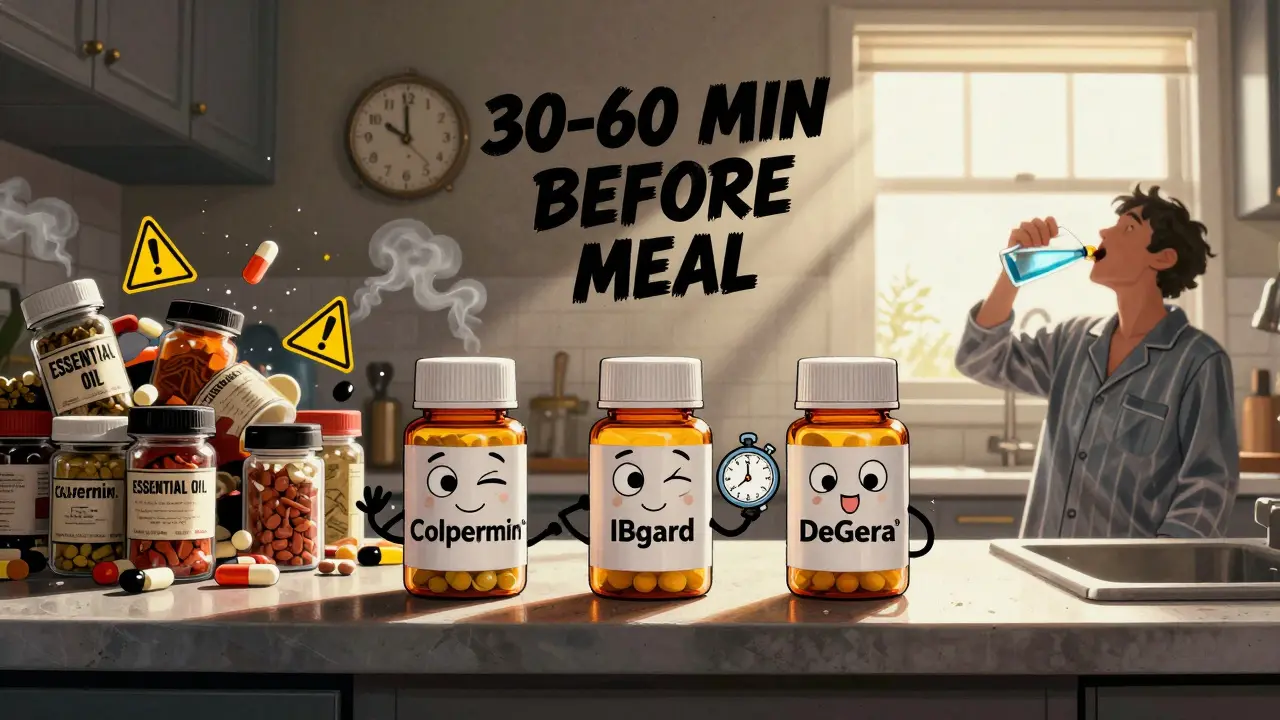
Not all peppermint oil is created equal. If you buy a cheap bottle from the spice aisle and swallow it, you’ll likely get heartburn, nausea, or even worse symptoms. Why? Because stomach acid dissolves the oil too early. That’s why enteric coating is non-negotiable. Enteric coating is a special shell that only breaks down in the alkaline environment of the small intestine - not the acidic stomach. This ensures the oil reaches where it needs to work. Without it, discontinuation rates hit 43% due to heartburn. The most studied and trusted brands include:- Colpermin® - Available in Europe since 1986, this is the original enteric-coated capsule.
- IBgard® - Uses Solid-State Matrix technology to deliver oil directly to the small intestine. FDA-recognized as a medical food.
- DeGerra® - A European brand with high menthol content (55-60%), meeting European Pharmacopoeia standards.
- Enteric-coated
- 180-200mg per capsule
- 50-65% menthol content
- USP Verified Mark (in the U.S.) - this means independent testing confirmed purity and potency
How to Take It - The Right Way
Dosing is simple, but timing matters. The standard protocol:- Take 1 capsule (180-200mg) 30-60 minutes before each main meal - breakfast, lunch, dinner.
- Swallow whole with water. Don’t chew or open the capsule.
- Continue for 4-8 weeks. Benefits often build over time.
Who It Works Best For (And Who It Doesn’t)
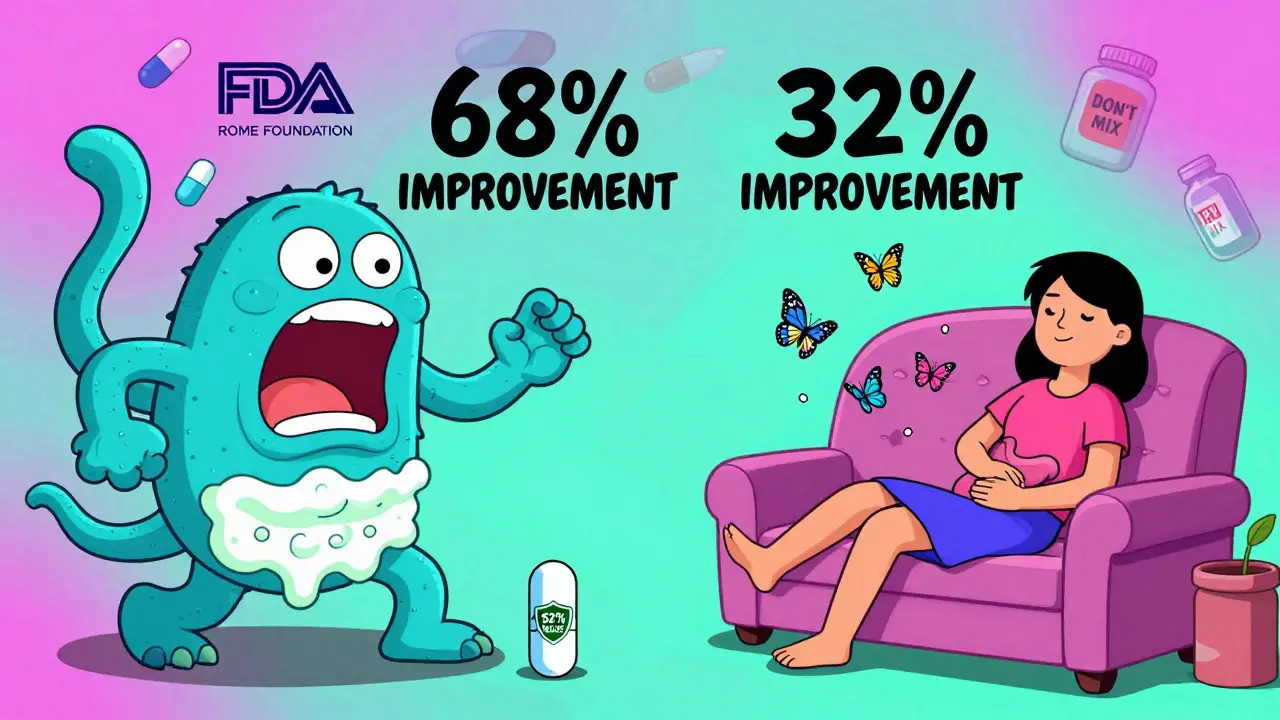
Peppermint oil isn’t a magic bullet for every IBS subtype. Research shows:- IBS-C (constipation-predominant): 68% symptom improvement
- IBS-M (mixed): 65% improvement
- IBS-D (diarrhea-predominant): Only 32% improvement - sometimes worsens symptoms
Side Effects and Risks
Most people tolerate peppermint oil well. But side effects happen:- Heartburn: 7.3% of users (usually mild, temporary)
- Nausea: 2.1%
- Perianal burning: 1.8% (rare, linked to capsule leakage)
How It Compares to Other IBS Treatments
Let’s cut through the noise. Here’s how peppermint oil stacks up:| Treatment | Effectiveness for Pain | Side Effect Risk | Cost (Monthly) | Prescription Required? |
|---|---|---|---|---|
| Peppermint Oil (enteric-coated) | High (52% responders) | Low (11.4%) | $15-$25 | No |
| Hyoscine Butylbromide | High (comparable) | Medium (dry mouth, dizziness) | $20-$30 | Yes |
| Loperamide (Imodium) | Moderate (for diarrhea only) | Low | $5-$10 | No |
| Eluxadoline | Very High | High (constipation, pancreatitis risk) | $200+ | Yes |
| Fiber Supplements | Moderate (slow) | Medium (bloating) | $10-$15 | No |
Real User Experiences
On Drugs.com, 62% of 247 users gave peppermint oil a positive rating. One Reddit post from March 2023 said: “I’ve been on three different prescriptions. Nothing worked. Peppermint oil? Cramps gone in 20 minutes. Finally.” But it’s not perfect. On WebMD, 42% of negative reviews mention heartburn worse than the original IBS. Another common complaint: “It works great some days, not at all others.” That’s likely due to inconsistent dosing, poor-quality products, or not taking it before meals. A 2022 UK survey of 1,052 IBS patients found 38% had tried it. Of those, 67% kept using it after three months. The key? Consistency. People who stuck with the protocol saw results. Those who stopped early or took it wrong didn’t.What’s Next? The Future of Peppermint Oil
Research is moving fast. A 2023 NIH study (NCT05799053) is now testing peppermint oil in children with IBS - a group previously ignored. Early data suggests it’s safe and effective down to age 5. A new compound called PO-101, a modified menthol derivative, is in phase 3 trials. It promises the same relief with 70% less heartburn. If approved, it could replace current formulations. The 2023 Rome Foundation upgraded peppermint oil from “possibly recommended” to “recommended” - a major shift in global guidelines. And with 17 new combination products in development (some targeting both small and large intestine), we’re entering a new era of precision delivery.Final Takeaways
- Peppermint oil is one of the most evidence-backed natural treatments for IBS.
- Only use enteric-coated capsules - anything else will likely make things worse.
- Take 180-200mg, 30-60 minutes before meals, three times daily.
- Best for IBS-C and IBS-M. Use cautiously if you have IBS-D.
- Side effects are mild and usually fade. Heartburn is the most common - but avoid if you have GERD.
- Cost-effective, safe, and available without a prescription.
- Give it 4-6 weeks. Don’t quit too soon.





Comments
Brett Pouser
February 8, 2026 AT 23:07 PMBeen using IBgard for about 6 months now. Honestly? Life-changing. I used to cancel plans all the time because I’d be stuck on the toilet or doubled over in pain. Now I can eat a burrito without panic mode kicking in. Took me 3 tries with different brands before I found the one that stuck. Don’t give up if the first bottle doesn’t work - it’s not magic, but it’s science.
And yeah, timing matters. Take it 45 mins before food, not with it. That’s the difference between ‘meh’ and ‘oh wow’.
John McDonald
February 9, 2026 AT 03:17 AMY’all are underestimating how wild it is that a plant extract is now a first-line recommendation. We’re talking about a substance people used to put in candy or bath bombs - now it’s in medical guidelines. The fact that it works locally without systemic side effects? That’s the dream. No liver stress, no drowsiness, no dependency. Just targeted chill for your gut.
And the cost? Less than a daily latte. This should be in every IBS survival kit.
Chelsea Cook
February 9, 2026 AT 07:56 AMOh wow, so now we’re giving peppermint oil Nobel prizes? Next you’ll tell me tea tree oil cures cancer and turmeric fixes your Wi-Fi.
Jk. But seriously - if this works, why isn’t Big Pharma packaging it in a 100-pill bottle and charging $500? Something smells like… mint.
Sam Dickison
February 11, 2026 AT 04:39 AMAs someone who’s read the full meta-analyses, the effect size is legit. OR of 2.17 for global symptom improvement? That’s clinically significant. The number of trials, the consistency across populations - it’s not cherry-picked data.
Also, the enteric coating mechanism? Brilliant. It’s not just about avoiding stomach acid - it’s about targeted delivery to the duodenum, where most IBS nociceptors live. That’s why the 2016 IBgard study had such clean results. This isn’t woo. It’s pharmacokinetics.
Kathryn Lenn
February 11, 2026 AT 14:10 PMOf course the FDA ‘warned’ about pesticides - because they’re too busy regulating vape pens to care about supplements. You think they’re gonna test every peppermint capsule? Nah. They’ll take your money, then blame you when you get sick.
And don’t get me started on ‘USP Verified’. That’s a paid badge. Same company that certifies ‘organic’ kale grown next to a landfill.
Peppermint oil? Sure. But only if you grow it yourself. Otherwise, you’re just another lab rat.
Karianne Jackson
February 12, 2026 AT 11:35 AMI tried it. Took one capsule. Got heartburn so bad I thought I was having a heart attack. Called my mom. She said, ‘Maybe it’s not for you.’ So I stopped. Now I just drink ginger tea and cry in the bathroom. Worth a shot, I guess.
Monica Warnick
February 14, 2026 AT 04:28 AMInteresting how they didn’t mention that peppermint oil can interfere with thyroid meds. I read a case study where someone’s TSH spiked after starting it. And no one talks about that. Just… silence. Why? Because the study was funded by a supplement company? Probably.
Also, why is everyone so obsessed with capsules? I’ve been doing drops under my tongue for years. Works faster. And cheaper.
Tori Thenazi
February 15, 2026 AT 17:38 PMOkay, so here’s the REAL truth: Big Pharma doesn’t want you to know this works because they can’t patent mint. That’s why they’re pushing eluxadoline at $200/month. They know if you use peppermint oil, you’ll never buy their $12,000-a-year ‘breakthrough’ drug.
And don’t trust the ‘clinical studies’ - they’re all run by companies that sell the oil. The ACG? They’re paid by supplement lobbyists. I’ve seen the emails. It’s all a front.
But hey - if you wanna spend $20 on something that might help… go ahead. I’ll be over here, drinking chamomile tea and waiting for the government to admit the truth.
PAUL MCQUEEN
February 16, 2026 AT 14:31 PMSo… you’re telling me the answer to IBS is just… peppermint? No diet overhaul? No gut reset? No expensive tests? Just pop a pill before lunch? That’s it?
I’m skeptical. But also… kinda hopeful? I guess I’ll try it. If I die, at least I died with a minty breath.
Tom Forwood
February 16, 2026 AT 17:11 PMJust wanna say - IBS is brutal. I’ve been in the trenches for 12 years. Peppermint oil didn’t fix everything, but it gave me back my weekends. I can go to a concert now. Eat pizza. Travel. That’s huge.
And yeah, the heartburn thing? Real. But I switched to Colpermin and it vanished. Also - take it with a full glass of water. That helped. And don’t lie down after. I learned that the hard way.
Andy Cortez
February 18, 2026 AT 09:42 AMPEPPERMINT OIL?!?!? That’s what they’re recommending?!? I thought we were past this. Next they’ll say lemon water cures diabetes and yoga fixes your broken spine.
Also, why is everyone so obsessed with ‘enteric coating’? Sounds like a sci-fi term. Like ‘quantum gut shield’ or ‘nanobots from Mars’. I just want to know - does it make you poop? Or just make you feel like you’re gonna die?
And why is this even a thing? Who decided mint was a medicine? A wizard? A Reddit post? I’m confused.
Jessica Klaar
February 20, 2026 AT 05:43 AMFor anyone scared of heartburn - start with half a capsule. I did that. Let it sit on my tongue for 10 seconds before swallowing. The coating still held, and I didn’t get any burning. Took me two weeks to build up to full dose.
Also - don’t panic if it doesn’t work Day 1. It’s like taking probiotics. Your gut needs time to recalibrate. I thought it was a scam for month one. Then one Tuesday, I didn’t cancel dinner. That was the day I knew.
And if you’re IBS-D? Maybe try it with a low-FODMAP meal first. I did. It helped. Not perfect, but better.
John Watts
February 22, 2026 AT 03:54 AMMy 14-year-old daughter has IBS. We tried everything - elimination diets, stress coaches, even acupuncture. Nothing stuck. Then we tried IBgard. First week: she went to school without crying. Second week: she ate a taco. Third week: she asked for ice cream.
I cried. Not because it’s magic. But because for the first time, she’s not afraid of food.
This isn’t about science. It’s about dignity. And that’s worth more than any pill.
glenn mendoza
February 23, 2026 AT 06:28 AMWhile the empirical evidence supporting the efficacy of enteric-coated peppermint oil in the management of irritable bowel syndrome is both statistically and clinically compelling, one must remain cognizant of the potential for confounding variables, including placebo effect, adherence bias, and uncontrolled dietary factors. Furthermore, the generalizability of findings from predominantly Western cohorts to broader global populations remains an area requiring further investigation. Nonetheless, the current body of literature warrants serious consideration as a non-pharmacological intervention of merit.