
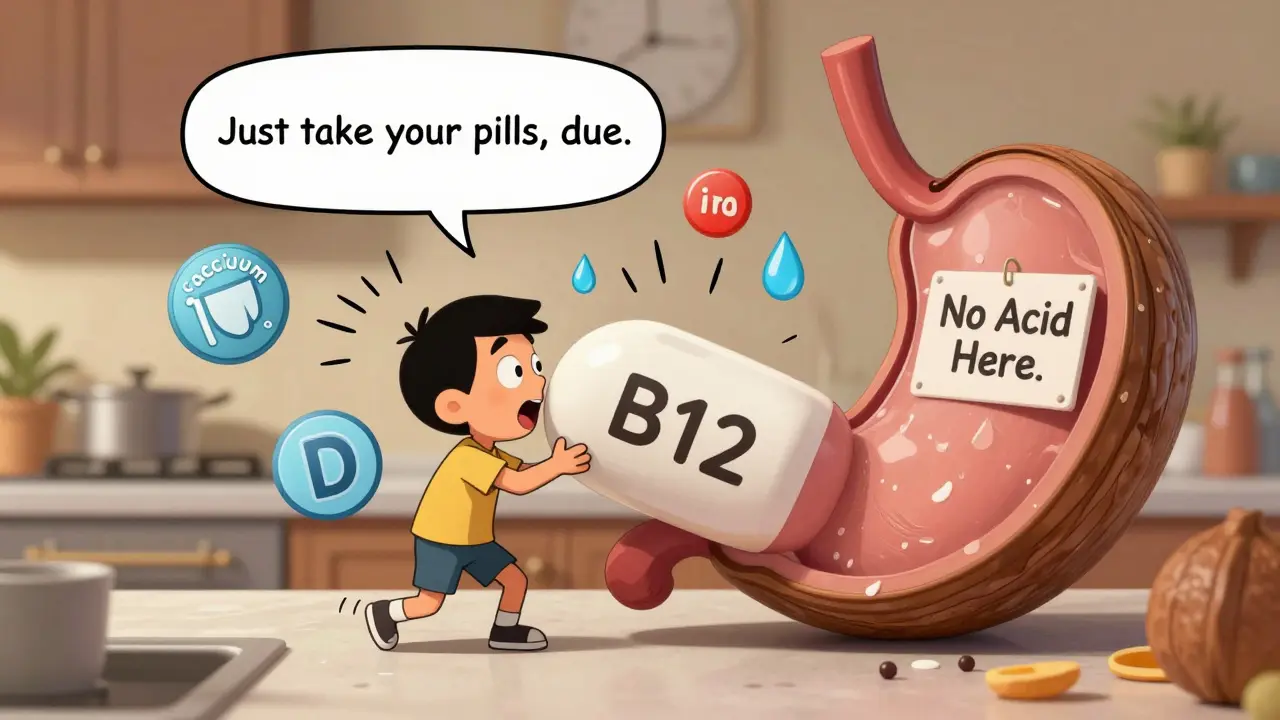
After weight-loss surgery, your body changes in ways you can’t see-but you’ll feel the effects if you skip your vitamins. It’s not just about taking pills because your doctor told you to. It’s about keeping your nerves, bones, blood, and brain working right. Without the right supplements, you could end up with numb hands, weak bones, extreme fatigue, or even memory problems. These aren’t rare side effects. They’re common-and preventable.
Why Regular Multivitamins Don’t Cut It
You might think, "I’ll just take my usual daily multivitamin." But that’s like using a garden hose to fill a swimming pool. After surgery, your stomach is smaller, your intestines are rerouted, and your body can’t absorb nutrients the way it used to. Standard supplements simply don’t deliver enough of what you need, and they’re often in forms your body can’t use anymore.For example, calcium carbonate, the kind found in most over-the-counter pills, needs stomach acid to be absorbed. After a sleeve gastrectomy or gastric bypass, acid production drops. So that calcium? It passes right through you. That’s why bariatric vitamins use calcium citrate instead-it works without acid.
Same goes for vitamin B12. Your body absorbs it from food using a protein called intrinsic factor, made in the stomach. After bypass surgery, that part is skipped. So even if you eat meat, eggs, or dairy, your body can’t grab the B12. That’s why bariatric formulas pack in 500-1,000 mcg per day-far more than the 2.4 mcg in a standard pill.
What You Actually Need (By the Numbers)
The American Society for Metabolic and Bariatric Surgery (ASMBS) has clear, science-backed guidelines. Here’s what you need daily, based on your surgery type:- Iron: At least 18 mg (higher if you’re a woman who still menstruates)
- Vitamin B12: 500-1,000 mcg (oral or sublingual-no shots needed for most)
- Calcium: 1,000-1,200 mg total, split into two or three doses (never more than 600 mg at once)
- Vitamin D3: 3,000 IU (some need up to 5,000 IU if levels are low)
- Vitamin A: 5,000-10,000 IU (watch for toxicity if you’re taking too much long-term)
- Folic acid: 400-800 mcg
- Thiamine (B1): 100-200 mg daily (often overlooked, but critical for nerve function)
These aren’t suggestions. They’re minimums. Studies show 60% of gastric bypass patients develop B12 deficiency within a year without proper supplementation. Nearly half get folic acid deficiency. And vitamin D? Up to 90% of patients are already low before surgery-and it only gets worse without daily replacement.
Form Matters More Than You Think
You can’t just swallow a big tablet after surgery. Your stomach is the size of a walnut. Pills that used to be fine? Now they get stuck. They can cause nausea, blockages, or just pass through unabsorbed.For the first 3-6 months after surgery, you need chewable or liquid forms. Many patients swear by liquid B12 drops-they work fast, are easy to take, and avoid the pill burden. After that, small, soft chewables are usually fine. Avoid hard pills unless your surgeon approves them.
Iron supplements are another pain point. Ferrous sulfate is cheap and common, but it’s rough on the stomach. It causes constipation, nausea, and cramps in about 40% of patients. Switching to ferrous fumarate or iron bisglycinate often makes a huge difference. If you’re struggling, ask your dietitian about alternatives.
Not All Surgeries Are the Same
Your supplement plan should match your procedure. Here’s how they differ:| Nutrient | Roux-en-Y Gastric Bypass (RYGB) | Sleeve Gastrectomy | Adjustable Gastric Band |
|---|---|---|---|
| Vitamin B12 Deficiency Risk | 60% | 25-30% | 10-15% |
| Iron Deficiency Risk | 20-47% | 15-30% | 10-20% |
| Vitamin D Deficiency Risk | 12-73% | 15-40% | 10-30% |
| Thiamine Deficiency Risk | Up to 29.5% | 10-15% | 5-10% |
| Calcium Absorption Challenge | High (due to bypass) | Moderate (reduced acid) | Low |
If you had a gastric bypass, you’re at the highest risk. You’ll need the most aggressive plan. Sleeve patients still need strong support, but their needs are lower. Band patients? They still need vitamins-but often less than others.
Adherence Is the Real Problem
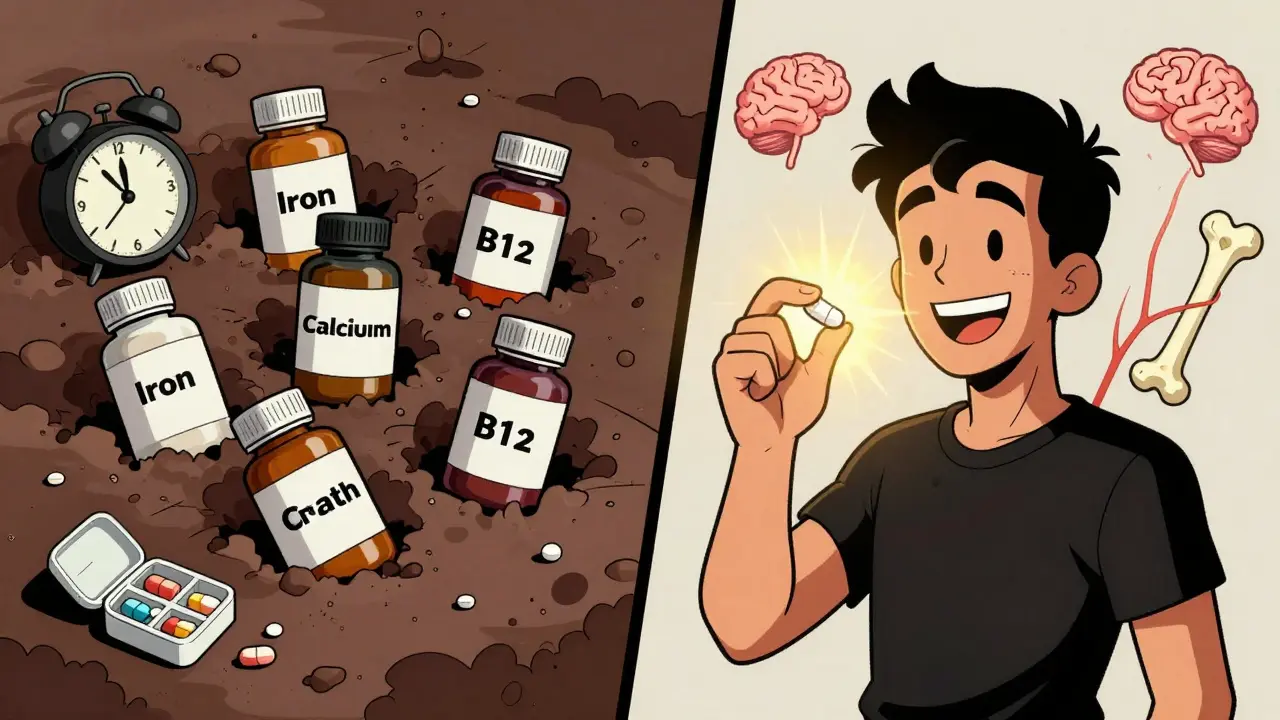
You might start strong. You buy the right supplements. You take them daily. You feel great. Then life happens. You’re busy. You forget. You run out. You get tired of the pills. And that’s when things go wrong.Studies show only 30-50% of patients stick with their regimen after five years. That’s not because they don’t care. It’s because the routine is hard. Taking six pills a day, spread out over meals, with calcium at breakfast, lunch, and dinner? It’s a full-time job.
Here’s what works:
- Use a pill organizer with morning/afternoon/evening slots
- Set phone alarms labeled "B12" and "Calcium"
- Keep supplements next to your toothbrush or coffee maker
- Buy in bulk-monthly subscriptions cut cost and hassle
- Switch to once-daily formulas if your doctor approves
One patient on Reddit said, "My neuropathy disappeared in 3 months after I started sublingual B12." Another wrote, "I took 8 pills a day until I switched to a bariatric multivitamin that combined everything. Now I only take 2. Game-changer."
Testing Is Non-Negotiable
You can’t guess your levels. You need blood tests.At your first follow-up (usually 3-6 months after surgery), your doctor should check:
- Vitamin B12
- Folate
- Iron (ferritin, hemoglobin, TIBC)
- Vitamin D
- Calcium
- Thiamine
After that, test every 6 months for the first two years, then yearly. Some clinics test more often if you’re high-risk or have symptoms like tingling, fatigue, or bone pain. Don’t wait until you feel bad. Deficiencies can cause irreversible damage before you notice symptoms.
What to Look for When Buying
Not all bariatric vitamins are created equal. Amazon’s top-rated brand? Nature’s Bounty Bariatric Formula. It’s affordable and easy to swallow. But it only has 300 mg of calcium-far below the 1,000+ mg you need. So you still have to buy extra.Look for these features:
- At least 18 mg iron
- 500-1,000 mcg B12
- 1,000-1,200 mg calcium (preferably citrate)
- 3,000 IU vitamin D3
- 5,000-10,000 IU vitamin A
- Chewable or softgel form
- No unnecessary fillers or artificial colors
Brands like Bariatric Fusion, Optimum Nutrition Bariatric, and Thorne Research offer comprehensive formulas. Some even include thiamine and zinc. Check labels carefully. If it doesn’t list exact numbers, don’t buy it.

The Cost and the Choice
Good bariatric vitamins cost $30-$60 a month. That’s not cheap. But compare it to the cost of a hospital stay for anemia, nerve damage, or a broken hip from osteoporosis. Prevention is cheaper.If insurance doesn’t cover them, look into health savings accounts (HSAs) or flexible spending accounts (FSAs). Some bariatric centers offer discount programs. And yes-some patients split pills or use generic brands, but only if their provider says it’s safe. Never cut corners on B12 or D.
What Happens If You Skip Them?
Let’s be clear: this isn’t about weight loss. It’s about survival.Low B12? You might lose feeling in your hands, have trouble walking, or develop memory loss. That damage can be permanent.
Low vitamin D? Your bones thin out. You’re more likely to break a bone from a simple fall.
Low iron? You’re exhausted all the time. Your heart works harder. You get dizzy.
Low thiamine? You could develop Wernicke’s encephalopathy-brain swelling that causes confusion, vision changes, and even coma. It’s rare-but it happens.
These aren’t "side effects." They’re direct results of neglecting your supplements. And they’re 100% preventable.
Final Thought: This Is Lifelong
You didn’t just lose weight-you changed how your body works. You’re not going back to the way things were. That means your vitamins aren’t temporary. They’re part of your new normal. Like brushing your teeth or taking blood pressure medicine. You don’t stop because you feel fine. You keep going because you know what happens if you do.Take your vitamins. Get your blood tested. Ask questions. If a pill is too big, ask for chewables. If your stomach hates iron, ask for a different kind. Your future self will thank you.




Comments
Mantooth Lehto
March 8, 2026 AT 22:01 PMI swear by my liquid B12 drops. 🙌 Used to get so dizzy and numb in my hands, like my nerves were screaming. After switching? Gone in 3 weeks. No more 'I forgot my pills' excuses - this stuff is easy. Just squirt under the tongue and boom. Game changer.
Melba Miller
March 9, 2026 AT 17:44 PMPeople don’t get it. This isn’t a diet. It’s a lifelong medical condition. I had a sleeve and thought I’d be fine with one pill a day. Nope. Six months in, I was crashing. My ferritin was 4. My doc said if I’d waited another month, I’d have needed a transfusion. Don’t be that person.
Dan Mayer
March 10, 2026 AT 19:50 PMWait, so you’re telling me I need 3000 IU of D3? That’s like 10x the RDA. Isn’t that toxic? I read somewhere that too much vitamin D can calcify your kidneys. I mean, I’m not a doctor but I read a lot. And my cousin’s neighbor’s cousin is a nurse so…
Robert Bliss
March 12, 2026 AT 00:32 AMI took the wrong iron for a year. Ferrous sulfate. My stomach was a war zone. Constipated, nauseous, just miserable. Switched to bisglycinate and suddenly I could eat again. No drama. No pain. Just… energy. If you’re struggling, ask for this. It’s worth it.
Peter Kovac
March 13, 2026 AT 23:13 PMThe statistical prevalence of deficiencies post-RYGB is alarming. According to ASMBS meta-analyses, B12 deficiency exceeds 60% at 12 months without supplementation. The economic burden of untreated deficiency - including neurological rehabilitation and fracture care - far exceeds the cost of prophylactic vitamins. This is not anecdotal. It is evidence-based.
Jazminn Jones
March 14, 2026 AT 01:32 AMIt’s amusing how people treat this like a lifestyle tweak. You underwent major surgery. Your anatomy is altered. You are not a normal human anymore. To equate this with 'taking a multivitamin' is akin to saying you can drive a Formula 1 car with a bicycle helmet. The terminology alone reveals a profound lack of understanding.
Stephen Rudd
March 15, 2026 AT 14:25 PMI think this whole thing is a scam. Big Pharma and bariatric clinics are pushing these expensive supplements because they make money. I’ve been off my pills for two years and I’m fine. My hair’s thick, I’m not tired, and I walk fine. Someone’s lying. Probably the surgeons.
Scott Easterling
March 16, 2026 AT 18:21 PMWait, wait, wait. So I need 100mg of thiamine? That’s 1000% of the daily value?! Why isn’t this on the label of every vitamin? And why do they make you take calcium in THREE doses?! Who has time for this? This is a full-time job. I’m not a pharmacist. I’m a dad. I just want to feel okay.
Neeti Rustagi
March 18, 2026 AT 01:58 AMAs a healthcare professional from India, I can confirm that post-bariatric care is often under-prioritized in low-resource settings. Many patients here are discharged with minimal education on supplementation. The consequences are devastating - irreversible neuropathy, fractures, cognitive decline. This post is not just helpful; it is lifesaving.
Janelle Pearl
March 18, 2026 AT 12:50 PMI started this journey scared. I thought I’d be stuck with a mountain of pills forever. Then I found a once-daily bariatric multivitamin with everything I needed. No more splitting doses. No more confusion. I still test every 6 months. But now? I take it like brushing my teeth. It’s just part of me now. You got this.
Samantha Fierro
March 19, 2026 AT 05:46 AMThe most important thing I learned: consistency > perfection. Miss a day? Don’t panic. Just take it tomorrow. But don’t stop. Your body doesn’t know you’re 'trying' - it only knows if you’re giving it what it needs. I’ve been 7 years post-op. I’ve never missed a blood test. I’ve never missed a pill. It’s not hard. It’s just non-negotiable.
APRIL HARRINGTON
March 19, 2026 AT 21:15 PMI took a break for a month because I was mad at my surgeon and guess what I woke up with numb fingers and felt like I was drunk all the time and I cried and I called my doc and she said I had Wernicke’s warning signs and I almost lost my mind and now I take everything and I’m so sorry I ever doubted this
Leon Hallal
March 20, 2026 AT 22:48 PMI used to skip my B12. Thought I was fine. Then I started forgetting names. My wife said I was acting like a zombie. I didn’t even realize it until she said something. Now I take it every morning. No more zombie mode.
Judith Manzano
March 21, 2026 AT 16:13 PMI’m 3 months post-op and this post made me cry. Not because I’m sad - because I finally understood. I thought I was just being lazy. Turns out I was in danger. Thank you for writing this. I’m buying the right vitamins today.