
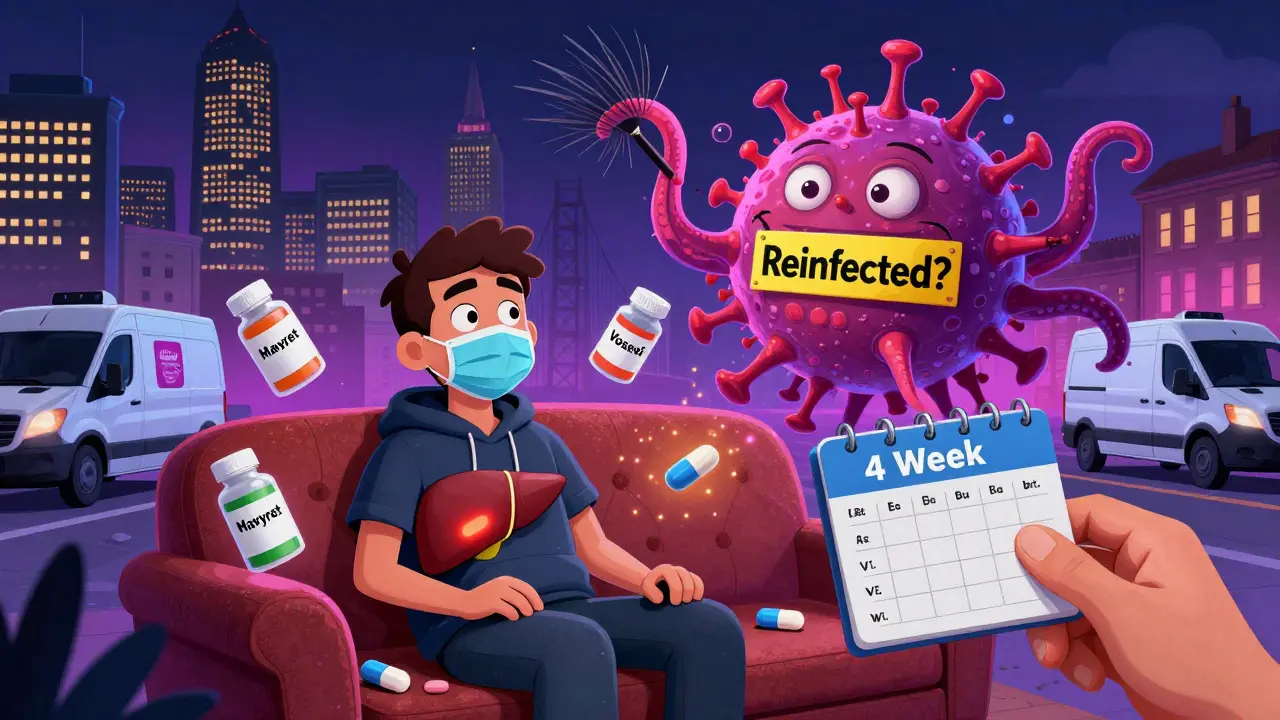
After beating hepatitis C with direct-acting antivirals (DAAs), many people think they’re done. But HCV reinfection is real-and it’s happening more often than you might expect. If you’re someone who injects drugs, uses methamphetamine, or has ongoing exposure to the virus, getting cured doesn’t mean you’re safe forever. The good news? You can be treated again. And again. And again. There’s no limit. No stigma. No waiting. Just science-backed care that works.
What HCV Reinfection Actually Means
Hepatitis C reinfection happens when someone who was successfully cured of HCV gets infected again. This isn’t the virus coming back from hiding-it’s a brand-new infection. It’s like catching the flu after you’ve recovered from last year’s strain. The immune system doesn’t build lasting protection against HCV, so being cured doesn’t make you immune. Reinfection rates are highest in the first six months after cure, especially among people who inject drugs. Studies show that if you’re under 30 and still injecting, your risk is more than three times higher than older users. Methamphetamine use also doubles the risk. These aren’t abstract numbers-they’re lived realities. In cities like Boston, San Francisco, and Glasgow, we’re seeing clusters of reinfection in communities where access to clean needles or opioid treatment is limited.How Effective Is Retreatment?
The biggest myth about HCV reinfection is that retreatment doesn’t work. It does. Just as well as the first time. The standard retreatment for reinfection is 8 weeks of glecaprevir/pibrentasvir (Mavyret). This combo cures over 95% of cases-even in people who’ve been treated before. If you relapsed after an earlier course (meaning the virus came back after treatment ended), doctors may use sofosbuvir/velpatasvir/voxilaprevir (Vosevi) for 12 weeks, sometimes with ribavirin. But for most people who get reinfected, the same 8-week pill pack they got the first time works perfectly. A 2024 study in JAMA Network Open looked at over 1,200 people who were cured and later reinfected. Every single one was successfully retreated. No drop in effectiveness. No resistance issues. No exceptions. The study concluded: “DAA retreatment for reinfection is as effective as treatment for primary infection.”The New 4-Week Option for Early Infection
If you catch HCV right after exposure-within the first 24 weeks-there’s now a faster option. The PURGE-C trial tested a 4-week course of glecaprevir/pibrentasvir in people with acute HCV. It cured 84% of participants. That’s not 95%, but it’s still high. And for someone who can’t come back for follow-up visits, or who’s worried about stigma, it’s a game-changer. The FDA approved Mavyret for acute HCV in June 2025. It’s the first and only DAA therapy with that specific label. This isn’t experimental anymore. It’s standard care for people who test positive soon after exposure. And it’s not just about speed. Shorter courses mean fewer pills, less cost, and fewer chances for someone to drop out of care. In places like Portland and Toronto, clinics are now offering 4-week treatment on the same day someone tests positive-no waiting, no referrals, no judgment.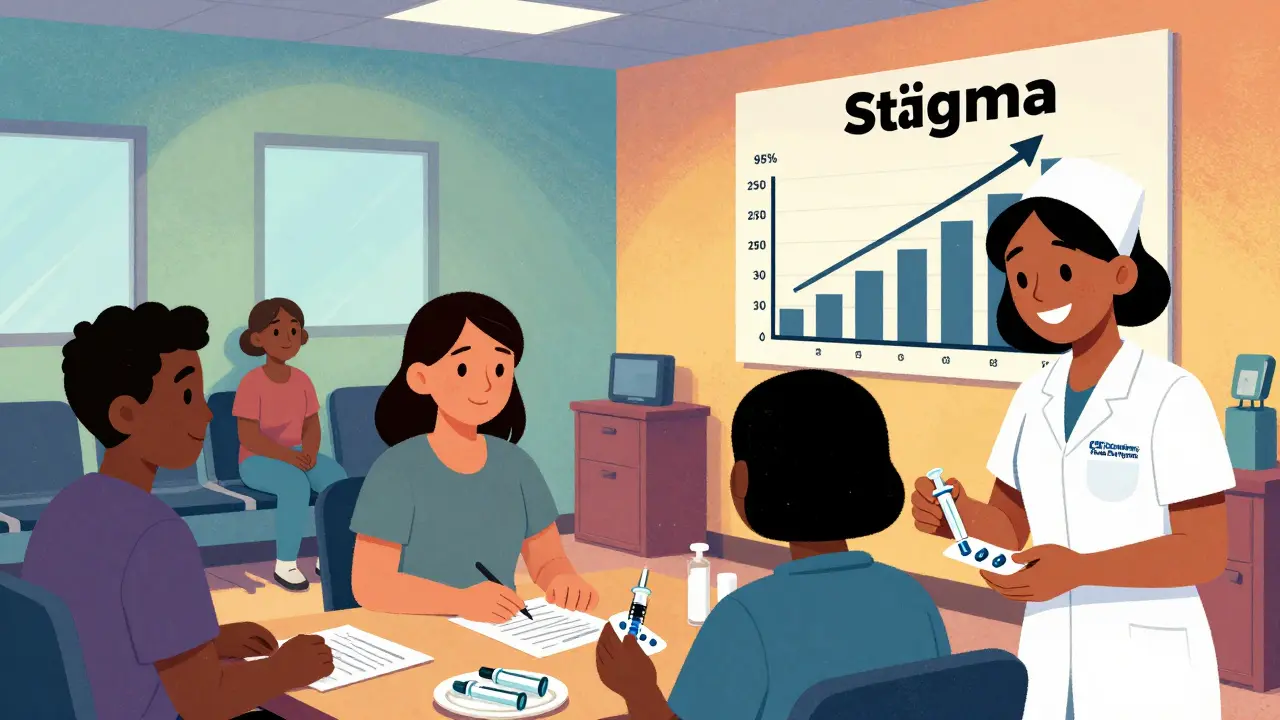
Harm Reduction Isn’t Optional-It’s Essential
You can’t cure your way out of HCV without fixing the systems that spread it. Treatment alone won’t stop reinfection. You need clean needles, opioid treatment, and support. Needle and syringe programs (NSPs) that give out at least 200 needles per person per year cut HCV transmission by 54%. Methadone or buprenorphine programs reduce new infections by half. These aren’t just “nice to have.” They’re proven, life-saving tools. But here’s the problem: only 38% of countries provide these services at the level science says is needed. In the U.S., 68% of people who inject drugs report being denied HCV treatment because they’re still using drugs. That’s not medical logic-it’s discrimination. The CDC’s 2024 guidelines say clearly: “Treatment should be offered to everyone with HCV, regardless of ongoing drug use.” And yet, clinics still turn people away. In Boston, a clinic that co-located HCV care with opioid treatment saw 82% of patients stick with their treatment plan. In San Francisco, where care was split between addiction clinics and liver specialists, 74% of patients got lost in the system.What Happens After You’re Cured?
Getting cured doesn’t mean you can stop caring. You still need to protect yourself. For the first six months after treatment, get tested for HCV RNA every three months. That’s when reinfection is most likely. After that, annual testing is enough unless you’re still at risk. Also, get tested for hepatitis B before starting any DAA treatment. HCV treatment can wake up a dormant HBV infection. Between 2019 and 2024, 12 cases of HBV reactivation were reported to the FDA in people who got HCV treatment without being screened first. It’s preventable.What About Immune Recovery?
Even after the virus is gone, your body doesn’t bounce back right away. Research in Frontiers in Immunology found that T cells-your body’s virus fighters-stay exhausted after cure, especially if you had liver scarring from long-term infection. That’s why reinfection is possible. Your immune system hasn’t fully healed. This isn’t a reason to give up. It’s a reason to be smarter. The goal isn’t just to cure HCV once. It’s to keep you healthy for life. That means ongoing support, regular testing, and access to harm reduction tools.
The Big Picture: Can We Really Eliminate HCV?
The World Health Organization wants to eliminate HCV by 2030. That means cutting new infections by 90% and treating 80% of people living with it. Right now, we have the tools. We have the drugs. We have the science. What we’re missing is political will, funding, and the end of stigma. In 2023, over 20 million people had been cured globally. That’s progress. But 1.5 million new infections still happen every year. Most of them are in people who inject drugs. And most of those people can’t get clean needles or opioid treatment. The U.S. is moving faster than most. As of August 2025, 32 states allow same-day HCV treatment for people who use drugs. That’s huge. But it’s not enough. We need every state to do it. We need every clinic to follow CDC guidelines. We need every nurse, doctor, and pharmacist to know: treating HCV again is not a failure. It’s the point.What You Can Do
If you’ve been cured of HCV:- Get tested every 3 months for the first 6 months after cure.
- Use clean needles every time. If you can’t, use bleach to rinse syringes (it’s not perfect, but it helps).
- Ask for opioid agonist therapy if you use opioids. It cuts your HCV risk in half.
- Don’t let anyone tell you you’re not eligible for treatment because you’re still using drugs. That’s not true.
- If you’re a clinician: Offer treatment the same day you diagnose HCV. No waiting. No conditions.

Comments
Elen Pihlap
January 8, 2026 AT 02:43 AMI got cured last year and got it back in 6 months. I’m not ashamed. I’m just trying to survive.
Anastasia Novak
January 10, 2026 AT 02:06 AMLet’s be real-this isn’t about medical science, it’s about systemic neglect. We’ve got a pharmaceutical miracle that cures 95% of cases, but we still treat people who use drugs like moral failures. The CDC guidelines are clear, yet clinics still demand sobriety as a precondition. That’s not healthcare. That’s punishment dressed in white coats. And don’t even get me started on how insurance companies deny coverage for retreatment because ‘it’s a repeat.’ Like, what? You don’t get to catch the flu twice? The virus doesn’t care about your life choices. Why should we?
Meanwhile, in Glasgow, they’re handing out clean needles and buprenorphine on the same street corner where people are getting tested. No forms. No judgment. Just care. And reinfection rates dropped 60%. Meanwhile, in Texas, a guy got turned away for using meth and died of liver failure. This isn’t a public health crisis. It’s a human rights crisis. And we’re all complicit.
Paul Mason
January 11, 2026 AT 18:10 PMMan, I read this and I’m like-why aren’t we doing this everywhere? I’m from Manchester and we’ve got a guy who runs a van that drives around the city giving out pills and needles. Same day treatment. No waiting. He’s not even a doctor, just a bloke who saw too many mates die. And guess what? People show up. They stick with it. It’s not magic. It’s just basic decency.
Alex Danner
January 13, 2026 AT 08:12 AMJust a quick note for anyone reading: if you’ve been cured, get your HBV screen done before starting any DAA regimen. I’ve seen two cases where people got reinfected with HCV, started treatment, and their dormant hepatitis B came roaring back. One guy ended up in the ICU. It’s 100% preventable. Don’t skip the bloodwork just because you’re focused on the HCV. Your liver doesn’t care what virus you think you’re fighting.
Katrina Morris
January 14, 2026 AT 00:02 AMim so glad im not alone in this like i got cured twice now and people act like im broken but the science says its fine and i just need clean needles and someone to ask how im doing not if im ready
Jessie Ann Lambrecht
January 14, 2026 AT 22:35 PMThis is the most hopeful thing I’ve read all year. We have the power to end this. Not in 2030. Not someday. Right now. With pills. With needles. With a damn minute of compassion. Stop waiting for permission to do the right thing. Just do it. Your patient isn’t asking for a medal. They’re asking to live.
LALITA KUDIYA
January 15, 2026 AT 19:47 PMsame day treatment is life changing i wish india had this too
Kyle King
January 17, 2026 AT 13:47 PMWait… so you’re telling me the government knows about this cure but won’t give it to addicts because they’re ‘unreliable’? That’s not science. That’s a cover-up. This is all part of the Big Pharma agenda to keep people sick so they keep buying pills. They don’t want you cured-they want you on a lifelong subscription. And the 4-week treatment? That’s a distraction. They’re trying to make you think it’s fixed when really they’re just hiding the real problem: the pharmaceutical cartel.
Rachel Steward
January 19, 2026 AT 01:02 AMLet’s interrogate the underlying assumption here: that ‘reinfection’ is a neutral term. It implies a passive victimhood. But what if reinfection is an active choice? What if the real issue isn’t access to needles-it’s the normalization of risk behavior under the banner of ‘harm reduction’? We’ve turned self-destruction into a human right. And now we’re rewarding it with free medicine. That’s not compassion. That’s moral surrender. The immune system doesn’t recover because the person never stopped putting poison in their veins. You can’t cure a lifestyle. You can only treat symptoms.
And don’t get me started on the ‘no stigma’ rhetoric. Stigma exists for a reason. It’s the social immune system. We used to shame people for smoking. We used to shame people for drunk driving. Now we shame the shame. And we wonder why the problem grows.
Yes, the drugs work. But if you treat the symptom without addressing the cause, you’re not healing-you’re enabling. And that’s not medicine. That’s masochism with a prescription pad.
Sai Ganesh
January 19, 2026 AT 08:26 AMIn India, we have very limited access to DAAs, and even less to harm reduction. Many people who inject drugs are afraid to go to clinics because they fear being reported to police. We need community health workers-not just pills. I’ve seen women walk 20 kilometers to get tested, then get turned away because they ‘still use.’ It breaks my heart. Science doesn’t care about borders, but policy does. We need to change the system, not just the treatment.
Emma Addison Thomas
January 20, 2026 AT 01:36 AMI’ve worked in addiction services for 18 years. I’ve seen people cured, relapse, get reinfected, cured again. The ones who thrive aren’t the ones who stop using overnight. They’re the ones who had someone who didn’t look away. Not once. Not even when they missed their third appointment. That’s the real cure. Not the pills. The presence.
Aparna karwande
January 20, 2026 AT 05:31 AMHow can America call itself a leader in healthcare when it treats its own people like disposable trash? You cure them, they use again, you punish them? This is not medicine. This is colonialism with stethoscopes. We in India have more dignity in our slums than your richest clinics. You have the drugs, you have the knowledge, but you lack the soul. And that’s why your epidemic grows.
Anthony Capunong
January 21, 2026 AT 15:14 PMLook, I don’t care if you’re a junkie. I care that you’re American. And if you’re American and you get HCV again, you get treated. No excuses. No hand-wringing. We’ve got the best damn drugs on the planet. Use them. If you can’t afford them, the government pays. If you won’t stop using, fine-treat you anyway. But don’t you dare tell me this is a moral issue. This is a national security issue. We can’t have a population dying of a curable disease while we spend billions on wars overseas. Fix this. Now.
Jonathan Larson
January 23, 2026 AT 01:15 AMIt is a profound ethical imperative to recognize that human dignity is not contingent upon behavioral perfection. The medical model of care must transcend punitive paradigms and embrace the holistic reality of lived experience. When we condition treatment upon abstinence, we are not practicing medicine-we are practicing exclusion. The data are unequivocal: harm reduction, coupled with immediate access to antivirals, yields superior clinical and social outcomes. To withhold care is not to uphold standards-it is to violate the Hippocratic Oath. The question before us is not whether we can afford to treat reinfection, but whether we can afford not to.
Anastasia Novak
January 24, 2026 AT 05:48 AMYou know what’s worse than being turned away for using drugs? Being told you’re ‘too far gone’ to care about. I got treated three times. I’ve been clean for 14 months. I’m not ‘clean’ because I suddenly became a saint. I’m clean because someone handed me a pill and said, ‘You’re worth it.’ Not ‘if you quit.’ Not ‘when you’re ready.’ Right now. That’s all it took. So don’t lecture me about moral surrender. I’m living proof that compassion isn’t weakness. It’s the only thing that works.