
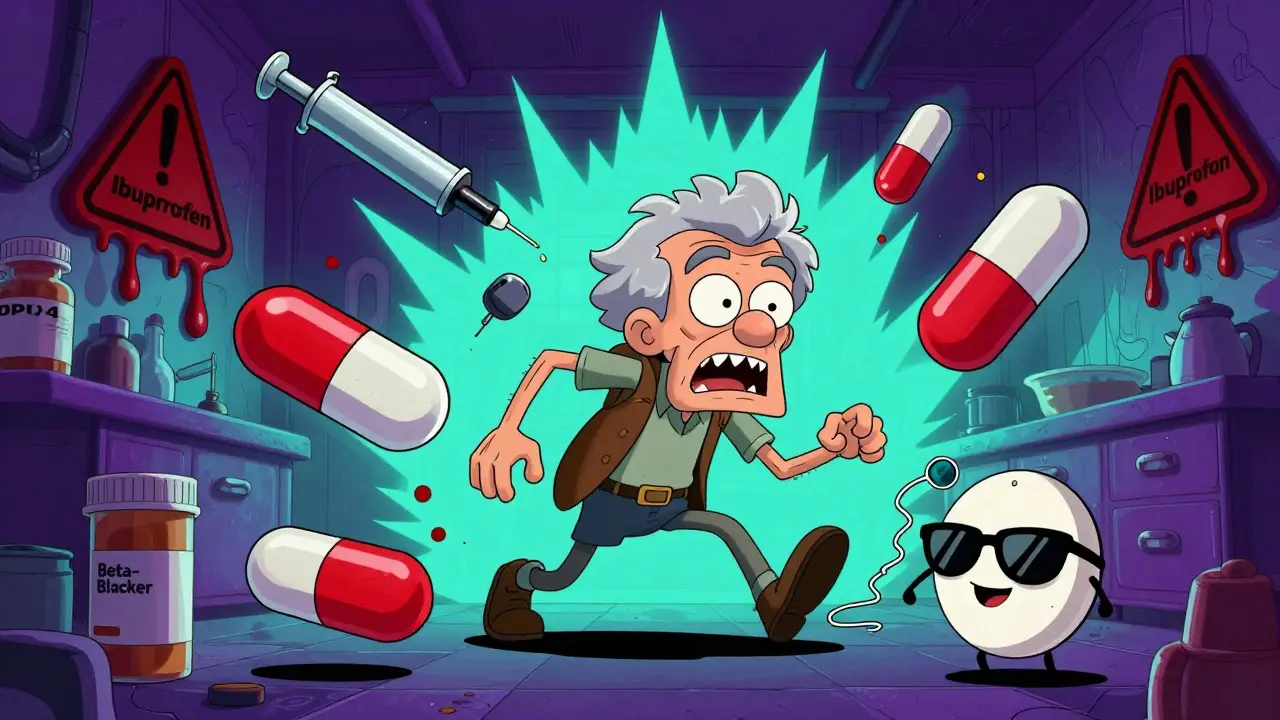
For many seniors with diabetes, the biggest danger isn't high blood sugar-it's low blood sugar. A drop below 70 mg/dL might seem minor, but in someone over 65, it can lead to a fall, a trip to the ER, or even a heart attack. Hypoglycemia is the leading cause of diabetes-related emergency visits among Medicare beneficiaries, and it’s far more common-and more dangerous-in older adults than in younger people.
Why Seniors Are at Higher Risk
As we age, our bodies change in ways that make low blood sugar more likely and harder to detect. Kidneys don’t clear medications as quickly, so drugs like glyburide stick around longer, increasing the chance of a sudden crash. The body’s natural defense against low blood sugar-releasing adrenaline and glucagon-also weakens with age. That means seniors often don’t feel the warning signs: shaking, sweating, or a racing heart. By the time they feel dizzy or confused, it’s already too late.Many seniors also take multiple medications. A common blood pressure pill like a beta-blocker can hide the heartbeat surge that normally warns you of low sugar. Pain relievers like ibuprofen can make sulfonylureas stronger, pushing glucose levels down further. On average, a senior with diabetes takes nearly five prescription drugs and almost two over-the-counter ones. Each one adds a layer of risk.
Medications That Put Seniors at Risk
Not all diabetes pills are created equal when it comes to safety. Some are fine. Others are dangerous-especially for older adults.Glyburide (brand names: Glynase, Micronase) is one of the worst offenders. It’s long-acting, cleared mostly by the kidneys, and stays in the system for hours. Studies show nearly 4 in 10 seniors on glyburide have at least one hypoglycemic episode per month. The American Geriatrics Society lists it as a medication to avoid in older adults. One study found 19% of elderly patients on glyburide had severe low blood sugar events-almost twice the rate of those on glipizide.
Glipizide (Glucotrol) is a bit safer because it’s shorter-acting and less likely to build up in the body. But it still carries risk, especially if taken without food or if kidney function is reduced.
Insulin is another major concern. Even with modern pumps and pens, insulin can cause sudden drops. Research shows seniors using insulin are 30% more likely to fall because of dizziness or confusion from low sugar. That’s not just inconvenient-it’s life-threatening.
Safe Alternatives for Seniors
The good news? There are much safer options now.DPP-4 inhibitors like sitagliptin (Januvia), linagliptin (Tradjenta), and saxagliptin (Onglyza) are among the safest choices. These drugs work by helping the body use its own insulin more efficiently-only when blood sugar is high. When used alone, they cause hypoglycemia in just 2-5% of users. That’s a huge drop from the 30-40% seen with glyburide. Many seniors report feeling more stable and confident after switching.
SGLT2 inhibitors like empagliflozin (Jardiance) and dapagliflozin (Farxiga) also have very low hypoglycemia risk. They work by making the kidneys flush out extra sugar through urine. In clinical trials, hypoglycemia rates were under 5%-even lower than placebo in some cases. They also offer heart and kidney benefits, which matter a lot for older adults.
Metformin is still the first-line treatment for many, but it needs careful use in seniors. It’s generally safe, but if kidney function drops below 30 mL/min, it can build up and cause lactic acidosis. Doctors often reduce the dose or stop it entirely in patients over 80 or with declining kidney health.
And then there’s tirzepatide (Mounjaro), a newer injectable approved in 2022. In trials with seniors, it caused hypoglycemia in only 1.8% of users-far less than insulin. It’s not for everyone, but for those who need stronger control without the risk, it’s a game-changer.
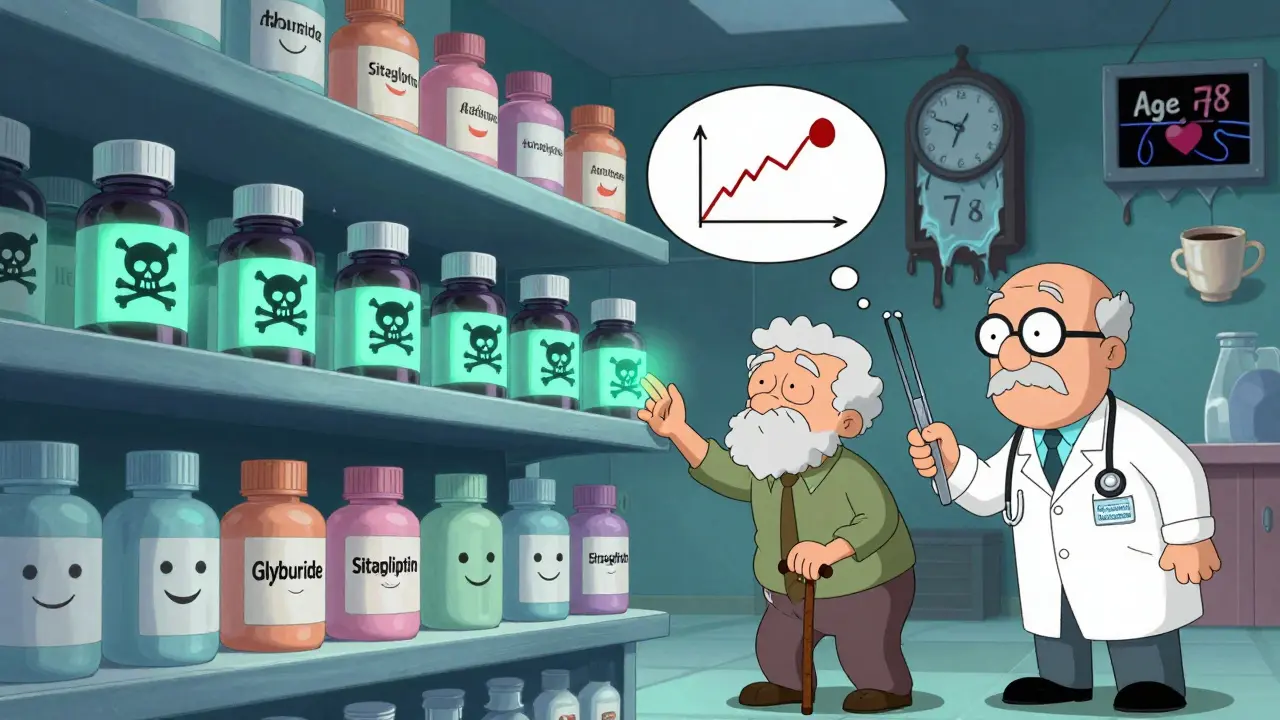
What to Do If You’re on a High-Risk Medication
If you or a loved one is on glyburide or another high-risk drug, don’t panic-but do act.First, talk to the doctor. Ask: “Is this the safest option for my age and health?” Don’t assume the prescription is final. Many seniors stay on outdated meds simply because no one brought it up.
Second, ask about switching. Many patients feel better within weeks after changing from glyburide to sitagliptin or linagliptin. One 78-year-old woman in Florida shared on the American Diabetes Association forum: “After my third fall from low blood sugar on glyburide, my doctor switched me to sitagliptin. In six months, I’ve had zero hypoglycemia episodes and feel much safer walking around my home.”
Third, get a medication review. Ask for a pharmacist-led medication reconciliation. Pharmacists are trained to spot dangerous combinations and outdated prescriptions. Studies show these reviews cut hypoglycemia events by nearly 30% in Medicare patients.
Monitoring and Early Warning Signs
Even with the safest meds, monitoring is key.Know the signs of low blood sugar: headache, drowsiness, weakness, dizziness, confusion, irritability, hunger, fast heartbeat, sweating, shaking. These can be subtle in seniors. Sometimes, all you notice is “I just don’t feel right.”
Use a glucose meter regularly-especially before meals, before bed, and if you feel off. But even better: consider a continuous glucose monitor (CGM). These devices track sugar levels 24/7 and send alerts when levels drop. Seniors using CGMs have 65% fewer hypoglycemic events than those relying on fingersticks alone. Many insurance plans, including Medicare, now cover CGMs for seniors at risk.
Keep fast-acting sugar on hand: glucose tablets, juice boxes, or even candy. Teach family members or caregivers how to use them-and when to call 911. Severe hypoglycemia can cause seizures or unconsciousness. If someone can’t swallow, they need glucagon. Ask your doctor for a prescription.
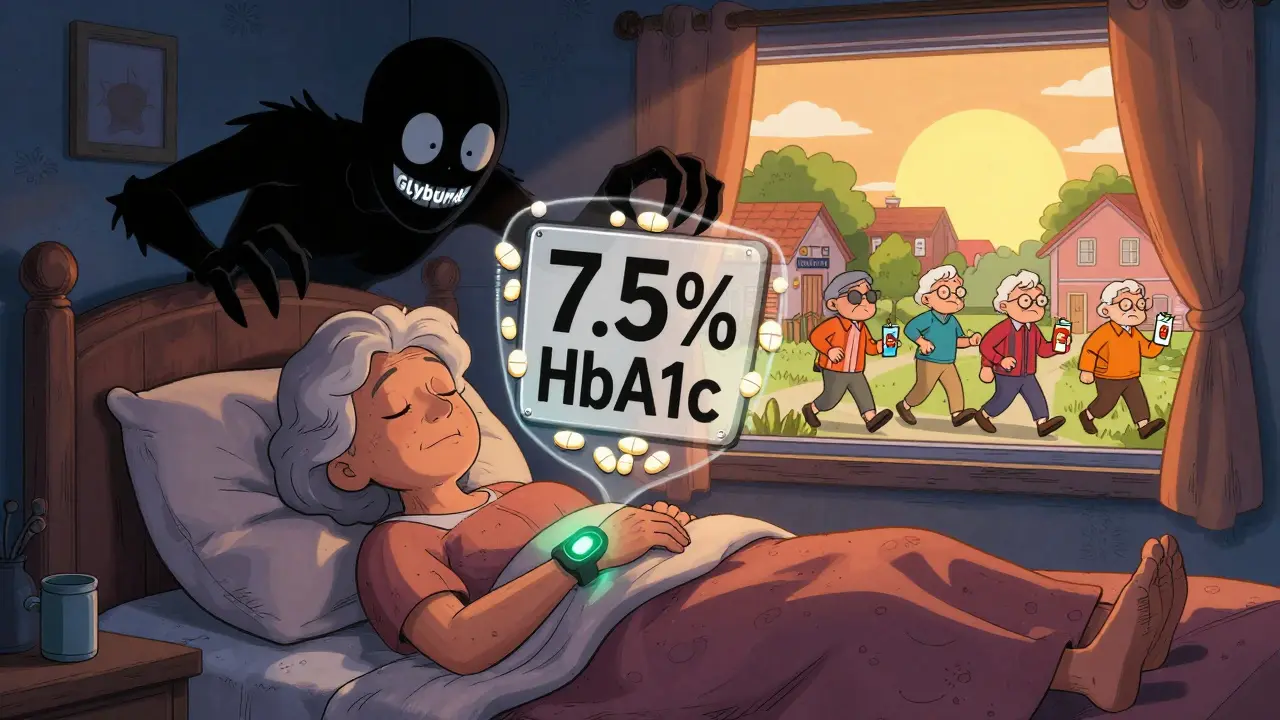
Target Blood Sugar Goals for Seniors
Forget the “normal” HbA1c of 6.5% you hear about for younger people. For seniors, tighter control can be deadly.The American Diabetes Association recommends different goals based on health status:
- Healthy, active seniors with few other illnesses: HbA1c of 7.0-7.5%
- Seniors with multiple health issues: 7.5-8.0%
- Frail, cognitively impaired, or with limited life expectancy: up to 8.5%
That’s right-8.5%. It’s not about perfection. It’s about safety. The goal isn’t to hit a number. It’s to live without fear of falling, fainting, or ending up in the hospital.
What Families and Caregivers Can Do
If you care for an older adult with diabetes, your role is critical.- Learn the symptoms of low blood sugar-even the quiet ones.
- Keep a log of blood sugar readings and any episodes of dizziness or confusion.
- Attend doctor’s visits with them. Write down your questions ahead of time.
- Ask if they’re on any medication that’s on the Beers Criteria list (like glyburide).
- Make sure they have glucagon and know how to use it.
One Reddit user shared: “My 82-year-old father was on glipizide and kept having nighttime lows. After switching to linagliptin, his blood sugars stabilized between 90-140 without dangerous drops.” That kind of change doesn’t happen by accident. It happens because someone cared enough to ask.
Final Thoughts
Diabetes in seniors isn’t about chasing the lowest possible number. It’s about living well, staying independent, and avoiding the hospital. The right medication can make all the difference. Safer drugs like DPP-4 inhibitors and SGLT2 inhibitors aren’t just alternatives-they’re often the best choice.If you’re managing diabetes in an older adult, ask: “Is this medicine keeping them safe-or putting them at risk?” The answer might just save their life.
What is the safest diabetes medication for seniors?
The safest options for seniors are DPP-4 inhibitors like sitagliptin (Januvia) and linagliptin (Tradjenta), and SGLT2 inhibitors like empagliflozin (Jardiance). These rarely cause low blood sugar when used alone. Metformin is also generally safe if kidney function is good. Avoid glyburide and other long-acting sulfonylureas-they’re linked to dangerous hypoglycemia in older adults.
Can seniors take insulin safely?
Insulin can be used safely in seniors, but only with careful dosing, frequent monitoring, and strong support. It increases fall risk by 30% due to hypoglycemia-related dizziness. Many doctors prefer to avoid insulin unless absolutely necessary. If insulin is needed, newer long-acting types like insulin glargine or degludec are preferred, and continuous glucose monitors are strongly recommended.
Why is glyburide dangerous for older adults?
Glyburide has a long half-life and is cleared mostly by the kidneys. As kidney function declines with age, the drug builds up in the body, causing prolonged and unpredictable low blood sugar. Studies show nearly 40% of seniors on glyburide experience hypoglycemia. The American Geriatrics Society lists it as a medication to avoid in older adults due to its high risk of severe, life-threatening lows.
Should seniors check their blood sugar daily?
Yes, especially if they’re on insulin or sulfonylureas. Checking before meals and at bedtime helps catch drops early. For those at high risk or with memory issues, a continuous glucose monitor (CGM) is ideal-it alerts users when sugar is falling, even during sleep. Seniors using CGMs cut their hypoglycemia events by 65% compared to fingerstick testing alone.
What should I do if a senior has a low blood sugar episode?
If they’re awake and able to swallow, give 15 grams of fast-acting sugar: 4 glucose tablets, ½ cup of juice, or 1 tablespoon of honey. Wait 15 minutes, then recheck blood sugar. If it’s still below 70 mg/dL, repeat. If they’re confused, unconscious, or can’t swallow, give glucagon if available and call 911 immediately. Never give food or drink to someone who can’t swallow safely.
How often should seniors have their diabetes meds reviewed?
Every 3 to 6 months. Seniors often take multiple medications, and their health changes quickly. Regular reviews with a doctor or pharmacist help catch high-risk drugs like glyburide, spot interactions, and adjust doses for declining kidney function. Medication reconciliation by a pharmacist can reduce hypoglycemia events by nearly 30%.
Comments
Ashley Karanja
January 26, 2026 AT 02:53 AMIt's fascinating how our bodies' natural defenses against hypoglycemia just... fade like an old radio signal. I've seen it in my mother-she’d wake up disoriented, no sweating, no trembling, just this eerie calm before the fall. It’s not just medication-it’s a systemic erosion of the body’s alarm system. And we keep prescribing glyburide like it’s 1998. The science has moved on, but the inertia? Still stuck in the dial-up era.
Karen Droege
January 26, 2026 AT 09:02 AMYES. I’m a geriatric pharmacist in Vancouver and I see this every week. Glyburide is the #1 culprit. I had a 79-year-old man come in after three ER visits in six months. His family thought he was having mini-strokes. Turns out, his blood sugar was dipping to 48 mg/dL every night. We switched him to linagliptin. He’s now hiking with his grandkids. No more falls. No more panic. Just life. Pharmacists are the unsung heroes here-ask for a med review. It’s free on Medicare.
Napoleon Huere
January 26, 2026 AT 14:26 PMThere’s a deeper philosophical layer here. We treat diabetes in seniors like it’s a math problem to be solved-lowest number wins. But life isn’t a glucose meter. It’s a dance. And sometimes, the most graceful step is to let the number be 8.2. We’ve confused control with perfection. The goal isn’t to avoid all lows-it’s to avoid the *last* one. The one that doesn’t come back from.
George Rahn
January 27, 2026 AT 08:31 AMLet me be blunt: this is what happens when medicine becomes a corporate spreadsheet. Glyburide is cheap. Insurance loves it. Doctors are overworked. Patients are silent. The result? A generation of seniors being medicated into frailty. This isn’t healthcare-it’s actuarial calculus disguised as compassion. We’ve outsourced moral responsibility to algorithms and formularies. Shame on us.
Shweta Deshpande
January 29, 2026 AT 00:53 AMMy aunt switched from glyburide to Jardiance last year and she’s like a new person! She started baking again, walking to the park, even joined a book club. She said she finally feels like herself-not like a walking time bomb. I cried when she told me. It’s not just medicine-it’s dignity. And it’s so easy to fix if we just listen.
Angie Thompson
January 29, 2026 AT 02:27 AMCGMs are LIFE. My grandma thought they were too expensive. I got her one through Medicare. Now she gets alerts when she’s dropping at 2 a.m. No more midnight panic calls. She says it’s like having a little guardian angel on her wrist. 💙 Also-glucose tablets in her purse, her walker, and her nightstand. Always. No excuses.
John Wippler
January 29, 2026 AT 19:35 PMMetformin’s the OG for a reason-but kidney function is the silent killer here. I’ve seen so many docs just keep prescribing it at 1000mg even when eGFR is 28. That’s not negligence-it’s ignorance. A simple eGFR check every 3 months could prevent a lactic acidosis death. We’re not talking about rare events. We’re talking about preventable tragedies. Don’t let your doctor skip the basics.
Kipper Pickens
January 31, 2026 AT 13:47 PMLet’s not romanticize SGLT2 inhibitors. Yes, hypoglycemia risk is low-but they’re not benign. Genital mycotic infections, volume depletion, ketoacidosis-even in non-diabetics now. And the cost? Over $600/month without insurance. For a senior on fixed income? That’s not a solution-it’s a privilege. Safer doesn’t always mean accessible.
Faisal Mohamed
February 2, 2026 AT 04:10 AMThere’s a metaphysical tension here: the desire for autonomy vs. the reality of biological decay. We want seniors to be independent, yet we prescribe drugs that erode their capacity for independence. Glyburide doesn’t just lower glucose-it lowers agency. The real question isn’t which drug is safest-it’s whether we’ve stopped treating elders as agents of their own lives.
Josh josh
February 4, 2026 AT 03:53 AMmy uncle was on glyburide for 12 years no one ever asked if it was still good then he fell and broke his hip and they switched him to januvia and he’s been fine since. just ask your doc dont assume its fine
bella nash
February 5, 2026 AT 11:41 AMThe clinical guidelines are unequivocal. The Beers Criteria, the American Diabetes Association, and the American Geriatrics Society concur in their consensus recommendations regarding the avoidance of long-acting sulfonylureas in the geriatric population. The evidence base is robust, reproducible, and unequivocal. Yet, prescribing inertia persists. This is not a failure of science-it is a failure of systems.
SWAPNIL SIDAM
February 6, 2026 AT 18:24 PMI work in a nursing home in Delhi. We had a patient on glyburide who kept fainting. We switched him to sitagliptin. No more fainting. No more IV fluids. He started laughing again. I’ve seen too many seniors treated like broken machines. But they’re not. They’re people. Just give them the right medicine and let them live.