

Alcohol & Diabetes Risk Assessor
(0-2 hrs)
(4-8 hrs)
(8+ hrs)
Enter your details and click "Assess Risk" to see personalized guidance.
Imagine feeling dizzy and confused at a party. You might think you've had too much to drink, but for someone with type 2 diabetes on medication, it could be something far more dangerous: hypoglycemia. This is where your blood sugar drops so low that your body starts to struggle. The tricky part? The symptoms of low blood sugar look almost exactly like the signs of being drunk. Slurred speech, unsteady walking, and confusion can mask a medical emergency until it becomes serious.
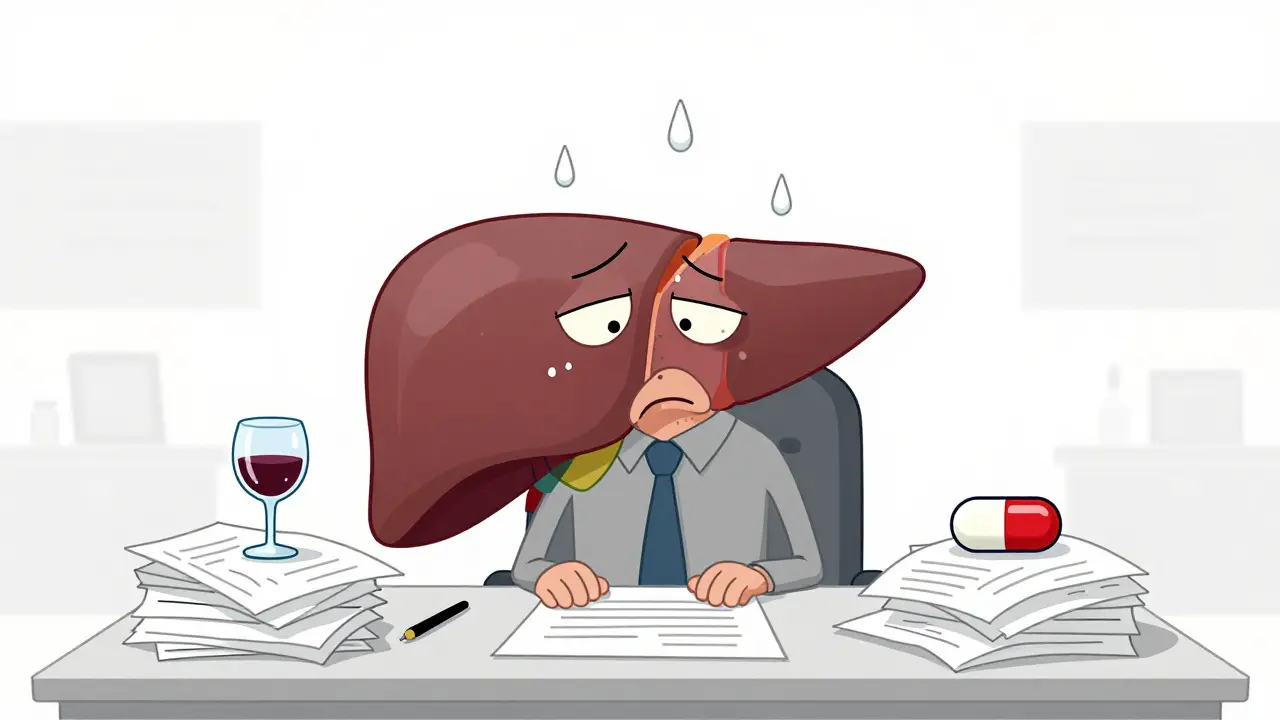
This isn't just a theoretical risk. When you mix alcohol with common diabetes drugs like metformin or insulin, your liver gets caught in the middle. It has to decide whether to process the alcohol or keep your blood glucose stable. Usually, it picks the alcohol. That decision can leave your blood sugar crashing hours after your last drink, often while you're asleep. Understanding this dynamic is crucial if you have diabetes and enjoy an occasional drink.
The Core Problem: How Alcohol Steals Your Blood Sugar
To understand why this happens, you need to look at what your liver does. The liver acts as your body's glucose reservoir. When your blood sugar is high, it stores glucose as glycogen. When your blood sugar is low, it releases that stored glucose back into your bloodstream to keep you functioning. It’s essentially your backup battery.
Now, add alcohol to the mix. Alcohol is toxic to the body, so the liver prioritizes breaking it down before doing anything else. While the liver is busy metabolizing ethanol, it stops releasing glucose. If you are taking medications that lower blood sugar, such as insulin or sulfonylureas, you have two forces working against you: the medication pushing levels down and the liver failing to push them up. This creates a perfect storm for severe hypoglycemia.
Here is the timeline that catches many people off guard:
- Immediate Phase: Alcohol enters the bloodstream. The liver begins processing it. Blood sugar may initially rise slightly due to the carbohydrates in beer or cocktails, then drop.
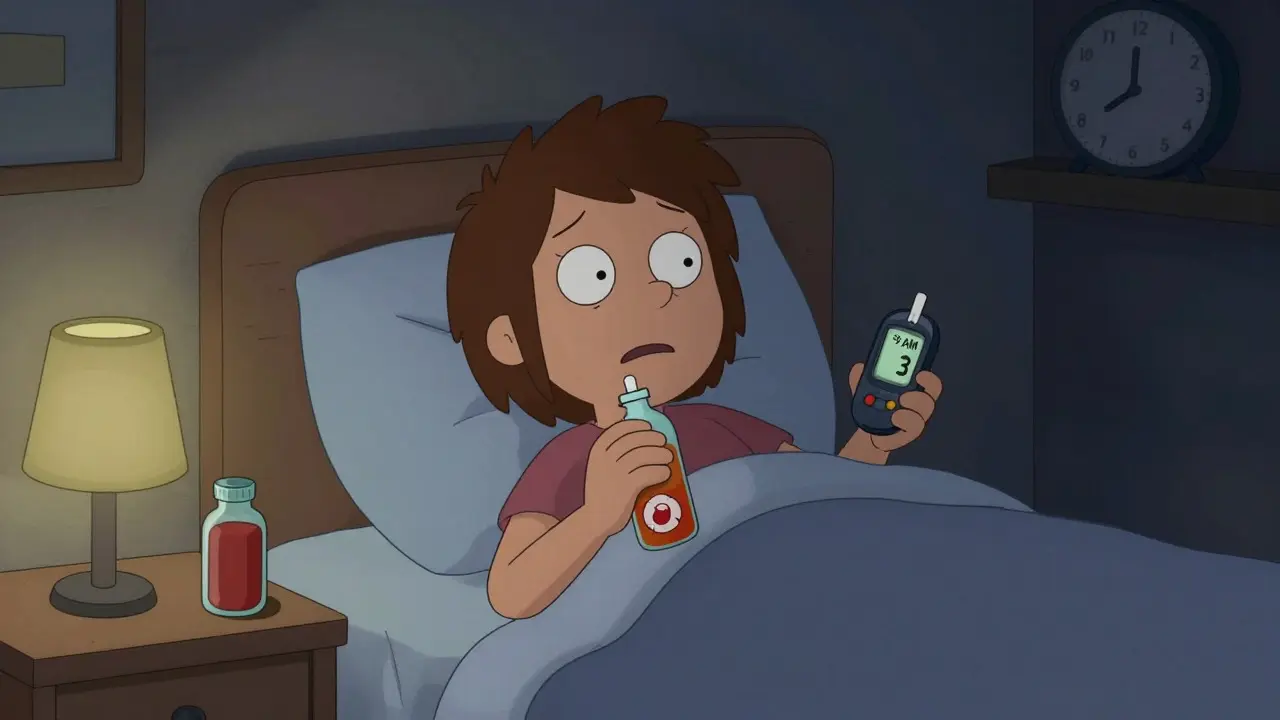
- Delayed Phase (4-8 hours later): The alcohol is still being processed. The liver remains blocked from releasing glucose. This is when the most dangerous drops occur, often during sleep.
- Recovery Phase: Once the alcohol is cleared, the liver resumes normal function, but the damage to blood sugar stability may have already happened.
This delay is why checking your blood sugar right before bed isn't enough. You might feel fine at 10 PM, only to wake up at 3 AM with shaking hands and a racing heart. Many people report needing emergency glucose tablets or juice in the middle of the night because they didn't anticipate this delayed effect.
Metformin and the Liver: A Double Whammy
If you take Metformin is a first-line oral medication used to treat type 2 diabetes by reducing glucose production in the liver and improving insulin sensitivity., the conversation about liver health takes a specific turn. Metformin itself is generally safe, but it puts a mild strain on the liver and kidneys. Alcohol also requires significant liver effort to break down. When you combine them, you are asking your liver to do two heavy jobs at once.
While acute interactions between metformin and alcohol are less likely to cause immediate hypoglycemia compared to insulin, the gastrointestinal side effects can be intense. Both substances can irritate the stomach lining. Mixing them increases the likelihood of nausea, vomiting, and abdominal pain. For some users, these symptoms are so uncomfortable that they lead to missed meals or poor food choices, which indirectly affects blood sugar control.
There is also a rare but serious condition called lactic acidosis. This occurs when lactate builds up in the blood faster than the body can clear it. While metformin alone carries a very small risk of this, adding alcohol increases that risk because alcohol can impair the liver's ability to clear lactate. Symptoms include muscle pain, trouble breathing, and extreme fatigue. If you experience these after drinking, seek medical attention immediately.
| Medication Type | Primary Risk with Alcohol | Liver Impact | Timing of Danger |
|---|---|---|---|
| Insulin | Severe Hypoglycemia | Moderate (metabolism priority) | During and up to 12 hours after |
| Sulfonylureas (e.g., Glipizide) | Prolonged Hypoglycemia | High (enzyme competition) | Delayed onset, lasts longer |
| Metformin | Gastrointestinal Distress | Additive stress | Immediate to moderate duration |
| SGLT2 Inhibitors | Euglycemic DKA (rare) | Low direct impact | Variable, linked to dehydration |
Why Symptoms Are So Hard to Spot
One of the biggest dangers of mixing alcohol and diabetes meds is the symptom overlap. Let's list the common signs of hypoglycemia:
- Trembling or shaking
- Sweating
- Irritability or mood swings
- Slurred speech
- Difficulty concentrating
- Unsteady gait or clumsiness
- Slurred speech
- Unsteady gait
- Confusion
- Mood changes
Practical Strategies for Safer Drinking
Does this mean you have to give up alcohol entirely? Not necessarily. But it does mean you need a strategy. Here is how to minimize the risks without ruining your evening.
1. Never Drink on an Empty Stomach This is the golden rule. Food slows the absorption of alcohol and provides a steady source of glucose. Aim for a meal that includes protein and healthy fats, along with complex carbohydrates. A simple snack like crackers with cheese or a handful of nuts can make a big difference if you aren't eating a full meal.
2. Choose Low-Carb Drinks Not all alcohol hits your blood sugar the same way. Sweet cocktails, regular beer, and fruit juices can spike your glucose initially, followed by a crash. Stick to dry wines, light beers, or spirits mixed with zero-calorie soda water. Avoid sugary mixers like orange juice or cola.
3. Monitor Your Levels If you use a continuous glucose monitor (CGM), pay attention to trends, not just numbers. A downward trend while drinking is a warning sign. If you use a finger-stick meter, check your blood sugar before you start drinking, every two hours while drinking, and right before bed. Some experts suggest setting an alarm for 2-3 hours after your last drink to check levels again, given the delayed hypoglycemia risk.
4. Know Your Limits The American Diabetes Association suggests limiting intake to one drink per day for women and two for men. One drink is defined as 12 oz of beer, 5 oz of wine, or 1.5 oz of distilled spirits. Keep track of how many you've had. It's easy to lose count when you're enjoying yourself, but losing track is exactly when the danger creeps in.
5. Tell Someone Let your host or a friend know you have diabetes. Give them a quick brief on what hypoglycemia looks like versus intoxication. If you feel shaky or confused, tell them explicitly: "I think my sugar is dropping." Don't let them guess.
When to Skip the Drink Altogether
There are times when the risk outweighs the reward. Consider avoiding alcohol completely if:
- Your blood sugar is already below 100 mg/dL (5.6 mmol/L) before you plan to drink.
- You are exercising intensely that day, as exercise combined with alcohol multiplies hypoglycemia risk.
- You have liver disease or kidney issues, as these organs handle both alcohol and medication clearance.
- You are starting a new medication regimen, as you don't yet know how your body responds to it.
Frequently Asked Questions
Can I drink alcohol if I take metformin?
Yes, but with caution. Metformin doesn't cause hypoglycemia on its own, but alcohol stresses the liver. Limit consumption to moderate amounts, always eat food with your drink, and watch for signs of gastrointestinal distress or unusual fatigue.
How long after drinking should I check my blood sugar?
Check before drinking, every 1-2 hours while drinking, and before bed. Crucially, set an alarm to check 2-4 hours after your last drink, as delayed hypoglycemia often peaks during sleep.
What is the safest alcoholic drink for diabetics?
Dry wines (red or white) and straight spirits mixed with zero-calorie soda are generally the lowest in carbohydrates. Light beers are a better option than regular ones, but still contain more carbs than spirits. Avoid sweet cocktails and fruit-based drinks.
Does alcohol affect CGM readings accurately?
Generally, yes, CGMs remain accurate during moderate alcohol consumption. However, rapid changes in blood flow or sweating from intoxication can occasionally cause minor sensor errors. Always confirm with a finger-stick test if your CGM reading seems inconsistent with how you feel.
What should I do if I suspect hypoglycemia while out drinking?
Consume 15 grams of fast-acting carbohydrates immediately, such as half a cup of juice, four glucose tablets, or three teaspoons of sugar. Wait 15 minutes and retest. If you cannot swallow or are unconscious, a helper should administer glucagon or call emergency services.

Comments
Colin Finch
August 24, 2026 AT 10:30 AMOh my word, this is absolutely terrifying and I am shaking just reading about the delayed phase!
Who knew that a simple glass of wine could turn into such a silent killer at 3 AM?
I always thought the liver was pretty good at multitasking, but apparently it just picks alcohol and leaves us hanging.
The fact that the symptoms look exactly like being drunk is such a cruel twist of fate.
My cousin had a scare last year where everyone thought he was just tipsy until he collapsed.
It really makes you want to wear a medical ID bracelet everywhere you go, doesn't it?
It’s not just about the sugar drop, it’s about the confusion that follows.
You feel like you're losing your mind while your body is running out of fuel.
And let's not forget the stomach issues with metformin, that sounds miserable too.
But honestly, the sleep aspect is what gets me the most.
Falling asleep feeling fine only to wake up in a cold sweat is a nightmare scenario.
We need more awareness on this, people really don't think twice about mixing meds and drinks.
Thanks for laying it all out so clearly, it’s a bit dramatic but necessary!
Here’s to staying safe and checking those levels before bed.
Let’s keep each other informed, folks!
Betty Childers
August 25, 2026 AT 04:35 AMI appreciate the breakdown here because it highlights how individualized this risk can be.
Many people assume if they are type 2 they are safer than type 1, but the medication mix changes everything.
It is interesting to see the table comparing the different drug classes and their specific liver impacts.
Sulfonylureas seem to have the longest tail of danger which is something I hadn't fully considered.
It reinforces the idea that there is no one-size-fits-all approach to drinking with diabetes.
You really have to know your own body and your specific regimen.
The advice to tell a friend is practical and often overlooked in social settings.
It takes the guesswork out of whether someone is sick or just having fun.
A simple conversation can save a life in these situations.
Glad to see such a thorough resource available for discussion.
Amy Zalkin
August 27, 2026 AT 04:21 AMok so i read this and now im kinda scared to even sip a beer 🍺
the part about the liver picking alcohol over glucose is wild right?
like our bodies are basically prioritizing poison over survival fuel 😅
i always thought dry wine was the 'safe' choice but seeing the crash potential is making me rethink
plus the typo in my head says 'hypoglycemia' looks like a disease name not a side effect lol
who knew slurred speech could mean two very different things??
my friends would totally just say 'you got drunk' if i started acting weird at a party
need to start carrying those glucose tabs in my purse just in case
also the lactic acidosis thing sounds super scary but rare i guess?
still its enough to make me stick to sparkling water with lime next time 🥂
Alex Brown
August 28, 2026 AT 08:12 AMThis post serves as a compelling reminder of the intricate balance required in managing chronic conditions alongside lifestyle choices. The interplay between pharmacological intervention and metabolic processing is a fascinating study in biological priority. It is noteworthy that the liver’s decision-making process, driven by evolutionary imperatives to clear toxins, can inadvertently compromise homeostasis when exogenous variables like medication are introduced. This suggests that modern medicine must account for these ancient physiological pathways more rigorously. The delayed onset of hypoglycemia is particularly insidious because it decouples the cause from the effect in time, creating a window of vulnerability that is difficult to monitor without technological aids. Therefore, the integration of continuous monitoring systems is not merely a convenience but a critical safety net. Furthermore, the social dimension of this issue cannot be understated; the misinterpretation of symptoms by peers highlights a gap in public health literacy regarding non-obvious medical emergencies. Education remains the most powerful tool we have to bridge this gap. By understanding the mechanics, patients can advocate for themselves more effectively in social and clinical settings. Ultimately, this is about respecting the complexity of the human system and making informed decisions rather than relying on assumptions. A thoughtful addition to the discourse on diabetic care.
Kaylyn Mello
August 29, 2026 AT 08:26 AMthis is so helpful thank you for posting it. i never realized the delay could be that long. my mom uses insulin and she always checks before bed but does she set an alarm? probably not. i might have to remind her about the 3am check. also the part about telling friends is great. i used to think it was embarrassing to explain my condition at parties but now it seems way better than getting misdiagnosed. glad to see the table too. makes it easy to see which meds are worse with alcohol. thanks for the info!
joyce Hogewoning
August 31, 2026 AT 00:57 AMOMG did you guys see the section about lactic acidosis because honestly that sounds like something out of a horror movie and not a side effect list and i am literally trembling thinking about how close we all get to this stuff every time we decide to have a little fun at a dinner party and then wonder why our stomachs are hurting the next day and it is just so frustrating that the symptoms overlap so much with actually being intoxicated which means you could be dying of low blood sugar and everyone around you is just laughing at your jokes thinking you are having a great time and it is just so unfair that we have to be so careful about everything else in life but then have to worry about this hidden danger too and i think we should all just start wearing those bracelets immediately because who wants to be unconscious at a club anyway so yeah big ups to the author for explaining this so well even if it made me a little anxious about my next drink.
Thhomas Fox
August 31, 2026 AT 19:44 PMGreat point about the timeline.
Most people focus on the immediate buzz.
They forget the 4-8 hour window.
That is when the real trouble starts.
Set that alarm. Seriously.
Your future self will thank you.
Keep it simple. Eat protein. Drink water.
You got this.
Owen John
September 1, 2026 AT 21:14 PMTypical pharmaceutical narrative. They want you scared so you buy more monitors.
But admit it, the liver logic is sound.
Evolution didn't prepare us for ethanol plus synthetic drugs.
We are experimenting on ourselves.
Just stick to spirits. Less carb, less mess.
Don't trust the cocktails. Sugar traps.
Stay sharp.
Maneesh kv
September 3, 2026 AT 11:16 AMNice article 👍 but u forgot to mention that exercise + alcohol is a deadly combo 💀 i hit the gym then drink and my sugar drops like crazy 😱 gotta be careful bro 🔥 respect to the writer though 🙌
John Park
September 4, 2026 AT 12:56 PMInteresting take but flawed premise.
You assume the liver is rational.
It is not.
It is a chaotic system.
Your linear timeline is a fiction.
Hypoglycemia is not a clock.
It is a state of collapse.
Stop trying to schedule your biology.
Just stop drinking.
Or stop taking meds.
Either way.
Choice is an illusion.
Kathleen McGrath
September 5, 2026 AT 10:34 AMThis is really encouraging to read.
It shows that you can still enjoy life.
Just with some smart choices.
I love the tip about telling a friend.
It makes you feel less alone.
Thank you for sharing this.
It helps me feel more confident.
Small steps make a big difference.
Keep going!
You are doing a great job.
Stay safe out there.
Hope this helps others too.
Really nice work.
Thanks again!