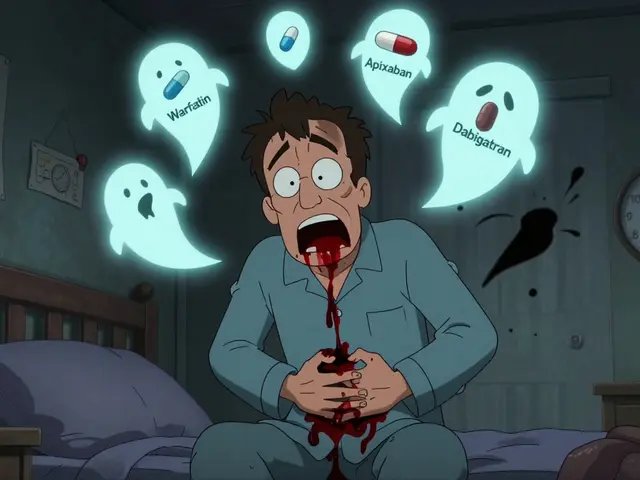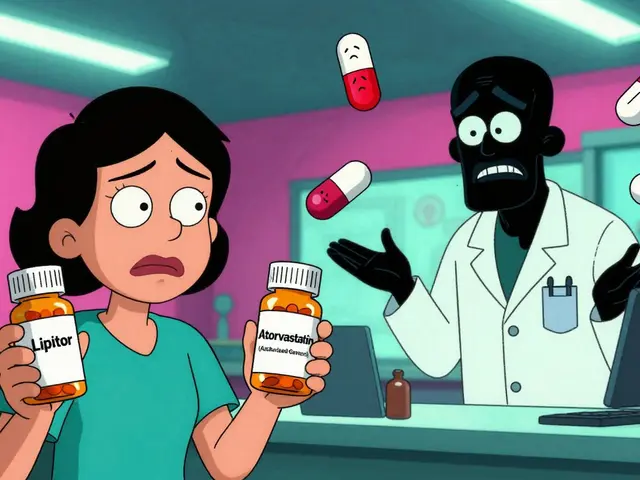

You take the same pill every day. You’ve been stable for years. Then, your pharmacy hands you a bottle with a different manufacturer’s name on it. It’s still warfarin. It’s still supposed to do the same thing. But inside your body, the chemistry might just have shifted enough to put you at risk.
This is the reality of warfarin generic switching, which involves transitioning between brand-name Coumadin and various generic formulations or between different generic manufacturers of this critical anticoagulant. For millions of patients relying on vitamin K antagonists to prevent strokes and blood clots, this switch isn’t just an administrative change-it’s a clinical event that demands vigilance. The stakes are high because warfarin has a notoriously narrow therapeutic index. A tiny shift in how your body absorbs the drug can swing your International Normalized Ratio (INR) from safe to dangerous.
The Narrow Window of Warfarin Therapy
To understand why switching matters, you first need to respect what warfarin actually does. Approved for medical use in 1954, this medication doesn’t dissolve existing clots; it stops new ones from forming by interfering with vitamin K-dependent clotting factors. It’s effective, reversible, and cheap. But it’s also unforgiving.
The target zone for most patients-an INR between 2.0 and 3.0-is incredibly tight. If your INR drops below this range, you’re not protected against thromboembolic events like stroke or pulmonary embolism. If it spikes above, you face a significantly higher risk of hemorrhagic complications, including life-threatening internal bleeding. This balance is so delicate that even small changes in diet, other medications, or the physical composition of the pill itself can disrupt it.
While newer direct oral anticoagulants (DOACs) like apixaban or rivaroxaban have taken over much of the market due to their ease of use, warfarin remains essential. It is the only approved option for patients with mechanical heart valves, those with severe renal impairment, and individuals who cannot afford the premium price of DOACs. According to recent data, approximately 1.2 million Medicare beneficiaries were still on warfarin in 2022. For these patients, the integrity of their specific formulation is non-negotiable.
Brand vs. Generic: Are They Really the Same?
The core question driving patient anxiety is simple: Is generic warfarin bioequivalent to the brand-name Coumadin? The regulatory answer is yes. The U.S. Food and Drug Administration (FDA) requires generic drugs to demonstrate bioequivalence, meaning they must deliver 80% to 125% of the active ingredient compared to the reference listed drug within a specific timeframe.
However, "bioequivalent" does not mean "identical." While the amount of active warfarin sodium is consistent, inactive ingredients-fillers, binders, and dyes-can vary between manufacturers like Teva, Mylan, Sandoz, and Barr Laboratories. For most drugs, this doesn’t matter. For warfarin, it sometimes does. These excipients can alter how quickly the pill dissolves or how well the gut absorbs the medication, leading to subtle fluctuations in plasma concentration.
| Feature | Coumadin (Brand) | Generic Warfarin |
|---|---|---|
| Active Ingredient | Warfarin Sodium | Warfarin Sodium |
| Bioequivalence Standard | Reference Listed Drug | 80-125% AUC/Cmax equivalence |
| Inactive Ingredients | Consistent proprietary formula | Varies by manufacturer (Teva, Mylan, etc.) |
| Cost (Monthly) | $300 - $500 (without insurance) | $4 - $10 (with Medicare Part D coverage) |
| Monitoring Frequency | Standard (every 4-6 weeks if stable) | Increased during transition (daily/every other day) |
| Clinical Outcomes | Proven efficacy since 1954 | Largely equivalent, but individual variability exists |
A landmark systematic review led by Dr. Jack Ansell analyzed over 40,000 patients across 11 studies. The conclusion was reassuring on a population level: generic warfarin products are as safe and effective as brand-name products. However, the caveat is crucial. While average INR levels remained stable across large groups, individual patients often experienced deviations. Some saw their INR drift upward, others downward. The difference might be small-0.05 to 0.12 INR units-but for someone hovering near the edge of their therapeutic range, that small nudge can push them into danger territory.

The Protocol for Safe Switching
If you are switching from Coumadin to a generic, or from one generic manufacturer to another, you cannot simply swap the bottles and wait for your next routine appointment. The standard protocol requires a structured approach to monitoring.
- Immediate Notification: Inform your anticoagulation clinic or primary care provider immediately when you receive a different manufacturer’s product. Do not assume the pharmacist has already notified them.
- Intensified Testing: Instead of waiting four to six weeks for your next INR test, you should check your levels daily or every other day for the first two weeks after the switch. The College of American Pathologists recommends frequent monitoring during initiation or significant changes, and this principle applies here.
- Dose Adjustment Readiness: Be prepared for dose changes. If your INR fluctuates, your provider may adjust your weekly dose by 5-10%. This is a minor tweak, but it needs to happen promptly to restore stability.
- Documentation: Note the specific manufacturer and lot number on your medication card. If you experience unexplained bleeding or bruising, having this data helps clinicians rule out product-specific inconsistencies.
Dr. Daniel Witt’s study at a St. Louis-based HMO found that switching to a specific generic (Barr Laboratories) did not significantly impact INR control for the group as a whole. Yet, the Cleveland Clinic Journal of Medicine advises a more cautious stance: "If a patient starts on Coumadin, we continue to prescribe it. However, if a patient wants generic warfarin because it is cheaper, we make this change but monitor the INR more frequently in the first few weeks of the transition." This middle ground acknowledges economic necessity while prioritizing physiological safety.
Why Individual Response Varies
Why do some patients sail through a generic switch without a hitch, while others see their INR spike? The answer lies in pharmacogenetics and metabolism. Warfarin is metabolized primarily by liver enzymes CYP2C9 and CYP3A4. Genetic variations in these enzymes determine how fast or slow your body processes the drug.
Recent research published in Clinical Pharmacology & Therapeutics (2022) suggests that genotyping for CYP2C9 and VKORC1 variants could help predict who is most vulnerable to instability during switches. Patients with certain genetic profiles may be more sensitive to slight changes in absorption rates caused by different fillers in generic pills. Until widespread pharmacogenetic testing becomes standard practice, we rely on empirical monitoring.
Furthermore, consider the context of your health. If you have atrial fibrillation, your target INR is 2.0-3.0. If you have a mechanical mitral valve, your target is 2.5-3.5. The latter group has less room for error. A drop of 0.3 INR units might be negligible for an afib patient but dangerous for a valve patient. This is why the American Heart Association emphasizes that switching between different generic manufacturers may introduce variability requiring additional monitoring, especially for high-risk indications.

Red Flags: When to Seek Immediate Help
During the transition period, you become your own best monitor. Watch for signs that your INR is too high (bleeding risk) or too low (clotting risk).
- Signs of High INR (Over-anticoagulated): Unusual bruising, nosebleeds that won’t stop, blood in urine or stool, prolonged bleeding from cuts, or severe headaches.
- Signs of Low INR (Under-anticoagulated): Swelling in legs (DVT), sudden shortness of breath (PE), chest pain, or neurological symptoms like slurred speech or weakness (stroke).
If you notice any of these symptoms, do not wait for your scheduled lab draw. Contact your healthcare provider immediately. In cases of severe bleeding, emergency reversal agents like Vitamin K or fresh frozen plasma may be required. The FDA added a black box warning to warfarin in 2010 specifically highlighting these bleeding risks, reinforcing the need for constant awareness.
Economic Reality vs. Clinical Ideal
We cannot discuss warfarin switching without addressing cost. Generic warfarin costs approximately $4-$10 per month with insurance, whereas brand-name Coumadin or DOACs can run hundreds of dollars. For many patients, especially those on fixed incomes, the generic is the only viable option. The Joint Commission’s National Patient Safety Goals aim to reduce harm from anticoagulant therapy, but they also recognize access issues.
The good news is that the market has stabilized. Early concerns in the 1990s about inconsistent generics like Warfilux (which was withdrawn) have largely faded. Today, the FDA’s Orange Book lists 12 approved generic warfarin products from major manufacturers, all rated AB therapeutically equivalent. The risk of a "bad batch" is low, but the risk of individual physiological mismatch remains. Therefore, the strategy isn’t to avoid generics, but to manage the transition aggressively.
How soon after switching warfarin generics should I get my INR checked?
You should check your INR within 3 to 7 days after switching manufacturers. Ideally, monitor daily or every other day for the first two weeks until you have two consecutive results within your therapeutic range. Do not wait for your routine 4-6 week appointment.
Can I switch back to brand-name Coumadin if my INR becomes unstable?
Yes, you can switch back, but this will require another period of intensive monitoring. Frequent switching between brands and generics is generally discouraged as it complicates dose stabilization. Work with your doctor to find one formulation that works and stick with it.
Do all generic warfarins contain the same inactive ingredients?
No. Different manufacturers (e.g., Teva, Mylan, Sandoz) use different fillers, binders, and dyes. While these do not affect the active drug content, they can influence how the pill dissolves and is absorbed, potentially causing minor INR fluctuations in sensitive individuals.
Is warfarin safer than DOACs for everyone?
Not necessarily. DOACs are easier to use and require less monitoring, making them safer for many patients regarding compliance and bleeding risk. However, warfarin is the only option for patients with mechanical heart valves, antiphospholipid syndrome, or severe kidney disease. Cost is also a major factor favoring warfarin.
What should I do if my INR is slightly out of range after a switch?
Contact your anticoagulation clinic. Do not adjust your dose yourself. Your provider will likely make a small adjustment (5-10%) and increase monitoring frequency. Minor deviations are common during transitions and usually resolve quickly with professional guidance.