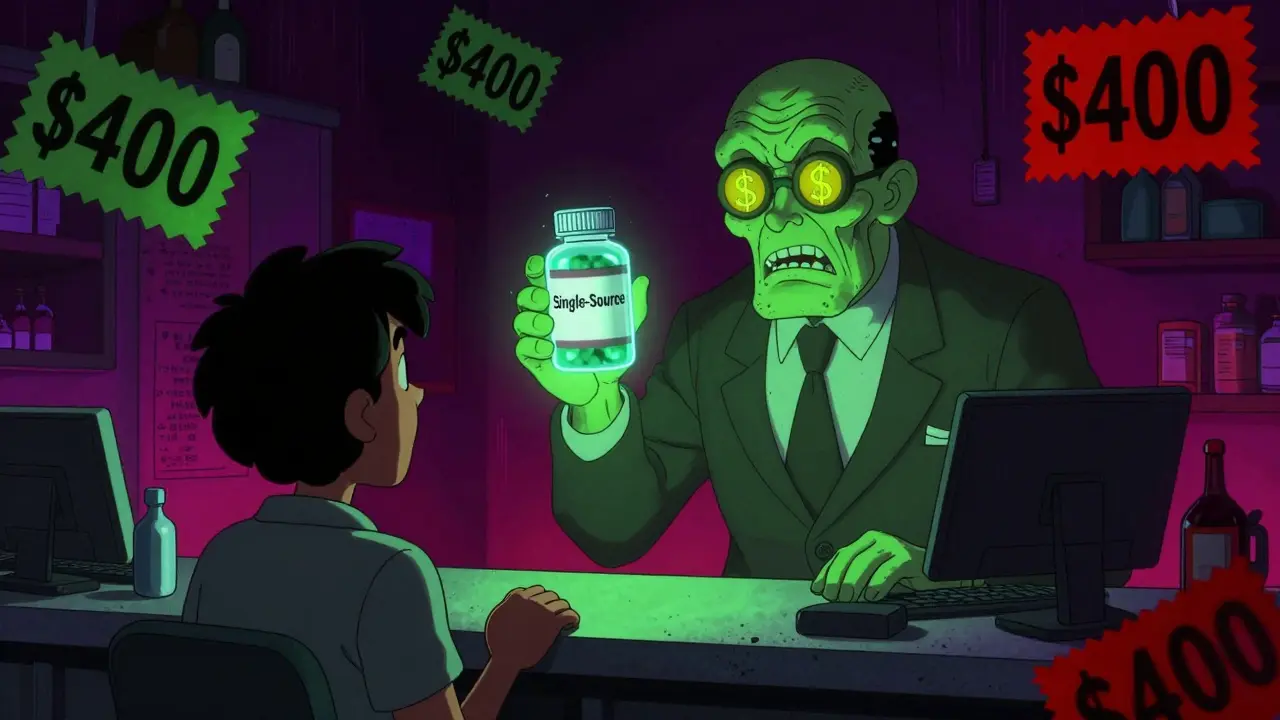
Have you ever stared at a pharmacy receipt, confused by why one medication costs $400 while another looks almost identical but costs $15? The difference often comes down to two terms that sound technical but define your healthcare budget: single-source and multi-source drugs. Understanding this distinction is not just about saving money; it is about knowing what you are putting into your body and how the insurance system treats it.
In the United States, roughly 90% of prescriptions filled are multi-source (generic) drugs, yet they account for only a fraction of total spending. Meanwhile, single-source drugs, which lack generic competition, drive up costs significantly. This guide breaks down exactly what these terms mean, how they affect your wallet, and what you can do to navigate the complex world of pharmaceutical pricing in 2026.
The Quick Summary
- Single-source drugs are made by only one company, usually because they are new or under patent protection. They are expensive and offer no direct price competition.
- Multi-source drugs have generic equivalents from multiple manufacturers. They are cheaper, bioequivalent to the brand name, and dominate the market.
- Safety is equal: The FDA requires multi-source drugs to be bioequivalent to the original brand, meaning they work the same way in the body.
- Pricing traps exist: Even with generics, Pharmacy Benefit Managers (PBMs) may steer you toward specific brands using rebates, sometimes making the "cheaper" option more costly out-of-pocket.
- Actionable tip: Always ask your pharmacist if a generic alternative exists and check your insurance formulary tier before paying cash.
What Is a Single-Source Drug?
A Single-source drug is a medication manufactured exclusively by one company with no generic equivalents available on the market. Think of these as the "brand-new" models in the car world. When a pharmaceutical company develops a new treatment, they receive patent protection that prevents others from copying it for a set period, usually 20 years from the filing date. During this time, they are the sole source.
You can identify single-source drugs in industry databases like Medi-Span’s MONY classification system, where they are marked with an 'N' code. Because there is no competition, the manufacturer has significant control over the price. According to research from the USC Schaeffer Center, single-source drugs command higher average list prices. For example, a study analyzing thousands of drug records found that for single-source drugs without generic competition, rebates and list prices move together dollar-for-dollar. This means the net price remains high.
Common examples include newer specialty medications used for oncology, immunology, and rare diseases. If you have been prescribed a biologic for rheumatoid arthritis or a new cancer therapy, it is likely single-source. These drugs are crucial for medical innovation, but they come with a steep price tag. In 2023, the absolute dollar increase in prices for single-source drugs was substantially higher than for multi-source drugs, adding nearly $1,000 more per year in some cases.
Understanding Multi-Source Drugs
Multi-source drugs are medications available as both the original brand and generic equivalents from multiple manufacturers. Once a patent expires, other companies can produce generic versions. This creates a competitive market. In the MONY system, these are marked with 'O' (originator brand with generics) and 'Y' (generic version).
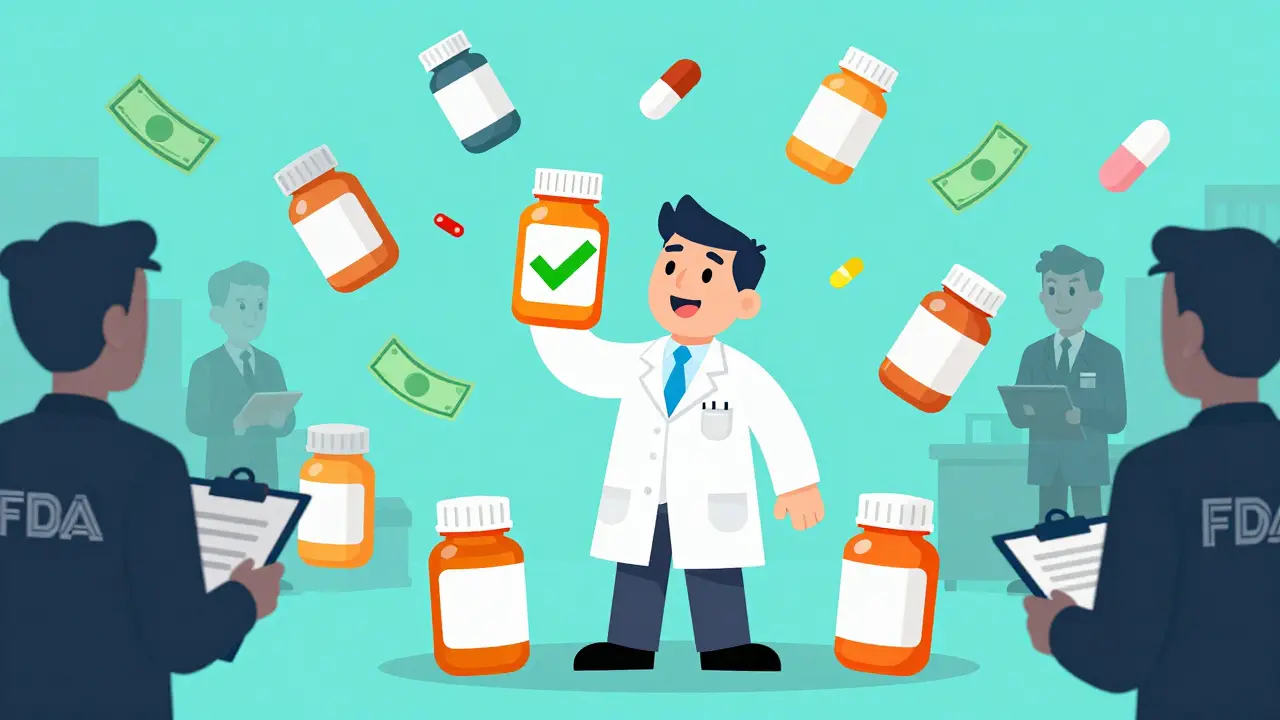
The key here is competition. When multiple companies make the same drug, prices drop. Approximately 86% of medications sold in the US are generic or multi-source products. Despite their lower cost, these drugs must meet strict standards. The Hatch-Waxman Act of 1984 mandates that generic equivalents contain identical active ingredients, dosage forms, strengths, and routes of administration. More importantly, they must demonstrate bioequivalence to the brand-name version.
Bioequivalence means the generic drug works in the body at the same rate and extent as the brand-name drug. The FDA evaluates this within a tight margin (80-125% of the reference drug's pharmacokinetic parameters). So, when you switch from a brand-name statin to a generic one, you are getting the same therapeutic effect for a fraction of the cost. Studies show that multi-source drugs save consumers an estimated $1.7 trillion over a decade.
Safety and Efficacy: Are Generics Really the Same?
This is the most common question patients ask. The short answer is yes, but with nuance. The FDA’s Orange Book lists all approved drug products and assigns therapeutic equivalence codes to multi-source drugs. An 'A' code indicates that the product is considered therapeutically equivalent to other pharmaceutically equivalent products. This means you can expect them to perform the same in the body.
However, patient experiences vary. A 2023 survey on Drugs.com showed that while multi-source drugs maintain a high average rating (4.2/5.0), about 68% of negative reviews cited "inconsistent effectiveness between generic manufacturers." Why does this happen if the FDA says they are equivalent?
It often comes down to inactive ingredients. While the active drug molecule is identical, the fillers, binders, and dyes can differ between manufacturers. Some patients are sensitive to these differences, experiencing slight variations in side effects or absorption. Additionally, the FDA allows a small window for bioequivalence. For most drugs, this is negligible. But for "narrow therapeutic index" medications-like certain seizure or thyroid drugs-even tiny variations can matter. In these cases, doctors may prefer you stay with one specific manufacturer.
If you feel a difference after switching generics, do not stop taking your medication. Talk to your pharmacist. They can check if your pharmacy switched suppliers due to PBM contracting changes-a phenomenon that affected 63% of multi-source drug users in a 2022 report. You might be able to request a specific manufacturer or get a waiver to stay on the brand if medically necessary.
The Pricing Puzzle: Why Do Costs Vary So Much?
You might assume that multi-source drugs are always cheaper. Usually, they are. But the system is complicated by Pharmacy Benefit Managers (PBMs) and rebates. PBMs negotiate with drug manufacturers to offer discounts, or rebates, in exchange for placing their drug on a preferred tier of the insurance formulary.
Here is the twist: Sometimes, a PBM will pay a huge rebate for a brand-name drug, even if a generic exists. They keep a portion of that rebate, and the insurance plan passes some savings to you. However, as Dr. Erin Trish from the USC Schaeffer Center noted in her 2022 testimony, "the rebate system creates perverse incentives where higher list prices generate larger rebates, but these savings rarely translate to lower out-of-pocket costs for patients."
For single-source drugs, the lack of generic competition means manufacturers have more power. Research shows that for single-source drugs, a $1 increase in rebates corresponds to a less-than-$1 increase in list price, leading to declining net prices for insurers-but not necessarily for you. If your copay is tied to the list price, you might still pay more for a single-source drug even if your insurer gets a rebate.
Conversely, multi-source drugs often use Maximum Allowable Cost (MAC) limits. MAC is the maximum price a PBM will pay for a generic drug. It typically sits 50-60% below the Average Wholesale Price. About 75% of generic drugs are reimbursed using these MAC limits. This keeps costs low for insurers and, ideally, for patients.
| Feature | Single-Source Drugs | Multi-Source Drugs |
|---|---|---|
| Manufacturers | One exclusive company | Multiple companies (Brand + Generics) |
| Price Level | High (Patent protected) | Low (Competitive market) |
| FDA Therapeutic Code | None assigned | Assigned (e.g., AB, AT) |
| Insurance Tier | Usually Higher (Tier 3/4) | Usually Lower (Tier 1/2) |
| Patient Savings | Limited without assistance | Significant ($287/month avg. savings) |
| Examples | New biologics, specialty drugs | Lisinopril, Metformin, Atorvastatin |
Navigating Insurance Formularies and PBMs
Your insurance plan uses a formulary, which is a list of covered drugs grouped into tiers. Single-source drugs often sit on higher tiers (Tier 3 or 4), meaning you pay a higher copay or coinsurance. Multi-source drugs are usually on Tier 1 or 2, offering the lowest out-of-pocket costs.
However, watch out for "step therapy." This is a requirement where your insurer forces you to try a multi-source alternative first before covering a single-source drug. If the generic doesn’t work or causes side effects, you can appeal. But this process takes time. A 2023 NEHI Network study found that navigating these systems often requires 2-3 pharmacy visits and understanding terms like "therapeutic equivalence codes."
Another issue is "single-source generics." Sometimes, only one generic manufacturer enters the market. In this case, the drug is technically multi-source, but there is no real competition. Truveris’ 2022 analysis showed that these single-source generics are not significantly cheaper than brand drugs because the lone generic maker holds similar pricing power to the brand. Always check if there are multiple generic options available.
Practical Steps for Patients
How can you protect yourself from unexpected costs and ensure you get the right medication? Here is a checklist based on current best practices:
- Ask for the Generic: When your doctor prescribes a brand-name drug, ask, "Is there a generic equivalent?" If the patent has expired, there should be one. If your doctor insists on the brand, ask them to note "Dispense as Written" on the prescription, but be prepared to pay more.
- Check Your Formulary: Log in to your insurance portal or call the number on your card. Ask which tier your medication is on. If a single-source drug is on Tier 4, ask if there is a therapeutic alternative on Tier 2 that works similarly.
- Verify Manufacturer Changes: If you have been stable on a generic for years and suddenly feel different, ask your pharmacist who manufactured your last few bottles. PBMs often switch contracts, changing the supplier. You can request a specific manufacturer if needed, though this may cost slightly more.
- Use Patient Assistance Programs (PAPs): For single-source drugs, many manufacturers offer PAPs that reduce costs for uninsured or underinsured patients. Websites like NeedyMeds or the manufacturer’s own site can help you apply. This can cut costs from hundreds of dollars to zero.
- Understand MAC Pricing: If you are self-insured or have a high-deductible plan, ask your PBM about MAC limits. Knowing the maximum allowable cost can help you negotiate or choose a pharmacy that honors lower rates.
The Future of Drug Pricing
The landscape is shifting. The Inflation Reduction Act of 2022 introduced Medicare Part D inflation rebate penalties in 2023, which disproportionately affect single-source drugs due to their higher baseline prices. This aims to curb excessive price hikes. Additionally, the FDA’s Generic Drug User Fee Amendments (GDUFA III) aim to speed up generic approvals, reducing the time a drug stays single-source. The goal is to cut approval times to 10 months by 2025, accelerating the transition to multi-source status.
Pharmaceutical companies are adapting too. Some are launching "authorized generics," where the brand-name company releases its own generic version to capture market share when patents expire. We saw this with Humira in 2023, after 14 years as a single-source blockbuster. This strategy helps maintain revenue but also provides patients with a lower-cost option sooner.
Long-term projections from the RAND Corporation suggest that while single-source drugs drive innovation, the multi-source model is essential for sustainable healthcare spending. With multi-source drugs potentially preventing $1.2 trillion in additional costs over the next decade, the push toward generics will continue. As a patient, staying informed about these dynamics empowers you to make smarter, safer, and more affordable health decisions.
Are single-source drugs safer than multi-source drugs?
Not necessarily. Both types undergo rigorous FDA testing. Single-source drugs are often newer and have recent clinical trial data, while multi-source (generic) drugs must prove bioequivalence to the brand name. The safety profile is effectively the same, though individual reactions to inactive ingredients can vary with generics.
Why is my generic drug more expensive than the brand name sometimes?
This can happen due to PBM rebate structures. If the brand-name drug offers a large rebate to the insurer, your copay might be lower than the cash price of the generic. Also, if only one generic manufacturer exists (single-source generic), they may charge near-brand prices due to lack of competition.
What does the 'N' code mean in drug classifications?
In the Medi-Span MONY classification system, 'N' stands for New or single-source drugs with no generic equivalents. 'O' represents originator brands with generics available, and 'Y' represents generic versions. This helps pharmacies and insurers determine pricing and coverage rules.
Can I refuse a generic substitution?
Yes, but your doctor must write "Dispense as Written" on the prescription. Be aware that your insurance may not cover the full cost of the brand-name drug, leaving you with a higher out-of-pocket expense. Always discuss the reason for refusing the generic with your provider.
How do I know if a drug is narrow therapeutic index?
Narrow therapeutic index (NTI) drugs have a small margin between effective dose and toxic dose. Examples include warfarin, levothyroxine, and phenytoin. Your pharmacist or doctor can tell you if your medication is NTI. For these drugs, consistency in manufacturer is often recommended to avoid efficacy fluctuations.