Dose Titration Simulator
Visualize how gradual dose adjustments minimize side effects compared to starting at a full therapeutic dose.
Starting a new prescription often feels like a gamble. You swallow the first pill hoping for relief, but instead, you might wake up with nausea, dizziness, or anxiety that makes life harder than before. This reaction isn't necessarily a sign that the drug is wrong for you-it often means your body just wasn't ready for the full strength yet. The solution lies in a medical practice called dose titration, which is the systematic process of adjusting medication dosage to achieve maximum therapeutic benefit while minimizing adverse effects. By starting low and going slow, doctors can help your system adapt, turning a potentially unbearable experience into manageable therapy.
What Is Dose Titration?
At its core, dose titration is about finding the sweet spot between effectiveness and tolerance. Imagine trying to lift weights. If you walk into a gym and immediately try to bench press 300 pounds, you’ll likely get injured. But if you start with 50 pounds and add weight gradually over weeks, your muscles strengthen without tearing. Your body processes medications in much the same way.
Dose titration involves two main directions: up-titration, which is gradually increasing the dosage to reach a target level, and down-titration, which is slowly decreasing the dose to find the lowest effective amount or to stop the medication safely. According to data from the American Medical Association (2022), 87% of prescription medications requiring precise dosing now include specific titration protocols in their FDA-approved labeling. This widespread adoption highlights that titration is no longer optional for many drugs-it’s standard care.
The goal is to identify the minimum effective dose. Many patients assume more medicine equals better results, but this is rarely true. In fact, taking more than necessary increases the risk of toxicity without adding significant benefit. Titration helps pinpoint exactly how much you need, nothing more.
Why Some Drugs Require Careful Titration
Not every pill needs a slow rollout. Painkillers like ibuprofen work quickly and have wide safety margins. However, certain classes of drugs demand precision because they have a narrow therapeutic index, meaning the difference between an effective dose and a toxic dose is very small.
Consider blood thinners. Warfarin, an older anticoagulant, requires meticulous monitoring. A study in the Journal of Thrombosis and Haemostasis (2022) found that 67% of patients on warfarin needed dose adjustments within their first month. Compare this to newer direct oral anticoagulants like apixaban, which only required adjustments in 28% of cases due to wider therapeutic windows. Even so, both require careful management.
Psychiatric medications are another prime example. Drugs used for ADHD, depression, or bipolar disorder affect brain chemistry directly. Introducing them too quickly can shock the system, leading to severe anxiety, insomnia, or mood swings. For instance, lamotrigine, used for epilepsy and bipolar disorder, must be titrated over five weeks to prevent Stevens-Johnson syndrome, a rare but life-threatening skin condition. Skipping these steps puts patients at unnecessary risk.
| Medication Class | Example Drug | Titration Duration | Primary Risk Avoided |
|---|---|---|---|
| ADHD Stimulants | Adderall | 4-6 weeks | Anxiety, Insomnia |
| Anticonvulsants | Lamotrigine | 5+ weeks | Stevens-Johnson Syndrome |
| Anticoagulants | Warfarin | Ongoing (INR monitored) | Bleeding or Clotting |
| Cancer Therapy | Venetoclax | 5 weeks | Tumor Lysis Syndrome |
How Up-Titration Works in Practice
Up-titration follows a structured timeline. Doctors typically start patients at 25-50% of the target dose. From there, they increase the amount by 10-25% increments every few days or weeks, depending on the drug’s speed of action. For fast-acting stimulants, adjustments might happen every 3-7 days. Slower-acting non-stimulants, such as atomoxetine, may take 8-12 weeks to fully titrate.
A classic protocol is seen with venetoclax, a treatment for chronic lymphocytic leukemia. To prevent tumor lysis syndrome-a dangerous buildup of toxins when cancer cells die too quickly-the dose starts at 20mg/day in week one, rising to 50mg in week two, 100mg in week three, 200mg in week four, and finally 400mg in week five. This rigid schedule saves lives by allowing the kidneys time to process cellular debris.
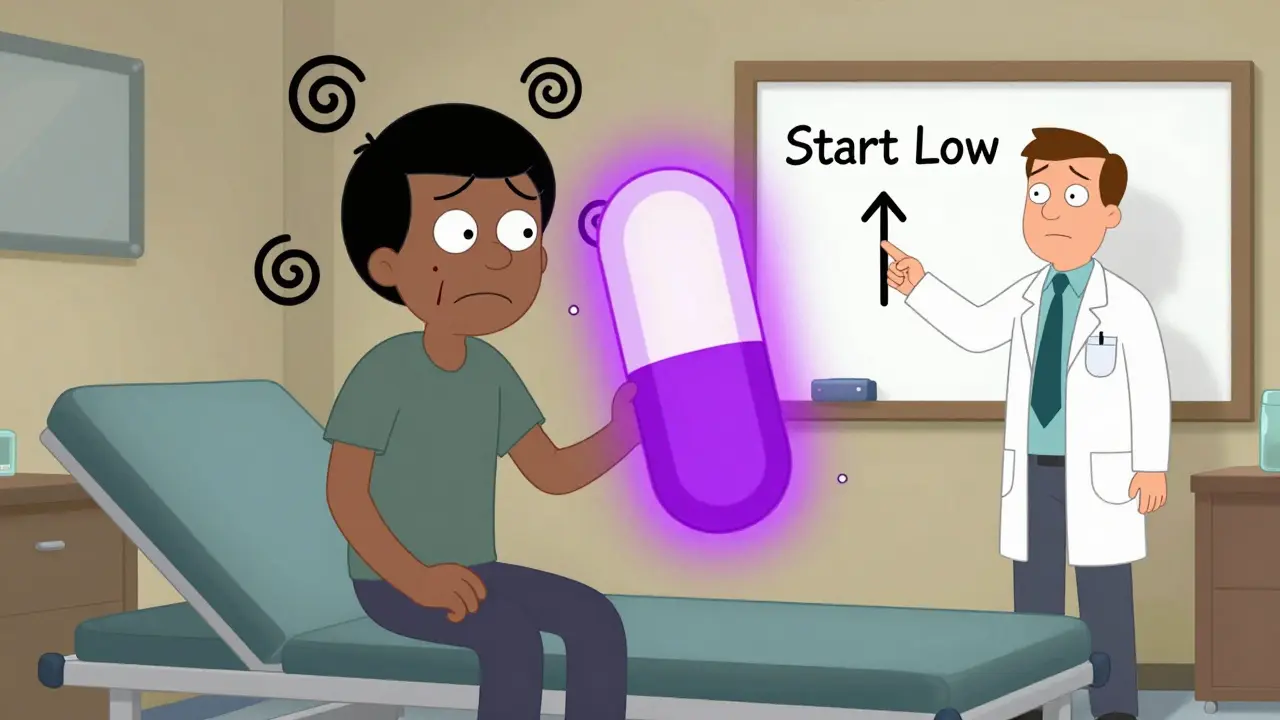
For everyday conditions like ADHD, the approach is less dramatic but equally important. Dr. David W. Goodman from Johns Hopkins University notes that "starting low and going slow" is the single most effective strategy to minimize side effects. A patient might begin with 5mg of Adderall rather than the standard 10mg. This smaller initial dose reduces the jolt to the nervous system, preventing the "wired" feeling that causes many people to quit treatment prematurely.

The Role of Down-Titration
While we often focus on starting meds, stopping them safely is just as critical. Abruptly quitting certain drugs can cause withdrawal symptoms that mimic or exceed the original condition. This is where down-titration comes in.
Down-titration involves reducing the dose gradually over weeks or months. It allows receptors in the brain or body to readjust to lower levels of the chemical. For example, beta-blockers used for heart failure or high blood pressure should never be stopped cold turkey. Doing so can trigger rebound hypertension or even heart attacks. The American Heart Association recommends gradual reduction to keep discontinuation rates due to side effects low-dropping from 45% to 18% when done correctly.
Patients often feel frustrated during down-titration because symptoms may return slowly. However, this phase ensures long-term stability. Working closely with a doctor to create a tapering schedule prevents the yo-yo effect of restarting medication after a failed abrupt stop.
Tracking Your Progress: What Patients Can Do
You play an active role in successful titration. Since everyone metabolizes drugs differently, your feedback guides your doctor’s decisions. Keeping a detailed log is essential. Track not just whether you feel better, but specifically what side effects appear and when.
Use a simple 1-10 scale for severity. Note the time you took the medication and any activities around it. Did you eat? Were you stressed? A 2021 BMC Psychiatry study found that 58% of patients struggled to distinguish medication side effects from normal health variations. Waiting 1-2 weeks between dose adjustments helps clarify patterns. If headaches start three days after an increase, that’s a clue. If they vanish after a week, your body adapted.
Digital tools are making this easier. Apps like TitrationTracker, cleared by the FDA in 2023, use AI to predict optimal dose adjustments based on your reported outcomes. Research in Nature Digital Medicine showed that algorithm-assisted titration reduced side effects by 32% compared to standard care. These tools don’t replace doctors, but they provide richer data for informed decisions.
- Keep a daily journal: Record mood, energy, sleep quality, and physical symptoms.
- Be consistent with timing: Take meds within a 30-60 minute window each day to maintain stable blood levels.
- Communicate openly: Tell your doctor about minor annoyances, not just major crises. Small tweaks early prevent big problems later.
- Patience is key: Remember that full titration can take 8-12 weeks. Don’t judge the drug’s success in the first few days.

Challenges and Limitations
Titration isn’t perfect. It takes time. In emergency situations like acute anaphylaxis or status epilepticus, there’s no room for gradual increases-you need immediate, full-dose intervention. Additionally, the process requires commitment. A 2021 study in the Journal of Clinical Pharmacy and Therapeutics reported a 32% non-adherence rate during titration phases. Patients get impatient, forget doses, or give up because they don’t feel instant relief.
Access is another barrier. Weekly check-ins and regular blood tests (like INR checks for warfarin) aren’t feasible everywhere. The WHO reports that only 22% of low-income countries have standardized titration protocols for essential medications. In these settings, simpler regimens or fixed-dose combinations are often used, though they may carry higher side effect risks.
Finally, overtreatment is a risk. As Dr. Alan F. Schatzberg warns, overly conservative titration can lead to undertreatment, especially in severe depression where rapid symptom relief is critical. Balancing caution with efficacy requires skilled clinical judgment.
The Future of Personalized Titration
We’re moving toward a future where titration is tailored to your genetics. Pharmacogenetic testing analyzes how your DNA affects drug metabolism. Currently, guidelines exist for 28 medications, with 12 more expected by 2025. This technology could tell a doctor exactly where to start the titration curve, skipping trial-and-error phases.
The global therapeutic drug monitoring market supports this shift, valued at $2.8 billion in 2022 and projected to reach $4.1 billion by 2027. As personalized medicine grows, the hope is that 75% of high-risk medications will use genetic markers for standard titration by 2030, according to the American College of Clinical Pharmacology. Until then, sticking to proven titration strategies remains the best way to protect your health while seeking relief.
How long does dose titration usually take?
The duration varies by medication type. Fast-acting drugs like ADHD stimulants may take 4-6 weeks, while slower-acting medications like non-stimulants or antidepressants can require 8-12 weeks for full titration. Complex treatments like venetoclax follow strict weekly schedules over five weeks.
Can I adjust my own dose without telling my doctor?
No, you should never self-adjust prescribed medications. Changing doses without medical supervision can lead to dangerous side effects, withdrawal symptoms, or treatment failure. Always consult your healthcare provider before making any changes.
What happens if I miss a dose during titration?
If you miss a dose, take it as soon as you remember unless it's almost time for the next one. Do not double up to make up for a missed dose, as this can spike side effects. Consistency is crucial for accurate titration data.
Why do some drugs have a narrow therapeutic index?
A narrow therapeutic index means the margin between a helpful dose and a harmful dose is very small. Drugs like warfarin or lithium fall into this category because slight increases in concentration can cause toxicity, while slight decreases render them ineffective.
Is down-titration necessary for all medications?
Not all medications require down-titration, but those affecting the central nervous system (like antidepressants, benzodiazepines, and beta-blockers) generally do. Stopping these abruptly can cause severe withdrawal or rebound symptoms.