
Preterm Infant Medication Safety Calculator
Medication Safety Calculator
Calculate safe dosages for preterm infants based on weight and gestational age. Helps prevent dangerous dosing errors and consider medication-specific risks.
Recommended Dose
Enter weight and gestational age to calculate
Medication-Specific Risks
Select a medication to see potential side effects and safety considerations
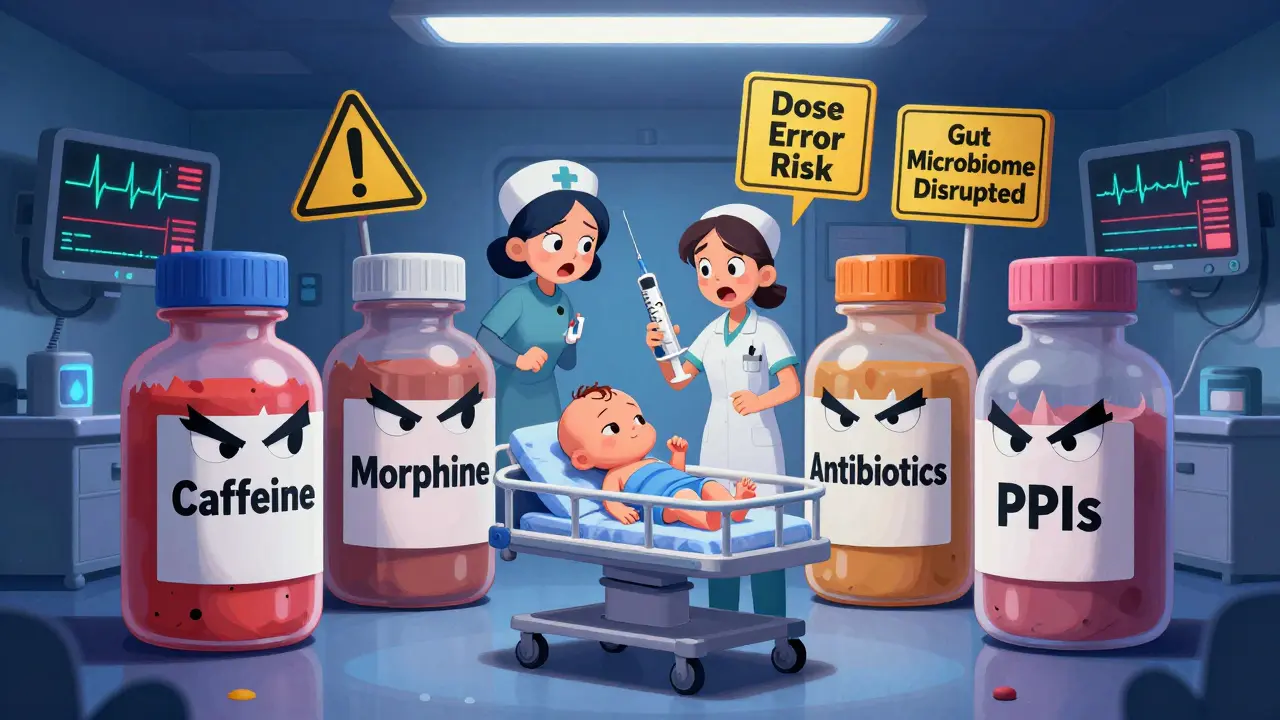
When a baby is born too soon, their body isn’t ready for the world - and that includes handling medications. Preterm infants, especially those born before 28 weeks, face a unique challenge: they need drugs to survive, but their underdeveloped organs can’t process them the way older babies or adults can. Every dose carries risk. Every pill, injection, or IV drip could cause harm - sometimes in ways that don’t show up until years later.
Why Medications Are Riskier for Preterm Infants
It’s not just about being small. A preterm baby’s liver, kidneys, and brain are still growing. Their enzymes, which break down drugs, are barely active. Their blood vessels are leaky. Their gut is fragile. These aren’t minor differences - they change how every medication behaves.
Take caffeine citrate, one of the most common drugs given to preterm babies to stop apnea. It’s usually safe - but not always. Around 18.7% of infants on standard doses develop fast heart rates. Nearly 7.3% stop feeding well. These aren’t rare side effects. They’re common enough that nurses monitor for them daily.
And that’s just one drug. More than 90% of respiratory medications used in NICUs are given off-label. That means they were never tested in babies this young. The FDA hasn’t approved them for this use. But there’s no choice. So doctors use them anyway - with guesses based on weight, gestational age, and gut feeling.
The Hidden Toll of Pain Management
For decades, doctors believed newborns didn’t feel pain the way adults do. That myth led to surgeries without anesthesia. Today, we know better. But the solution has its own dangers.
A 2021 study in JAMA Network Open found that 100% of extremely preterm infants received some kind of pain or sedation drug during their NICU stay. Over 40% got opioids. Nearly 30% got benzodiazepines. These drugs help them tolerate breathing tubes, IVs, and procedures. But they also affect brain development.
The American Academy of Pediatrics now says routine use of these drugs isn’t recommended. Why? Because repeated exposure may change how neural connections form. The long-term effects aren’t fully understood, but early evidence points to higher risks of attention problems, learning delays, and even autism spectrum traits later in life.
Now, NICUs are shifting toward targeted, short-term use - only when absolutely necessary. Weaning protocols have cut average opioid exposure from nearly 29 days down to 14. And pain is still managed just as well. That’s progress.
Antibiotics: Saving Lives, Changing Microbiomes
One in three preterm infants gets antibiotics in the first week of life - often for suspected infection, even when there’s no proof of it. That’s because sepsis can kill fast, and waiting for test results isn’t an option.
But antibiotics don’t just kill bad bacteria. They wipe out good ones too. A 2021 study from Washington University showed that preterm babies exposed to antibiotics had 47% more harmful bacteria in their guts - especially Enterobacteriaceae - and 32% fewer beneficial species like Bifidobacterium. These changes didn’t go away. They lasted 18 months after discharge.
And it gets worse. These babies also had 2.8 times more antibiotic-resistant genes in their gut. That means future infections might be harder to treat. One parent on a preemie support forum described her son: “He got 28 days of antibiotics for possible sepsis that was never confirmed. Now at age 2, he’s had five ear infections and two rounds of antibiotics.” That’s not rare.
Experts like Dr. Gautam Dantas warn that the gut microbiome is mostly set by age three. What happens in the NICU can shape a child’s health for life.
Anti-Reflux Drugs: A Common Practice with Dangerous Consequences
It’s common to see preterm infants on acid-reducing medications like proton pump inhibitors (PPIs). Parents and doctors worry about spitting up, crying, or discomfort. But here’s the truth: there’s almost no evidence these drugs help.
A 2022 Cochrane review found no benefit for anti-reflux meds in preterm infants. And yet, 41% of NICU graduates are still prescribed them. Why? Because it feels like the right thing to do.
The cost? A 1.67 times higher risk of necrotizing enterocolitis (NEC), a deadly gut disease. An 1.89 times higher chance of late-onset sepsis. And a 2.3 times greater risk of bone fractures. These aren’t small risks. They’re life-altering.
The AAP updated its guidelines in January 2024 to say: don’t use anti-reflux meds routinely in preterm infants. If a baby spits up, it doesn’t mean they need a pill. There are safer ways to manage feeding - positioning, slower feeds, thickened milk. Those should come first.
The Hidden Problem: Dosing Errors
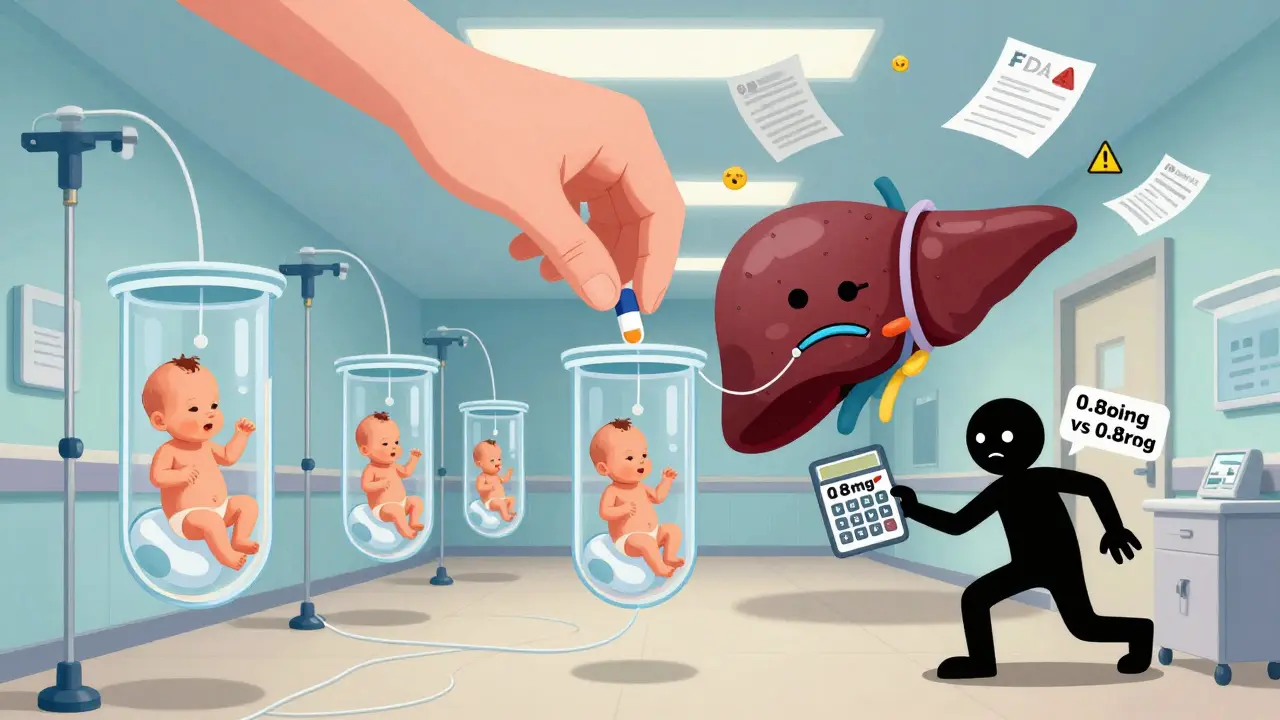
Most NICU meds are dosed by weight - in milligrams per kilogram. Sounds simple. But for a baby weighing 800 grams? One decimal point wrong means a 10% overdose. That’s enough to stop breathing.
Nurses report that 68.4% see at least one dosing error per month. Over 20% of those lead to real harm: low blood pressure, seizures, organ stress. Many errors happen because formulas aren’t built for tiny weights. Or because the same drug has different dosing rules depending on gestational age.
For example, morphine clearance in a 26-weeker is 60% lower than in a 34-weeker. Fentanyl behaves differently too. But most hospitals still use one standard dose for all preemies. That’s changing. NICUs using pharmacokinetic modeling software like DoseMeRx have cut dosing errors by over half. But only 37% of Level IV NICUs use it. Most still rely on paper charts and mental math.
What’s Being Done - And What’s Next
Change is slow, but it’s happening. The FDA’s Best Pharmaceuticals for Children Act has led to 15 new neonatal labeling changes since 2002. The NIH’s Neonatal Research Network now has a dedicated pharmacology core. And in 2023, the Neonatal Precision Medicine Initiative launched - aiming to build personalized dosing models for 25 high-risk drugs by 2026.
There’s also hope in new formulations. NeoFen, the first fentanyl designed specifically for preterm infants, is in FDA Fast Track review. Approval is expected in mid-2025. It could mean safer pain control without the spikes in blood pressure or breathing trouble that current versions cause.
And researchers are testing microbiome-sparing antibiotics - drugs that target only the bad bugs, leaving the good ones alone. Early trials are promising. If they work, they could prevent years of digestive and immune problems.
The Bottom Line
Medications save preterm babies. But they also hurt them - sometimes silently, sometimes years later. The key isn’t to avoid drugs. It’s to use them wisely.
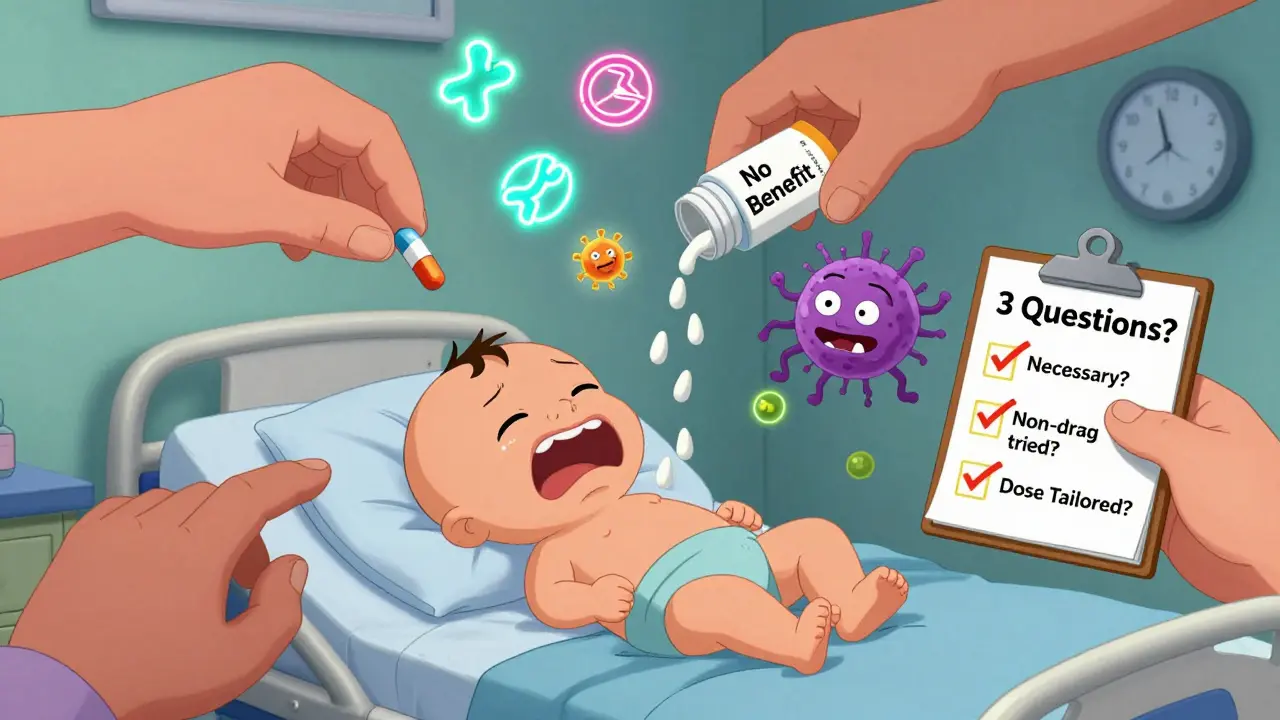
Every time a preterm infant gets a drug, three questions should be asked:
- Is this absolutely necessary?
- Have we tried non-drug options first?
- Is the dose tailored to their exact gestational age and weight?
The answer to all three should be yes - every time. Because for these tiny patients, the line between healing and harm is thinner than a strand of hair.
Why are preterm infants more sensitive to medication side effects?
Preterm infants have underdeveloped organs - especially the liver and kidneys - which are responsible for breaking down and clearing drugs from the body. Their enzyme systems, like cytochrome P450, are only 30% as active as in adults at 32 weeks gestation and don’t fully mature until age one. Their blood-brain barrier is leaky, their gut is fragile, and their body weight changes daily. All of this means drugs can build up faster, last longer, and affect the brain and organs more severely than in older babies.
Are antibiotics always necessary for preterm infants?
No. Many preterm infants receive antibiotics for suspected infection even when tests are negative. Studies show that up to one-third of these babies get antibiotics without confirmed infection. While this can be life-saving, it also disrupts the developing gut microbiome, increases antibiotic resistance, and raises the risk of long-term issues like allergies, asthma, and digestive disorders. Current guidelines recommend antibiotics only when infection is likely or confirmed - not as a precautionary measure.
Can caffeine citrate cause problems in preterm infants?
Yes. While caffeine citrate is the standard treatment for apnea of prematurity and has saved countless lives, it can cause side effects in nearly one in five infants. Common issues include fast heart rate (tachycardia) and feeding intolerance. Some babies become too jittery to feed properly, leading to poor weight gain. Doses are carefully monitored, and adjustments are made if side effects appear. The benefits usually outweigh the risks, but it’s not risk-free.
Why are anti-reflux medications still used if they’re ineffective?
Many doctors and parents assume that spitting up or fussiness after feeds means acid reflux - and therefore need medication. But research shows these symptoms are often normal in preterm infants and not caused by stomach acid. Anti-reflux drugs like PPIs don’t improve feeding, crying, or weight gain. Instead, they increase the risk of NEC, sepsis, and bone fractures. Despite this, they’re still prescribed because changing long-standing habits takes time - and because parents often ask for something to be done.
How do NICUs reduce medication errors in preterm infants?
The most effective methods include using weight-based dosing calculators built into electronic systems, implementing gestational-age-specific dosing protocols, and using pharmacokinetic modeling software like DoseMeRx. NICUs also rely on pharmacist-led reviews of all medication orders, double-checking doses by two staff members, and training nurses on developmental pharmacology. Units that use these practices have cut dosing errors by over 50%.


Comments
Daz Leonheart
February 4, 2026 AT 10:43 AMI've seen this first hand with my niece. Born at 26 weeks, she was on 3 different meds by day 3. We didn't know half of them were off-label. The nurses were amazing, but the system? It's like flying blind with a parachute made of tissue paper. I'm glad someone's finally putting this out there.
Kunal Kaushik
February 5, 2026 AT 04:47 AMThis is so important. 🙏 I work in a NICU in Mumbai and we face the same issues - limited resources, no pharmacokinetic software, and parents who just want the baby to stop crying. We do our best, but guidelines like this? They’re a lifeline.
Caleb Sutton
February 6, 2026 AT 18:11 PMThey're hiding the truth. The pharmaceutical companies know how fragile these babies are. They push these drugs because they can. The FDA? A rubber stamp. And don't get me started on the 'research' - funded by the same companies that make the drugs. It's a pyramid scheme with tiny babies at the bottom.
Janice Williams
February 6, 2026 AT 20:01 PMIt is profoundly concerning that clinical practice continues to outpace evidence-based medicine, particularly in neonatal pharmacology. The systemic normalization of off-label prescribing without robust pharmacodynamic data constitutes a moral hazard of the highest order. Furthermore, the reliance on anecdotal gestalt over quantifiable pharmacokinetic modeling is not merely suboptimal - it is indefensible.
Roshan Gudhe
February 8, 2026 AT 01:53 AMThere’s a quiet revolution happening in neonatal care, and this post captures it. We’re moving from "what feels right" to "what science says." But change is slow because it requires us to admit we were wrong - and that’s hard. Especially when you’ve been doing it the same way for 20 years. Still, the babies deserve better. And slowly, they’re getting it.
Rachel Kipps
February 9, 2026 AT 08:03 AMI work as a nurse in a level IV NICU and I’ve seen dosing errors up close. One time, a 780g baby got a 10% overdose because the computer defaulted to the 34-week formula. We caught it, but... it shouldn’t have happened. We need better systems. Not more courage. More code.
Prajwal Manjunath Shanthappa
February 10, 2026 AT 03:47 AMLet us not delude ourselves: the neonatal pharmacological landscape is a grotesque parody of evidence-based practice. The proliferation of PPIs in preterm infants - a practice devoid of empirical support - is emblematic of a medical culture that prioritizes parental anxiety over infant physiology. One is left to wonder whether the profit motive or the pathology of therapeutic overreach drives this epidemic of iatrogenesis.
Wendy Lamb
February 11, 2026 AT 06:53 AMThe part about antibiotics changing the microbiome for 18 months? That hit me. My son was on them for 21 days. He’s 4 now and still gets sick every other month. I didn’t know it could be linked. This needs to be in every parent’s hands.