

Every day, pharmacists dispense millions of generic medications. They’re cheaper, widely available, and just as effective as brand-name drugs-when handled correctly. But here’s the problem: generic medications are behind nearly half of all preventable pharmacy errors. Not because they’re unsafe, but because of how they’re managed. A patient gets a new prescription for metformin. They’ve taken it before, but this time the pill is blue instead of white. They think it’s wrong. Or worse, they don’t notice the change at all-and end up taking the wrong dose. These aren’t rare mistakes. They happen in community pharmacies across the UK and US every single day.
Why Generics Are More Error-Prone
Generic drugs aren’t just copies. They’re manufactured by different companies, each with their own pill shape, color, size, and even inactive ingredients. One manufacturer’s 500mg metformin tablet might be oval and white. Another’s is round and yellow. The active ingredient? Identical. But to a patient-or even a busy pharmacist-the difference looks like a different drug. Look-alike, sound-alike names make it worse. Consider hydralazine and hydroxyzine. One treats high blood pressure. The other is for anxiety. Mix them up? That’s a dangerous error. Generic versions often share these confusing names, and many pharmacy systems don’t flag them. Even more subtle: bioequivalence. The FDA allows generics to absorb between 80% and 125% of the brand drug’s effect. That’s legal. But for patients with narrow therapeutic windows-like those on warfarin or thyroid meds-that small variation can mean the difference between control and crisis. And if the pharmacist doesn’t know which manufacturer’s version the patient was previously on, they might swap it without realizing the risk.The Most Common Generic Medication Errors
There are five types of errors that show up again and again with generics:- Dosage errors (37.4% of clinical errors): A patient gets 500mg instead of 250mg because the label was misread or the stock bottle was mislabeled.
- Strength discrepancies (19.2%): The prescription says 10mg, but the generic available is only in 5mg or 20mg. The pharmacist dispenses two 5mg pills without confirming the prescriber’s intent.
- Dispensing form issues (14.4%): The patient was on a brand-name extended-release tablet. The generic dispensed is an immediate-release capsule. The patient takes it the same way-leading to spikes in blood levels.
- Quantity mistakes (11.3%): The script says 30 tablets, but the pharmacy fills 60 because the generic comes in a larger bottle.
- Administrative mix-ups (48.7%): Wrong patient, wrong prescription, wrong date. These are often caused by rushed workflows in high-volume pharmacies.
And here’s what makes it worse: most of these errors aren’t caught until after the patient takes the medication. A 2023 study found that 15-20% of first-fill counseling sessions with patients catch these mistakes-but only if the pharmacist actually takes the time to talk to them.
How Technology Can Stop Errors Before They Happen
Technology isn’t magic. But when used right, it’s the best tool we have. Computerized Physician Order Entry (CPOE) systems reduce medication errors by up to 55%. That’s huge. But not all systems are equal. Many still don’t track generic manufacturer changes. A pharmacist might see “metformin” on screen, but not know whether it’s from Teva, Mylan, or Sandoz-each with different appearances and release profiles. Bar code medication administration (BCMA) cuts adverse events by 50%. In hospitals, nurses scan the patient’s wristband and the pill bottle before giving a dose. If the barcode doesn’t match, the system stops them. In community pharmacies? Only 35-40% have this. Most still rely on visual checks. Clinical Decision Support Systems (CDSS) can flag dangerous substitutions. For example: if a patient is on a specific brand of levothyroxine and the system detects a switch to a different generic, it can prompt the pharmacist: “Patient previously on Synthroid. New generic may cause TSH fluctuation. Confirm with prescriber.” But these alerts only work if the system has up-to-date drug databases. And here’s the catch: too many alerts cause alert fatigue. If the system beeps every time a generic is swapped-even when it’s safe-pharmacists start ignoring it. The trick? Smart alerts. Only trigger them for high-risk drugs and known patient-specific risks.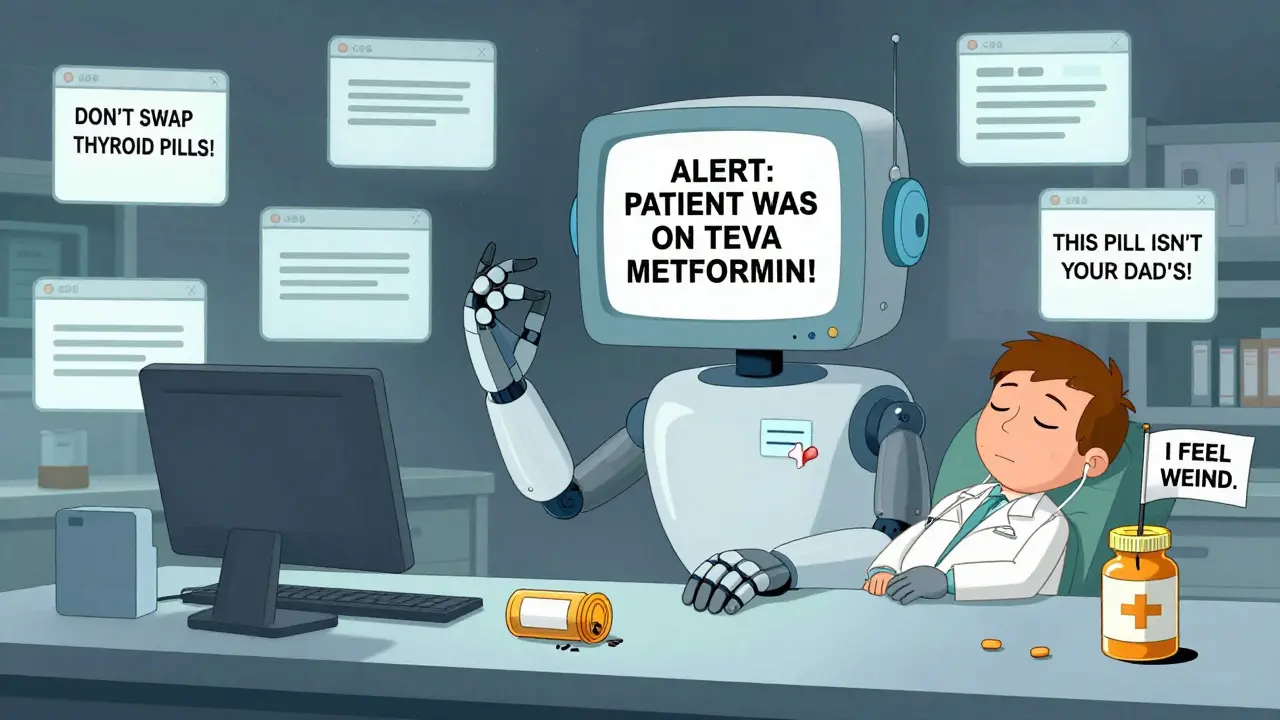
What Pharmacists Can Do Right Now
You don’t need a $75,000 software upgrade to reduce errors. Start with these five steps:- Use the 8 R’s every time: Right patient, right drug, right dose, right route, right time, right reason, right documentation, right response. Don’t skip one. Even in a rush.
- Check the physical pill: Before handing over any generic, compare it to the previous bottle the patient brought in. If it looks different, ask: “Have you seen this version before?”
- Mandatory first-fill counseling: Spend 3-5 minutes with every patient on a new prescription. Say: “This is a generic version of [brand]. It works the same, but it looks different. Did you notice the change?” You’ll catch 12-15% of errors here.
- Update your drug references: Outdated drug guides are a silent killer. 42% of pharmacists report incorrect generic formulation info in their references. Use Drug Facts and Comparisons or Epocrates. Update annually.
- Document substitutions: If you switch a patient from one generic to another, note it in their record. Why? Because if they go to another pharmacy next week, the next pharmacist needs to know.
These aren’t fancy. But they work. A UK community pharmacy in Bristol cut its dispensing errors by 41% in six months just by enforcing the 8 R’s and adding mandatory counseling.
When Patients Are Confused-What to Say
Patients don’t understand bioequivalence. They don’t care about FDA guidelines. They care if their pill changed color and they feel different. Don’t say: “It’s bioequivalent.” Say: “This is the same medicine, just made by a different company. Sometimes the shape or color changes, but the effect is the same. If you feel anything different-dizziness, nausea, or if your condition seems worse-call us right away.” And if they’ve had bad experiences before? Don’t dismiss it. Even if the science says it’s identical, their body might react differently. Switch back to their previous version. Or talk to the prescriber. Patient trust matters more than cost savings.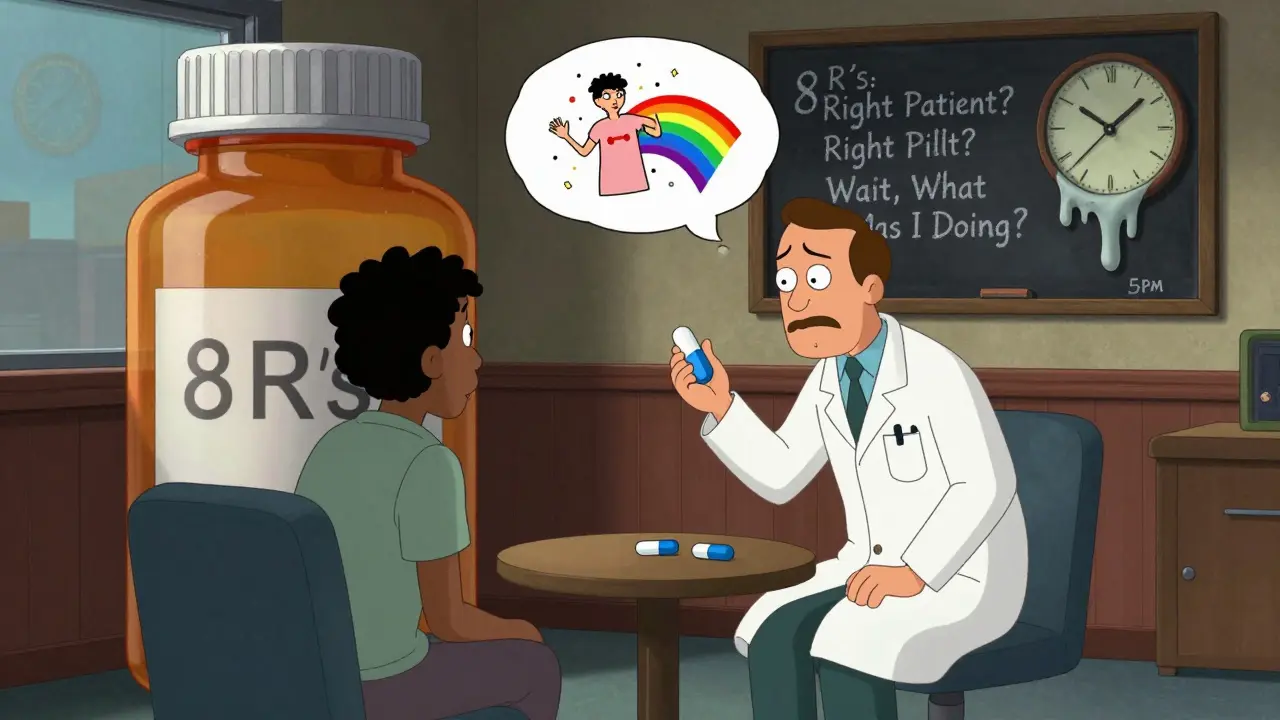
What’s Changing in 2026
The FDA’s 2022 GDUFA III rules now require manufacturers to notify pharmacies and prescribers when they change a generic drug’s appearance or formulation. That’s new. It means pharmacies should get alerts before the pills on the shelf look different. The WHO also updated its guidelines in 2023 to push for standardized naming. No more “metformin hydrochloride 500 mg tablet” from one maker and “Metformin HCl 500mg” from another. Consistent labels reduce confusion. And AI is starting to help. Pilot programs in the US are using machine learning to predict which patients are likely to have adverse reactions to a new generic based on their age, genetics, and past responses. Early results show a 22% drop in errors beyond standard systems. But here’s the truth: none of this matters if pharmacists are overworked. The UK’s NHS is short by 1,200 pharmacists. Community pharmacies are running at 120% capacity. Technology can help-but only if we give pharmacists the time to use it.What’s Not Working
Relying on memory. Skipping counseling. Ignoring pill differences. Assuming “it’s just a generic, so it’s fine.” The biggest myth? That generics are risk-free because they’re FDA-approved. Approval doesn’t mean error-proof. It means the active ingredient meets standards. It doesn’t guarantee the patient won’t be confused, misdosed, or harmed by a switch they didn’t know about. And systems that only alert on drug interactions? They miss 70% of generic-specific errors. Because the drug is the same. The problem is the form, the label, the patient’s history.Final Thought: Safety Isn’t Optional
Medication errors cost the UK and US over £70 billion a year. They cause 7,000-9,000 deaths annually in the US alone. Most of these are preventable. Generics saved billions in healthcare costs. That’s good. But if we’re not careful, we’ll trade cost savings for patient harm. The fix isn’t more rules. It’s better systems, better training, and better communication. Every pharmacist has the power to stop an error before it reaches a patient. All it takes is slowing down long enough to look at the pill, ask the question, and listen to the answer.Why do generic medications cause more errors than brand-name drugs?
Generics aren’t inherently riskier, but they introduce more variables. Different manufacturers make them with different colors, shapes, sizes, and inactive ingredients. Patients often mistake these changes for a different drug. Pharmacists may not know which version a patient was previously on, and pharmacy systems often don’t track manufacturer changes. This leads to confusion, wrong substitutions, and missed warnings.
What’s the most common mistake pharmacists make with generics?
The most common mistake is assuming the patient knows or notices the change in appearance. Many pharmacists dispense a different generic version without confirming with the patient or checking their previous bottle. This leads to patients stopping their medication because they think it’s wrong-or taking it incorrectly because they didn’t realize the dose or release type changed.
Can technology fully prevent generic medication errors?
No single technology can prevent all errors. Bar code scanning and clinical decision support reduce errors by 50% or more, but they depend on accurate data. If the system doesn’t know which generic manufacturer the patient was on, or if alerts are too frequent, staff ignore them. Technology helps-but only when paired with human verification and patient communication.
Should pharmacists always ask patients about previous generics?
Yes. Especially for high-risk drugs like thyroid medication, seizure meds, or blood thinners. Ask: “What did your last bottle look like?” or “Did you notice a change in color or shape?” Many patients won’t volunteer this unless asked. This simple step catches errors that systems miss.
What should I do if a patient says their generic isn’t working like before?
Don’t dismiss it. Even if the generic is bioequivalent, patients can experience differences due to inactive ingredients, absorption timing, or psychological factors. Check the manufacturer and formulation. If it’s different from their previous version, contact the prescriber. Sometimes, switching back to the original generic-or even the brand-is the safest option for that patient.
How can my pharmacy start reducing generic errors today?
Start with three actions: (1) Train staff on the 8 R’s of medication safety. (2) Make first-fill counseling mandatory-spend 3-5 minutes with every patient on a new generic. (3) Update your drug reference books or software. These steps cost little but can cut errors by 30% or more within six months.
Pharmacy errors with generics aren’t inevitable. They’re a system problem-and systems can be fixed. The tools exist. The knowledge is there. What’s missing is the consistent, human-centered practice that puts patient safety first.


Comments
Kristen Russell
January 2, 2026 AT 00:10 AMJust had a patient tell me last week their new metformin made them nauseous-turned out it was a different filler. We switched them back. Simple fix, zero tech needed.
Lee M
January 3, 2026 AT 07:12 AMLet’s be real-this isn’t about generics. It’s about pharmacies treating patients like inventory. You don’t get a 5-minute counseling session because your time is worth $18/hour. The system is broken, not the pills. Tech won’t fix a culture that sees patients as bottlenecks.
Todd Nickel
January 4, 2026 AT 07:54 AMThe bioequivalence range of 80–125% is legally acceptable, yes-but it’s mathematically absurd when applied to narrow-therapeutic-index drugs. A 25% variation in absorption isn’t noise; it’s a clinical wildcard. For a patient on warfarin, that’s not a ‘slight difference’-it’s a potential bleed or clot. The FDA’s tolerance isn’t a safety standard; it’s a cost-control compromise dressed in regulatory language. We’re gambling with pharmacokinetics because we’d rather save $2.50 than risk a lawsuit from someone who didn’t notice the pill color changed.
Austin Mac-Anabraba
January 5, 2026 AT 07:02 AM‘Patient trust matters more than cost savings’-what a charming sentiment. But let’s not pretend this is about ethics. It’s about liability. If you switch a patient’s generic without documenting it and they crash, you’re on the hook. That’s why the 8 R’s exist-not because they’re noble, but because they’re legal armor. Stop romanticizing counseling. It’s risk mitigation with a smile.
Bryan Anderson
January 6, 2026 AT 00:14 AMI’ve worked in a high-volume pharmacy for 12 years. The biggest issue isn’t the pills-it’s the lack of continuity. Patients come in with half-empty bottles, no records, and no idea what they’re taking. If the system doesn’t share data between pharmacies, no amount of barcodes or CDSS will help. We need interoperable EHRs that track generic manufacturer changes across the entire care network. Until then, we’re just playing whack-a-mole.
jaspreet sandhu
January 6, 2026 AT 01:20 AMIn India we have this problem too but worse. Sometimes same generic has three different looks in same city. Pharmacist just gives whatever is cheapest. Patient comes back after two weeks saying ‘this medicine not work’. We tell them ‘same chemical’. They say ‘but my headache not go’. We have no time to explain. No one cares. Only money talks. You say 8 R’s? We do 1 R: Right payment.
Olukayode Oguntulu
January 6, 2026 AT 11:11 AMAh yes, the noble pharmacist-guardian of the pill, sentinel of the bioequivalence. How quaint. We’ve outsourced our biological sovereignty to corporate formularies and algorithmic substitution engines. The real tragedy isn’t the blue tablet-it’s that we’ve normalized the erasure of patient agency under the banner of ‘efficiency’. You speak of ‘systems’ like they’re neutral tools. They’re not. They’re instruments of capital’s colonization of the body. The pill is a political object now. And we, the pharmacists, are its reluctant custodians in a regime that values throughput over transcendence.
LIZETH DE PACHECO
January 7, 2026 AT 14:55 PMThank you for writing this. I’m a nurse and I see patients come in scared because their pill changed color. I always tell them: ‘It’s the same medicine, just dressed differently. But if you feel weird, call your pharmacy. You’re not crazy.’ It’s small, but it helps. Keep reminding people: trust your body. And pharmacists-take the five minutes. It’s worth it.