
Medication Guide Knowledge Check
How Much Do You Know?
Test your understanding of medication guides with this 5-question quiz. Every answer could help protect your health.
1. Which type of medications are MOST likely to require a Medication Guide?
2. How long do pharmacists spend explaining Medication Guides on average?
3. What percentage of patients read their Medication Guide according to studies?
4. What does the FDA require Medication Guides to include?
5. Which statement about Medication Guides is TRUE?
Every time you pick up a prescription, there’s a small paper booklet tucked inside the bag-often ignored, rarely read. But that little guide could be the difference between staying safe and ending up in the hospital. These are Medication Guides, and they’re not just paperwork. They’re a lifeline designed by the FDA to protect you from serious, sometimes deadly, side effects of certain drugs.
What Exactly Is a Medication Guide?
A Medication Guide is a printed handout that comes with certain prescription medications. It’s not the same as the tiny label on the bottle or the thick booklet your doctor gets. This is specifically for you-the patient. The FDA requires these guides for about 150 drugs out of thousands on the market. These aren’t random choices. They’re drugs with serious risks: opioids, biologics for autoimmune diseases, psychiatric medications like clozapine, and some cancer treatments. The FDA stepped in because too many people were getting hurt without knowing why. A drug might work wonders, but if you don’t know the warning signs of a rare but deadly reaction, you might keep taking it until it’s too late. That’s where Medication Guides come in. They’re written in plain language-no medical jargon-and must be at or below a sixth-grade reading level. That means clear sentences, short paragraphs, and bolded warnings you can’t miss.What’s Inside a Medication Guide?
These guides don’t just say, “Take one pill a day.” They tell you exactly what you need to watch for. Here’s what you’ll find in every FDA-approved Medication Guide:- The brand name and generic name of the drug
- Why it’s approved (what condition it treats)
- Serious side effects you must call your doctor about immediately
- What to avoid-like alcohol, other drugs, or certain foods
- How to store it safely (some need refrigeration)
- How to dispose of it properly (don’t flush it!)
Why Can’t I Just Rely on My Pharmacist?
Your pharmacist is there to help, and they should explain your meds. But here’s the reality: most pharmacies are packed. Pharmacists are juggling 30+ prescriptions an hour. A 2022 study found they spend an average of 47 seconds per Medication Guide. That’s not enough time to explain everything. And here’s the catch-pharmacies aren’t required to give you the same level of detail every time. Some give you a one-page summary. Others hand you the full FDA guide. But only the FDA-approved Medication Guide has been reviewed and approved for accuracy. It’s the only one guaranteed to include every critical warning. Think of it like this: your pharmacist is your coach. The Medication Guide is the playbook. You need both. But if you skip the playbook, you’re flying blind.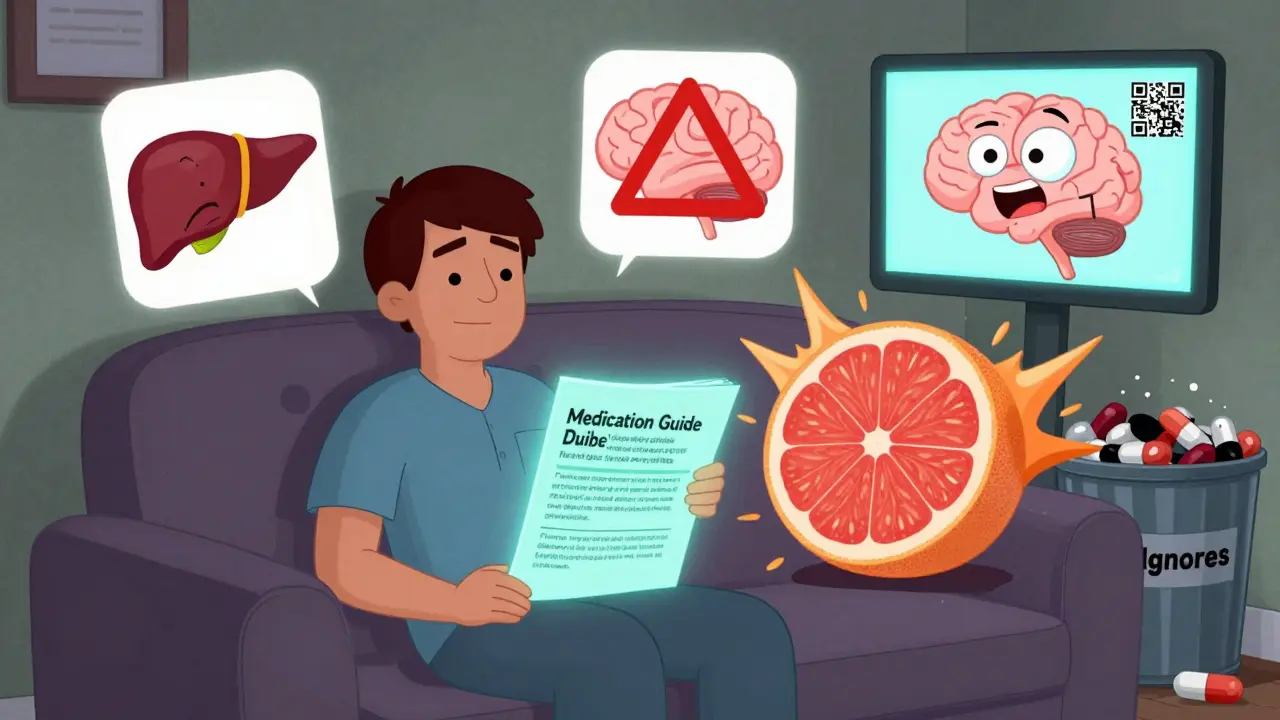
Do People Actually Read Them?
Let’s be honest. Most people don’t. A 2020 study in JAMA Internal Medicine found that only 52% of patients even remembered getting one. Of those, only 38% said they read it. On Reddit, pharmacists say most patients toss them in the drawer without a second look. But here’s the flip side: the people who *do* read them? They’re the ones who catch the warning signs early. One patient on PatientsLikeMe credited her Medication Guide for spotting early symptoms of a rare brain infection linked to her drug. She called her doctor. They stopped the medication. She avoided permanent brain damage. The problem isn’t the guide-it’s how it’s delivered. If you just hand someone a thick pamphlet and say, “Read this,” most won’t. But if you sit with them for two minutes, point to the bolded warnings, and ask, “What would you do if you felt this?”-comprehension jumps by over 50%.What’s Changing With Medication Guides?
The FDA knows these guides aren’t perfect. That’s why they’re updating them. Starting in 2024, every new Medication Guide must prove it actually changes patient behavior. Not just looks pretty. Not just has big fonts. It has to show it helps people avoid harm. New versions are getting smarter. In May 2023, the FDA approved the first “Interactive Medication Guide” for Jardiance, a diabetes drug. It has a QR code. Scan it, and you get a short video explaining risks in plain language, plus a personalized checklist based on your health history. Also, by 2025, you’ll be able to get these guides in Spanish, Chinese, Tagalog, and 22 other languages. And they’re adding visual icons-like a red triangle for “STOP and call your doctor”-so you don’t have to read a paragraph to know something’s urgent.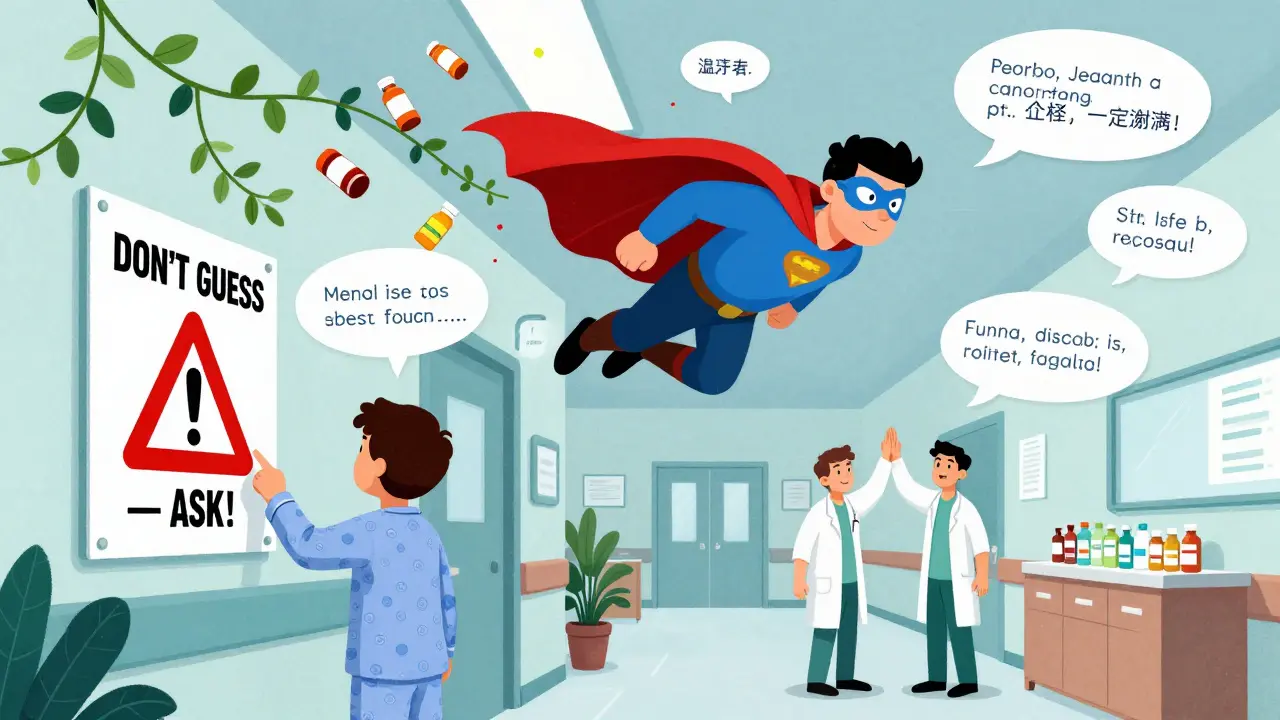
What Happens If You Skip It?
Skipping a Medication Guide doesn’t mean you’ll get hurt. But it means you’re taking a gamble. These drugs are powerful. Some can cause liver failure, severe allergic reactions, or suicidal thoughts. Others interact dangerously with common supplements like St. John’s Wort or grapefruit juice. One patient took a new antidepressant and didn’t realize it could trigger a dangerous spike in blood pressure when mixed with his cold medicine. He didn’t read the guide. He ended up in the ER. He later said, “If I’d known, I’d have asked my doctor to switch me.” The FDA says Medication Guides have helped reduce preventable adverse events by 22% for the drugs they cover. That’s not a small number. That’s thousands of hospital visits avoided every year.What Should You Do?
Here’s what you can do right now:- Ask for the Medication Guide every time you pick up a new prescription-even if you’ve taken the drug before. Manufacturers sometimes update them.
- Don’t just take it. Sit down with it. Read the bolded sections. Highlight the warnings.
- Ask your pharmacist: “What are the top three things I need to watch out for?” Then check the guide to see if they match.
- If you don’t understand something, call your doctor. Don’t guess.
- Keep the guide in a visible spot-not buried in a drawer. Put it next to your pill organizer.
Final Thought: It’s Not Just Information. It’s Protection.
Medication Guides aren’t bureaucracy. They’re not filler. They’re a safety net woven into the system because people got hurt-too many times. You wouldn’t drive a car without reading the manual. You wouldn’t use a power tool without knowing the risks. Why treat your body any differently? The next time you get a Medication Guide, don’t toss it. Open it. Read the bold parts. Ask one question. That one act might be the most important thing you do for your health this year.Are Medication Guides required for all prescription drugs?
No. Medication Guides are only required for about 150 prescription drugs in the U.S.-mostly those with serious safety risks like opioids, biologics, and certain psychiatric medications. Most common prescriptions like antibiotics or blood pressure pills don’t need one. The FDA only mandates them when the risks are high enough that patient understanding could prevent harm.
Can I get a Medication Guide electronically?
Yes. Since October 2022, the FDA allows pharmacies to provide Medication Guides electronically if you ask for it. Some pharmacies now offer digital versions via email or a secure patient portal. The first interactive digital guide, approved in May 2023, even includes videos and personalized risk checklists. But you still have the right to request a printed copy if you prefer.
What if my pharmacy doesn’t give me a Medication Guide?
If your drug requires a Medication Guide and you don’t get one, ask for it. Pharmacies are legally required to provide it. If they say they don’t have it, ask them to contact the manufacturer. In 2023, 41% of pharmacies reported shortages, especially for cancer and autoimmune drugs. You have the right to receive it, even if it takes a day or two to arrive.
Can I throw away my Medication Guide after I finish the prescription?
It’s okay to discard it once you’ve finished the course and aren’t restarting it. But if you might need the same drug again-or if you’re switching providers-it’s smart to keep it. The guide contains important information about side effects and interactions that could be useful if you’re prescribed it again in the future.
Do Medication Guides replace talking to my doctor?
No. Medication Guides are meant to support, not replace, conversations with your doctor or pharmacist. They give you facts, but your provider knows your full medical history. Always discuss your concerns with them. Use the guide to ask better questions, not to make decisions on your own.


Comments
Candice Hartley
January 28, 2026 AT 05:08 AMThis is the most important thing I've read all year. 🙏 I used to toss these guides until my mom had a near-fatal reaction to a combo of her meds. Now I keep them taped to the fridge.
astrid cook
January 28, 2026 AT 22:07 PMOf course the FDA cares now. They only step in when people start dying and lawsuits pile up. This is just damage control wrapped in pretty fonts and sixth-grade vocabulary. Don't act like they're saints.
Paul Taylor
January 29, 2026 AT 03:52 AMI've been a pharmacist for 22 years and I can tell you this guide thing is the only thing that actually sticks with patients long term. I hand them the guide and say look at the bold part right here this is where you call us not your cousin not Google not your yoga instructor it's this one thing and they remember it because it's not buried in a 20 page leaflet it's screaming at them in red and they start asking questions
Murphy Game
January 30, 2026 AT 12:31 PMThey’re pushing these guides because Big Pharma doesn’t want to be sued. The real danger? The FDA approves these drugs knowing full well the side effects but lets them stay on the market anyway. The guide isn’t protection-it’s a legal shield for them. You think they’d pull these drugs if they really cared? No. They’d rather you read a pamphlet than admit they made a mistake.
John O'Brien
January 30, 2026 AT 22:28 PMBro this is literally life or death and people still ignore it? I had a friend take that antidepressant without reading the guide and ended up in the psych ward for a month. If you don't read these you're not just being lazy you're gambling with your brain.
Andrew Clausen
January 31, 2026 AT 19:42 PMThe FDA does not mandate Medication Guides for all high-risk drugs. The current list of 150 is arbitrary and outdated. For example, drugs like liraglutide and semaglutide carry significant risks of pancreatitis and gallbladder disease yet are not required to include a guide. This is regulatory negligence masked as patient safety.
Desaundrea Morton-Pusey
February 2, 2026 AT 06:25 AMAmerica’s healthcare system is broken. We need to stop pretending a piece of paper fixes everything. Why don’t they just make doctors talk to patients instead of handing them a brochure like they’re giving out free samples at Costco?
Harry Henderson
February 4, 2026 AT 04:43 AMSTOP SCROLLING. OPEN THE GUIDE. RIGHT NOW. If you’re on anything that can kill you quietly, you owe it to yourself to read the bold parts. One minute of your time could save your life. I’m not asking. I’m telling you. Do it.
suhail ahmed
February 5, 2026 AT 09:12 AMIn India we call these guides 'survival scrolls'-because honestly, that’s what they are. My aunt took a biologic for RA and missed the warning about TB reactivation. She got sick, but her sister had read the guide and pushed for tests. Saved her life. These aren’t paperwork-they’re ancient wisdom in modern packaging.
April Williams
February 6, 2026 AT 15:09 PMI can't believe you're normalizing this. This is the exact reason people die. You're telling folks to just read a pamphlet? What about the 70-year-old with dementia who can't read? What about the single mom working two jobs? This isn't safety-it's victim-blaming dressed up as public health.
Conor Flannelly
February 7, 2026 AT 03:22 AMThere's a quiet beauty in this. The FDA, for once, didn't just write a regulation-they wrote a lifeline. Not perfect, but real. I've seen patients in Dublin, in Belfast, even in rural Nigeria who’ve saved themselves because they held that guide and finally understood. It’s not about bureaucracy. It’s about dignity.
Conor Murphy
February 8, 2026 AT 14:40 PMI used to think these were just filler. Then my brother got prescribed clozapine. I read the guide. I flagged the warning about seizures and fever. We called the doctor the next day. Turned out his white count was dropping. They adjusted his dose. He’s alive because we didn’t ignore the paper.
Kegan Powell
February 9, 2026 AT 07:46 AMYou know what’s wild? The guides are getting better. The QR code one for Jardiance? I scanned it while waiting in line at CVS and it asked me if I had kidney issues and showed me a video with subtitles. I didn’t even know I had a risk. That’s not just information-that’s care. We’re finally starting to treat people like humans not just prescriptions
Marian Gilan
February 10, 2026 AT 10:02 AMtheyre hiding something. why only 150 drugs? why no mention of the fact that the same companies that make these drugs also write the guides? and why did the FDA approve the interactive one with a qr code but not let patients download it for free? something smells like corporate sponsorship and i dont trust this at all