
You are watching a patient receive an IV antibiotic. Suddenly, their face turns pale, they start wheezing, and they complain of tightness in their throat. Seconds matter now. This is not just a mild rash; this is medication-induced anaphylaxis, a severe, life-threatening systemic allergic reaction triggered by drugs such as antibiotics, NSAIDs, or chemotherapy agents. It accounts for roughly 20-30% of all hospital anaphylaxis cases. If you hesitate, the outcome can be fatal. The goal of this guide is to strip away the confusion and give you a clear, actionable protocol based on the latest guidelines from the Resuscitation Council UK and the American Academy of Allergy, Asthma & Immunology (AAAAI).
Recognizing the Signs Before It’s Too Late
The biggest mistake people make is waiting for 'classic' signs like hives. Here is the hard truth: skin changes are absent in 10-20% of severe medication reactions. You cannot rely on a rash to tell you if someone is dying. Instead, focus on the ABCs: Airway, Breathing, and Circulation.
Look for these specific red flags that indicate immediate danger:
- Airway compromise: Swelling of the tongue (seen in 76% of cases) or tightness in the throat (82%). Does the patient sound hoarse? Are they struggling to swallow?
- Breathing difficulties: Wheezing, persistent coughing, or noisy breathing (reported in 89% of cases). Is the person gasping for air?
- Circulatory collapse: Persistent dizziness, fainting, or a sudden drop in blood pressure. In children, look for a pale or blueish appearance (33% of cases).
If two or more body systems are involved-for example, swelling plus wheezing-you are dealing with anaphylaxis. Do not wait for confirmation. Act immediately.
The Critical First Steps: Positioning Matters
Before you even reach for the medication, you must manage the patient's posture. This step is often overlooked but is directly linked to survival. According to clinical data from the Resuscitation Council UK, moving a patient from lying down to standing during a reaction increases the risk of cardiovascular collapse and death by 15-20%. Why? Because blood pools in the legs when upright, depriving the heart and brain of oxygen.
Follow these positioning rules strictly:
- Lay them flat immediately. Prohibit standing or walking. This is non-negotiable.
- Adjust for breathing issues. If the patient is conscious but struggling to breathe, allow them to sit up slightly with their legs outstretched. This helps expand the chest cavity without causing blood pooling.
- Use the recovery position for unconscious patients. Place them on their side to keep the airway open. If the patient is pregnant, place them on their left side to prevent the uterus from compressing major blood vessels.
- Keep young children flat. Avoid holding them upright, which can worsen shock.
Getting the position right buys you time and stabilizes the patient while you prepare the next critical step.
Administering Epinephrine: The Only Cure
This is the most important part of the entire process. Antihistamines like diphenhydramine (Benadryl) only treat skin symptoms. They do nothing for airway swelling or low blood pressure. Corticosteroids take hours to work. Epinephrine (Adrenaline) is the only medication that rapidly reverses the life-threatening symptoms of anaphylaxis by constricting blood vessels and relaxing airway muscles. Delaying its use is the single biggest factor in fatal outcomes-70% of deaths involve delayed or missing epinephrine.
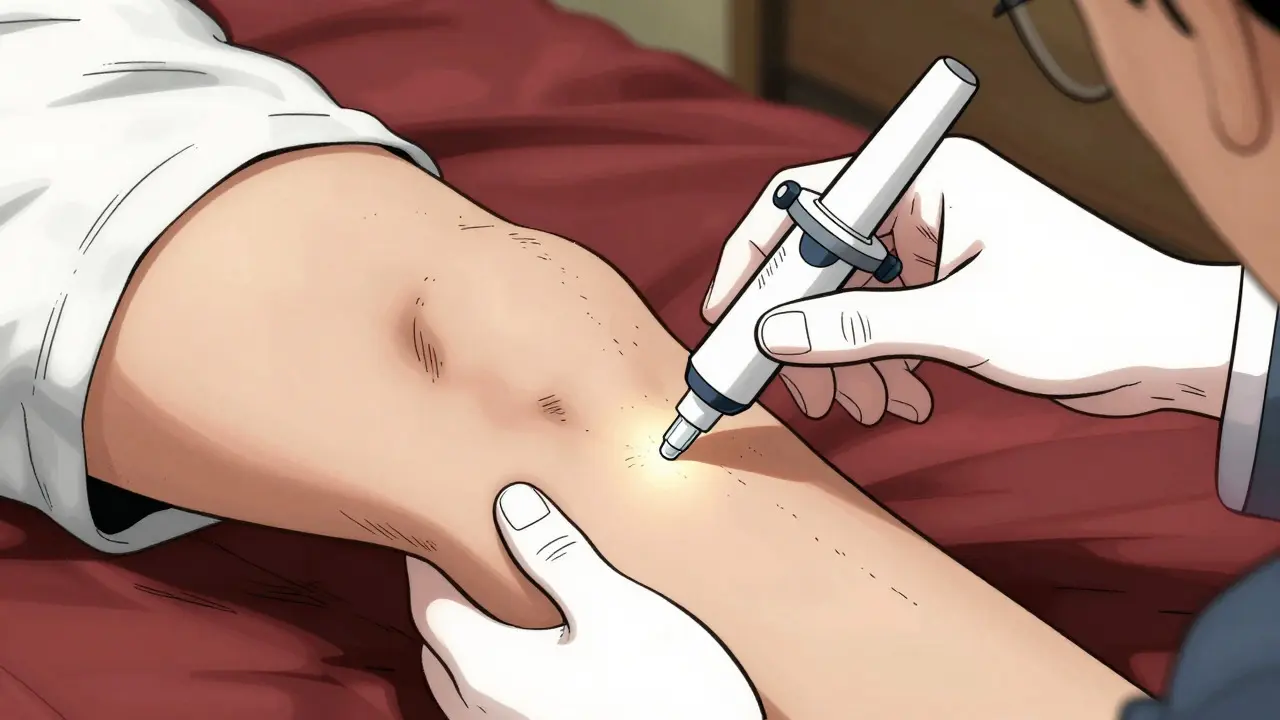
You need to administer it intramuscularly into the anterolateral thigh. Use an auto-injector device such as an EpiPen, Auvi-Q, or Adrenaclick. These devices are designed for speed and ease of use, even under stress.
| Patient Group | Dosage | Device Type |
|---|---|---|
| Children (15-30 kg / 33-66 lbs) | 0.15 mg | Pediatric Auto-Injector |
| Adults & Children (>30 kg / >66 lbs) | 0.3 mg | Standard Adult Auto-Injector |
Here is how to do it correctly:
- Remove the safety cap.
- Inject into the outer thigh. Aim for the middle of the upper leg. You can inject through clothing if necessary to save seconds.
- Hold firmly for 10 seconds. Many people pull it out too soon. Count it out loud if you have to.
- Massage the area. Gently rub the injection site for 10 seconds to help absorption.
Epinephrine works within 1-5 minutes. However, its effect lasts only 10-20 minutes. This means you might need a second dose.

When to Give a Second Dose
If the patient’s breathing, airway, or circulation problems persist after five minutes, administer a second dose of epinephrine. Do not hesitate. Some protocols suggest doses every 10 minutes if symptoms continue until emergency services arrive.
Why do people hesitate? Fear. A 2021 survey found that 42% of nurses admitted delaying epinephrine due to fear of side effects like rapid heartbeat or high blood pressure. But here is the reality check: out of 35,000 documented administrations between 2015 and 2020, only 0.03% resulted in significant adverse cardiac events. The risk of the drug is negligible compared to the certainty of death from untreated anaphylaxis.
Special Considerations: Beta-Blockers and Refractory Cases
Not all patients react the same way. If the patient takes beta-blockers (common for heart conditions in adults over 40), standard epinephrine doses may be less effective. Beta-blockers block the receptors that epinephrine needs to work on. In these cases, you may need 2-3 times the usual dose. Be prepared to escalate care quickly.
In rare cases (5-10%), patients develop refractory anaphylaxis, where symptoms persist despite two appropriate IM doses. This requires advanced medical intervention, such as IV epinephrine infusions, which should only be administered by specialists in a controlled hospital setting. Your job is to stabilize and transport.
Post-Reaction Care and Biphasic Reactions
Once the initial crisis is managed, the job isn’t done. You must call emergency services (911 or your local equivalent) immediately after administering the first dose. Hospital transfer is mandatory.
Why? Because of biphasic reactions. About 20% of patients experience a second wave of symptoms 1 to 72 hours after the initial episode, even after successful treatment. For medication-induced anaphylaxis, the risk is higher-up to 25% according to recent draft guidelines. Patients require a minimum observation period of 4 to 6 hours in a hospital setting. High-risk patients may need 6-8 hours of monitoring.
Discharging a patient home too early is a common error that leads to readmission and potential fatality. Ensure the medical team documents the specific medication trigger so future exposures can be avoided.
Common Mistakes to Avoid
Real-world implementation reveals several pitfalls that can cost lives. Avoid these errors:
- Improper injection technique: Injecting into subcutaneous fat instead of muscle reduces absorption. Always aim for the thick muscle of the outer thigh.
- Failing to hold the injector: Pulling the device out before 10 seconds leaves medication behind.
- Allowing the patient to stand: As mentioned, this triggers cardiovascular collapse in nearly 20% of cases.
- Relying on antihistamines alone: Benadryl does not save lives in anaphylaxis. It is a secondary treatment at best.
New technology is helping reduce these errors. The FDA-approved Auvi-Q 4.0 features voice guidance that talks users through the steps, improving correct administration rates from 63% to 89% among untrained users. If you have access to newer devices, utilize them.
How quickly does epinephrine work for medication anaphylaxis?
Epinephrine typically begins working within 1 to 5 minutes of intramuscular injection. It acts rapidly to constrict blood vessels and open airways. However, its duration of action is short, lasting only about 10 to 20 minutes, which is why a second dose may be necessary if symptoms persist.
Can I use an EpiPen if the patient has no skin symptoms?
Yes. Skin symptoms like hives are absent in 10-20% of severe anaphylaxis cases. If the patient has difficulty breathing, throat tightness, or signs of shock (dizziness/fainting), administer epinephrine immediately. Do not wait for a rash to appear.
What is the difference between anaphylaxis and a mild drug allergy?
A mild drug allergy usually involves only one body system, such as a localized rash or itching. Anaphylaxis is a systemic reaction involving two or more systems, particularly the airway, breathing, or circulation. Symptoms include wheezing, throat swelling, hypotension, and collapse. Anaphylaxis is life-threatening and requires immediate epinephrine.
Why is positioning important during an anaphylactic reaction?
Positioning prevents cardiovascular collapse. Standing or sitting upright causes blood to pool in the legs, reducing blood flow to the heart and brain. Laying the patient flat ensures adequate perfusion to vital organs. Pregnant patients should be placed on their left side to avoid compressing major blood vessels.
Do patients need to stay in the hospital after receiving epinephrine?
Yes. Patients require a minimum observation period of 4 to 6 hours in a hospital setting. This is because 20% of patients experience a biphasic reaction, where symptoms return hours later. Medication-induced anaphylaxis carries a higher risk of this recurrence, making extended monitoring essential.
What should I do if the patient is taking beta-blockers?
Beta-blockers can interfere with the effectiveness of epinephrine. If the patient is on these medications, you may need to administer 2-3 times the standard dose of epinephrine. Be prepared for a more complex reaction and ensure emergency medical services are aware of the medication history.