
Imagine your body’s internal alarm system suddenly failing. You feel exhausted, weak, and confused, but no one knows why. For people with Addison’s disease, a rare endocrine disorder where the adrenal glands fail to produce essential hormones like cortisol and aldosterone, this isn’t just a metaphor-it’s a daily reality. First described by Dr. Thomas Addison in 1855, this condition was once primarily caused by tuberculosis. Today, in developed nations, it is overwhelmingly an autoimmune issue, accounting for 80-90% of primary adrenal insufficiency cases.
If you or someone you know has been diagnosed with this condition, or if you suspect you might have it, understanding the mechanics of adrenal insufficiency and the critical role of steroid replacement therapy is not just helpful-it can be life-saving. This guide breaks down what happens inside the body, how doctors diagnose the problem, and exactly how to manage treatment to avoid dangerous complications.
The Core Problem: When Adrenal Glands Fail
To understand Addison’s disease, you first need to know what the adrenal glands do. These small, triangular organs sit on top of your kidneys. They are powerhouses that produce two critical types of hormones:
- Cortisol (Glucocorticoids): Often called the "stress hormone," cortisol helps regulate blood sugar, reduce inflammation, and keep your body functioning under pressure. Without it, your body cannot handle even minor stressors like a cold or a cut.
- Aldosterone (Mineralocorticoids): This hormone controls the balance of salt and water in your body. It tells your kidneys to hold onto sodium and excrete potassium. Without aldosterone, your blood pressure drops dangerously low, and electrolyte imbalances occur rapidly.
In primary adrenal insufficiency, the adrenal cortex-the outer layer of the gland-is destroyed. In most modern cases, the immune system mistakenly attacks these glands. This process is slow. Symptoms often don’t appear until about 90% of the adrenal tissue is damaged. By then, the damage is permanent, requiring lifelong hormone replacement.
Spotting the Signs: Symptoms and Diagnostic Clues
Addison’s disease is notorious for being misdiagnosed. The National Adrenal Diseases Foundation reports that patients wait an average of 3.2 years before getting the correct diagnosis. Why? Because the early symptoms are vague and mimic other common conditions.
You might experience profound fatigue, muscle weakness, weight loss, and low blood pressure. But there are specific signs that point directly to adrenal issues:
- Hyperpigmentation: Darkening of the skin, especially in creases, scars, and gums. This happens because high levels of ACTH (the signal from the brain telling adrenals to work) also stimulate melanin production. This is a hallmark of *primary* adrenal insufficiency.
- Salt Cravings: An intense desire for salty foods due to sodium loss.
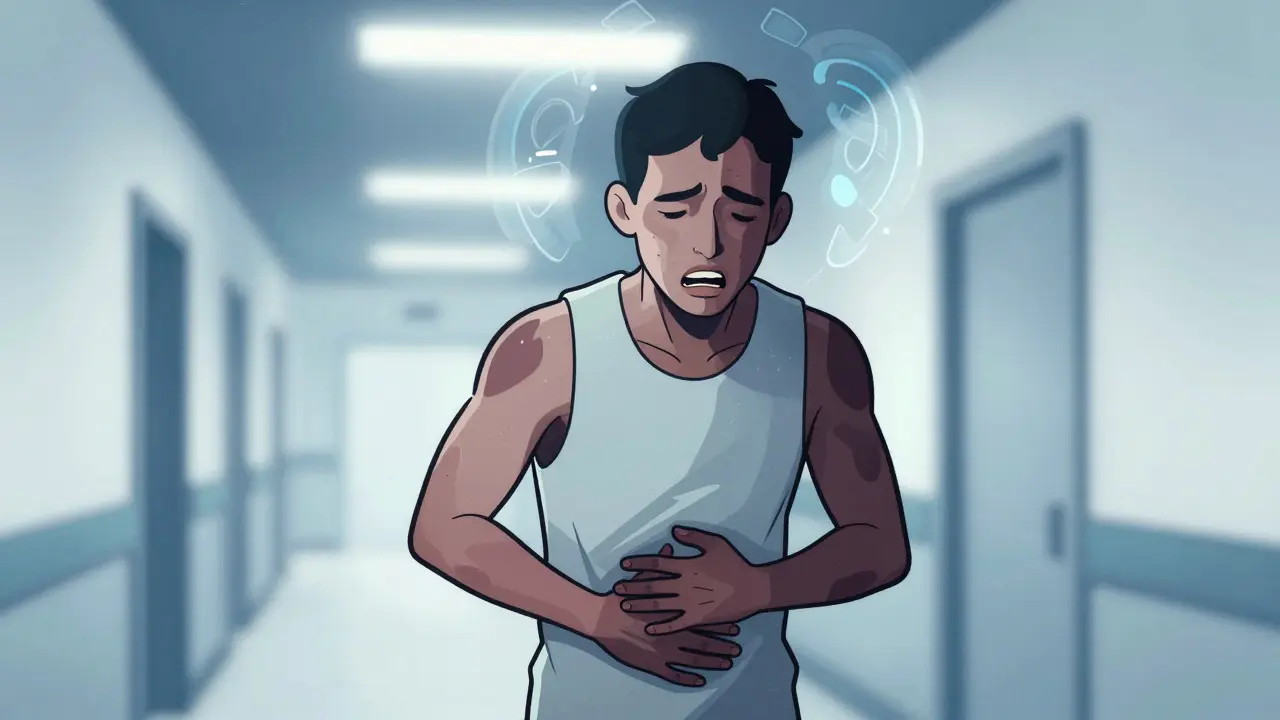
- Gastrointestinal Issues: Nausea, vomiting, diarrhea, or abdominal pain.
- Hypoglycemia: Low blood sugar, leading to dizziness or fainting.
Doctors confirm the diagnosis through blood tests. Key markers include very low serum cortisol (below 5 mcg/dL) and high plasma ACTH levels (≥50 pg/mL). The gold standard test is the ACTH stimulation test. If your cortisol levels don’t rise significantly after receiving synthetic ACTH, it confirms your adrenal glands aren’t responding. Additionally, checking for 21-hydroxylase antibodies can confirm if the cause is autoimmune, which is true for the vast majority of cases in North America and Europe.
Primary vs. Secondary Adrenal Insufficiency
It is crucial to distinguish between primary and secondary forms, as the treatment differs slightly. Primary adrenal insufficiency means the problem is in the adrenal glands themselves. Secondary adrenal insufficiency means the pituitary gland in the brain isn’t sending enough ACTH signals, so the adrenals shrink from disuse.
| Feature | Primary (Addison’s Disease) | Secondary |
|---|---|---|
| Root Cause | Adrenal gland destruction (autoimmune, TB, etc.) | Pituitary gland failure or long-term steroid use |
| Aldosterone Levels | Low (requires mineralocorticoid replacement) | Normal (no mineralocorticoid needed) |
| Skin Pigmentation | Present (hyperpigmentation) | Absent |
| Electrolytes | Hyponatremia (low sodium), Hyperkalemia (high potassium) | Usually normal |
| ACTH Levels | High (body trying to stimulate adrenals) | Low or Normal |
Lifelong Management: Steroid Replacement Therapy
Once diagnosed, the goal is to replace what your body can no longer make. This involves two types of medications:
- Glucocorticoids: Usually hydrocortisone. It mimics natural cortisol. Most people take it in divided doses throughout the day to match the body’s natural rhythm-higher in the morning, lower at night. Typical doses range from 15-25 mg per day.
- Mineralocorticoids: Fludrocortisone is the standard. It replaces aldosterone to help retain sodium and excrete potassium. Doses are usually small, around 50-300 mcg daily.
Newer options are emerging. In 2023, the FDA approved Chronocort, a modified-release hydrocortisone. This allows for once-daily dosing and provides more stable cortisol levels, reducing the peaks and valleys associated with traditional immediate-release tablets. Clinical trials showed it reduced cortisol fluctuations by 37%, potentially lowering long-term cardiovascular risks.
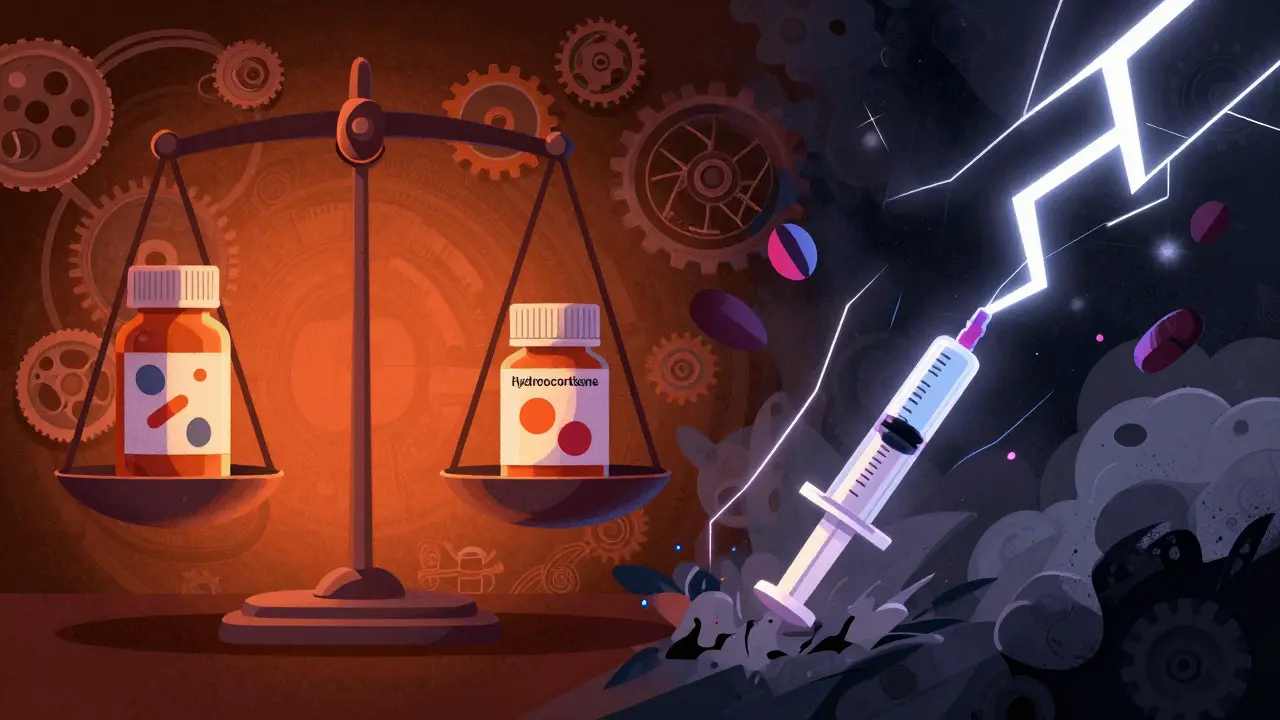
Finding the right dose is a balancing act. As Dr. Wiebke Arlt warns, over-replacement increases cardiovascular mortality by 44%, while under-replacement doubles the risk of adrenal crisis. Regular monitoring of blood pressure, electrolytes, and physical symptoms is essential to stay in the "sweet spot."
The Danger Zone: Preventing and Treating Adrenal Crisis
An adrenal crisis is a medical emergency. It occurs when the body needs extra cortisol to handle stress (like infection, injury, or surgery) but doesn’t get it. Blood pressure plummets, dehydration sets in, and shock can develop within hours. Mortality rises by 3-5% for every hour treatment is delayed.
To prevent this, you must follow "Sick Day Rules." These are protocols developed by organizations like the Addison’s Disease Self Help Group:
- Minor Illness: If you have a fever, cold, or mild gastroenteritis, double or triple your usual hydrocortisone dose immediately.
- Vomiting/Diarrhea: If you can’t keep pills down, you need an injection. All patients should carry an emergency kit containing injectable hydrocortisone (usually 100mg IM/IV).
- Surgery/Trauma: Inform all healthcare providers about your condition. You will likely need higher IV doses during procedures.
Wearing a medical alert bracelet is non-negotiable. Data shows that 92% compliance with carrying emergency kits and wearing ID reduces crisis mortality by 50%. Education is key; patients who complete specialized training programs report a significant drop in crisis frequency.
Living Well with Addison’s Disease
Managing Addison’s disease requires vigilance, but it doesn’t mean a diminished quality of life. About 50% of patients develop other autoimmune conditions, such as thyroid disease or Type 1 diabetes. Regular screening for these issues is part of comprehensive care.
Cost can also be a barrier. Hydrocortisone can cost $350-$500 per month without insurance, leading some patients to ration medication-a dangerous practice. Advocacy groups and patient registries are working to improve access and awareness. With proper education, consistent medication adherence, and a strong support network, most people with Addison’s disease lead full, active lives.
What triggers an adrenal crisis?
The most common triggers are infections (39%), gastroenteritis (25%), and missing medication doses (18%). Physical stressors like surgery, trauma, or extreme heat can also precipitate a crisis if cortisol doses aren't adjusted upward accordingly.
Is Addison's disease genetic?
While not directly inherited in a simple pattern, there is a genetic predisposition. Having a family history of autoimmune diseases increases your risk. However, environmental factors and immune system triggers play a major role in whether the disease develops.
Can you reverse adrenal damage in Addison's disease?
Currently, no. The destruction of the adrenal cortex is permanent. Treatment focuses entirely on replacing the missing hormones for life. Research into regenerative therapies is ongoing, but hormone replacement remains the standard of care.
How does diet affect Addison's disease?
Patients often need to consume more salt than the general population, especially during hot weather or illness, to counteract sodium loss. Maintaining steady blood sugar is also important, so regular meals with complex carbohydrates are recommended to prevent hypoglycemia.
What is the life expectancy for someone with Addison's disease?
With proper treatment and management of crises, life expectancy is near normal. However, studies suggest a slight reduction (3.2-11.2 years) primarily due to cardiovascular complications from long-term glucocorticoid use and the risk of acute crises. Careful dosing minimizes these risks.