
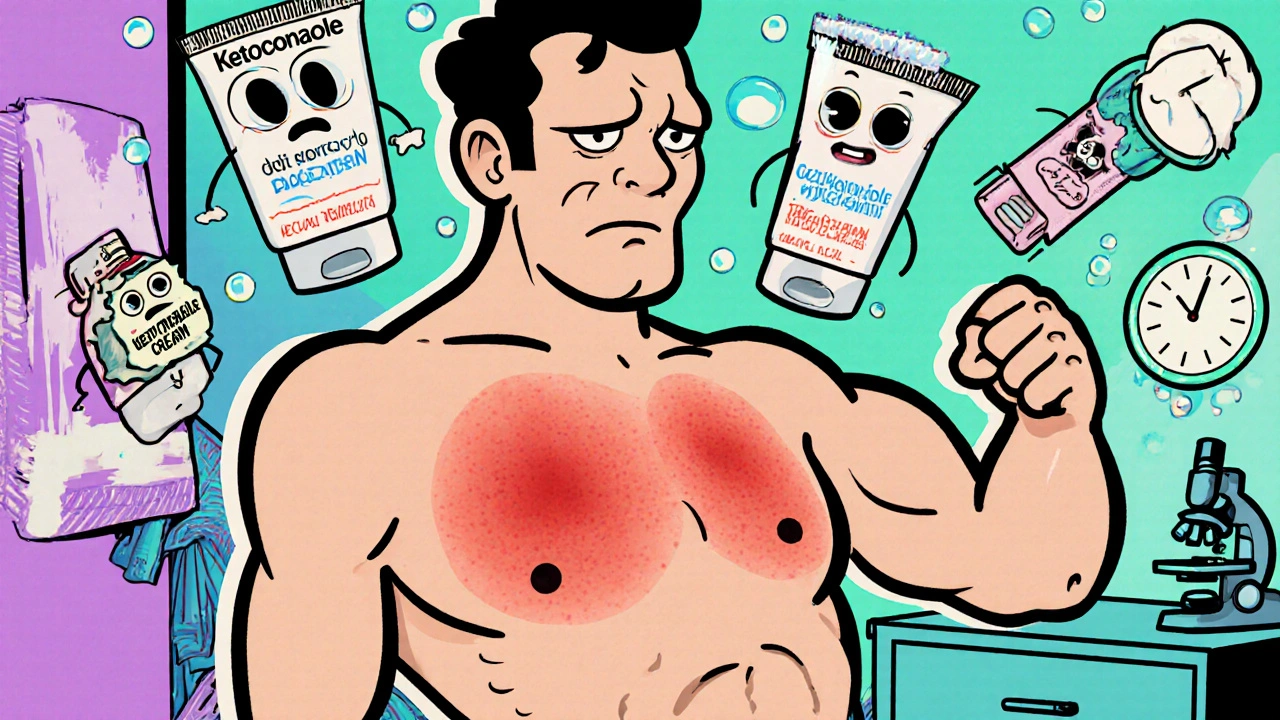
Antifungal Cream Selector
Choose Your Treatment Plan
When your skin itches, flares up, or starts peeling in patches, it’s often not just dryness-it’s a fungal infection. Ringworm, jock itch, athlete’s foot, and seborrheic dermatitis are common, and ketoconazole cream has been a go-to for decades. But is it still the best option? With new antifungals on the market and growing concerns about resistance and side effects, many people are asking: what else works as well-or better?
How Ketoconazole Cream Actually Works
Ketoconazole cream is an antifungal medication that stops fungi from making ergosterol, a key part of their cell membranes. Without it, the fungi can’t survive. It’s effective against a broad range of fungi, including Candida, Malassezia, and dermatophytes. That’s why it’s used for dandruff, scalp fungus, and body rashes.
Most people see improvement in 1-2 weeks with daily use. But it’s not perfect. Some users report stinging, redness, or dryness. In rare cases, it can cause skin thinning with long-term use. And while it’s available over-the-counter in many countries, prescription-strength versions are stronger and sometimes needed for stubborn infections.
Clotrimazole: The Most Common Alternative
Clotrimazole is the most widely used over-the-counter antifungal cream in the U.S. and Europe. It works similarly to ketoconazole by disrupting fungal cell membranes. But here’s the difference: clotrimazole has been studied more extensively for common skin infections like athlete’s foot and yeast rashes.
A 2023 meta-analysis in the Journal of Dermatological Treatment found clotrimazole cleared athlete’s foot in 83% of patients after 4 weeks, compared to 76% for ketoconazole. It’s also less likely to cause irritation. Many dermatologists recommend clotrimazole as a first-line treatment because it’s affordable, widely available, and has decades of real-world safety data.
One downside? It often needs to be applied twice daily. Ketoconazole is usually used once a day. For people who forget creams, that extra application can make a difference.
Terbinafine: Faster Results, Different Mechanism
Terbinafine (sold as Lamisil cream) works differently. Instead of targeting cell membranes, it blocks an enzyme called squalene epoxidase, which fungi need to build their cell walls. This makes it more lethal to fungi-and faster.
In clinical trials, terbinafine cleared athlete’s foot in as little as 1 week for many patients, compared to 2-4 weeks with ketoconazole. A 2024 study in the British Journal of Dermatology showed terbinafine had a 91% cure rate at 4 weeks, outperforming both ketoconazole and clotrimazole.
It’s also less likely to cause resistance. That’s important because antifungal resistance is rising, especially in hospitals and among people with weakened immune systems. Terbinafine is slightly more expensive than ketoconazole, but you often need less of it and for a shorter time.
Miconazole: A Gentle Option for Sensitive Skin
If your skin is easily irritated-think eczema-prone areas, babies, or older adults-miconazole cream might be the better pick. It’s one of the mildest antifungals available without a prescription.
Studies show miconazole works just as well as ketoconazole for yeast infections like candidiasis, especially in skin folds. It’s often combined with hydrocortisone in creams like Monistat-Derm to reduce itching and inflammation. But that combo isn’t for long-term use. Steroids can thin skin if used too long.
One advantage of miconazole: it’s available in powder form too. That’s helpful for areas that stay damp, like between toes or under the breasts. Powder absorbs moisture, while cream just sits on top.

Other Options: Selenium Sulfide, Ciclopirox, and Natural Remedies
Selenium sulfide (found in Selsun Blue shampoo) is technically not a cream, but many people use it as a body wash for fungal rashes. It’s been shown to reduce Malassezia overgrowth linked to dandruff and pityriasis versicolor. It’s cheap, but can be messy and smells strong.
Ciclopirox (Loprox cream) is a prescription-only antifungal that also has anti-inflammatory properties. It’s often used when other treatments fail. One study showed it cleared stubborn scalp fungus in 70% of patients after 6 weeks-better than ketoconazole in resistant cases.
Some people turn to tea tree oil, coconut oil, or apple cider vinegar. These aren’t proven to cure infections, though small studies suggest tea tree oil might help mild cases. But they’re not regulated, vary in potency, and can cause allergic reactions. Don’t rely on them alone for persistent rashes.
When to Skip Creams Altogether
If you’ve tried 2-3 antifungal creams for 4 weeks with no improvement, you might not have a fungal infection at all. Psoriasis, eczema, and even allergic reactions can look like ringworm. A doctor can do a skin scraping and test it under a microscope-fast, painless, and definitive.
For widespread or recurring infections, oral antifungals like fluconazole or itraconazole may be needed. These are stronger, faster, and treat from the inside out. But they come with risks: liver stress, drug interactions, and the need for blood tests. Only use them under medical supervision.
Choosing the Right Treatment: A Simple Guide
Here’s how to pick based on your situation:
- First-time, mild rash? Start with clotrimazole. It’s safe, cheap, and effective.
- Fast relief needed? Go for terbinafine. It works quicker and has higher cure rates.
- Sensitive or inflamed skin? Try miconazole, especially if itching is bad.
- Dandruff or scalp flakes? Ketoconazole shampoo (2%) is still the gold standard. Creams don’t work well on hair.
- Recurring or spreading? See a doctor. You might need oral meds or a culture test.
Don’t keep switching creams every few days. Give each one at least 2 weeks. Fungi don’t die overnight. Stopping too early is the #1 reason infections come back.

Common Mistakes People Make
Many patients use antifungal cream the wrong way:
- Applying only where it looks bad-instead of covering a bit beyond the rash too. Fungi spread under the skin.
- Stopping when it stops itching. The infection can still be alive.
- Using it on broken skin or open wounds. That can cause more irritation.
- Sharing towels or shoes. That’s how you reinfect yourself or spread it to others.
Also, avoid steroid creams unless prescribed. They reduce redness and itching, but they also hide the infection and let it grow deeper. A steroid-antifungal combo might be okay short-term, but only under a doctor’s guidance.
Final Take: Ketoconazole Still Has Its Place
Ketoconazole cream isn’t outdated. It’s still useful, especially for dandruff, seborrheic dermatitis, and cases where Malassezia is the culprit. But for most common fungal skin infections, newer options like terbinafine and clotrimazole often do better.
If you’ve been using ketoconazole for years without issues, keep going. But if it’s not working-or if you’re tired of the side effects-it’s time to try something else. There’s no single best cream for everyone. The right choice depends on your infection type, skin sensitivity, and how fast you need results.
Bottom line: Don’t guess. Try the right one for your case. And if in doubt, get it checked. Skin infections are easy to fix-when you treat them correctly.
Is ketoconazole cream better than clotrimazole?
Clotrimazole is generally better for first-time fungal infections like athlete’s foot or yeast rashes. It has a higher cure rate in clinical studies and causes less irritation. Ketoconazole is more effective for dandruff and scalp-related fungal overgrowth, especially from Malassezia. For body rashes, clotrimazole is the safer, more reliable choice.
Can I use ketoconazole cream on my face?
Yes, but only for specific conditions like seborrheic dermatitis or facial dandruff. Avoid using it on acne-prone or sensitive facial skin unless directed by a doctor. Long-term use on the face can cause thinning, redness, or irritation. For acne-like rashes, it’s better to get a proper diagnosis first.
How long should I use antifungal cream?
Use it for at least 2 weeks, even if symptoms disappear sooner. For athlete’s foot or jock itch, continue for 4 weeks to prevent recurrence. Stopping early is the main reason infections come back. Always follow the label instructions or your doctor’s advice.
Does ketoconazole cream cause resistance?
Yes, overuse or improper use can lead to fungal resistance. That’s why terbinafine is preferred for stubborn cases-it has a lower risk of resistance. Don’t use ketoconazole long-term unless necessary. Rotate treatments if infections keep returning, and always finish the full course.
Can I use antifungal cream with other skin products?
Yes, but wait at least 15 minutes between applying antifungal cream and moisturizers or makeup. Thick lotions can block absorption. Avoid using steroid creams unless prescribed-mixing them with antifungals without medical advice can worsen the infection.
What to Do Next
If you’re unsure which cream to try, start with clotrimazole-it’s the most widely recommended first step. If it doesn’t work after 2 weeks, switch to terbinafine. Keep a log: note when the rash started, what you used, and how it changed. That helps a doctor decide faster if you need to see them.
And if your rash spreads, gets painful, or doesn’t improve after 4 weeks, don’t wait. See a dermatologist. What looks like a fungus could be something else-and treating it wrong can make it worse.





Comments
Melvin Thoede
October 27, 2025 AT 17:48 PMBeen using clotrimazole for my athlete’s foot for years and it’s never failed me. Cheap, works like a charm, and no weird side effects. Ketoconazole? Too harsh on my skin. I switched after one bad experience with stinging. Clotrimazole wins every time.
Suzanne Lucas
October 28, 2025 AT 16:28 PMOkay but have y’all tried the tea tree oil thing?? I swear it’s magic 🙃 I had this weird patch on my neck that looked like ringworm, used coconut oil + tea tree for 3 days and POOF gone. No pharmacy needed. Big pharma doesn’t want you to know this lol
Ash Damle
October 30, 2025 AT 14:21 PMI used to be skeptical about natural stuff too but after my dermatologist told me to try terbinafine after ketoconazole failed me twice I’m a believer. One week and it was gone. No more itching at 3am. Also the cream doesn’t smell like a chemical lab. Just sayin’.
Kevin Ouellette
October 30, 2025 AT 22:30 PMLove this breakdown! So many people just grab the first cream they see at the drugstore. Terbinafine is the MVP for speed and effectiveness. I used it for jock itch last summer and was back to normal in 10 days. Also, don’t forget to wash your socks in hot water. Fungi live in those little bastards.
Tanya Willey
October 31, 2025 AT 14:58 PMLet me guess - you all think this is just about fungus? Nah. The FDA approved ketoconazole cream in 1984. That’s the same year they started fluoridating water. Coincidence? I think not. They want you to keep buying creams forever. Terbinafine? Patent expired in 2010. That’s why they’re pushing it now. They’re cleaning up the market. Watch your back.
sarat babu
November 2, 2025 AT 09:49 AMBrooooooo!!! You think this is about creams??? NOOOO!!! It's about your LIFESTYLE!!! You eat too much sugar, you don't wash your feet properly, you wear plastic shoes like a slave to capitalism!!! I had the same rash for 3 months!!! Then I stopped eating bread, started rubbing garlic on it, and prayed to Lord Ganesha every morning!!! And guess what??? It vanished!!! You need spiritual healing, not some chemical poison from America!!!
Wiley William
November 2, 2025 AT 20:19 PMTerbinafine? Overrated. You guys are all sheep. Ketoconazole is the OG. The studies you’re quoting? Funded by Big Pharma. Terbinafine’s cure rate? Probably inflated. I’ve used ketoconazole for 15 years. My skin is fine. You’re all panicking over nothing. Also, why are you using cream on your face? That’s just asking for trouble. Dumb.
Richard H. Martin
November 4, 2025 AT 09:08 AMMy grandfather used lye soap and vinegar for everything. No fancy creams. No prescriptions. No science. Just good old American grit. You think we need all this? Nah. You’re weak. Wash your skin. Dry it. Don’t be a baby. Ketoconazole? That’s what Europeans use. We don’t need it. We’ve got muscle. And clean feet. That’s all.