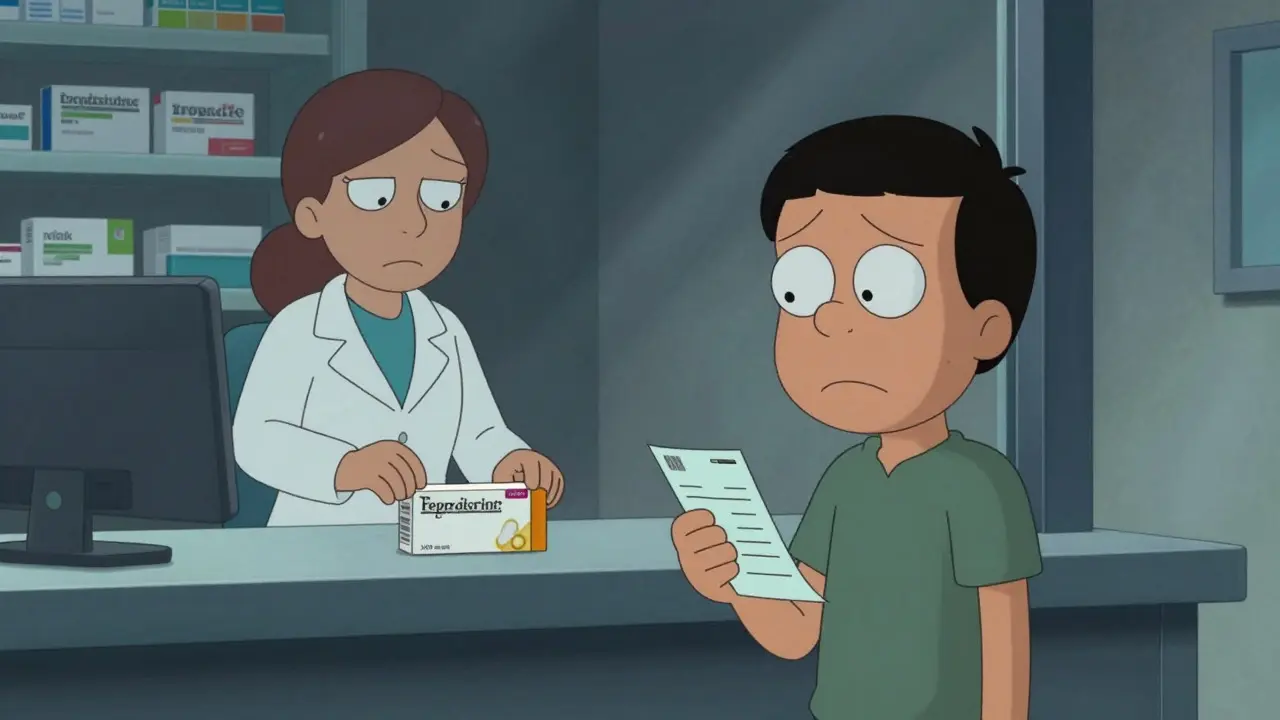
You walk into the pharmacy, hand over your prescription for a specific brand-name drug you’ve trusted for years, and the pharmacist hands you a box with a different name. You didn’t ask for it. You didn’t agree to it. Yet, in many parts of the United States, this is standard procedure. This practice, known as generic substitution, allows pharmacists to replace prescribed medications with cheaper alternatives without always asking for your explicit permission first. But do you have the right to say no? The short answer is yes, but the process varies wildly depending on where you live.
Navigating these rules can feel like solving a legal puzzle while holding a headache pill. State laws differ significantly regarding whether a pharmacist must notify you, get your consent, or if they can simply switch the medication automatically. Understanding your specific state’s regulations is the first step to taking control of your healthcare costs and therapeutic stability. Whether you are dealing with a narrow therapeutic index drug, a biosimilar insulin, or just a preference for a familiar formulation, knowing how to legally request a brand-name drug is a critical health literacy skill.
Understanding the Legal Landscape of Drug Substitution
The framework for generic substitution in the U.S. stems from the Hatch-Waxman Act of 1984. This legislation established the modern pathway for approving generic drugs, aiming to lower healthcare costs by allowing manufacturers to produce equivalent versions of brand-name medicines. However, the implementation of these savings is left largely to individual states. As of recent analyses, all 50 states and Washington, D.C., have specific laws governing how pharmacists handle substitution, but the details create a patchwork of rights and responsibilities.
In 19 states, including California, New York, and Texas, the law mandates that pharmacists perform generic substitution when an approved generic is available. In these jurisdictions, the default action is to substitute unless you actively refuse. Conversely, seven states-Alaska, Connecticut, Hawaii, Maine, Massachusetts, New Hampshire, and Vermont-plus D.C., require explicit patient consent before any substitution occurs. If you live in one of these states, the burden is on the pharmacist to ask you. In the remaining states, the rules fall somewhere in between, often requiring notification but not necessarily formal consent.
| Requirement Type | Number of Jurisdictions | Key Examples | Patient Action Required |
|---|---|---|---|
| Mandatory Substitution | 19 States | California, New York, Texas | Must explicitly decline at counter |
| Consent Required | 7 States + DC | Massachusetts, Connecticut, Hawaii | Pharmacist must ask; patient can say no |
| Notification Only | 31 States + DC | Florida, Iowa, Oklahoma | Pharmacist must inform; patient can object |
Why You Might Want to Keep the Brand Name
Most people assume generics are identical to brands. While the FDA requires generic drugs to be bioequivalent, meaning they deliver the same amount of active ingredient into the bloodstream at the same rate, subtle differences exist. These differences usually involve inactive ingredients called excipients, which can include dyes, binders, and preservatives. For most healthy individuals, these variations don’t matter. But for patients with sensitive conditions, they can make a significant difference.
The biggest concern involves Narrow Therapeutic Index (NTI) drugs. These are medications where a small change in blood concentration can lead to serious side effects or treatment failure. Common examples include levothyroxine for thyroid issues, warfarin for blood thinning, and certain antiepileptic drugs. In Kentucky, for instance, the Board of Pharmacy maintains a specific list of NTI drugs that cannot be substituted without special approval. Similarly, in Hawaii, substituting antiepileptics requires both practitioner and patient consent. If you are on one of these critical medications, requesting the brand name isn't just a preference; it's a safety measure.
Biosimilars present another layer of complexity. Unlike small-molecule generics, biologics are large, complex molecules derived from living organisms. A biosimilar is similar to its reference product but not identical. While the FDA approves them based on high similarity, some patients report changes in efficacy or side effects after switching. For example, diabetes communities frequently discuss experiences with insulin switches, where automatic substitution from one brand to a biosimilar led to erratic blood sugar readings. Because of this, 45 states impose more stringent requirements for interchangeable biologic substitution compared to simple chemical generics.

Step-by-Step Guide to Refusing Substitution
If you decide you want your brand-name medication, here is how to execute that request effectively. The process is straightforward but requires clear communication.
- Check Your State Law: Determine if your state requires consent or merely notification. This sets your baseline power. In consent states, you have stronger leverage.
- Speak Up at the Counter: When picking up your prescription, clearly state, "I would like the brand name, please." Do not wait for the pharmacist to offer the generic first if you know your state allows refusal.
- Cite the Specific Right: If pushed back, say, "I am declining substitution per state law." This phrase signals that you are informed and reduces the likelihood of the pharmacist arguing it is mandatory.
- Request Manager Assistance: If the front-line pharmacist claims they "have to" substitute you, ask for the pharmacy manager. Managers are usually more aware of local regulatory nuances and liability risks.
- Get Physician Documentation: If the issue persists, ask your doctor to mark the prescription "Dispense As Written" (DAW). In 48 states, this notation exempts the prescription from automatic substitution. Even better, if there is a medical reason, ask for a "brand medically necessary" notation, which is recognized in most jurisdictions.
Cost Implications and Insurance Factors
The primary driver for substitution is cost. Generic drugs typically cost 80% to 85% less than their brand-name counterparts. For patients paying cash, this is a massive saving. However, insurance plans complicate the picture. Many Pharmacy Benefit Managers (PBMs) structure copays so that the generic option has a lower out-of-pocket cost. If you choose the brand, your copay might jump from $10 to $40 or more.
Previously, a practice known as "gag clauses" prevented pharmacists from telling you if paying cash for the brand was actually cheaper than your insurance copay for the generic. This changed with the 2018 Know the Lowest Price Act and further reinforced by the 2022 Consolidated Appropriations Act, which prohibited PBM gag clauses nationwide. Now, you have the right to know the true price. Always ask: "What is my total cost for the brand versus the generic, including any assistance programs?" Sometimes, manufacturer coupons or patient assistance programs from companies like Pfizer or Merck can make the brand-name option free or nearly free, even if the list price is high.
Be aware that Medicare Part D plans often have higher generic utilization rates (around 95%) compared to commercial plans (around 85%). This reflects stricter formulary controls. If you are on Medicare, check your plan’s formulary specifically for the brand-name drug you need. It may be listed as a non-preferred tier, resulting in higher coinsurance.
Common Pitfalls and How to Avoid Them
Even with knowledge, patients sometimes face hurdles. One common pitfall is assuming that "therapeutically equivalent" means "identical." The FDA’s Orange Book lists drugs as therapeutically equivalent, which implies they should produce the same clinical effect. However, real-world data suggests that for some patients, especially those with chronic conditions, the switch can cause noticeable changes. If you experience new side effects or reduced efficacy after a switch, document the date and contact your provider immediately.
Another mistake is failing to communicate with your prescriber. If you are consistently refusing substitution, your doctor needs to know. They may need to adjust your monitoring schedule or provide the DAW notation proactively. Without this coordination, you risk a cycle of arguments at the pharmacy counter every month.
Finally, don't ignore the role of mail-order pharmacies. If you use a mail-order service, substitution rules can be harder to navigate because you aren't physically present to decline. Check the terms of service for your mail-order provider. Some allow you to specify "no substitution" in your profile settings, while others may apply it automatically unless you call in each order. Dr. Aaron Kesselheim, a Harvard Medical School professor who studied state substitution laws, noted that this variation creates confusion, particularly for those using remote healthcare services.
FAQ
Can a pharmacist force me to take a generic drug?
In most states, no. If your state requires consent, they must ask. In states with mandatory substitution, they can substitute unless you explicitly decline. However, for NTI drugs or if your doctor marks the script "Dispense As Written," they generally cannot substitute without additional approval.
What does "Dispense As Written" mean?
It is a notation on a prescription that tells the pharmacist to fill the exact brand-name drug prescribed, bypassing automatic generic substitution. It is widely recognized across the U.S. but rules vary slightly by state regarding when it can be used.
Are biosimilars the same as generics?
No. Generics are copies of small-molecule drugs. Biosimilars are highly similar copies of complex biological drugs. They are not considered interchangeable in all contexts, and many states have separate, stricter rules for substituting biosimilars.
Will I pay more if I refuse the generic?
Often, yes, due to insurance copay structures. However, with the ban on gag clauses, you have the right to compare prices. Manufacturer coupons or patient assistance programs may offset the cost of the brand-name drug.
What should I do if the pharmacist says I can't refuse?
Ask for the pharmacy manager. Cite your state's specific law if you know it. If unresolved, file a complaint with your state board of pharmacy, which monitors adherence to substitution statutes.