

HIV Med & Birth Control Interaction Checker
Select your current HIV medication type:
(e.g., Ritonavir, Darunavir)
(e.g., Dolutegravir)
Select your contraceptive method:
Interaction Analysis
Select a medication and a birth control method to see the risk assessment.
Imagine this: you take your HIV medication every single day. You also take your birth control pill at the same time, without missing a dose. Everything seems under control. Then, two weeks later, you get a positive pregnancy test. This isn’t just a hypothetical nightmare; it is a documented reality for thousands of women living with HIV. The culprit? A dangerous clash between HIV protease inhibitors and hormonal contraceptives.
If you are on antiretroviral therapy (ART), especially one involving protease inhibitors, your body processes hormones differently than expected. These drugs don't just fight the virus; they change how your liver breaks down estrogen and progestin. The result? Your birth control might stop working while you think it’s doing its job. Understanding this interaction is not just about avoiding an unplanned pregnancy-it is about protecting your long-term health and maintaining control over your life.
The Science Behind the Clash
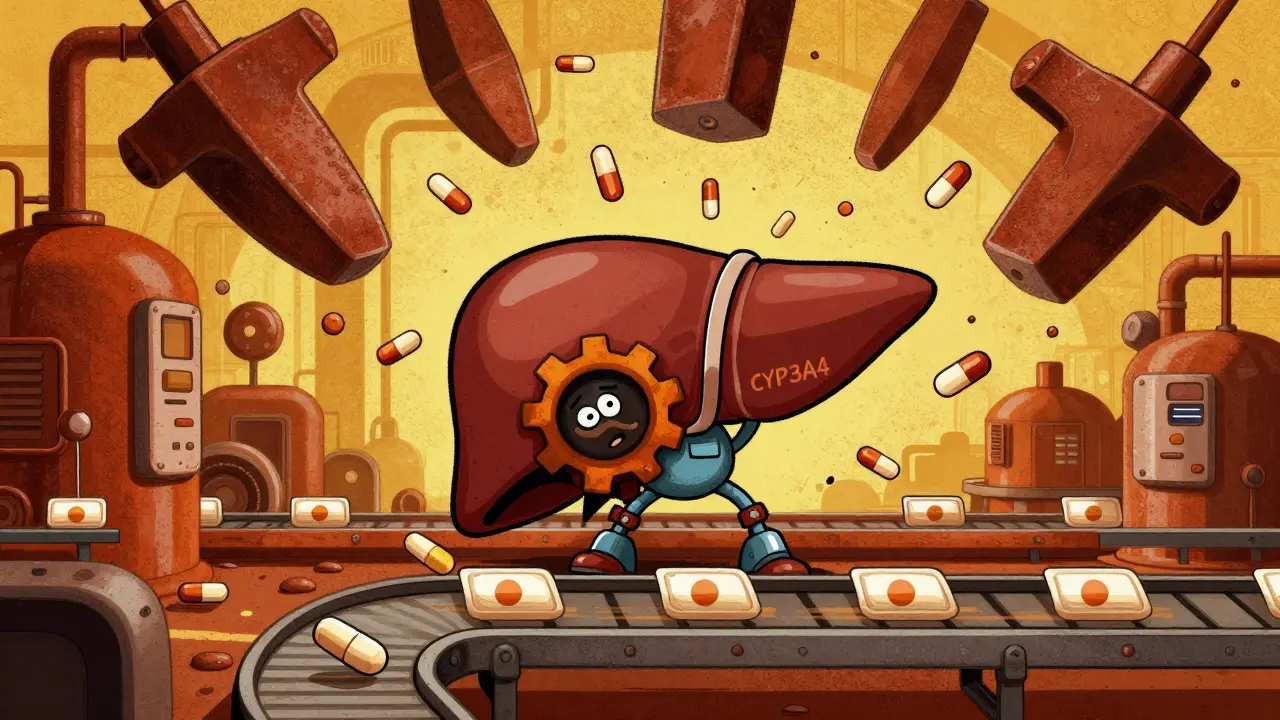
To understand why this happens, we need to look inside your liver. Specifically, at an enzyme called Cytochrome P450 3A4 (CYP3A4). Think of CYP3A4 as a busy factory worker that breaks down various substances in your body, including many medications and hormones. When you take protease inhibitors, such as ritonavir, lopinavir, or darunavir, these drugs interfere with this worker. They can either block the enzyme entirely or, in some cases, force it to work overtime.
When CYP3A4 is inhibited, hormone levels might spike unpredictably. But more commonly, certain combinations cause the liver to clear contraceptive hormones too quickly. For example, studies have shown that using the contraceptive patch with lopinavir/ritonavir can decrease ethinyl estradiol levels by 45%. That is nearly half the hormone needed to prevent ovulation. Meanwhile, norelgestromin levels might increase by 83%, leading to side effects like nausea or breast tenderness without offering better protection. It is a double-edged sword where neither safety nor comfort is guaranteed.
This mechanism was first identified in the late 1990s when ritonavir entered clinical use. Since then, pharmacokinetic trials have confirmed that these interactions are significant enough to warrant major changes in medical guidelines. The World Health Organization (WHO) and the Centers for Disease Control and Prevention (CDC) now classify the use of progestin-only pills with ritonavir-boosted protease inhibitors as Category 3. In plain English, this means the risks usually outweigh the benefits, and doctors should avoid prescribing this combination unless no other options exist.
Which Methods Are Safe?
Not all birth control methods fail when mixed with HIV meds. In fact, some remain highly effective regardless of what antiretrovirals you take. Knowing which ones to choose can make all the difference.
| Method | Interaction Risk | Recommendation |
|---|---|---|
| Copper IUD | None | Highly Recommended. Works mechanically, not hormonally. |
| Hormonal IUD (Mirena/Kyleena) | Low | Recommended. Local hormone release minimizes systemic interaction. |
| Implant (Nexplanon) | Moderate to High | Use Caution. Levels may drop significantly with boosted PIs. |
| Combined Oral Pills | High | Avoid with ritonavir-boosted regimens. |
| Progestin-Only Pills | High | Avoid with ritonavir-boosted regimens (WHO Category 3). |
| Depot Injection (Depo-Provera) | Variable | Caution. Some studies show reduced efficacy with efavirenz, less so with PIs. |
Intrauterine devices (IUDs) stand out as the gold standard here. Because they release hormones directly into the uterus (or use no hormones at all, in the case of copper), they bypass the liver’s metabolic pathway almost entirely. This means their effectiveness stays near 99%, whether you are taking dolutegravir, tenofovir, or a complex protease inhibitor regimen. If you want peace of mind, an IUD is often the best bet.
On the flip side, the contraceptive ring and patch are particularly vulnerable. A 2019 study published in *The Lancet* found that etonogestrel levels from the NuvaRing dropped to subtherapeutic concentrations in 38% of women using efavirenz-based regimens. While efavirenz is not a protease inhibitor, the principle holds: transdermal methods rely on steady blood levels, which these drugs disrupt. If you prefer non-invasive options, be aware that "perfect use" does not guarantee protection when your metabolism is being hijacked by ART.
Real Stories, Real Consequences
Data points are important, but human stories drive home the urgency. Consider MariaJ, who shared her experience on an HIV support forum. She was taking Tri-Sprintec, a combined oral contraceptive, alongside darunavir/cobicistat. She adhered perfectly to both schedules. Yet, she became pregnant. Her case highlights a critical gap: even newer boosters like cobicistat can interact with hormones, though perhaps less severely than ritonavir. Still, the risk remains real.
Another user, 'HIVandFamily', described becoming pregnant at 18 weeks gestation while using Depo-Provera with atazanavir/ritonavir. Her provider admitted the interaction was well-documented but often overlooked in community clinics. These aren’t isolated incidents. A 2021 survey by the Positive Women's Network-USA found that 28% of HIV-positive women had experienced contraceptive failure while using hormonal methods with antiretrovirals. Of those failures, 63% involved protease inhibitor regimens.
The emotional toll is immense. Many women face impossible choices. A 2022 case series from UCSF reported that 12 women chose to discontinue their effective HIV treatment to preserve contraceptive efficacy. This decision risks viral rebound, transmission to partners, and progression to AIDS. No one should have to choose between managing their HIV and preventing pregnancy. This is why proactive counseling is so vital.
What Doctors Should Be Telling You
If your healthcare provider hasn’t discussed this interaction in detail, ask them. According to the Reproductive Health Access Project, clinicians should spend 7-10 minutes specifically addressing contraceptive-antiretroviral interactions during family planning consultations. They should use tools like the CDC’s interaction checker, which assesses 147 specific drug pairs.
Effective communication matters. The American College of Obstetricians and Gynecologists (ACOG) recommends a "teach-back" method. After explaining your options, your doctor should ask you to repeat back what you understood. Studies show this technique helps 85% of patients correctly explain alternative options, compared to only 42% with standard counseling. Don’t be shy-ask questions until you feel confident.
Key questions to ask:
- Does my current ART regimen contain ritonavir or cobicistat?
- Is my chosen birth control method listed as Category 3 or 4 in the WHO guidelines?
- Can we switch to a long-acting reversible contraceptive (LARC) like an IUD?
- If I must use pills, do I need a higher dose or additional barrier methods?

Navigating the Future of Care
The landscape is shifting. Newer antiretrovirals, particularly integrase strand transfer inhibitors (INSTIs) like dolutegravir, have minimal interactions with contraceptives. As of 2023, dolutegravir-based regimens are used by 72% of new ART initiates globally. This shift alone could drastically reduce contraceptive failures. The WHO has even proposed reclassifying etonogestrel implants from Category 2 to Category 1 for use with dolutegravir, based on data showing only a 12% reduction in hormone levels-a much safer margin.
However, access remains a challenge. In low-income settings, only 22% of HIV-positive women use LARCs, compared to 68% in high-income countries. Barriers include cost, availability, and lack of trained providers. Programs like the FHI360 Provider Reference Tool have helped bridge this gap by introducing color-coded interaction charts at point-of-care, reducing failures by 37% in 12 African countries.
Looking ahead, the Global Health Council predicts that by 2030, 95% of contraceptive counseling for HIV-positive women will occur through integrated "one-stop-shop" clinics. This model aims to combine HIV care, reproductive health, and mental health support under one roof. If successful, it could lower contraceptive failure rates from 9.3 to 3.1 per 100 woman-years. Until then, vigilance is your best defense.
Emergency Contraception: What Works?
If you miss a pill or suspect your regular method failed, emergency contraception (EC) becomes crucial. But here again, HIV meds complicate things. Copper IUDs inserted within five days of unprotected sex are the most effective EC option and are unaffected by drug interactions. Hormonal EC pills, however, vary.
Levonorgestrel pills (Plan B) may have reduced efficacy if taken with certain antiretrovirals. A 2024 report noted 35% lower levonorgestrel concentrations in women using darunavir/cobicistat. Ulipristal acetate (Ella) is generally more effective than levonorgestrel but still interacts with enzyme-inducing drugs. Always consult a pharmacist or doctor immediately after a potential failure. Do not assume the pill worked because you took it on time.
Can I take the birth control pill with HIV protease inhibitors?
Generally, no. The WHO classifies progestin-only pills with ritonavir-boosted protease inhibitors as Category 3, meaning risks outweigh benefits. Combined oral contraceptives also show reduced effectiveness due to altered hormone metabolism. Consult your doctor for safer alternatives like IUDs.
Are IUDs safe for women on HIV medication?
Yes, IUDs are considered highly safe and effective. Both copper and hormonal IUDs maintain near 99% effectiveness because they act locally in the uterus, bypassing the liver enzymes affected by HIV drugs. They are recommended by the CDC and WHO for women on antiretroviral therapy.
Does dolutegravir interact with birth control?
Dolutegravir has minimal interactions with most contraceptives. Unlike protease inhibitors, it does not significantly alter hormone levels. Recent guidelines suggest it is compatible with implants and pills, making it a preferred option for women concerned about contraceptive efficacy.
What should I do if I become pregnant while on HIV meds and birth control?
Contact your healthcare provider immediately. Do not stop your HIV medication abruptly, as this can lead to viral rebound. Your doctor will adjust your regimen to ensure both your health and the baby's safety. Early prenatal care is essential for managing HIV during pregnancy.
Is Depo-Provera effective with protease inhibitors?
Evidence is mixed. While some studies show Depo-Provera remains effective with non-ritonavir regimens, others indicate reduced efficacy with certain boosted PIs. Due to inconsistent data, many experts recommend LARCs like IUDs as a more reliable alternative for women on protease inhibitors.




Comments
Tumble Farm
June 21, 2026 AT 22:48 PMIt is crucial to understand that the interaction isn't just about efficacy but also about metabolic pathways. The CYP3A4 enzyme is the primary bottleneck here. When protease inhibitors inhibit this enzyme, the clearance of ethinyl estradiol is significantly reduced, leading to higher serum levels which might seem protective but actually increases side effects like nausea and breast tenderness without guaranteeing ovulation suppression due to variable absorption rates. Conversely, with inducers, the hormone is cleared too fast. This is why LARCs are preferred as they bypass first-pass metabolism entirely.
Amy Bogdahn
June 23, 2026 AT 02:41 AMYou are ignoring the obvious solution. Just get an IUD. Stop complaining about pills failing you when you knew better.
krystal Live
June 24, 2026 AT 11:41 AMomg thank u so much for posting this!! i wasnt sure if my meds were messing with my bc but now im gonna go talk to my doc right away!! stay strong everyone u got this 💪✨
Tucker Brown
June 25, 2026 AT 08:51 AMThe pharmaceutical industry pushes these complex regimens to keep patients dependent on expensive drug cocktails while hiding the reproductive costs. They want a controlled population. Look at the funding sources for those 'guidelines'. It's not about health, it's about compliance and data harvesting through medical dependency. Wake up.
Frank Polster
June 25, 2026 AT 21:10 PMAh yes, because nothing says 'empowerment' like having your liver enzymes hijacked by Big Pharma's latest miracle cure. Truly the golden age of medicine where we trade fertility for viral suppression. Groundbreaking stuff, really. Can't wait to see what they do to our kidneys next.
ankit agarwal
June 26, 2026 AT 04:21 AMFrom a pharmacokinetic standpoint, the inhibition of cytochrome P450 3A4 by ritonavir creates a non-linear pharmacodynamic response in hormonal contraceptives. The bioavailability of progestins becomes erratic, leading to sub-therapeutic windows during the follicular phase. We must consider the systemic bioimpedance caused by boosted protease inhibitors. It is not merely an interaction; it is a fundamental alteration of the endocrine homeostasis. The therapeutic index narrows dangerously. One must evaluate the area under the curve (AUC) for both the antiretroviral and the contraceptive agent to predict failure rates accurately. This is basic medicinal chemistry logic applied to clinical practice.
Stephanie Cree
June 26, 2026 AT 12:08 PMI simply cannot believe people still rely on such primitive methods! 🙄 It is absolutely scandalous that women are not educated on proper contraceptive hygiene and medication management. If you are taking HIV meds, surely you have access to superior healthcare resources? To suggest otherwise is to imply negligence on the part of the patient. One should never mix substances without consulting a specialist who understands the intricate balance of one's biological systems. It is quite embarrassing to read these comments. 😒📚
Bruno Sarri
June 27, 2026 AT 19:05 PMI hear you all, and it is totally valid to feel frustrated or confused by this information. It is a lot to process. Please remember that there is no shame in asking your doctor for help with this. You deserve care that respects both your HIV status and your reproductive goals. Let's support each other in finding safe options. No judgment here, just looking out for one another.
Dez Johnston
June 28, 2026 AT 16:03 PMI've been thinking about this for a bit. It seems like the gap in communication is huge. I wish more clinics had clear charts like the FHI360 tool mentioned. It would make things so much easier for patients who don't know where to start. Quietly hoping this gets more attention.
Ashley Jacelyn
June 29, 2026 AT 03:22 AMThis is such important info. Thank you for sharing. It makes me feel better knowing that IUDs are a safe option. I will definitely bring this up at my next appointment. Wishing everyone the best in their health journeys.
Sonam Norbu
June 30, 2026 AT 05:56 AMWe need to stop relying on foreign guidelines and develop our own domestic solutions for healthcare interactions. Our local doctors know our bodies better than some international committee. Support American research and American made contraceptives. Don't let globalists dictate your reproductive health choices.
Koushiki Behera
June 30, 2026 AT 15:43 PMLife is a delicate balance, isn't it? 🌿 It is fascinating how our bodies interact with science. We must remain open to learning and adapting. Peace and love to all navigating this complex journey. Let us embrace knowledge with kindness. ✨💖
KESHAV KUMAR
July 1, 2026 AT 15:24 PMSure, blame the liver. Because clearly, the problem isn't that the drugs are poorly designed. Oh wait, maybe it is. But hey, at least we have a fancy table to look at while our birth control fails. Brilliant.
Alyssa Smith
July 3, 2026 AT 12:16 PMIt is wonderful to see this community coming together to share vital health information. Understanding these interactions empowers us to take charge of our well-being. Remember, every person's journey is unique, and seeking personalized advice from healthcare providers is key. Let us continue to support one another with positivity and respect. Together, we can navigate these challenges effectively and maintain our health and happiness. Keep shining! 🌟