

If you’ve been worrying constantly for months-about work, health, family, even things that haven’t happened yet-you might be dealing with generalized anxiety disorder (GAD). It’s not just stress. It’s a persistent, uncontrollable sense of dread that interferes with sleep, focus, and daily life. Around 6.8 million American adults live with it each year, and women are twice as likely to be affected as men. The good news? We know how to treat it. The tricky part? Choosing the right path among SSRIs, benzodiazepines, and CBT. Each has strengths, risks, and timelines that don’t always match what people expect.
What Is Generalized Anxiety Disorder?
GAD isn’t just being nervous before a big meeting. According to the DSM-5, it’s excessive worry that happens more days than not for at least six months. You can’t turn it off. Along with the worry, you usually have three or more physical or mental symptoms: restlessness, fatigue, trouble concentrating, irritability, muscle tension, or sleep problems. It’s not mild-it causes real distress or keeps you from doing things you need to do.
Many people with GAD also have depression. In fact, about 60% of cases come with it. That’s why treatment can’t just focus on anxiety-it has to address the whole picture.
SSRIs: The Long-Term Solution
SSRIs-selective serotonin reuptake inhibitors-are the most common first-line medication for GAD. That includes drugs like escitalopram (Lexapro), sertraline (Zoloft), and paroxetine (Paxil). They work by increasing serotonin in the brain, which helps regulate mood and anxiety over time.
But here’s the catch: they don’t work right away. You need to take them for 2 to 6 weeks before you start feeling better. Some people give up too soon and think they don’t work. That’s a mistake. Studies show about 50-60% of people respond well to SSRIs after a full trial. Escitalopram, in particular, has shown strong results in large trials like STAR*D.
Side effects are real but often temporary. Nausea, drowsiness, and sexual dysfunction are the most common. About 47% of users report sexual side effects, and 15-20% stop taking SSRIs because of them. Starting at a low dose-like 25mg of sertraline-and slowly increasing helps reduce early discomfort.
What makes SSRIs stand out? They work for the long haul. Unlike benzodiazepines, they don’t cause tolerance. You don’t need to keep increasing the dose. And if you stop them properly, withdrawal is mild compared to benzodiazepines. They’re also safe to take with other conditions like heart disease or diabetes, which is important since many people with GAD have other health issues.
Benzodiazepines: Fast Relief, Big Risks
Benzodiazepines-like alprazolam (Xanax), lorazepam (Ativan), and diazepam (Valium)-work fast. Really fast. If you’re having a panic attack or can’t sleep because your mind won’t shut off, a benzodiazepine can calm you down in 30 to 60 minutes. That’s why they were once the go-to treatment.
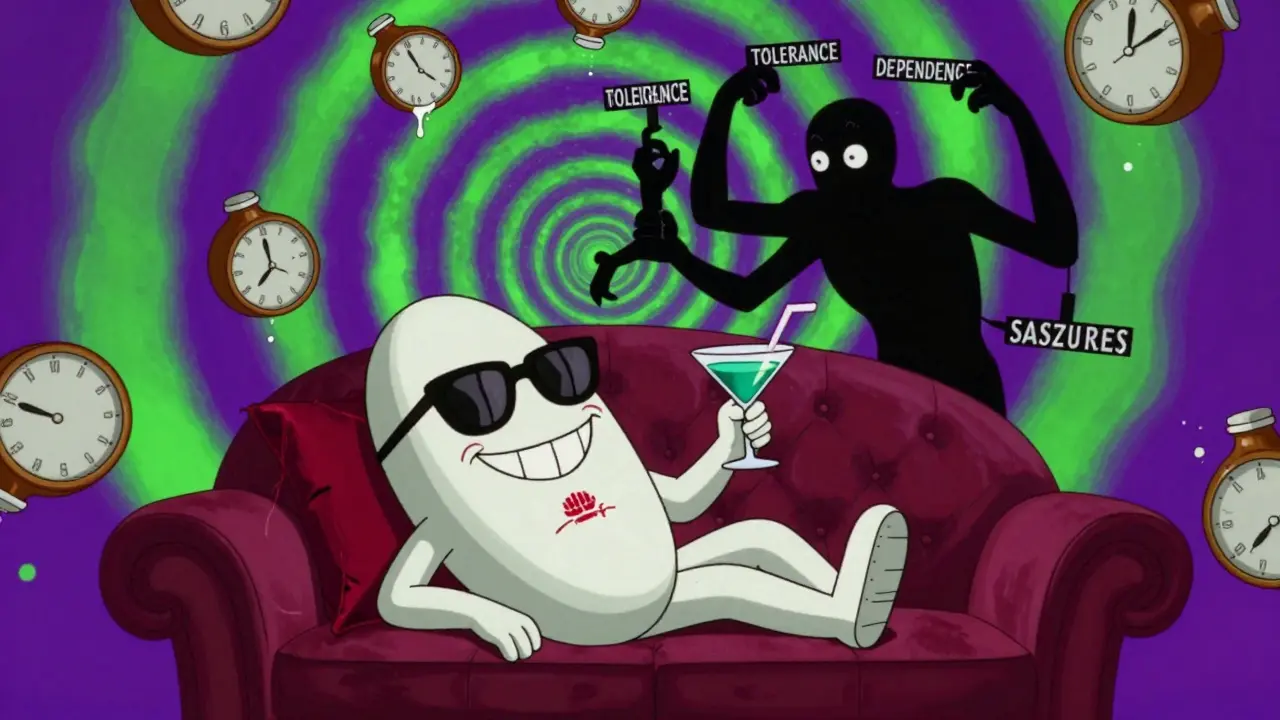
They boost GABA, the brain’s main calming chemical. That’s why they feel so effective. But here’s what most people don’t realize: your brain adapts. After 3 to 6 months, many people need higher doses to get the same effect. That’s tolerance. And when you try to stop? Withdrawal can be worse than the original anxiety. Symptoms include rebound anxiety, insomnia, tremors, and even seizures in severe cases.
According to the Ashton Manual-a trusted guide for benzodiazepine tapering-safe withdrawal can take 8 to 16 weeks. And even then, some people struggle for months. A 2023 review found that 76% of people on Reddit who used benzodiazepines for GAD reported dependence after just 3 months. The FDA now requires a black box warning on all benzodiazepines about addiction and withdrawal risk.
They’re not useless. In a crisis-like a sudden flare-up of panic or acute insomnia-they can be a bridge. But they’re not a destination. Guidelines from NICE, the APA, and the VA/DoD all say: don’t start here. Use them only short-term, if at all.
Cognitive Behavioral Therapy (CBT): Rewiring Your Brain
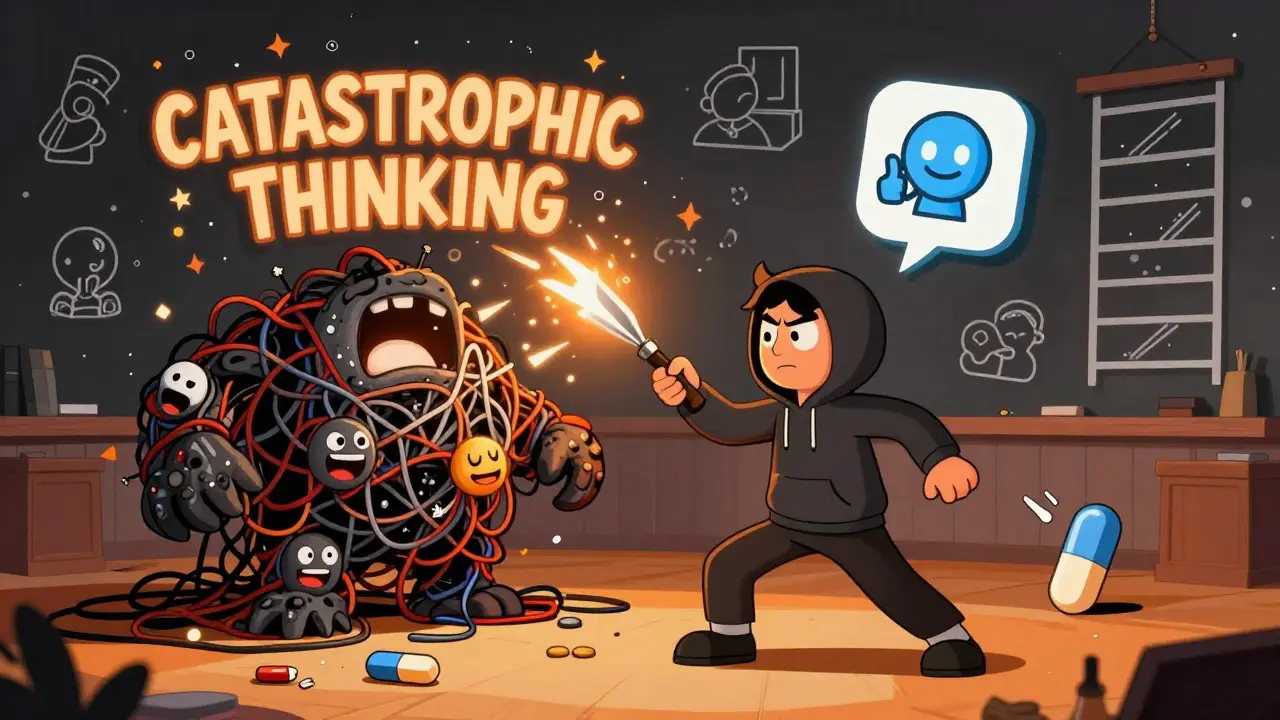
CBT is the only treatment that actually teaches you new ways to think and act. It doesn’t just mask symptoms-it changes the patterns that cause them. For GAD, CBT focuses on three things: identifying catastrophic thoughts (like “If I make a mistake, I’ll lose my job and end up homeless”), learning to challenge them, and gradually facing situations you avoid because they trigger worry.
A typical course lasts 12 to 20 weekly sessions, each about 50 minutes. Between sessions, you do homework: journaling worries, practicing breathing techniques, or exposing yourself to low-level anxiety triggers. Studies show that when people complete at least 70% of their homework, their chances of success jump by 2.3 times.
The results? About 40-60% of people reach remission after CBT. That’s similar to SSRIs. But here’s the kicker: CBT’s benefits last longer. At the 12-month mark, only 25% of people who did CBT relapse. For those who stopped SSRIs, it’s 45%. Why? Because CBT gives you tools. You don’t need the medication forever-you’ve learned how to manage anxiety yourself.
The downside? Access. There are only about 0.5 licensed CBT therapists per 10,000 adults with anxiety in the U.S. Sessions cost $100-$150 out-of-pocket. Insurance often covers it, but copays are higher than for medication. That’s why digital CBT apps like Woebot and SilverCloud are gaining ground. They’re not perfect, but they’re better than nothing.
Comparing the Three: What Works Best?
Let’s cut through the noise. Which treatment is best? The answer depends on what you need right now.
| Feature | SSRIs | Benzodiazepines | CBT |
|---|---|---|---|
| Time to effect | 2-6 weeks | 30-60 minutes | 4-8 weeks |
| Duration of benefit | Long-term with continued use | Short-term only | Long-term, even after stopping |
| Relapse rate after stopping | 45% | High (due to withdrawal) | 25% |
| Common side effects | Nausea, sexual dysfunction, fatigue | Drowsiness, dizziness, memory issues | Initial increase in anxiety during exposure |
| Dependency risk | Very low | High | None |
| Best for | Chronic GAD, especially with depression | Acute panic, short-term crisis | Long-term recovery, skill-building |
Here’s what the data says: if you want to feel better fast, benzodiazepines win. But if you want to stay better, CBT wins. SSRIs sit in the middle-slower than benzos, not as durable as CBT, but easier to access and effective for most.
What Should You Do?
If you’re newly diagnosed, start with one of two paths: SSRIs or CBT. Don’t start with benzodiazepines unless you’re in a true crisis. Even then, limit them to 2-4 weeks.
Here’s a practical breakdown:
- Choose SSRIs if: You need symptom relief quickly but can wait a few weeks. You’re okay with potential side effects. You have depression along with anxiety. You want something you can take daily without therapy.
- Choose CBT if: You’re willing to do the work. You want long-term results. You’re concerned about medication side effects. You have access to a therapist or a validated app like Woebot.
- Consider benzodiazepines only if: You’re having severe panic attacks, can’t sleep for days, or are at risk of harm. Use them for no longer than 2 weeks, then taper under medical supervision.
Some people do both. A 2022 study in JAMA Network Open found that combining SSRIs and CBT led to a 65% remission rate-higher than either alone. That’s the gold standard, if you can afford it.
The Future: New Options on the Horizon
Change is coming. In 2023, the FDA approved zuranolone, a new drug that works like benzodiazepines but with far less risk of dependence. Early trials showed only 5% withdrawal symptoms compared to 25% with traditional benzos. It’s not yet widely available, but it’s a sign that the field is moving away from old models.
Digital CBT is also expanding. Apps like Calm and Headspace aren’t replacements for therapy, but they help people get started. And pharmacogenetic testing-like GeneSight-is now available to help doctors pick the right SSRI based on your genes. If your body metabolizes serotonin slowly, you might need a lower dose. That kind of personalization is the future.
One thing won’t change: anxiety doesn’t get better by ignoring it. Whether you choose medication, therapy, or both, you have to show up. The tools exist. The science is clear. The hardest part isn’t finding the right treatment-it’s starting it.
Can I take SSRIs and benzodiazepines together?
Yes, but only short-term and under close supervision. Doctors sometimes prescribe a benzodiazepine for the first few weeks while an SSRI builds up in your system. But long-term use together increases sedation, fall risk, and dependency. It’s not a permanent solution.
How long should I stay on an SSRI for GAD?
Most experts recommend staying on SSRIs for at least 6 to 12 months after symptoms improve. Stopping too soon increases relapse risk. If you’re doing CBT at the same time, you might be able to taper off sooner. Always consult your doctor before stopping.
Is CBT better than medication for anxiety?
It’s not better-it’s different. CBT and SSRIs are equally effective at the end of treatment. But CBT has much lower relapse rates afterward. If you want to learn how to manage anxiety for life, CBT wins. If you need quick symptom relief, SSRIs are more practical.
Why are benzodiazepines still prescribed if they’re risky?
Because they work fast. In emergencies-like a panic attack that won’t stop or severe insomnia-they can be lifesaving. But guidelines now clearly say they shouldn’t be used for ongoing treatment. Many doctors still prescribe them out of habit or because patients ask for them. That’s changing as awareness grows.
Can I do CBT on my own without a therapist?
Yes, but with limits. Self-guided CBT using books or apps like Woebot or SilverCloud works for mild to moderate GAD. But if your anxiety is severe or you’re avoiding most of life, you’ll need a trained therapist. They can adjust techniques, give feedback, and help you push through tough exposure exercises.
What if I can’t afford therapy or medication?
Start with free or low-cost options. Many community health centers offer sliding-scale therapy. Apps like Woebot are free. Online support groups (like Reddit’s r/Anxiety) can help you feel less alone. Some SSRIs are available as generics for under $10 a month. Even small steps-like journaling worries or practicing 5-minute breathing exercises-can reduce symptoms over time.
Comments
Arlene Mathison
January 21, 2026 AT 04:45 AMJust started Lexapro last week and honestly? My brain feels like it’s finally stopped screaming. The first two weeks were rough-nausea, drowsiness, felt like a zombie-but day 14? I slept through the night. No 3 a.m. panic spirals. Still taking it slow, but this might be the first thing in years that actually works.
Also, if you’re scared of side effects? Start at 5mg. No need to jump in like a cannonball.
Nadia Watson
January 22, 2026 AT 02:38 AMThe data presented here is remarkably consistent with clinical guidelines from the American Psychiatric Association and the National Institute for Health and Care Excellence. It is imperative that patients understand the distinction between symptomatic relief and curative intervention. Benzodiazepines, while pharmacologically effective in the acute phase, do not address the cognitive distortions underlying generalized anxiety disorder. Cognitive behavioral therapy, by contrast, facilitates neuroplastic change, resulting in enduring symptom reduction. Access barriers remain a systemic failure in mental healthcare infrastructure.
Courtney Carra
January 23, 2026 AT 15:24 PMCBT is basically your brain’s upgrade patch 🤖✨
Imagine your thoughts are old software running on Windows XP. SSRIs? They just mute the error messages. Benzodiazepines? They turn off the whole computer. CBT? It installs Linux. You learn to code your own peace.
Also, therapy isn’t just ‘talking’-it’s like doing push-ups for your nervous system. And yeah, it’s hard. But so is living in your own head on fire.
Shane McGriff
January 24, 2026 AT 20:16 PMI’ve been on Zoloft for 8 months and honestly? I wish I’d started CBT sooner. The meds got me out of the ditch, but CBT taught me how to walk again. My therapist made me write down every catastrophic thought-‘If I mess up this presentation, I’ll get fired and end up homeless’-and then we tore it apart like it was a bad movie plot.
Turns out, my brain’s worst-case scenario is usually just… me being mildly embarrassed. That’s it.
Also, if you’re thinking ‘I don’t have time for therapy’-you don’t have time *not* to. Your future self will thank you.
Jacob Cathro
January 24, 2026 AT 22:44 PMSSRIs are just chemical crutches for people who don’t wanna face reality. Benzodiazepines? Nah, they’re the real MVPs. If you’re gonna panic, at least panic hard. Why waste time with talk therapy when you can just chill with Xanax and Netflix?
Also, the whole ‘CBT lasts longer’ thing? That’s just Big Pharma trying to sell you a subscription. You think your thoughts are that fixable? LOL. You’re just a meat puppet with serotonin glitches.
pragya mishra
January 25, 2026 AT 22:55 PMWhy are you all so obsessed with meds? Just pray more. My cousin in Mumbai took ashwagandha and now she’s happy. Why don’t you try yoga? Or just stop overthinking? It’s all in your head. I did it. You can too.
Also, SSRIs make you numb. You’ll lose your passion. I know. I’ve seen it.
Manoj Kumar Billigunta
January 27, 2026 AT 08:46 AMAs someone from India, I’ve seen too many people suffer because they think therapy is ‘for rich people’ or ‘Western nonsense’. But here’s the truth: anxiety doesn’t care where you’re from. It doesn’t care if you’re poor or rich. It just wants you to feel trapped.
My brother took generic sertraline for $8 a month. He did free CBT on YouTube. He didn’t need fancy clinics. He just needed someone to say, ‘It’s okay to not be okay.’
Start small. Breathe. Write one thing you’re scared of. That’s your first step.
Andy Thompson
January 27, 2026 AT 21:39 PMThey’re lying about SSRIs. The FDA knows they’re just mind-control drugs. Look at the studies-most are funded by Big Pharma. And CBT? That’s just brainwashing with a therapist’s notebook. Why are you all so quick to believe the system? Benzodiazepines? They’re the only thing keeping people sane while the world burns.
They don’t want you to be calm. They want you medicated, quiet, and productive. Wake up.
Also, did you know the WHO says anxiety is a ‘manufactured epidemic’? They’re scared of a population that thinks for itself.
sagar sanadi
January 28, 2026 AT 14:14 PMOh wow, another ‘science says’ post. Next you’ll tell me gravity is real.
CBT works? Sure. So does ignoring your problems and drinking whiskey. Benzodiazepines are bad? Then why do doctors prescribe them like candy? SSRIs make you feel like a zombie? Then why are they the ‘gold standard’?
People just want answers. But the truth? Nobody knows what’s really going on in your brain. We’re all just guessing with degrees.
kumar kc
January 29, 2026 AT 16:30 PMStop taking drugs. Just be strong. God doesn’t give you anxiety you can’t handle. You’re weak if you need pills. Pray. Work. Sleep. That’s it.
Thomas Varner
January 31, 2026 AT 05:42 AMJust wanted to say-this post is one of the clearest, most balanced takes I’ve seen on GAD treatment. Seriously. The table? Perfect. The Ashton Manual reference? Spot on. The part about digital CBT? Needed more of that.
Also, I’ve been on Lexapro for 14 months. Tapered off last month after 6 months of CBT. No rebound. No withdrawal. Just… me. Quiet, but me.
Also, if you’re thinking ‘I can’t afford therapy’-check out the free CBT modules on the Centre for Clinical Interventions website. They’re gold. I swear.
clifford hoang
January 31, 2026 AT 07:16 AMLet’s be real: the entire mental health system is a Ponzi scheme.
SSRIs? Made to keep you dependent. CBT? A fancy way to make you pay $150/hour to repeat the same three phrases: ‘Is that thought true?’ ‘What’s the evidence?’ ‘What’s the worst that could happen?’
Benzodiazepines? The only honest option. At least they don’t pretend to ‘fix’ you. They just shut you up.
And don’t even get me started on ‘digital CBT apps’. Woebot? That’s a chatbot trained on Reddit threads and corporate wellness brochures. You’re not healing-you’re being gamified.
They want you to believe you need a system. But the truth? You just need to stop listening to them.
Also, zuranolone? That’s just a rebranded benzo with a patent. Watch. It’ll be on the market in 6 months. Then they’ll tell you it’s ‘revolutionary’.
Wake up. The system doesn’t want you well. It wants you compliant.
Arlene Mathison
January 31, 2026 AT 16:47 PMWait, so you’re saying CBT apps are just corporate propaganda? But I used Woebot for 3 months and it actually helped me catch my catastrophizing. I didn’t even know I was doing it until it said, ‘Is there evidence you’ll lose your job?’ and I was like… wait, no, I just forgot to send one email.
Also, I’m not saying the system’s perfect-but if a free app helps me not cry in the shower, I’ll take it. Even if it’s ‘gamified’.
And I’m not ‘compliant’-I’m alive. And that’s enough for today.