

Fiber & Medication Timing Calculator
Input Your Schedule
Analysis Result
You swallow your morning pills. You mix your fiber powder with water. You drink it all down within minutes of each other. If this sounds like your routine, you might be flushing money-and medicine-down the drain without realizing it.
Fiber is powerful stuff. It’s the go-to fix for constipation, helping millions move things along naturally. But when you take it at the same time as prescription drugs, that helpful gel-like substance in your gut can trap those medications before your body ever gets a chance to use them. The result? Your blood pressure stays high, your blood sugar spikes, or your anxiety meds don’t kick in. This isn't just a minor inconvenience; it's a safety issue.
Getting the timing right is the difference between a supplement that helps and one that hinders. Here is exactly how to schedule your fiber intake so you get the digestive benefits without sabotaging your health regimen.
The Science Behind the Conflict
To understand why timing matters, you have to look at what happens inside your stomach. When you consume psyllium husk, which is the active ingredient in popular brands like Metamucil, it absorbs water and turns into a thick, viscous gel. This gel adds bulk to your stool, which is great for relieving constipation. However, that same sticky matrix doesn't distinguish between food particles and pharmaceutical compounds.
If you take a pill while this gel is forming or moving through your intestines, the medication can get physically bound up. Your body then excretes the trapped drug instead of absorbing it into your bloodstream. A 2022 systematic review published in PMC (PMID: PMC9535527) highlights that while fiber increases treatment response for constipation by 48%, its ability to alter gastric emptying time means it directly impacts drug bioavailability. In simple terms, the fiber slows everything down and holds onto things too tightly.
This interaction is particularly risky for narrow-therapeutic-index drugs, where even a small drop in absorption can lead to serious health consequences. For example, lithium levels can fluctuate dangerously if absorption is inconsistent. Understanding this mechanism is the first step toward fixing your daily routine.
The Golden Rule: Two Hours Before or After
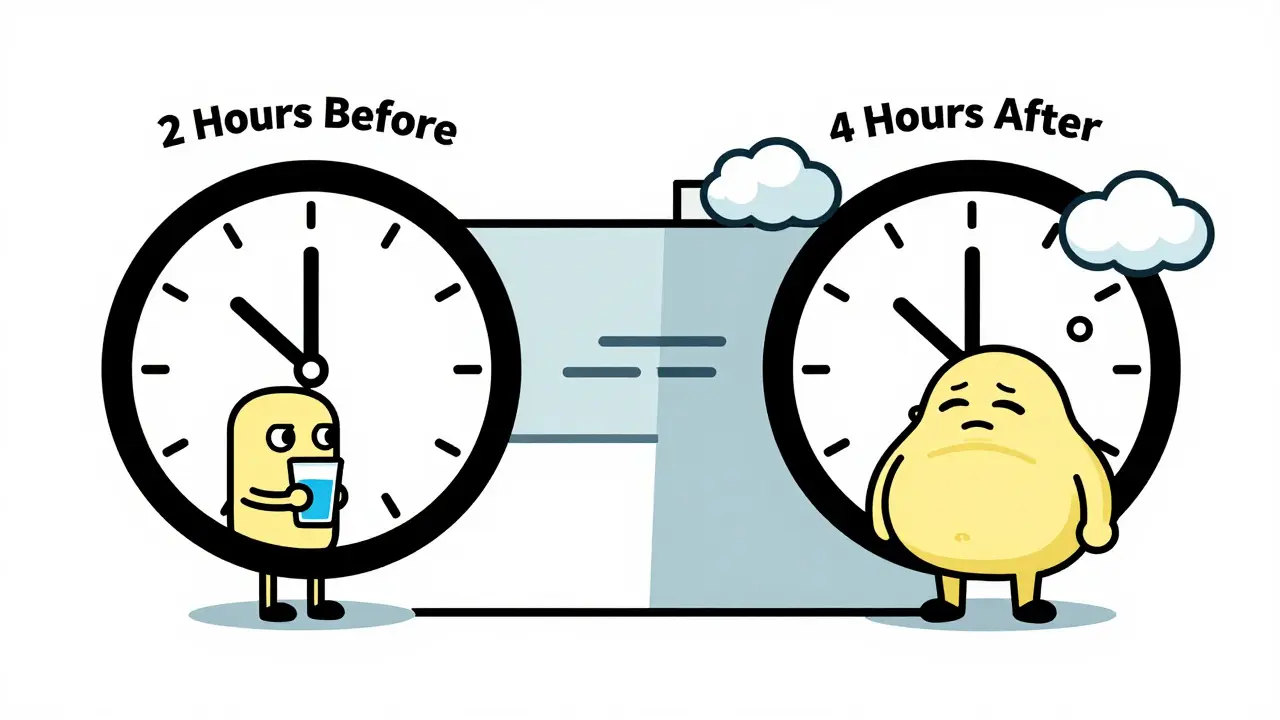
Most medical guidelines and product labels agree on a specific window to avoid these interactions. The standard advice from manufacturers like Metamucil is clear: take bulk-forming fibers at least 2 hours before or 4 hours after taking any medication.
Why the asymmetry? Why two hours before but four hours after? It comes down to digestion speed. When you take fiber before a med, it starts moving through your system quickly. By the time you take the pill two hours later, the bulk of the fiber has likely passed the primary absorption zones in the upper intestine. However, if you take the pill first and then the fiber, the fiber sits in your stomach and small intestine, creating a barrier that can delay the pill's breakdown for several hours. Hence, the longer wait time after medication.
For most common medications, a strict 2-hour separation in either direction is often sufficient, but sticking to the more conservative "2 hours before, 4 hours after" rule provides a safety buffer. This applies especially to critical drugs like:
- Carbamazepine (an anticonvulsant)
- Lithium (a mood stabilizer)
- Metformin (for type 2 diabetes)
- Olanzapine (an antipsychotic)
If you are on any of these, do not guess. Follow the spacing strictly.
Morning vs. Night: Finding Your Slot
Once you know you need space between fiber and meds, the next question is: when should I take the fiber? Many people assume bedtime is perfect because they’re done with their day. Surprisingly, data suggests otherwise.
User experiences and clinical observations show that taking fiber right before bed can disrupt sleep. FreeRx patient forums document cases where nighttime supplementation led to bloating, gas, and abdominal soreness, keeping users awake. Nature Made customer reviews from late 2023 showed significantly lower ratings for bedtime users compared to those who took fiber during the day. The reason is simple: your digestive system slows down at night. Introducing a bulky, fermentable substance like psyllium when your gut is winding down can cause uncomfortable distension.
A better strategy depends on your medication schedule:
| Medication Time | Recommended Fiber Time | Reasoning |
|---|---|---|
| Morning only | Late Morning or Early Afternoon | Avoids interference with morning meds; keeps gut active during the day. |
| Evening only | Mid-Morning | Allows full clearance of fiber before evening meds; avoids nighttime bloating. |
| Twice Daily (AM/PM) | Noon | Sits squarely in the middle, respecting the 2-4 hour gap for both doses. |
If you take meds in the morning, aim for your fiber dose around lunchtime. This influences your digestion for lunch and dinner without interfering with your morning routine. If you take meds at night, take your fiber mid-morning. This ensures the fiber has moved through your system well before you pop your evening pill.
Dosage Matters More Than You Think
Timing is crucial, but dosage determines whether the fiber actually works. Many people under-dose, expecting immediate results. According to the American College of Gastroenterology, effective fiber supplementation for chronic constipation typically requires doses exceeding 10 grams per day. That’s roughly three servings of standard psyllium products.
However, jumping straight to 10 grams is a recipe for disaster. Your gut needs to adapt. Start with one serving per day. Gradually increase over 1-2 weeks. During this adjustment period, expect some minor bloating or changes in bowel habits. This is normal. If you skip this ramp-up phase, you risk severe gas and cramping, which might make you quit the supplement entirely.
Also, never forget the water. Psyllium expands rapidly. Taking it with less than 8 ounces (237 mL) of liquid can cause it to swell in your esophagus, leading to choking or obstruction. This is especially dangerous for elderly patients or anyone with swallowing difficulties. Always drink plenty of fluids when taking fiber.

When to Stop and See a Doctor
Fiber is safe for most people, but it’s not a cure-all. If you’ve been taking fiber correctly for two weeks and see no improvement, or if you experience sudden changes in bowel habits lasting more than seven days, stop and consult a healthcare provider. Symptoms like abdominal pain, nausea, vomiting, or rectal bleeding are red flags that require immediate medical attention. These could indicate underlying conditions like diverticulitis or intestinal blockages, where adding more fiber could actually worsen the situation.
Dr. Steven Quatrino of SAMPA Docs notes that certain colorectal conditions paradoxically require reduced fiber intake during active treatment phases. What helps one person can harm another if the diagnosis is wrong.
Practical Tips for Success
Implementing this new schedule can feel complicated at first. Here are a few ways to make it stick:
- Use Alarms: Set phone reminders for your "fiber window." If you take meds at 8 AM, set a reminder for 10 AM or later.
- Keep a Log: Track your bowel movements and any side effects for the first two weeks. This helps you determine if the timing and dosage are working.
- Check Labels: Not all fiber is created equal. Psyllium is generally more effective for constipation than methylcellulose or polycarbophil. Ensure you know what you’re buying.
- Consult Your Pharmacist: Bring your list of medications to the pharmacy. Ask specifically: "Does my medication interact with psyllium?" They can give you personalized timing advice based on your specific prescriptions.
By treating fiber as a serious part of your health regimen rather than an optional snack, you ensure it does its job without getting in the way of your other treatments. Proper timing protects your medication efficacy and keeps your digestive system running smoothly.
Can I take fiber supplements with breakfast?
Yes, but only if you do not take any medications with breakfast. If you take morning meds, wait at least 2 hours after eating and taking your pills before having your fiber supplement. Otherwise, the fiber may bind to the medication and reduce its effectiveness.
Is it better to take fiber in the morning or at night?
Morning or afternoon is generally better. Taking fiber at night can lead to bloating and gas that disrupts sleep, as your digestive system slows down while you rest. Aim for mid-day dosing to align with your body's natural activity levels.
How much fiber do I need to relieve constipation?
Clinical studies suggest doses greater than 10 grams per day are most effective for increasing stool frequency. However, you should start with a smaller dose (e.g., 3-5 grams) and gradually increase over 1-2 weeks to minimize bloating and gas.
Which medications interact most with fiber?
Fiber can significantly affect the absorption of lithium, carbamazepine, metformin, olanzapine, and certain thyroid medications. Always separate these drugs from fiber intake by at least 2-4 hours to ensure proper dosage absorption.
What if I forget to space out my fiber and meds?
If you accidentally take them together, do not panic. Monitor for any unusual symptoms related to your medication (like higher blood sugar or increased anxiety). Do not double up on your next dose. Just resume your spaced-out schedule immediately. If you miss a fiber dose, simply take it at the next appropriate time.
Can fiber supplements cause dehydration?
Yes, if you do not drink enough water. Fiber absorbs liquid from your body to form bulk. Without adequate fluid intake (at least 8 ounces per dose), fiber can harden in the gut, potentially worsening constipation or causing blockages. Stay hydrated throughout the day.