
Antidepressant Sweating Risk Calculator
Compare Your Medication's Sweating Risk
Based on clinical data and user reports, this tool shows the likelihood of excessive sweating with different antidepressants. Choose your current medication to see your risk level and better alternatives.
Select your medication to see your sweating risk level
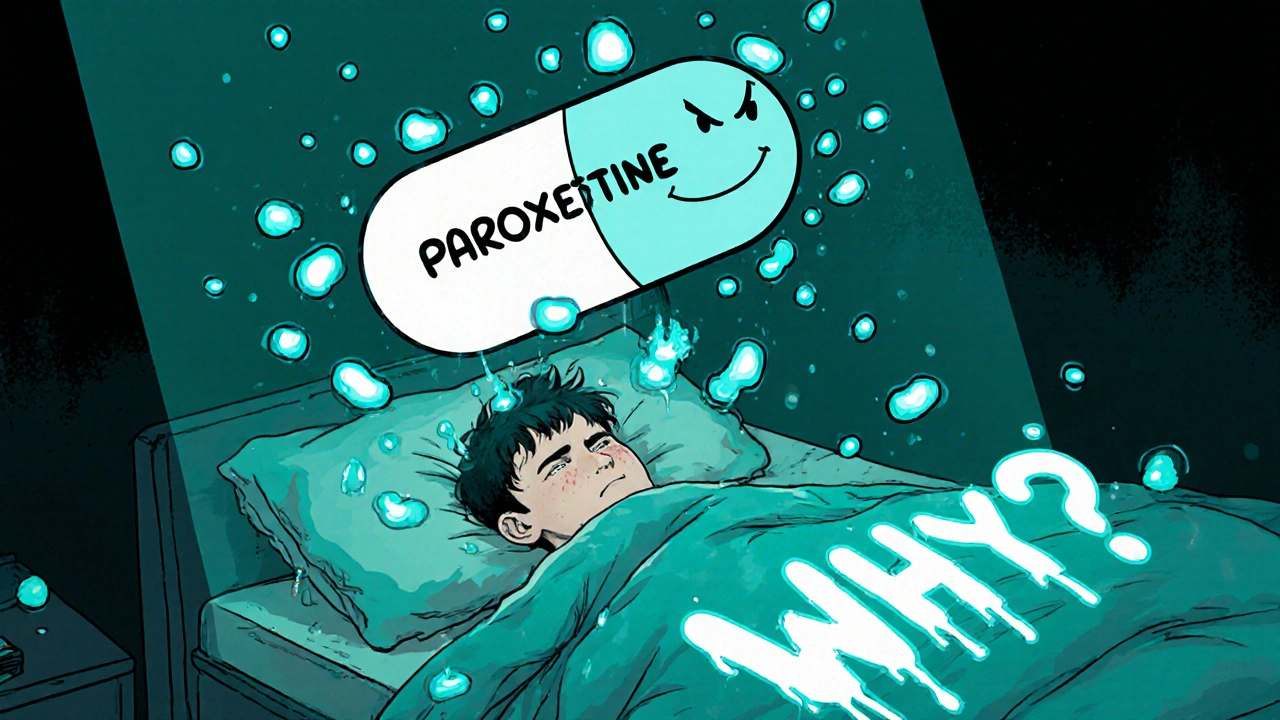
Imagine waking up soaked through, even though your bedroom is cool. Your shirt sticks to your back. Your armpits are dark with sweat. You’ve been taking your antidepressant for weeks - your mood is better - but this sweating? It’s ruining your days. You’re not alone. About 1 in 5 people on antidepressants deal with this exact problem. It’s called antidepressant-induced excessive sweating, or ADIES. And while it’s not dangerous on its own, it’s one of the top reasons people stop taking their meds.
Why Do Antidepressants Make You Sweat So Much?
Antidepressants don’t just affect your mood. They mess with your body’s thermostat. Most of them - especially SSRIs like sertraline and paroxetine, and SNRIs like venlafaxine - boost serotonin. That’s good for depression. But serotonin also talks to the hypothalamus, the part of your brain that controls sweating. Too much serotonin? Your brain thinks you’re overheating… even when you’re not. It’s not about how hot it is outside. It’s not stress. It’s not your workout. This is pure chemistry. You can be sitting still in a 68°F room and still drench your pillow. The sweat often hits your scalp, face, neck, and underarms first. And it doesn’t always show up right away. Some people get it after weeks or even months of stable use. Not all antidepressants are equal here. Paroxetine is the worst offender - nearly 1 in 5 users report heavy sweating. Sertraline isn’t far behind. Fluoxetine? Much lower risk. And then there’s citalopram - which, surprisingly, causes less sweating than its close cousin escitalopram, even at the same dose. Why? Because of tiny chemical differences that affect how your body handles the drug. That’s why switching from escitalopram to citalopram has helped people stop sweating overnight.How Common Is This, Really?
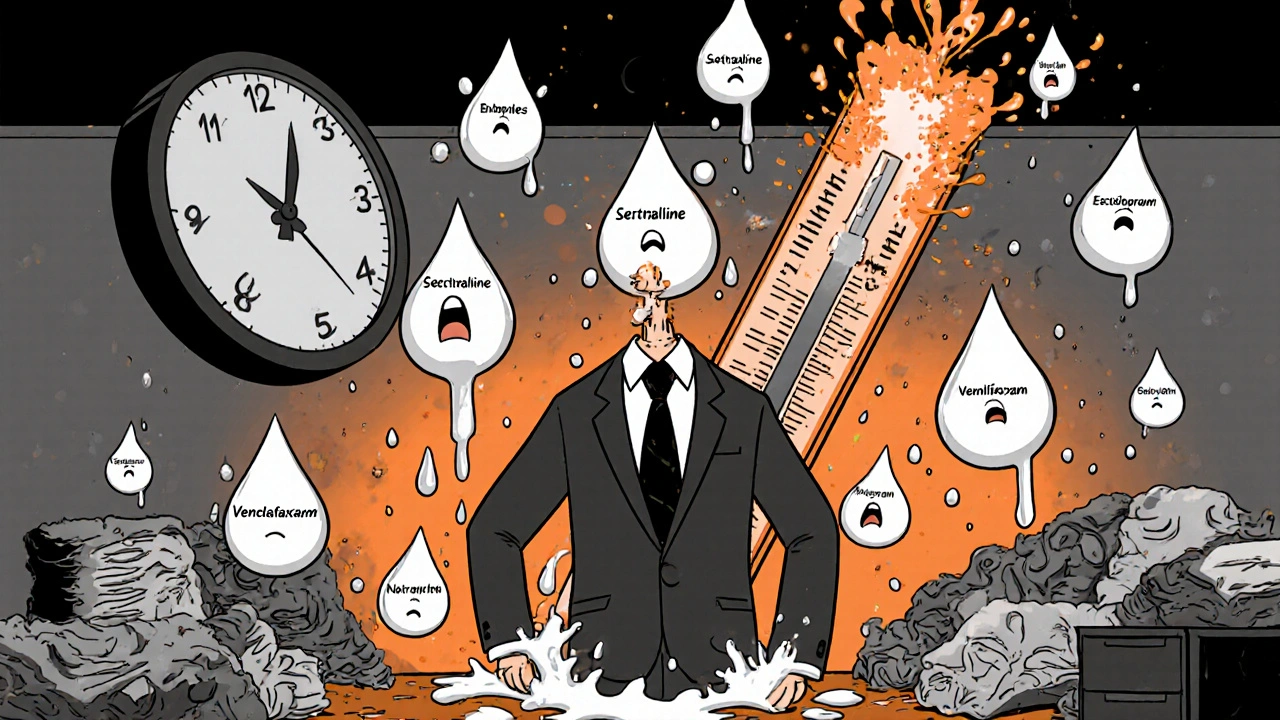
Around 13% of U.S. adults take antidepressants. If 10-20% of them get excessive sweating, that’s over 3 million people in America alone dealing with this daily. In the UK, the numbers are similar. Yet, most doctors don’t bring it up unless you do. And too many patients suffer in silence because they think it’s normal - or worse, they’re embarrassed to mention it. On Reddit’s r/antidepressants, you’ll find hundreds of posts like this: “I changed clothes three times a day at work.” “I stopped Paxil because I couldn’t sleep through the night sweats.” “I felt like I was drowning in my own sweat.” One user said they’d rather go back to depression than keep sweating like this. That’s how bad it gets. And it’s not just emotional. It’s physical. Constant wetness leads to skin irritation, rashes, and even infections. Clothes wear out faster. Laundry bills spike. You avoid social events. You cancel plans. You start dreading mornings.What Medications Cause the Most Sweating?
Here’s a clear breakdown of how different antidepressants stack up when it comes to sweating risk, based on clinical data and user reports:| Medication | Class | Sweating Risk | Notes |
|---|---|---|---|
| Paroxetine | SSRI | High (19%) | Worst offender. Often causes night sweats. |
| Sertraline | SSRI | High (15%) | Commonly prescribed - high chance of sweating. |
| Escitalopram | SSRI | Medium-High (14%) | Higher than citalopram despite being its active form. |
| Citalopram | SSRI | Medium (7%) | Often a good switch from escitalopram. |
| Fluoxetine | SSRI | Low (7%) | One of the least likely to cause sweating. |
| Venlafaxine | SNRI | High (12-18%) | Immediate-release worse than extended-release. |
| Bupropion | NDRI | Medium (10%) | Less sexual side effects, but still causes sweating. |
| Trazodone | SARI | Low (3-5%) | Often used as a sleep aid - low sweating risk. |
| Fluvoxamine | SSRI | Very Low (2-4%) | Best SSRI option if sweating is a concern. |
| Tricyclics (e.g., amitriptyline) | Tricyclic | Medium-High (10-15%) | Less used now due to other side effects. |
Notice something? Citalopram is a better choice than escitalopram for people prone to sweating. And fluvoxamine? It’s rarely prescribed, but if you’ve had bad reactions to other SSRIs, it’s worth asking about.
What to Do When Sweating Gets Out of Hand
You have options. And you don’t have to suffer. 1. Talk to your doctor - don’t quit cold turkey. Stopping antidepressants suddenly can cause withdrawal symptoms, including more sweating. That’s the opposite of what you want. 2. Try switching medications. This is the most effective long-term fix. If you’re on sertraline or paroxetine, ask about switching to citalopram, fluvoxamine, or trazodone. Studies show that even small changes - like going from escitalopram to citalopram - can cut sweating by 70% or more. One patient in a 2023 case report stopped sweating entirely after the switch. 3. Consider a lower dose. Sometimes, lowering the dose helps. But here’s the catch: it doesn’t always work. For some people, sweating happens at any dose. And lowering too much can bring back depression. So this isn’t a magic fix - but it’s worth trying if your dose is high. 4. Add a non-antidepressant to help. If switching meds isn’t possible, your doctor might prescribe a small dose of something like glycopyrrolate (1-2 mg daily) or benztropine (0.5-1 mg daily). These are anticholinergics - they block the signals that trigger sweat glands. They’re not meant to be used forever, but they can give you breathing room while you adjust. 5. Try terazosin at night. This is an older blood pressure drug, but it’s been shown to reduce sweating in antidepressant users. Taking 1-5 mg at bedtime can help, especially for night sweats. It’s not FDA-approved for this, but it’s used off-label with good results.Cooling Strategies That Actually Work
Medication changes take time. In the meantime, you need to stay cool now. Here’s what works, based on real user reports and clinical studies:- Moisture-wicking fabrics - Skip cotton. Wear shirts made of polyester blends, merino wool, or technical athletic fabrics. They pull sweat away from your skin and dry fast.
- Cooling vests - A 2022 pilot study showed a 60% reduction in sweating when participants wore a wearable cooling vest during the day. These are lightweight, rechargeable, and discreet under clothes.
- Strong antiperspirants - Use ones with 15-20% aluminum chloride. Apply them at night on dry skin. You might need to reapply every few days. Clinical trials show they’re effective for focal sweating underarms and palms.
- Keep your environment cool - Use a fan, keep your bedroom at 65°F, and avoid heavy blankets. Some people sleep with a cold pack wrapped in a towel beside them.
- Hydrate, but don’t overdo it - Drink water to replace lost fluids, but avoid caffeine and alcohol. Both can make sweating worse.
- Carry spare clothes - Keep a change of shirt, socks, and underwear in your bag. A small towel or sweat-wiping cloth helps too.
One user on Sweathelp.org said: “I started wearing a cooling vest under my blazer at work. I went from 3 changes a day to none. It’s not perfect, but it’s life-changing.”
When Sweating Could Be Something Worse
Not all sweating is ADIES. If you suddenly start sweating plus you have:- Fast heartbeat
- Tremors or muscle stiffness
- Confusion or high fever
- Diarrhea or hallucinations
That’s not just sweating. That’s serotonin syndrome - a rare but dangerous condition. It can happen when you start a new antidepressant, increase your dose, or mix meds. If you have these symptoms, go to the ER immediately. This is an emergency.
What’s Next for People With Medication-Induced Sweating?
The field is changing fast. In 2024, a new tool called the Anticholinergic Risk Scale started rating antidepressants by their sweating potential. Paroxetine got the highest score (4/4). Fluvoxamine got the lowest (1/4). Doctors are starting to use this when choosing meds. New delivery methods are coming too. Transdermal patches like selegiline cause 60% less sweating than oral SSRIs. And in 2023, a new experimental drug called LS-2-1123 showed only 3.2% sweating incidence - compared to 14.7% for escitalopram. That’s a game-changer. By 2027, doctors may test your genes to see how you metabolize antidepressants. If you’re a slow metabolizer, you’re more likely to get side effects like sweating. That means your first pill won’t be a guess - it’ll be targeted.You’re Not Broken. This Is Treatable.
Excessive sweating from antidepressants isn’t your fault. It’s a side effect of a drug that’s helping your brain. But it doesn’t have to wreck your life. You don’t need to quit your meds. You don’t need to suffer in silence. Start by talking to your doctor. Ask: “Could my sweating be from my medication?” Show them this list of alternatives. Ask about switching to citalopram or fluvoxamine. Ask about glycopyrrolate or a cooling vest. This isn’t just about comfort. It’s about sticking with treatment. And if you can manage the sweating, you can keep getting better - without feeling like you’re drowning every day.Can antidepressant sweating go away on its own?
Sometimes, but rarely. Most people don’t develop tolerance. Studies show sweating often lasts beyond six months - and in many cases, it doesn’t improve without intervention. Waiting it out isn’t a reliable strategy.
Is excessive sweating a sign my antidepressant isn’t working?
No. Sweating is a side effect, not a sign of treatment failure. Many people feel better emotionally but still sweat heavily. Your mood improvement means the drug is working - the sweating is just an unwanted side effect.
Can I use over-the-counter antiperspirants for medication-induced sweating?
Yes, but standard deodorants won’t help. You need clinical-strength antiperspirants with 15-20% aluminum chloride. Brands like Certain Dri or Drysol are effective. Apply at night on dry skin for best results.
Why does switching from escitalopram to citalopram reduce sweating?
Escitalopram is the active S-isomer of citalopram. Citalopram contains both S- and R-isomers. The R-isomer may interfere with serotonin’s effect on sweat glands, reducing hyperhidrosis. Even though they’re chemically similar, this small difference leads to a big change in side effects for some people.
Are there natural remedies for antidepressant sweating?
No proven natural remedies exist. Herbal supplements like sage or witch hazel have no clinical backing for this use. Some people report minor relief from acupuncture or yoga, but these don’t stop the root cause. Stick to science-backed methods: medication switches, anticholinergics, and cooling tech.
Can I take something to stop the sweating without changing my antidepressant?
Yes. Glycopyrrolate (1-2 mg daily) or benztropine (0.5-1 mg daily) are commonly prescribed off-label for this. Terazosin at night can help with night sweats. These aren’t cures, but they can reduce sweating enough to make daily life manageable while you decide on a longer-term fix.



Comments
Holly Dorger
October 29, 2025 AT 21:11 PMi swear i thought i was the only one. changed shirts 4 times at work last week. my boss asked if i was sick. i just smiled and said 'hot office.' no way i'm telling them i'm on meds and sweating like a pig.
Amanda Nicolson
October 30, 2025 AT 13:59 PMoh my god this is the most accurate thing i’ve ever read. i was on paroxetine for 8 months and i swear i woke up in puddles. like, actual puddles on my sheets. i thought i was haunted. then i switched to fluvoxamine and it was like someone flipped a switch. no more midnight drownings. i cried the first night i slept dry. it’s not just inconvenient-it’s soul-crushing. please, if you’re suffering, don’t suffer in silence. your doctor can help. you’re not broken, you’re just chemically overworked.
Jackson Olsen
October 30, 2025 AT 22:39 PMcitalopram over escitalopram? weird but makes sense. tried it. stopped sweating. mood still good. no drama. just science. thanks for the tip.
Penny Clark
October 31, 2025 AT 18:48 PMi’ve been using drysol at night and it’s a game changer 🙏 i used to hate looking in mirrors because my shirts were always dark under the arms. now? i wear white again. and yes i know it’s not a cure but it’s peace. also cooling vest from amazon-$60 and it’s worth every penny. no more sweating through meetings. you’re not alone.
Niki Tiki
November 1, 2025 AT 18:35 PMwhy are we letting big pharma make us sweat like this? just quit the pills and go natural. yoga and turmeric. you dont need chemicals to fix your brain. america is so weak. my grandpa fought in the war and never took a pill. he sweated from work not from meds. get tough.
Jim Allen
November 3, 2025 AT 08:18 AMso we’re just gonna keep patching this with anticholinergics and cooling vests? what if the real fix is just not taking antidepressants at all? we’ve been sold a lie that your brain needs chemicals to function. what if it just needs rest? food? sunlight? i’m not saying stop meds. i’m saying maybe we’re treating the symptom and ignoring the cause.
Nate Girard
November 3, 2025 AT 18:16 PMthank you for writing this. i’ve been too embarrassed to talk about it even with my therapist. reading this made me feel seen. i’m going to ask my doctor about fluvoxamine next week. and yes i’m buying a cooling vest. if it helps me feel like a human again, it’s worth it.
Carolyn Kiger
November 4, 2025 AT 11:10 AMmy sister switched from sertraline to citalopram and her night sweats vanished in two weeks. she didn’t even tell me at first-she was afraid i’d think she was giving up. but she’s happier now, not just because her mood is better but because she can wear a sundress again without panic. small changes matter.
krishna raut
November 4, 2025 AT 20:58 PMfluvoxamine best option for sweating. low risk. works fine. try it.