

You love your pet, but you hate sneezing every time they jump on the couch. It is a frustrating reality for about 10% of Americans who suffer from pet allergies, which are triggered by microscopic proteins found in dander, saliva, and urine rather than hair itself. The good news? You do not have to choose between your health and your furry friend. While you cannot eliminate allergens entirely, you can drastically reduce them using specific home strategies and tools.
Understanding the Real Culprit: Dander vs. Hair
Most people think shedding hair causes their symptoms, but that is a myth. The real enemy is pet dander, defined as microscopic flakes of skin shed by cats, dogs, and other animals. These tiny particles carry potent proteins like Fel d 1 (from cats) and Can f 1 (from dogs). Because dander is so light and sticky, it floats in the air for hours and clings to fabrics for months. Even after removing a pet from a home, these allergens can linger in dust for up to six months, according to research cited by Allergy Fort Worth.
Cats generally produce more persistent allergens than dogs, but individual variation matters more than breed. No cat or dog breed is truly "hypoallergenic," warns Dr. David Stukus of Nationwide Children's Hospital. Every animal produces some level of these proteins, meaning your strategy must focus on containment and removal, not just choosing the right breed.
The Bedroom Rule: Your First Line of Defense
If you only implement one change, make this one. Designating your bedroom as a strict pet-free zone is the single most effective environmental control available. Dr. Sandra Hong at Cleveland Clinic notes that this simple boundary reduces nighttime allergy symptoms by up to 40%. Why? Because you spend roughly one-third of your life in bed, breathing deeply in a confined space. If your pillow is covered in dander, you are inhaling concentrated allergens for eight hours straight.
To enforce this rule effectively:
- Keep pets out of the bedroom entirely, even during the day.
- Use allergen-proof covers on pillows and mattresses to trap any dander that might sneak in via clothing.
- Wash your hands immediately after petting your animal before touching your face or bedding.
This creates a safe haven where your body can recover, significantly reducing morning congestion and fatigue.

Air Filtration: What Actually Works
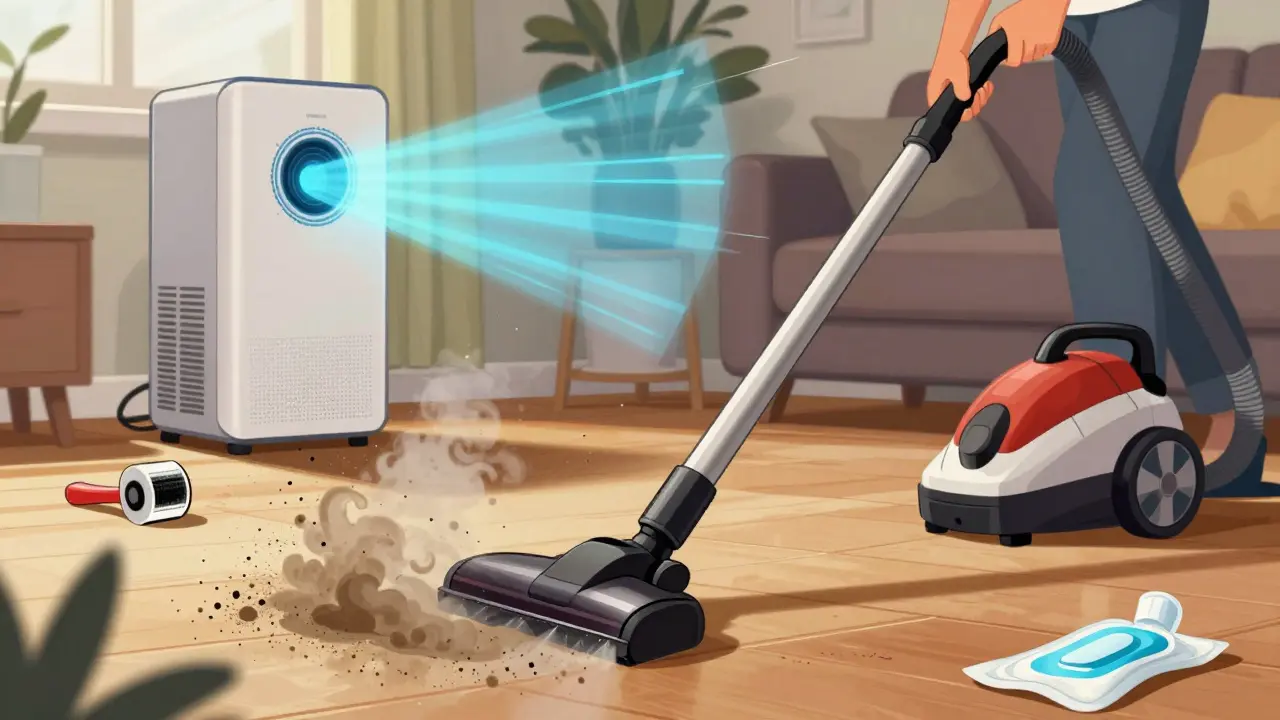
Standard vacuums and air cleaners often fail because their filters are too coarse. To capture microscopic dander, you need HEPA filters, which stand for High-Efficiency Particulate Air filters capable of trapping 99.97% of particles as small as 0.3 microns. According to Filtrete’s 2023 research, vacuum cleaners with true HEPA filtration are 30-50% more effective at capturing dander than standard models. Similarly, air purifiers with HEPA filters can cut airborne allergen concentrations by 40-60% in a typical room.
| Tool Type | Effectiveness Against Dander | Key Benefit |
|---|---|---|
| Standard Vacuum | Low (recirculates fine particles) | Cheaper upfront cost |
| HEPA Vacuum | High (captures 99.97% of micro-particles) | Prevents dander from blowing back into air |
| HEPA Air Purifier | Medium-High (reduces airborne levels by 40-60%) | Continuous cleaning while you sleep/live |
| Carbon Filter Only | None (only removes odors) | Eliminates pet smells, not allergens |
Position your air purifier in the main living area and your bedroom. For best results, ensure the unit is sized correctly for the room; an undersized purifier will struggle to keep up with daily shedding. Replace filters every 6-12 months, as clogged filters lose efficiency and can harbor mold.
Flooring and Fabrics: Cutting Down Surface Reservoirs
Dander loves soft surfaces. Carpets act like sponges, trapping millions of microscopic particles deep within their fibers. Studies show that hard flooring surfaces like hardwood, tile, or linoleum harbor 50-75% less pet dander than carpeted areas. If you are renovating, swapping out carpets for hard floors is a game-changer for allergy sufferers.
If you must keep carpets, you need to attack them aggressively. Vacuum at least two to three times a week using a HEPA-equipped machine. Spend 15-20 minutes per session, moving slowly to allow the suction to pull dander out of the fibers. For upholstery, use lint rollers daily to remove surface dander, which can capture 70-85% of loose particles. Wash all pet bedding and removable throw blankets weekly in hot water-at least 130°F (54°C)-to kill allergens and break down protein structures.
Pet Hygiene: Bathing and Grooming
Bathing your pet helps wash away loose dander and saliva proteins. However, this is easier said than done. Only 35% of allergy sufferers bathe their pets weekly due to resistance and inconvenience. Cats, in particular, struggle with bathing; 60% of cat owners report difficulty maintaining regular schedules.
To make grooming manageable:
- Bathe your pet once a week using an allergen-reducing shampoo. This can temporarily lower the amount of protein released into the environment.
- If full baths are impossible, use wet wipes designed for pets to wipe down their fur daily. This removes surface dander without the stress of a tub bath.
- Hire a professional groomer if your pet is aggressive. A monthly professional clean can supplement your weekly home care.
Remember, bathing works best when combined with other strategies. It reduces the load, but it does not stop production. The Fel d 1 protein continues to be produced in sebaceous glands regardless of how clean the coat looks.
Medical Support: When Home Isn't Enough
Environmental controls are the foundation, but many people need medical support to feel comfortable. Over-the-counter antihistamines provide relief for 60-70% of mild cases within an hour. For severe reactions, consider seeing an allergist. Immunotherapy, such as allergy shots or the newly approved sublingual tablet Odactra for cat allergies, offers long-term solutions. Clinical trials show an 80% symptom reduction rate for Odactra, providing a convenient alternative to traditional shots.
Dr. Jonathan Bernstein emphasizes that no single intervention works alone. A comprehensive approach combining HEPA filtration, pet-free zones, regular cleaning, and appropriate medication yields the best outcomes. By layering these strategies, you create multiple barriers against dander, allowing you to enjoy your pet without suffering through constant symptoms.
Is there truly a hypoallergenic dog or cat breed?
No. According to Dr. David Stukus of Nationwide Children's Hospital, no dog or cat breed is completely hypoallergenic. All mammals produce dander, saliva, and urine containing allergenic proteins like Can f 1 and Fel d 1. While some breeds may produce slightly less dander or shed less hair, individual variation plays a larger role than breed type. Relying on "hypoallergenic" claims often leads to disappointment and continued exposure.
How often should I vacuum to control pet dander?
You should vacuum at least two to three times a week using a vacuum cleaner equipped with a true HEPA filter. Standard vacuums often recirculate fine particles back into the air. Spending 15-20 minutes per session ensures you pull dander out of carpets and rugs. In high-traffic areas or rooms where pets spend most of their time, daily vacuuming may be necessary for severe allergy sufferers.
Do air purifiers really work for pet allergies?
Yes, but only if they have a true HEPA filter. Air purifiers with HEPA technology can reduce airborne pet allergen concentrations by 40-60% in standard-sized rooms. They work continuously to capture floating dander particles that settle on surfaces. Ensure the unit is appropriately sized for your room and replace the filter regularly to maintain effectiveness. Carbon-only filters do not remove allergens, only odors.
What is the most effective single step to reduce symptoms?
Designating your bedroom as a pet-free zone is considered the single most effective environmental control. Dr. Sandra Hong from Cleveland Clinic notes this can reduce nighttime allergy symptoms by up to 40%. Since you spend significant time sleeping in a confined space, keeping the bed free of dander prevents prolonged exposure during rest, allowing your immune system to recover.
How long does it take to see improvement after changing home habits?
Most people notice symptom improvement within 4-6 weeks of consistently implementing environmental controls like HEPA vacuuming, keeping pets out of bedrooms, and washing bedding. However, measurable reductions in household allergens can take up to 3 months to reach 50-70% lower levels. Patience and consistency are key, as dander lingers in dust and fabrics for extended periods.