
MAOI Food Safety Checker
Check if a food is safe to eat while taking monoamine oxidase inhibitors (MAOIs). MAOIs require careful dietary management due to tyramine interactions that can cause dangerous blood pressure spikes.
Why MAOIs Are Still Used Despite Their Risks
Most people start antidepressants with the hope of feeling better without major lifestyle changes. But if you’ve tried SSRIs, SNRIs, or other common meds and nothing worked, you might end up hearing about MAOIs - monoamine oxidase inhibitors. These aren’t your typical antidepressants. They’re older, more dangerous, and come with a long list of rules. But for some people, they’re the only thing that works.
MAOIs were the first antidepressants ever developed. Back in the 1950s, doctors noticed that tuberculosis patients on iproniazid started feeling happier. That accidental discovery led to the first real psychiatric medication. Today, less than 1% of antidepressant prescriptions in the U.S. are for MAOIs. But that small number includes people who’ve tried five or six other drugs and still can’t get out of bed. For them, MAOIs aren’t a last resort - they’re a lifeline.
How MAOIs Work (And Why That’s Both a Blessing and a Curse)
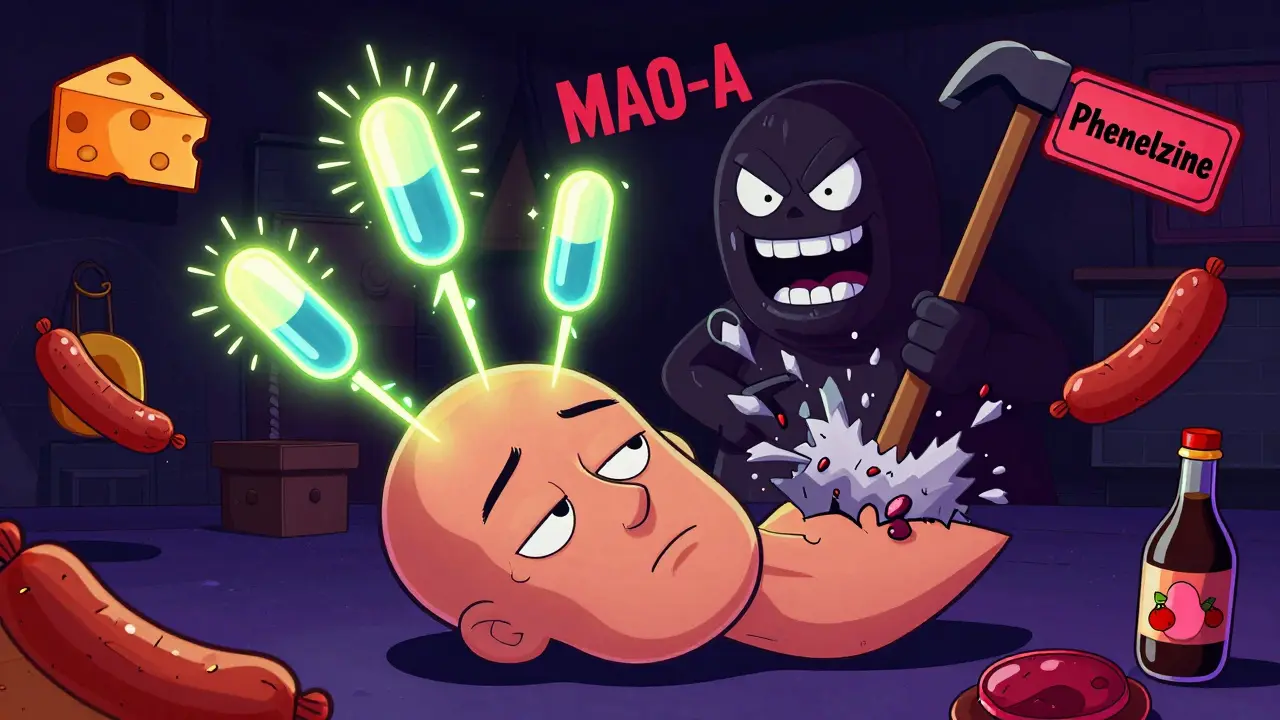
Normal antidepressants like Prozac or Lexapro mainly boost serotonin. MAOIs do something different. They block the enzyme monoamine oxidase, which breaks down serotonin, norepinephrine, and dopamine. That means all three mood chemicals stick around longer in your brain. This broad effect is why MAOIs often work when other drugs fail - especially in atypical depression, where people feel heavy, sluggish, and oversensitive to rejection.
There are two types of MAO enzymes: MAO-A and MAO-B. MAO-A is the big player in depression. It handles serotonin and norepinephrine. That’s why older MAOIs like phenelzine and tranylcypromine block MAO-A. Newer ones, like selegiline patches, target MAO-B more, which is better for Parkinson’s but not depression. Then there’s moclobemide, a reversible inhibitor used in Europe. It lets the enzyme work again after a while, making it safer - but it’s not available in the U.S.
The Tyramine Trap: Why Your Cheese Can Be Deadly
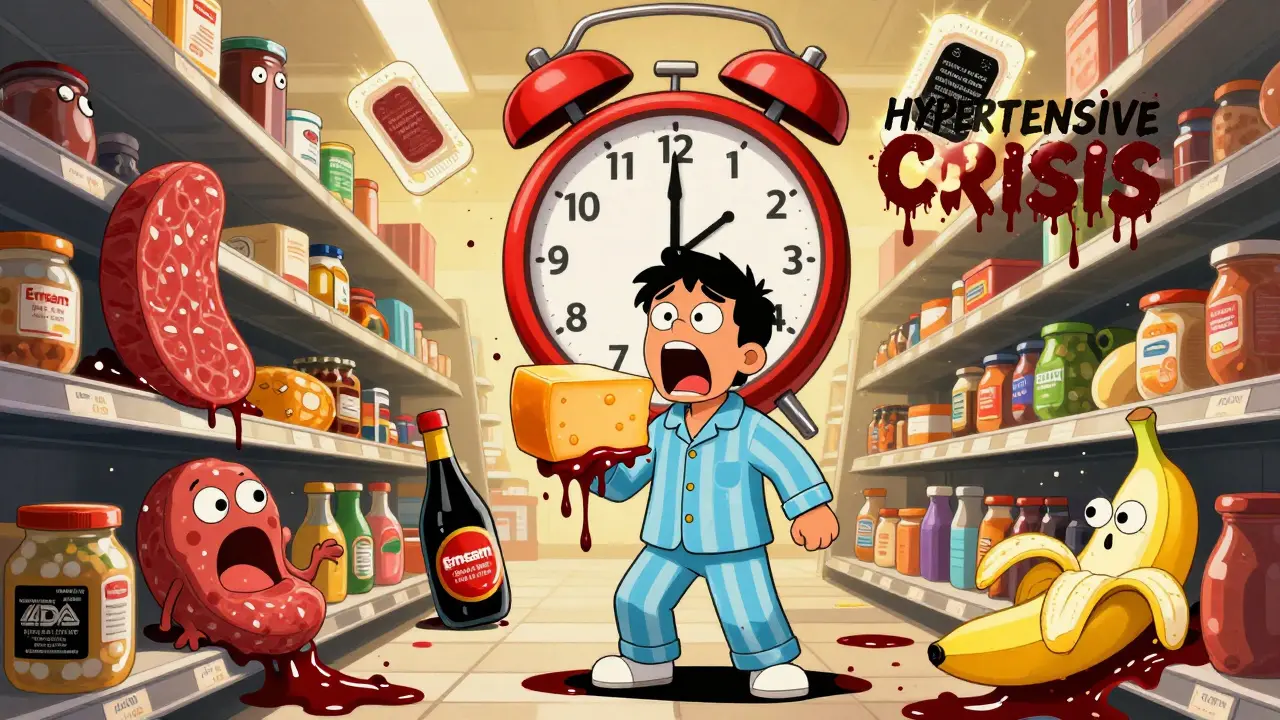
If you’re on an MAOI, you can’t just eat what you want. Certain foods contain tyramine - a compound that normally gets broken down by MAO-A in your gut. When that enzyme is blocked, tyramine floods your bloodstream and triggers a massive release of norepinephrine. That’s when your blood pressure spikes - fast.
A hypertensive crisis isn’t just a headache. It can mean a stroke, heart attack, or even death. Symptoms include pounding headache, blurred vision, chest pain, nausea, and a blood pressure reading over 200/110. One patient on Reddit described a crisis after eating aged cheddar: “I thought I was having a panic attack. Turns out my BP was 220/110. I spent the night in the ER.”
High-tyramine foods include:
- Aged cheeses (Parmesan, blue cheese, cheddar - anything aged over 48 hours)
- Cured or smoked meats (salami, pepperoni, hot dogs)
- Fermented soy (soy sauce, miso, tempeh)
- Tap beer, homebrewed beer, and some wines
- Overripe fruits, especially bananas and avocados
- Yeast extracts (Marmite, Vegemite)
Safe alternatives? Fresh cheeses like cottage cheese, mozzarella, or cream cheese. Fresh meats. Bottled beer. Store-bought sauces with no fermentation. The rule is simple: if it’s been sitting around for days, it’s probably off-limits.
Drug Interactions: The Hidden Dangers
It’s not just food. Mixing MAOIs with other meds can be deadly. Taking an SSRI like sertraline while on an MAOI can cause serotonin syndrome - a condition where your brain gets flooded with too much serotonin. Symptoms include confusion, rapid heart rate, muscle rigidity, fever, and seizures. It’s rare, but when it happens, it’s life-threatening.
Even over-the-counter cold meds can be dangerous. Pseudoephedrine (in Sudafed) and dextromethorphan (in cough syrups) can spike blood pressure or trigger serotonin syndrome. Many people don’t realize this until they take a cold pill and end up in the hospital.
There’s a mandatory 2-week washout period when switching from an SSRI to an MAOI, and up to 5 weeks if you were on fluoxetine (Prozac), because it lingers in the body. Skipping this step isn’t just risky - it’s reckless.
The Patch That Changed Everything: Emsam
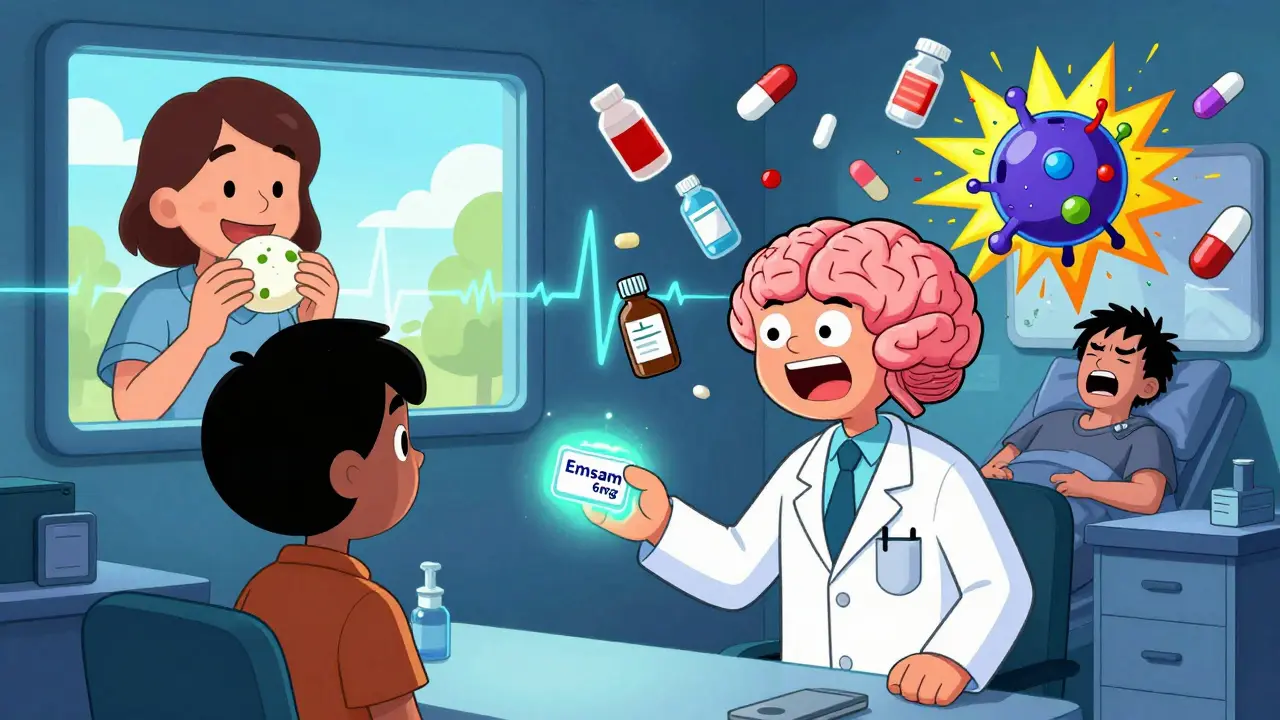
One big reason MAOIs aren’t completely abandoned is the selegiline patch - Emsam. Approved by the FDA in 2006, it delivers the drug through the skin instead of the gut. At the lowest dose (6 mg/24 hours), it doesn’t block MAO-A in the intestines, so tyramine gets broken down normally. That means no diet restrictions.
At higher doses (9 mg and 12 mg), dietary limits return. But for many, the low-dose patch is a game-changer. A 2023 study found that only 8% of users on the 6 mg patch needed to change their diet - compared to 92% on oral MAOIs. The downside? It costs $850 to $1,200 a month. Generic pills like phenelzine? $30 to $50.
Real People, Real Stories
On Reddit’s r/antidepressants, there’s a thread with over 1,200 comments from MAOI users. Most say the same thing: “It saved my life - but it’s exhausting.”
One user, ChronicDepressor87, said they’d been depressed for 12 years. After trying 7 different meds, Parnate finally lifted the fog. “I can laugh again. I can go out. I can work.” But then they added: “I’ve had two hypertensive crises from accidentally eating something with soy sauce. I keep phentolamine in my purse now.”
Another user, NeurochemNerd, said dating was nearly impossible. “Explaining you can’t have soy sauce on a first date? Yeah, that’s a turnoff. I’ve lost relationships over cheese.”
Still, 65% of MAOI users stick with it for over two years - compared to 42% of people on SSRIs with the same level of treatment resistance. That tells you something: when nothing else works, people will jump through hoops.
Who Should Consider MAOIs - And Who Should Avoid Them
MAOIs aren’t for everyone. They’re best for:
- People with treatment-resistant depression (failed at least 3 other meds)
- Those with atypical depression (oversleeping, overeating, mood reactivity)
- Patients who’ve had success with MAOIs in the past
Avoid them if you:
- Have uncontrolled high blood pressure
- Have liver disease
- Are pregnant or breastfeeding
- Can’t commit to strict diet and medication rules
- Are on regular meds that interact (like opioids, stimulants, or decongestants)
Doctors won’t prescribe MAOIs lightly. You’ll need a psychiatric evaluation, a dietitian consult, and signed consent forms. The FDA requires a black box warning on every prescription - the strongest warning they give.
What’s Next for MAOIs?
Researchers aren’t giving up on MAOIs. A new drug called AZD7325, currently in trials, reduces tyramine sensitivity by 70%. That could mean fewer dietary rules. The NIMH is also funding studies on MAOIs for bipolar depression - a population that often doesn’t respond to standard treatments.
For now, MAOIs remain a tool for specialists. General practitioners rarely use them. But in the right hands, with the right patient, they’re still one of the most effective antidepressants we have.
Final Thoughts: Is It Worth It?
If you’re struggling and nothing else has helped, MAOIs might be worth exploring. But don’t go into it blind. You need a psychiatrist who knows how to manage them. You need to be ready to change how you eat, shop, and even socialize. You need to carry emergency medication. You need to be honest with your doctor about every pill you take - even aspirin.
It’s not easy. But for some, it’s the difference between surviving and living.
Comments
Naresh L
February 1, 2026 AT 15:24 PMIt's fascinating how biology forces us into such rigid routines. The body doesn't care about your social life or your favorite snacks. If you're on an MAOI, you're not just taking a pill-you're renegotiating your relationship with food, time, and even intimacy. It's less medicine, more lifestyle archaeology.
And yet, people do it. Not because they want to, but because the alternative is silence. That's the real weight here-not the tyramine, not the blood pressure spikes, but the quiet desperation that makes someone choose a life of restrictions over a life of numbness.
franklin hillary
February 2, 2026 AT 08:10 AMMAOIs are the punk rock of antidepressants-loud dangerous and no one else wants to manage them but god damn if they don't work when everything else fails
I've seen people go from catatonic to laughing at stupid dog videos in 3 weeks on Parnate. The diet? Yeah it's a nightmare but so is crying in the shower every morning for 8 years. I'd rather be the guy who can't eat blue cheese than the guy who can't feel anything at all
Ishmael brown
February 2, 2026 AT 19:05 PMlol imagine being so depressed you're willing to give up pizza and soy sauce 😂
also why do we still use 1950s drugs in 2025? someone get this man a CRISPR kit
June Richards
February 4, 2026 AT 10:14 AMThis whole post is just fearmongering with footnotes. Everyone knows you can't mix MAOIs with anything. It's not a secret. Stop acting like people are going to accidentally eat cheddar and die. Also why is everyone so obsessed with the diet? It's literally one page of a PDF. You don't need a PhD to read it.
Lu Gao
February 4, 2026 AT 18:13 PMActually, the dietary restrictions are more nuanced than most people realize. Not all aged cheeses are equally high in tyramine-Parmesan is worse than Gouda, for example. And fermented foods like kimchi or kombucha are often mistakenly lumped in with soy sauce when they're not always problematic at low doses. The real issue is cumulative exposure. One bite of salami? Probably fine. Three meals of it over a week? Not so much.
Also, Emsam at 6mg is a game-changer. If your doctor won't prescribe it, find one who will. It's not about being rich-it's about being informed.
Chris & Kara Cutler
February 5, 2026 AT 18:04 PMI'm on Emsam 6mg and honestly? I eat sushi, I drink beer, I put soy sauce on everything. My doctor says I'm fine. Don't let fear stop you from living. You're not broken. You're just on a different path.
Rachel Liew
February 5, 2026 AT 19:23 PMI just want to say thank you for writing this. My sister is on Parnate and I didn't understand why she couldn't eat the same things as us. Now I get it. I'm going to help her read labels and maybe even cook her safe meals. You're not alone.
Lilliana Lowe
February 7, 2026 AT 03:34 AMThe romanticization of MAOIs as some mystical last resort is frankly irresponsible. Most patients who claim they "only work for me" are conflating placebo effects with pharmacology. The dropout rate is astronomical. The risks are grossly underreported in anecdotal Reddit threads. If you're not under the supervision of a psychopharmacologist with a specialty in mood disorders, you're playing Russian roulette with your autonomic nervous system.
vivian papadatu
February 7, 2026 AT 16:08 PMI'm from Nigeria and we have a saying: "The medicine that saves you also chains you." That's MAOIs in one sentence. I've seen people here take them because they have no access to newer drugs. They learn the diet. They carry phentolamine. They trade soy sauce recipes like secrets. It's not glamorous. But it's survival. And survival deserves respect, not mockery.
Melissa Melville
February 8, 2026 AT 12:27 PMSo let me get this straight… you’re telling me the only thing that works for my depression also means I can’t have a nice bowl of ramen? Cool. I’ll just keep crying into my oat milk latte then. 😌