You just picked up a prescription for a new medication. The pharmacist hands you the bottle, maybe a small pamphlet, and sends you on your way. But did you get the Medication Guide? For hundreds of drugs, the U.S. Food and Drug Administration (FDA) mandates that patients receive this specific document because the risks are too serious to ignore. Yet, many patients never see one, or don't realize they have the right to ask for it.
Understanding how to access these guides isn't just about paperwork; it's about knowing the specific dangers of what you're swallowing. Whether you prefer paper or digital copies, or if you're dealing with complex medications under special safety programs, here is exactly how to ensure you get the safety information you need.
What Exactly Is a Medication Guide?
A Medication Guide is a FDA-approved patient labeling document required for certain prescription drugs that pose serious public health concerns. Unlike standard package inserts designed for doctors, these guides are written in plain English for you, the patient. They exist under regulations found in 21 CFR Part 208.
The FDA doesn't require these guides for every pill. They step in when three specific conditions are met:
- The drug has serious risks that could affect your decision to take it.
- Taking the drug correctly is crucial for it to work (adherence).
- Patient education can help prevent serious side effects.
Think of them as a mandatory safety briefing. In 2006, only about 40 drugs had these guides. By 2011, that number jumped to 305. This eight-fold increase shows how seriously regulators view the communication gap between complex pharmacology and everyday patient understanding.
Your Rights at the Pharmacy Counter
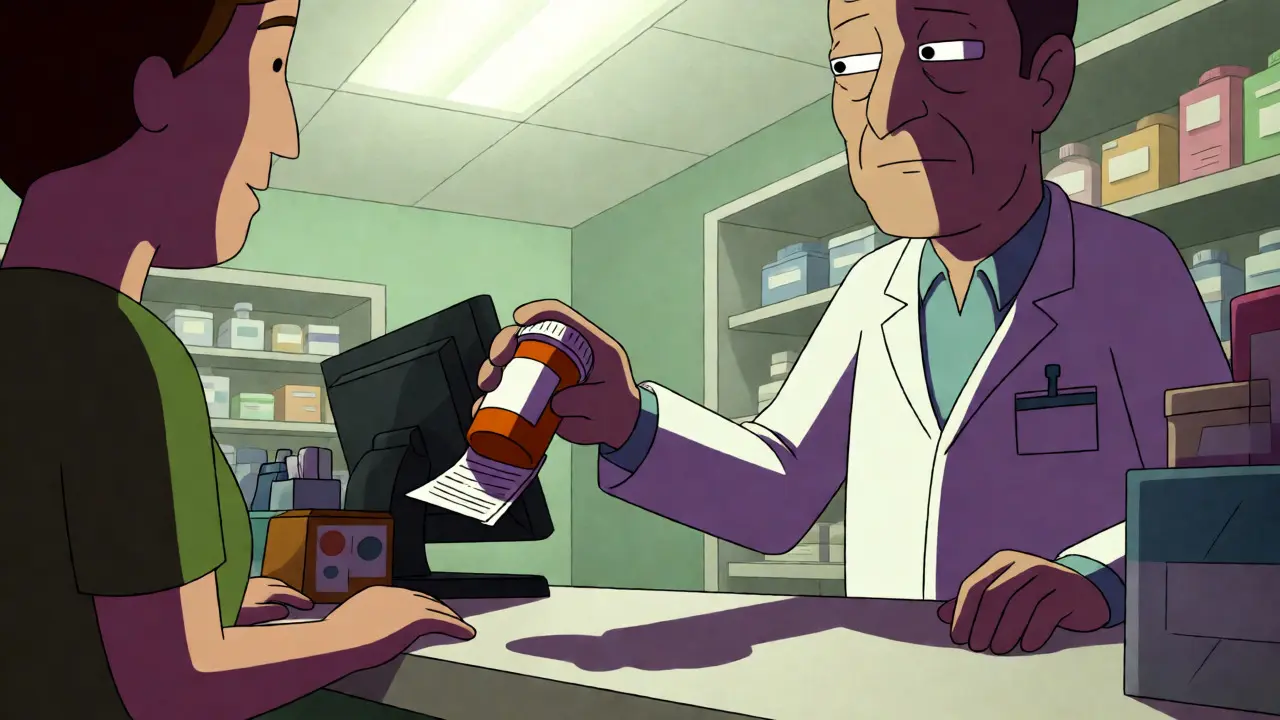
The default rule is simple: if your drug requires a Medication Guide, the pharmacist must give it to you. This applies to outpatient settings-community pharmacies, ambulatory care units, or clinics where you go home after treatment. You shouldn't have to beg for it.
However, reality often differs from regulation. Sometimes the guide gets buried under other paperwork, or the pharmacy runs out of printed copies. Here is where you need to be proactive. You have the legal right to request a Medication Guide even if the pharmacist didn't hand one over automatically. If you feel unsure about a new medication, simply ask: "Does this drug require a Medication Guide?"
There is an important exception to keep in mind. If you are receiving a drug in a hospital setting where healthcare professionals administer it directly to you (like an IV drip), you might not get a physical guide at the bedside. However, you still have the right to request one. Furthermore, if your drug is part of a Risk Evaluation and Mitigation Strategy (REMS) program, the distribution rules are stricter. Providers often must review the guide with you before you start the therapy.
Paper vs. Digital: Choosing Your Format
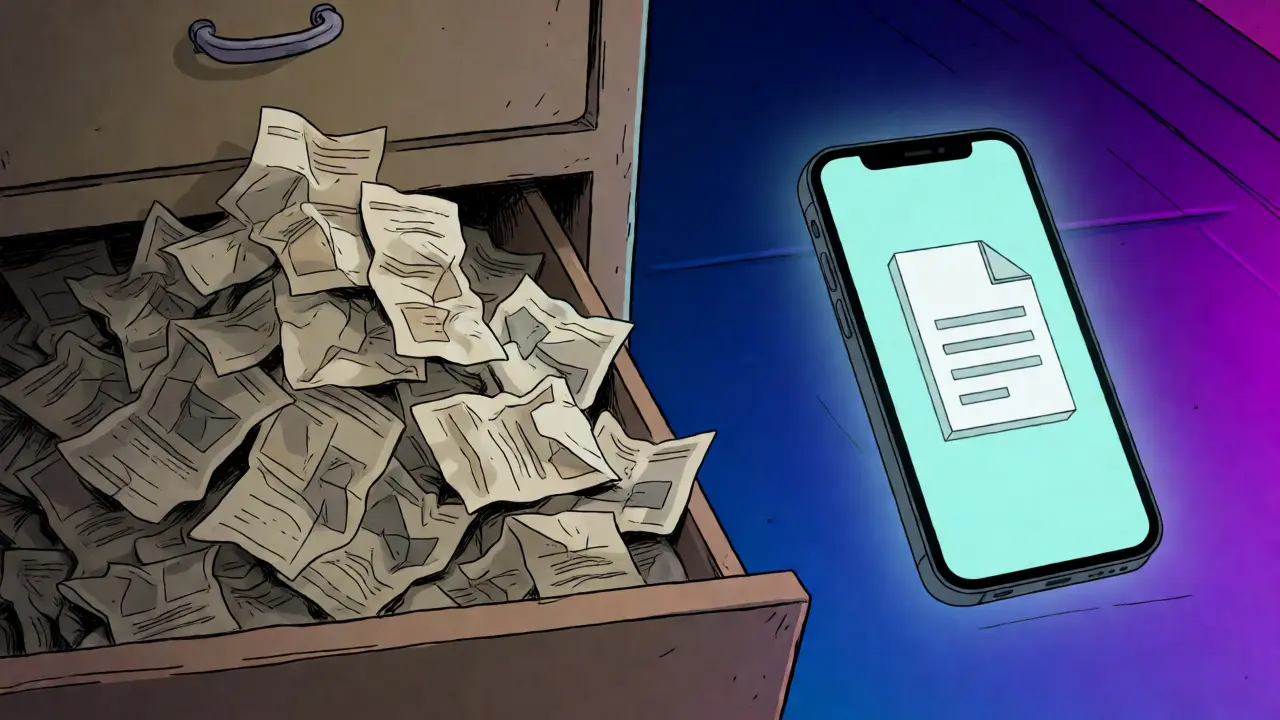
Most people expect a folded piece of paper. That remains the default method of distribution. But do you actually want a paper copy cluttering your drawer? You can opt for electronic delivery instead.
When you pick up your prescription, tell the pharmacist you'd like the Medication Guide sent electronically. Many pharmacies now support email or text links to these documents. This is particularly useful if you want to search for specific terms within the guide later or share it with a family member who helps manage your care.
| Feature | Paper Copy | Electronic Version |
|---|---|---|
| Default Status | Yes, unless requested otherwise | No, must be requested by patient |
| Accessibility | Physical handling; can be lost | Searchable text; easy to store digitally |
| Cost | Included in service | Included in service |
| Best For | Patients who prefer tangible records | Tech-savvy users; those needing quick reference |
Finding Guides Online When You Missed the Handout
Did you forget to ask for the guide last week? Or maybe you moved and lost the paper copy? You don't need to drive back to the pharmacy. The FDA maintains an online repository of approved Medication Guides.
You can visit the FDA's website and search for the drug name. While the interface isn't always intuitive, it is the authoritative source. Look for the section dedicated to "Patient Labeling Resources." Here, you can download PDFs of current guides. Keep in mind that while the FDA site is reliable, third-party sites sometimes host outdated versions. Always check the date on the document to ensure you're reading the latest safety warnings.
If you cannot find the guide online, call your pharmacist. They can print a fresh copy for you at any time, regardless of whether you are picking up a refill or not. It is their job to ensure you have this information.

The Future: Patient Medication Information (PMI)
The current system has flaws. Studies, including a significant analysis published in 2012, found that many Medication Guides fail to meet federal readability standards. They are often too long, too technical, or poorly formatted. Patients struggle to understand them, which defeats the purpose.
To fix this, the FDA proposed a new system called Patient Medication Information (PMI). Under this proposal, manufacturers would create standardized, one-page documents with clear headings. These would be stored in a central, FDA-managed online repository, making them easier to find and compare.
Implementation will be staggered. Drugs approved recently will transition faster, while older drugs have up to five years to comply. Until then, the old Medication Guides remain in effect. Don't wait for PMI to start asking questions about your meds today.
Troubleshooting Common Access Issues
Sometimes, despite your best efforts, things go wrong. Here is how to handle common scenarios:
- The Pharmacist Says No: If a pharmacist claims a guide isn't available, ask them to check the FDA database or print it themselves. Rarely, a specific batch might be missing inserts, but the digital version should always be accessible.
- You Are in a Hospital: If you are an inpatient, ask your nurse or doctor specifically for the guide. They may not distribute it routinely, but they are responsible for ensuring you understand your treatment plan.
- Language Barriers: Medication Guides are primarily issued in English. If you speak another language, ask if your pharmacy offers translated summaries or if there are community resources available. The FDA does not mandate translations for all guides, so this is a known gap in care.
Remember, being informed makes you a safer patient. The guide isn't just legal compliance; it's your roadmap to avoiding adverse events. Take two minutes to read it. Highlight the warnings that scare you. Ask your pharmacist to explain the parts you don't understand. Your health depends on more than just taking the pill-it depends on knowing why and how.
Do I have to pay extra for a Medication Guide?
No. Providing the Medication Guide is part of the dispensing service required by law. There is no additional charge for receiving the paper or electronic version.
Can my doctor refuse to give me the guide?
A prescriber might determine that giving the guide isn't in your best interest in rare cases, but you retain the right to request it. Pharmacists generally must provide it upon request, especially for drugs subject to REMS programs.
Are Medication Guides available for over-the-counter drugs?
No. Medication Guides are specifically required for certain prescription drugs. Over-the-counter medications use different labeling formats, such as the Drug Facts label.
What if I lose my Medication Guide?
You can return to the pharmacy and ask for a replacement copy. Alternatively, you can download the current version from the FDA’s official website repository.
Is the new PMI system already in place?
Not fully. The FDA has proposed the Patient Medication Information (PMI) rule to standardize guides, but implementation is phased. Current Medication Guides under 21 CFR Part 208 remain the standard until the transition completes.