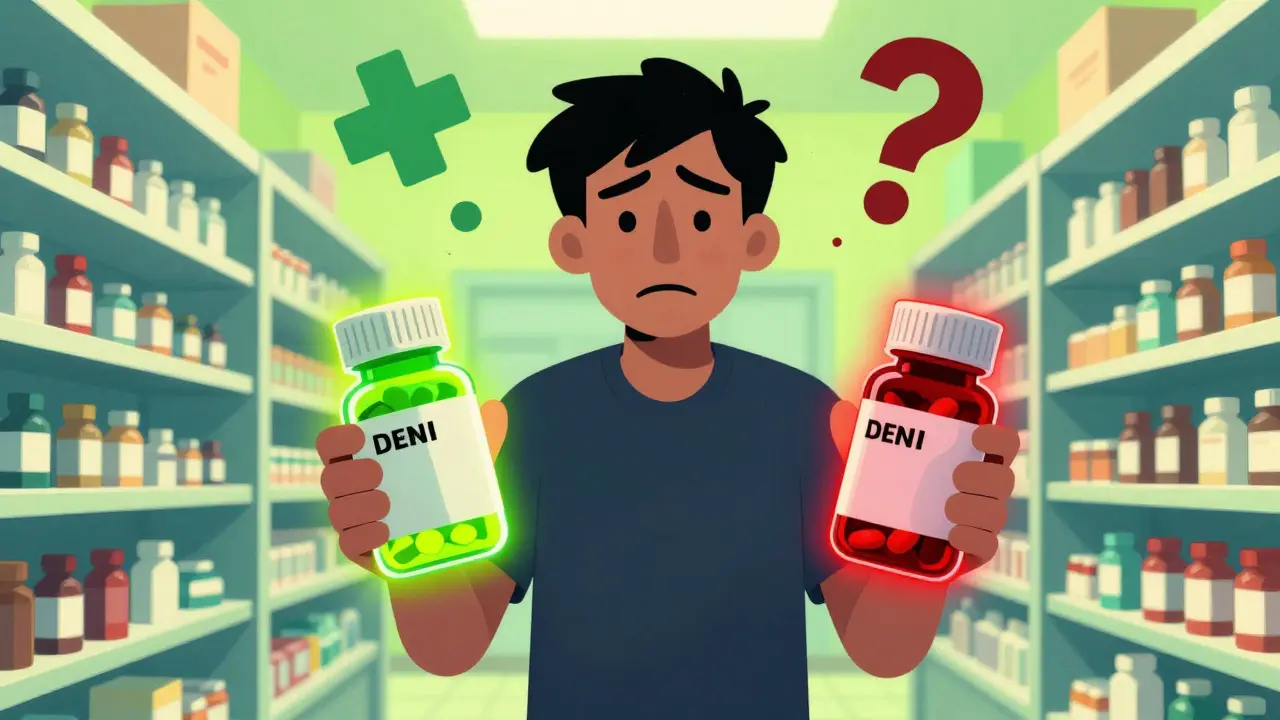
Have you ever looked at your prescription bottle and wondered why one generic pill costs $4 while another looks identical but costs $25? Or maybe you’ve heard terms like 'Schedule II' or 'Tier 1' and felt completely lost in the jargon. You are not alone. The world of generic drug classifications is a complex system of categories that determine how medications are prescribed, priced, regulated, and understood by healthcare providers. It’s not just about what the drug does; it’s about where it fits in a massive global puzzle of safety, law, and economics.
Understanding these classifications isn’t just for pharmacists or doctors. As a patient, knowing how your medication is categorized can help you navigate insurance copays, understand legal restrictions, and even recognize potential side effects based on how similar drugs behave. Let’s break down the messy, fascinating world of drug categorization into plain English.
The Therapeutic Classification: What Does It Treat?
This is the most common way you will encounter drug categories. Therapeutic classification groups medications based on the medical condition they treat rather than their chemical makeup. If you have high blood pressure, you’re likely taking an antihypertensive. If you have depression, you might be on an antidepressant. Simple, right?
The Food and Drug Administration (FDA) and the United States Pharmacopeia (USP) maintain the primary models for this. In 2023, the FDA updated its USP Therapeutic Categories Model to make sure these labels stay clinically relevant. This system is used by 92% of U.S. hospitals because it helps doctors quickly find the right tool for the job. For example, under this system, you’ll see broad buckets like 'Analgesics' (pain relievers), which are then split into 'Non-opioid' (like ibuprofen) and 'Opioid' (like morphine).
However, this system has a glitch. Many drugs do more than one thing. Take aspirin. It’s an analgesic (pain killer), but it’s also an anticoagulant (blood thinner). Which category does it belong to? This ambiguity can cause confusion, especially as new drugs emerge that treat multiple conditions simultaneously. That’s why the FDA is rolling out a 'Therapeutic Categories Model 2.0' by early 2025, which allows for primary and secondary indications, making the system more flexible for modern medicine.
The Pharmacological Classification: How Does It Work?
If therapeutic classification asks "what does it cure?", pharmacological classification asks "how does it work inside the body?" Pharmacological classification organizes drugs by their mechanism of action, such as which receptors they bind to or which enzymes they inhibit. This is the science-heavy approach.
For instance, many heart medications are beta-blockers. They all end in '-lol' (like propranolol) because they block beta-adrenergic receptors. This naming convention, known as stem naming, was adopted by the USP in 1964 and has since reduced medication errors by 18%. Currently, there are 87 distinct stems recognized in the USP Dictionary. Another example is proton pump inhibitors, which almost always end in '-prazole' (like omeprazole).
This system is incredibly precise. The National Center for Biotechnology Information (NCBI) identifies over 1,200 distinct pharmacologic classes. But here’s the catch: it requires advanced scientific knowledge. A doctor might know that a drug is a 'Kinase Inhibitor,' but that doesn’t tell them if it’s treating cancer, arthritis, or something else without looking deeper. It’s great for researchers but less helpful for quick bedside decisions.
The Legal Classification: DEA Schedules
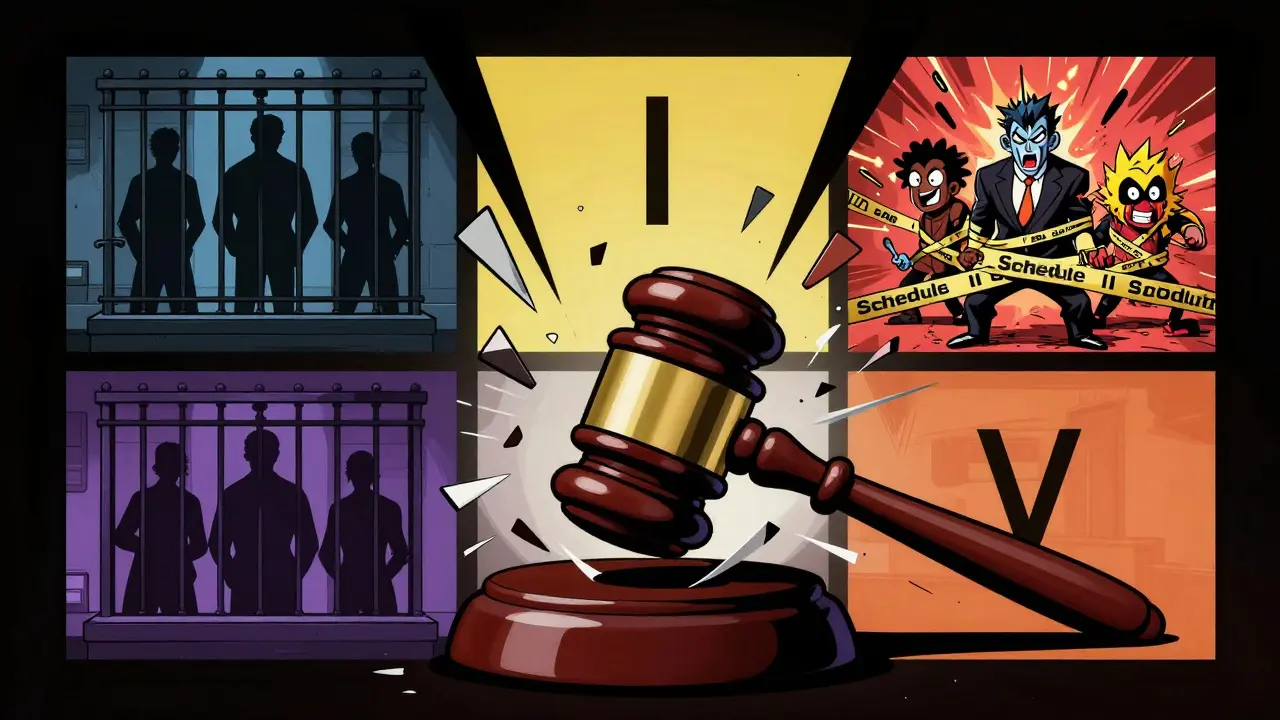
Not all drugs are created equal in the eyes of the law. The Drug Enforcement Administration (DEA) uses a five-schedule system to classify drugs based on their abuse potential and accepted medical use. This comes from the Controlled Substances Act of 1970 and is critical for understanding prescription rules.
- Schedule I: No accepted medical use and high abuse potential. Examples include heroin and LSD. These cannot be prescribed legally.
- Schedule II: High abuse potential but with accepted medical use. Examples include oxycodone and fentanyl. Prescriptions cannot have refills; you need a new script every time.
- Schedule III: Moderate to low abuse potential. Examples include buprenorphine (for pain or addiction treatment) and testosterone. Refills are limited to five within six months.
- Schedule IV: Low abuse potential. Examples include benzodiazepines like Xanax.
- Schedule V: Lowest abuse potential. Examples include cough syrups with small amounts of codeine.
This system is often controversial. Critics point out inconsistencies, such as marijuana remaining Schedule I despite being legal for medical use in 38 states and having FDA-approved cannabinoid medications like dronabinol (Schedule II). There is ongoing debate in Congress about reclassifying marijuana to Schedule III, which would significantly change research and prescribing dynamics.
The Economic Classification: Insurance Tiers
If you pay for your medication through insurance, you live in the world of formulary tiers. Insurance tier systems categorize drugs based on cost and preferred alternatives, directly impacting your out-of-pocket expenses. This isn’t about biology or law; it’s about money.
| Tier | Description | Typical Cost Impact |
|---|---|---|
| Tier 1 | Preferred Generics | Lowest copay (covers ~75% of generics) |
| Tier 2 | Non-Preferred Generics | Slightly higher copay |
| Tier 3 | Preferred Brands | Moderate copay |
| Tier 4 | Non-Preferred Brands | High copay |
| Tier 5 | Specialty Medications | Highest cost (top 5-7% of drugs) |
Here’s the tricky part: two generic drugs might contain the exact same active ingredient but sit in different tiers. Why? Because of formulary contracts between insurers and manufacturers. A study by the Kaiser Family Foundation (KFF) found that Tier 3 drugs can cost patients 25-35% more than Tier 2 equivalents, even if they are medically identical. This forces pharmacists to spend significant time navigating prior authorizations, with insurance disputes accounting for 43% of these requests according to pharmacy community data.
Global Standards: The WHO ATC System
While the U.S. relies heavily on FDA and DEA frameworks, the rest of the world largely follows the World Health Organization’s Anatomical Therapeutic Chemical (ATC) classification system. ATC classification is a global standard maintained by the WHO that catalogs over 5,000 substances across 14 anatomical groups. It is used by 143 countries either fully or with minor modifications.
The ATC system is hierarchical. First, it looks at the anatomical group (e.g., Cardiovascular system). Then, the therapeutic subgroup (e.g., Antiarrhythmics). Finally, the chemical/pharmacological subgroup. This system achieves 94% accuracy in analyzing medication use patterns globally. However, it requires constant updates. In 2022 alone, 217 new ATC codes were added to keep pace with new drug approvals. By 2024, the system will expand further to include new biologic agents and cell therapies.
Why Do Conflicting Classifications Matter to You?
You might wonder why we need so many different systems. The answer is that each serves a different master. Therapeutic classification serves clinical care. Pharmacological classification serves scientific research. DEA scheduling serves public safety and law enforcement. Insurance tiers serve financial sustainability.
The problem arises when these systems clash. A survey of 1,243 physicians found that 68% experience moderate to severe confusion between therapeutic and pharmacologic classifications, particularly with multi-mechanism drugs like duloxetine, which is both an antidepressant and a neuropathic pain agent. This confusion leads to inefficiency; primary care physicians spend 12-18 minutes per patient navigating these conflicting systems.
Moreover, classification confusion contributes to medication errors. The FDA identified that 27% of medication errors are related to classification issues, primarily involving drugs with multiple therapeutic indications. Standardized terminology reduces these errors by 31% in hospital settings, highlighting the critical need for clear, consistent classification.
The Future of Drug Classification
We are standing on the brink of a major shift. Personalized medicine and AI are challenging traditional boxes. IBM Watson Health launched a platform in August 2023 that uses machine learning to predict optimal therapeutic placement with 92.7% accuracy. By 2028, analysts predict that 65% of new molecular entities will require novel classification approaches because they have multimodal mechanisms of action-they don’t fit neatly into one old box.
Experts warn that current silos risk becoming obsolete. Dr. Scott Gottlieb, former FDA Commissioner, noted in *Nature Reviews Drug Discovery* that fundamental restructuring may be needed within 5-7 years to accommodate precision medicine. We are moving toward hybrid models that combine therapeutic, pharmacologic, and genomic markers. For now, however, understanding the current landscape is essential for anyone managing their health.
What is the difference between therapeutic and pharmacologic classification?
Therapeutic classification groups drugs by the condition they treat (e.g., antidepressants), making it useful for clinical decision-making. Pharmacologic classification groups drugs by their mechanism of action (e.g., serotonin reuptake inhibitors), which is more scientifically precise but requires deeper medical knowledge.
Why are some generic drugs more expensive than others?
Insurance companies place drugs into different tiers based on formulary contracts and cost negotiations. Two generics with the same active ingredient may fall into Tier 1 (preferred) or Tier 2 (non-preferred), resulting in different copays for the patient despite identical clinical efficacy.
What does it mean if a drug is Schedule II?
Schedule II drugs, as defined by the DEA, have a high potential for abuse but an accepted medical use. Examples include oxycodone and fentanyl. Prescriptions for these drugs cannot be refilled; you must obtain a new prescription from your doctor for each supply.
How does the WHO ATC system differ from US classifications?
The WHO ATC system is a global standard used by over 140 countries, organizing drugs by anatomical, therapeutic, and chemical properties. The US primarily uses FDA therapeutic categories for clinical use and DEA schedules for legal control, creating a more fragmented approach compared to the unified ATC structure.
Can a drug belong to multiple classifications?
Yes. Most drugs fit into multiple categories simultaneously. For example, aspirin is therapeutically an analgesic and an anticoagulant, pharmacologically a non-steroidal anti-inflammatory drug (NSAID), and legally an over-the-counter medication. Newer systems like the FDA's Model 2.0 are designed to better handle these multi-indication drugs.