Imagine your life-saving medication is made in a factory you’ve never visited, thousands of miles away. For decades, the global pharmaceutical industry has relied heavily on two Asian giants for this task: China and the world's largest producer of active pharmaceutical ingredients (APIs) and generic drugs. But as geopolitical tensions rise and regulatory scrutiny tightens, the question isn't just about cost anymore. It’s about risk. Specifically, what happens when the US Food and Drug Administration (FDA) steps up its monitoring?
The landscape of drug manufacturing is shifting fast. If you are sourcing medications or investing in healthcare supply chains, you need to understand the stark differences between these two powerhouses. One offers unmatched scale and low costs; the other offers regulatory reliability and a smoother path to Western markets. Here is the real deal on the risks, the monitoring, and where the industry is heading in 2026.
The Core Difference: Scale vs. Compliance
To understand the risk, you first have to look at the numbers. India and China dominate the global supply of generic medicines, but they play very different roles. China controls roughly 80% of the global supply of Active Pharmaceutical Ingredients (APIs). These are the raw chemical building blocks that make drugs work. Without Chinese APIs, many Indian factories would stand still.
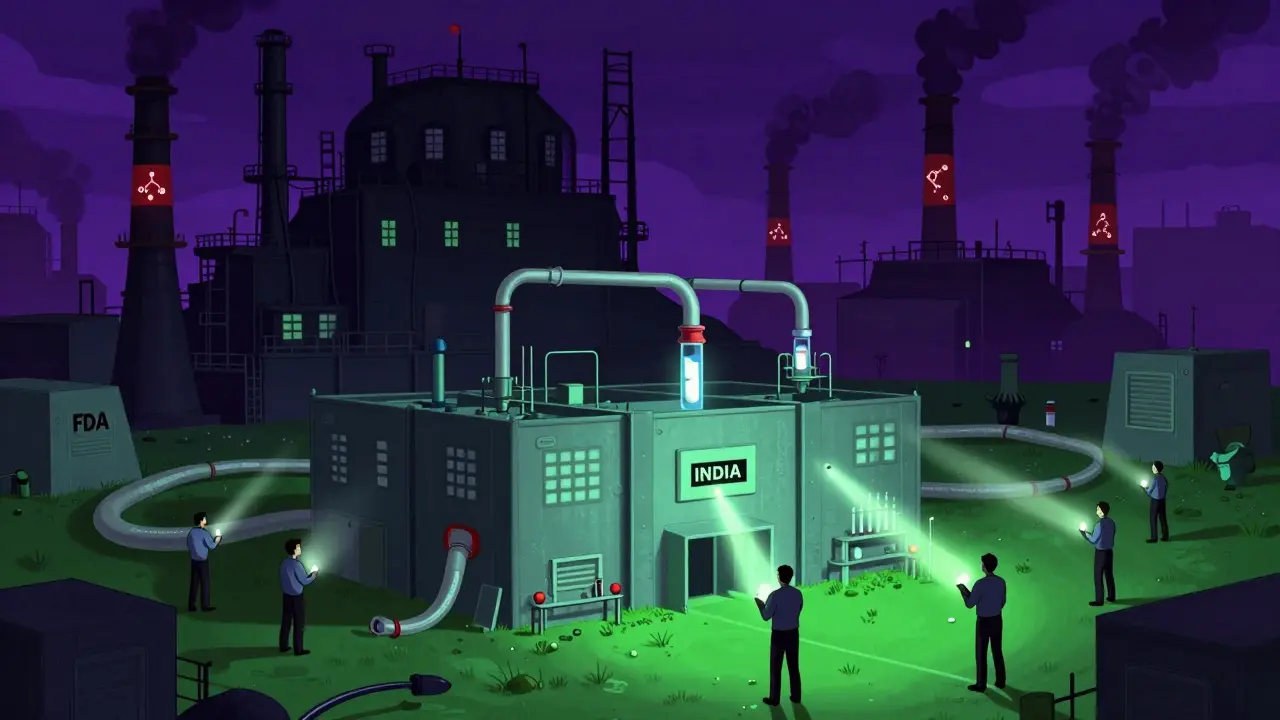
However, when it comes to the final product-the pills, injections, and capsules that end up in US pharmacies-India takes the lead. According to data from PharmaBoardroom, India operates over 100 manufacturing plants approved by the US FDA. China? Only 28. That is a massive gap. This 257% advantage in certified capacity means Indian manufacturers are already speaking the language of US regulators. They have built their infrastructure around passing those strict inspections.
This creates a complex dependency. India makes the finished goods, but often uses Chinese raw materials. This "China+1" strategy, where companies use India as a secondary hub to mitigate risk, is becoming the standard for major pharmaceutical firms. But it doesn’t eliminate the risk; it just moves it upstream.
FDA Monitoring: What the Inspections Reveal
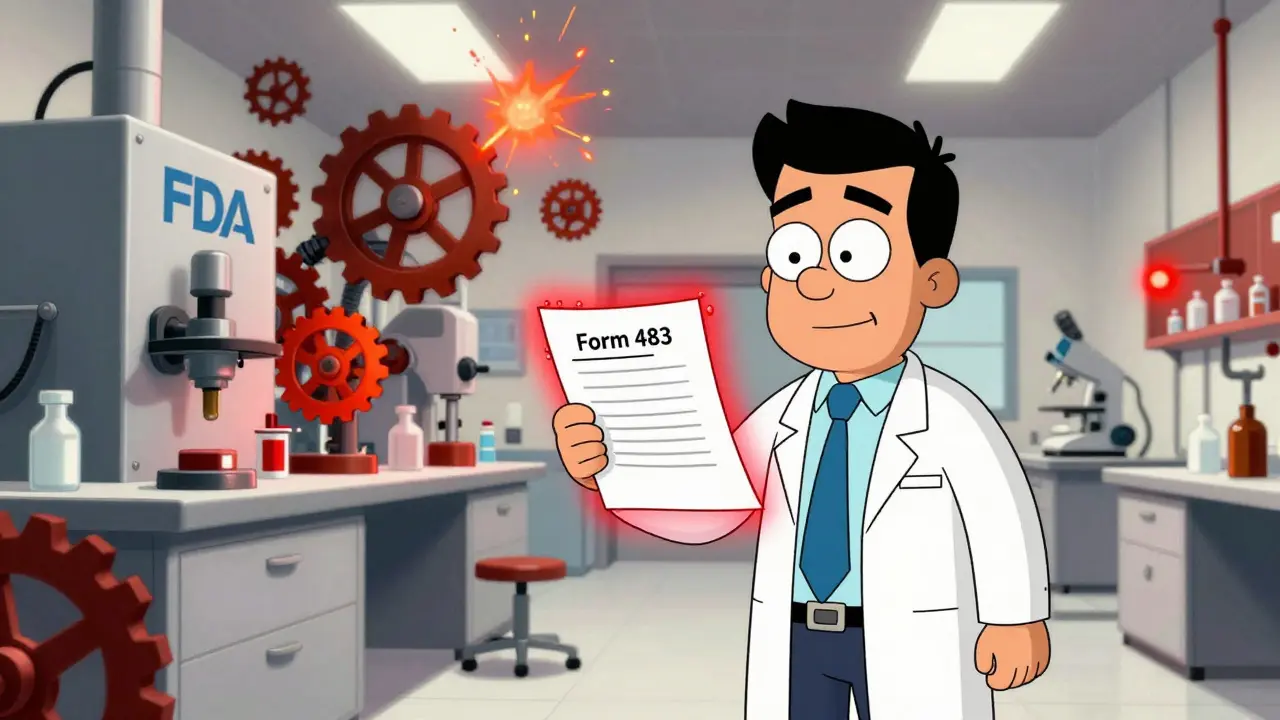
So, how does the FDA actually monitor these facilities? The agency conducts routine inspections to ensure compliance with Good Manufacturing Practices (GMP). When problems are found, inspectors issue a Form 483-a list of observed violations. The frequency of these forms tells a clear story about operational discipline.
Data from 2020 to 2023 shows a significant divergence. Indian facilities received approximately 30% fewer Form 483 observations than their Chinese counterparts during similar inspection cycles. Why? Because Indian companies have spent years aligning with WHO-GMP and FDA standards. They view compliance not as a hurdle, but as their primary selling point to Western buyers.
In contrast, Chinese facilities face greater scrutiny due to historical compliance issues and a more fragmented regulatory environment domestically. While China has made strides in meeting international certifications like ISO and CE, consistency remains a challenge, especially among smaller suppliers. The FDA has also placed several Chinese facilities on Import Alert lists, effectively banning products from those sites until issues are resolved. In 2023, about 37% of Chinese pharmaceutical facilities faced import alerts compared to just 18% of Indian ones. That is a red flag for any procurement manager.
| Factor | China | India |
|---|---|---|
| FDA-Approved Plants | 28 | 100+ |
| API Market Share | ~80% Global | Dependent on imports |
| Form 483 Observations | Higher Frequency | 30% Lower |
| Import Alerts (2023) | 37% of Facilities | 18% of Facilities |
| Primary Strength | Scale & Cost | Regulatory Compliance |
The Hidden Risk: API Dependency
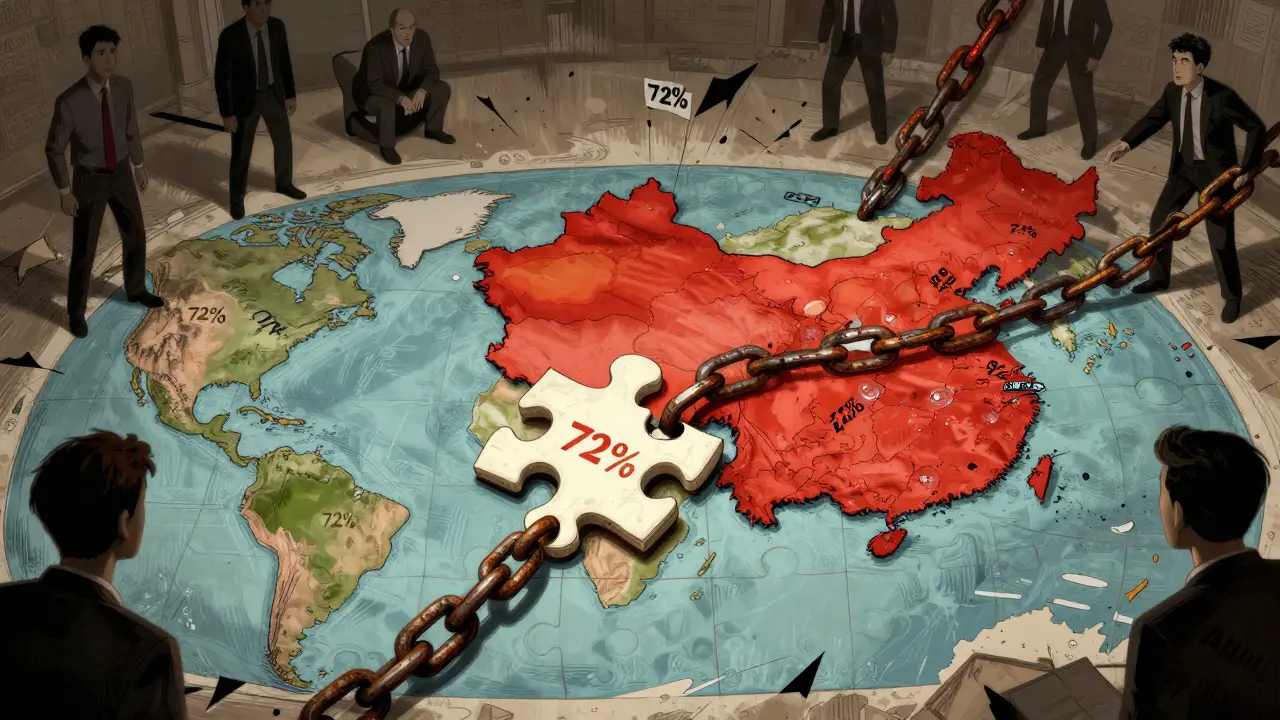
Here is the catch that keeps supply chain executives awake at night. While India looks safer on paper, it is deeply dependent on China for its raw materials. In fiscal year 2024, approximately 72% of India’s bulk drug and intermediate imports came from China. That number was already high at 66% in 2022, so the trend is worsening, not improving.
This creates a single point of failure. If geopolitical tensions flare up, or if there is a disruption in Chinese logistics, Indian factories can’t just switch suppliers overnight. As one senior sourcing executive noted, this dependency creates a vulnerability that companies are urgently trying to address. You might think you are diversifying by moving production to India, but if the ingredients come from China, you haven’t truly diversified.
This dynamic forces a difficult choice. Do you stick with China for its integrated ecosystem and lower costs? Or do you move to India for regulatory ease, accepting the hidden risk of upstream dependency? Most large pharmaceutical companies are now adopting a hybrid approach, slowly building alternative API sources in Europe or North America, even though it costs significantly more.
Cost, Speed, and the Future of Biologics
Let’s talk money. Manufacturing APIs in both China and India offers a roughly 40% cost advantage compared to producing them in the US or Europe. That savings is hard to ignore. However, the price differential is narrowing. Rising labor costs in China and increased regulatory burdens are eating into those margins.
Speed to market is another factor. Setting up a compliant manufacturing line in China might take 3-6 months, whereas India can require 6-9 months for full regulatory alignment. But here is the trade-off: Chinese facilities often require subsequent remediation after FDA inspections, which adds hidden time and cost. Indian facilities tend to be "inspection-ready" from day one, reducing audit fatigue for multinational corporations.
Looking ahead, the battle is shifting toward biologics and biosimilars-complex drugs derived from living organisms. China is growing its biopharmaceutical market rapidly, with a projected CAGR of 19.3%. India is also expanding, with a 22% CAGR in biosimilars, aiming for a $12 billion market by 2025. The government in India has allocated nearly $3 billion in incentives to boost domestic production of these high-value drugs. If India can reduce its reliance on Chinese APIs and master biologics, it could become the undisputed leader in global pharma manufacturing by 2047.
Practical Steps for Sourcing Managers
If you are responsible for pharmaceutical sourcing, here is what you should do right now:
- Audit Your API Suppliers: Don’t just look at the finished good manufacturer. Trace the ingredients back to the source. If your Indian supplier buys 70% of their raw materials from China, you need to know that.
- Diversify Geographically: Consider a "China+1+1" strategy. Use India for generics, but explore partnerships in Europe or North America for critical APIs.
- Monitor FDA Import Alerts: Subscribe to FDA updates. A facility on an import alert list is a liability. Check the status of your current partners regularly.
- Evaluate Digital Maturity: Look for manufacturers using digital interventions to track quality. Bain & Company reports that Indian firms are increasingly adopting digital tools to eliminate errors, which is a strong sign of future-proofing.
- Plan for Transition Time: If you decide to shift production from China to India, allow extra time for regulatory alignment. Don’t rush the process, or you will invite compliance failures.
Conclusion: Navigating the New Normal
The era of blind trust in low-cost manufacturing is over. Both China and India offer compelling advantages, but they come with distinct risk profiles. China provides scale and speed but carries higher regulatory and geopolitical risks. India offers regulatory stability and FDA familiarity but suffers from deep structural dependencies on Chinese raw materials.
The smartest players in the industry aren’t choosing sides. They are building resilient, transparent supply chains that can withstand shocks. They are demanding visibility into every step of the process, from the chemical synthesis in a lab to the pill bottle on the shelf. As FDA monitoring becomes stricter and geopolitical realities shift, transparency isn’t just a nice-to-have-it’s the only way to stay in business.
Why does the FDA inspect Chinese facilities more strictly?
The FDA inspects all foreign facilities based on risk assessments, but Chinese facilities have historically had higher rates of non-compliance and data integrity issues. Additionally, geopolitical tensions have led to increased scrutiny. Consequently, Chinese facilities face a higher rate of Import Alerts and Form 483 observations compared to Indian facilities, which have invested heavily in aligning with US regulatory standards.
What is the 'China+1' strategy in pharmaceuticals?
The 'China+1' strategy involves diversifying supply chains by adding a secondary manufacturing hub outside of China to mitigate risk. In pharmaceuticals, India is the most common '+1' destination due to its strong regulatory compliance, English-speaking workforce, and large number of FDA-approved facilities. This helps companies avoid total dependence on Chinese manufacturing.
Is it true that India depends on China for drug ingredients?
Yes. Approximately 72% of India's bulk drug and intermediate imports come from China. This creates a significant supply chain vulnerability. Even if the final drug is manufactured in India, the raw Active Pharmaceutical Ingredients (APIs) likely originated in China, meaning disruptions in China can still impact Indian production.
Which country has more FDA-approved pharmaceutical plants?
India has significantly more FDA-approved manufacturing plants than China. As of recent data, India operates over 100 FDA-approved facilities, while China has only 28. This gives India a substantial advantage in exporting finished generic drugs to the United States and other regulated markets.
How does the cost of manufacturing compare between China and India?
Both countries offer a cost advantage of roughly 40% compared to manufacturing in the US or Europe. However, the price differential between China and India is narrowing due to rising labor costs in China and increased regulatory compliance costs. India may appear slightly more expensive upfront for setup but often saves money in the long run through fewer regulatory fines and faster approval processes.