

Looking in the mirror and seeing indentations or raised bumps where acne used to be is frustrating. You aren't alone. According to the American Academy of Dermatology, about 95% of people with acne vulgaris develop some form of scarring. These aren't just temporary marks; they are permanent textural changes caused by disrupted collagen production during the healing process. The good news? We have moved far beyond hoping they fade on their own. Today’s landscape offers precise tools like microneedling is a procedure that uses fine needles to create controlled micro-injuries to stimulate collagen regeneration, advanced lasers, and potent topicals that can significantly improve skin texture.
The key to success isn't picking one 'magic' bullet. It's understanding your specific scar type and matching it with the right technology. Whether you have rolling waves, boxcar pits, or deep ice-pick scars, there is a protocol for you. Let’s break down what actually works, what the downtime looks like, and how to combine these strategies for the best results without wasting money on ineffective treatments.
Understanding Your Scar Type
Before booking any appointment, you need to know what you’re dealing with. Treatments that work wonders for one scar type might do nothing for another. Acne scars generally fall into two camps: atrophic (depressed) and hypertrophic (raised). Atrophic scars make up 80-90% of cases and are further split into three distinct shapes:
- Rolling Scars: Wide, wave-like depressions with sloping edges. These are often caused by fibrous bands pulling the skin down. They respond very well to both microneedling and lasers, with improvement rates around 75%.
- Boxcar Scars: Sharper, angular depressions with defined vertical walls. Think of them as small craters. These show moderate response (55-60%) to most treatments but often require deeper intervention.
- Ice Pick Scars: Narrow, deep pits that extend into the dermis. These are the toughest to treat, with only 30-35% improvement from standard energy-based devices. They often require TCA CROSS (chemical reconstruction of skin scars) rather than just lasers or needles.
If you have raised, thickened scars (hypertrophic or keloid), the approach is completely different, usually involving steroid injections rather than collagen-stimulating procedures. Knowing this distinction saves you from undergoing unnecessary pain and cost.
Microneedling: The Collagen Booster
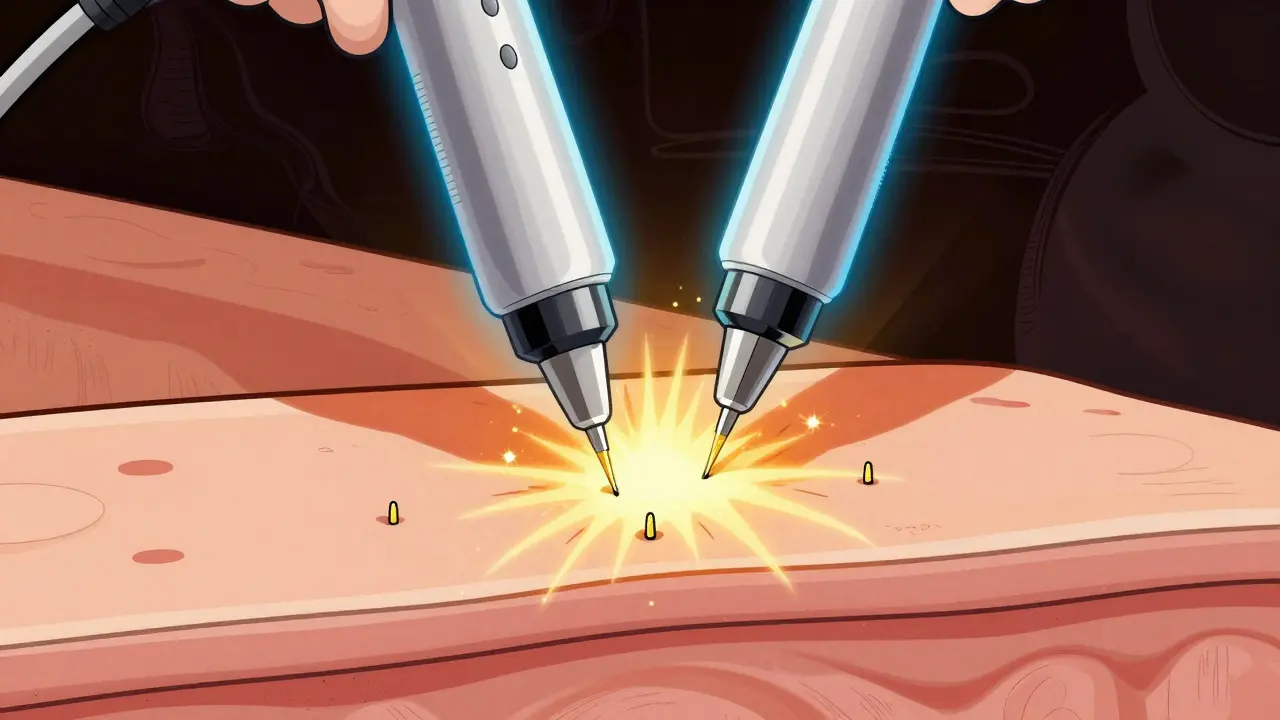
Microneedling has evolved from simple roller balls to sophisticated automated pens. Devices like the Dermapen operate at 100-200 punctures per second, creating thousands of microscopic channels. This triggers your body’s natural wound-healing response, boosting collagen and elastin production. For acne scars, we typically look at needle depths between 1.5mm and 2.5mm.
However, the real game-changer in recent years is Radiofrequency (RF) Microneedling. Devices like Morpheus8 deliver bipolar radiofrequency energy through insulated needles. While traditional microneedling relies solely on mechanical injury, RF adds thermal energy directly into the deeper layers of the skin. This dual action tightens skin while remodeling scar tissue. A 2023 study noted that RF microneedling narrows the efficacy gap with lasers, especially for patients with darker skin tones who are at higher risk for hyperpigmentation from laser heat.
The Reality Check:
- Sessions Needed: 3-6 sessions, spaced 4-6 weeks apart.
- Downtime: Mild. Expect 24-48 hours of redness and slight swelling. You can usually return to work the next day.
- Pain Level: Moderate. Most clinics apply numbing cream, but RF microneedling can feel hotter and more intense than standard needling.
- Best For: Rolling and boxcar scars, skin tightening, and patients with Fitzpatrick skin types IV-VI.
Laser Resurfacing: Precision and Power
Lasers offer more aggressive resurfacing options. They use light energy to remove damaged skin layers or heat the underlying tissue to stimulate new growth. The choice depends heavily on whether you want an ablative (removes skin) or non-ablative (heats skin) treatment.
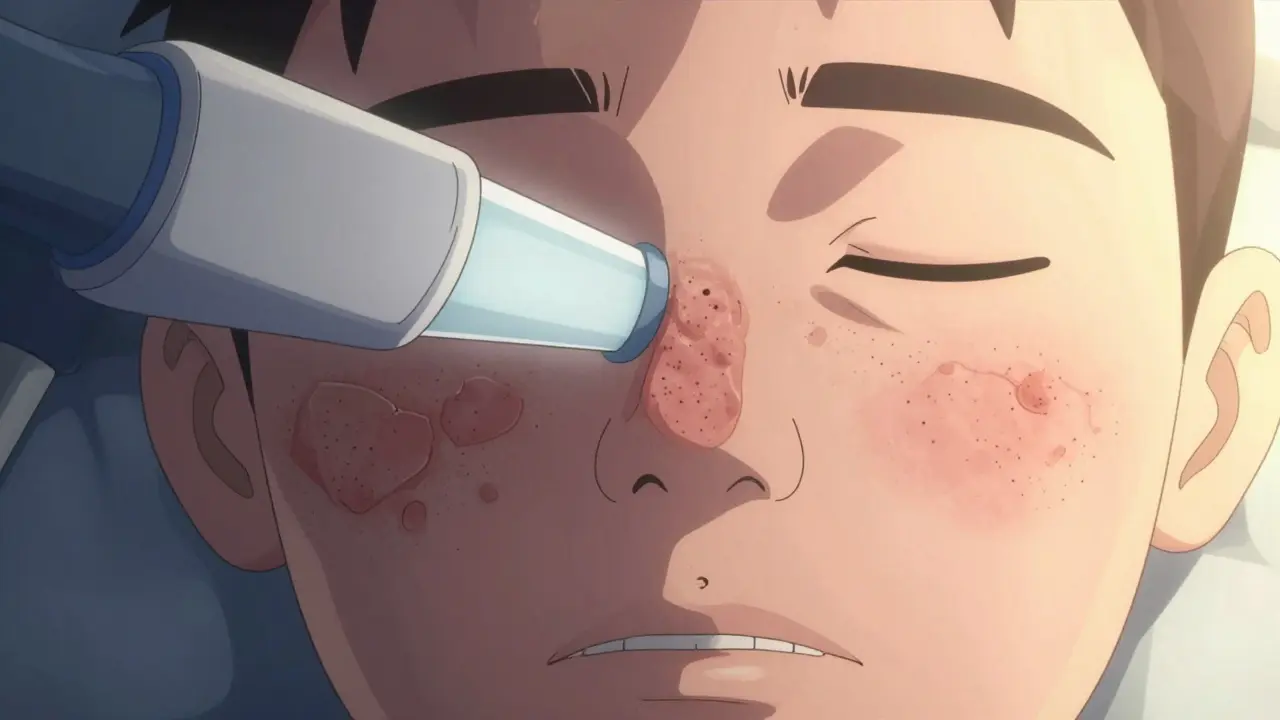
Ablative Fractional CO2 Lasers: Operating at 10,600 nm, these are the heavy hitters. They vaporize columns of skin tissue, forcing a complete rebuild. A randomized controlled trial published in the Journal of Cosmetic Dermatology found that ablative fractional CO2 laser produced more pronounced reductions in lesion severity compared to RF microneedling. However, this comes at a cost. Downtime is significant-7 to 14 days of oozing, crusting, and intense redness. There is also a higher risk of post-inflammatory hyperpigmentation, especially in darker skin tones.
Non-Ablative Lasers (e.g., Fraxel 1540nm): These create microthermal zones without destroying the surface layer. They are safer for diverse skin tones and require less recovery time (3-5 days). While effective, they demand more sessions-often 6 or more-to match the results of a single ablative session. An Er:YAG laser (2940 nm) sits somewhere in the middle, offering superficial resurfacing with faster healing than CO2 but less depth.
The Reality Check:
- Sessions Needed: 1-5 for ablative; 4-6+ for non-ablative.
- Downtime: High for ablative (up to 2 weeks); Low-Moderate for non-ablative (3-5 days).
- Risk Profile: Higher risk of hyperpigmentation and infection if aftercare is neglected.
- Best For: Severe boxcar and rolling scars, patients with lighter skin tones (for ablative), and those willing to endure significant downtime for maximum impact.
Topical Strategies: The Essential Foundation
You cannot fix scars with procedures alone if your daily skincare is lacking. In fact, Dr. Angela Lamb warned in JAMA Dermatology that 70% of treatment failures stem from poor post-procedure skincare compliance. Topicals prepare the skin for procedures and maintain results afterward.
Pre-Treatment Prep: Starting prescription tretinoin (0.05%) nightly for 12 weeks before your first procedure can increase efficacy by 22%. It thins the stratum corneum, allowing energy devices to penetrate more evenly. If you have dark spots alongside scars, using hydroquinone or kojic acid for 4-6 weeks prior can reduce the risk of hyperpigmentation by 35%.
Post-Treatment Care: Once the skin barrier is compromised, you need gentle repair. Silicone gels are clinically proven to reduce hyperpigmentation risk. Newer products like Skinbetter Science’s AlphaRet combine growth factors with stabilized retinaldehyde to support ongoing collagen synthesis without the irritation of high-dose retinol immediately after trauma.
| Treatment | Best Scar Type | Avg. Sessions | Downtime | Skin Tone Safety |
|---|---|---|---|---|
| RF Microneedling | Rolling, Boxcar | 3-6 | 1-2 Days | High (All Types) |
| Ablative CO2 Laser | Severe Boxcar, Rolling | 1-3 | 7-14 Days | Low (Risk of PIH) |
| Non-Ablative Laser | Mild Rolling, Texture | 4-6+ | 3-5 Days | Medium-High |
| Standard Microneedling | Mild Rolling | 4-6 | 24 Hours | High (All Types) |
Combination Therapy: The Gold Standard
The most successful outcomes rarely come from a single modality. The current consensus among dermatologists, including guidelines from the Journal of the American Academy of Dermatology, favors a combined approach. A typical protocol might involve starting with 3 sessions of RF microneedling to address general texture and tighten skin, followed by a single fractional laser treatment to tackle residual deep scars.
This strategy balances efficacy with safety. By using microneedling first, you build a foundation of collagen without the aggressive downtime of lasers. Then, you use the laser for precision work. One clinic case study reported an average 78% scar reduction using this exact sequence over nine months. Remember, consistency is key. Rushing into aggressive treatments without proper spacing allows inflammation to linger, which can actually worsen scarring.
Setting Realistic Expectations
It is crucial to understand that 'cured' is not the right word. Even with the best technology, you are aiming for significant improvement, not perfection. Most patients see 50-80% improvement after a full course of treatment. Factors like age, genetics, smoking status, and sun exposure play huge roles. Smoking, for instance, severely impairs collagen production, making treatments less effective.
Also, beware of quick fixes. Any provider promising total eradication in one session is likely overselling. True remodeling takes time because collagen turnover is a slow biological process. Patience, paired with a disciplined topical routine, will yield better results than chasing the newest gadget every few months.
How many microneedling sessions do I need for acne scars?
Most patients require 3 to 6 sessions of microneedling, spaced 4 to 6 weeks apart. The number depends on the severity of your scars and your skin's healing response. RF microneedling may yield visible results slightly faster due to the added thermal energy, but standard microneedling still requires multiple passes to build sufficient collagen.
Is laser treatment safe for dark skin tones?
It requires caution. Ablative lasers like CO2 carry a high risk of post-inflammatory hyperpigmentation (PIH) in Fitzpatrick skin types IV-VI. Non-ablative lasers and RF microneedling are much safer options for darker skin tones because they target deeper layers with less surface heat, reducing the risk of pigment disruption. Always consult a dermatologist experienced in treating diverse skin types.
What is the difference between rolling and boxcar scars?
Rolling scars have wide, shallow depressions with sloping edges, creating a wavy appearance. Boxcar scars are deeper with sharp, vertical walls, resembling chickenpox scars. Rolling scars respond better to subcision and microneedling, while boxcar scars often benefit more from laser resurfacing or TCA CROSS to lift the edges.
Can topical creams remove acne scars?
Topical creams cannot remove deep structural scars on their own. However, ingredients like tretinoin, vitamin C, and niacinamide can improve skin texture and fade discoloration (post-inflammatory erythema or hyperpigmentation). They are essential as adjuncts to professional treatments to enhance results and prevent new pigmentation issues.
How long does it take to see results from acne scar treatments?
Initial improvements in texture and tone may be visible within 4-6 weeks after the first session as collagen begins to remodel. However, significant changes typically become apparent after 3-6 months, following a full series of treatments. Full collagen maturation can continue for up to 6 months post-treatment.




Comments
Jamie Rogers
July 10, 2026 AT 03:23 AMOh man, this post is like a lifeline for anyone who’s been staring at their skin in the mirror feeling totally defeated. I’ve spent years trying every weird home remedy you can imagine, and it’s so validating to see the science behind why some things work and others don’t. The part about rolling scars responding well to microneedling gave me actual hope because that’s exactly what I have on my cheeks. It feels good to know there’s a plan rather than just guessing.
Angie Lara
July 11, 2026 AT 20:00 PMi totally agree with jamie here! i had no idea that tretinoin could actually prep the skin for procedures. i always thought it was just for active acne or anti-aging. the fact that it thins the stratum corneum makes so much sense now. i might start talking to my derm about starting that before my next session. thanks for sharing this info!
Ed Ostrego
July 13, 2026 AT 19:16 PMLet’s gooo! This is the kind of actionable content we need more of. Stop wasting money on those $20 rollers from Amazon if you have deep boxcar scars. You need real energy devices. Get your mindset right, commit to the 6-month timeline, and trust the process. Your skin will thank you later. No excuses, just results!
Ambarish Pal
July 15, 2026 AT 05:30 AMWhat absolute nonsense is this hype machine spewing? 'Significant improvement' is such a vague term designed to manage expectations while charging you thousands. I’ve seen people spend ten grand on lasers and end up looking like they got sandblasted. The industry wants you to believe you’re broken and need fixing. Most of these scars are cosmetic quirks, not medical emergencies. Save your money and learn to love your face as it is.
Andrew Donovan
July 15, 2026 AT 09:21 AMWhile Ambarish paints a rather gloomy picture, the nuance here is quite fascinating. The distinction between ablative and non-ablative isn't just marketing fluff; it's physics. CO2 lasers vaporize tissue-literally burning away the top layer-which is why the downtime is so brutal but the results can be dramatic. RF microneedling, however, is more like a gentle nudge to the body's healing mechanisms. For someone with darker skin, avoiding that surface heat is crucial to prevent hyperpigmentation. It’s a delicate dance of biology and technology.
Patrick Meyer
July 15, 2026 AT 09:23 AMlook, if u cant afford the proper aftercare then dont bother getting treated. most people fail because they cant follow simple instructions. its not about the laser, its about discipline. also, stop using cheap drugstore creams. if ur gonna invest in the procedure, invest in the maintenance. otherwise u r just throwing cash into the void. simple as that.
Prashant Shishodia
July 15, 2026 AT 09:37 AMYou need to understand one thing. Scars are permanent changes in collagen structure. Topicals alone will never fix a deep pit. You must use mechanical or thermal energy to stimulate new growth. Do not waste time hoping a cream will erase an ice-pick scar. Use TCA CROSS or subcision. Be direct. Be effective. Stop dreaming and start treating.
Autumn LW
July 16, 2026 AT 06:30 AMI’m frankly appalled by how many people still think 'natural' remedies work for structural scarring. It’s embarrassing. If you have boxcar scars, you need precision ablation. Anything less is a waste of time and money. Don’t come to me crying when your DIY microneedling causes infection. Get professional treatment or stay out of the clinic. It’s that simple.
Scott Colter
July 17, 2026 AT 02:39 AMThere is a profound philosophical shift happening in dermatology, isn't there? We are moving from erasure to enhancement. The idea that we must 'cure' our skin is rooted in a fear of imperfection. Yet, as this article notes, even the best treatments only yield 50-80% improvement. Perhaps the true goal is not perfection, but acceptance of our evolving selves. The scars tell a story of survival, after all. Why do we rush to silence them?
Paul Lyons
July 18, 2026 AT 13:40 PMThis whole industry is a scam designed to prey on insecure Americans! They want you to feel ugly so you buy their expensive gadgets. In other countries, people are healthy and happy without spending thousands on lasers. But here, everyone is obsessed with looking perfect. It’s disgusting. Wake up, sheeple! The government doesn’t regulate these clinics enough. You’re playing with fire.
Deva Vidya
July 19, 2026 AT 14:23 PMI find the combination therapy approach incredibly promising. Starting with RF microneedling to build that collagen foundation sounds much safer than jumping straight into aggressive lasers. It gives the skin time to heal and adapt. I’m definitely going to discuss this staged approach with my dermatologist. It feels more sustainable and less traumatic for the skin barrier.
ANINDA GHOSH
July 19, 2026 AT 15:11 PMIn our culture, we often speak of resilience and the marks life leaves upon us. However, modern medicine offers us the gift of restoration. The detailed breakdown of scar types is truly enlightening. Understanding whether one has rolling or boxcar scars empowers the individual to make informed choices. It is a blend of ancient wisdom regarding patience and modern technological prowess. :)
MiMi Stanley
July 20, 2026 AT 19:57 PMI’ve been reading through this quietly, and the bit about smoking impairing collagen production really hit home. I quit six months ago, and I’m wondering if that’s already helping my skin heal better. It’s interesting how lifestyle factors play such a huge role alongside the clinical treatments. Makes you want to take care of your whole body, not just the surface.
Najmunisa Govender
July 21, 2026 AT 03:27 AMIt is so important to emphasize the risk of hyperpigmentation for darker skin tones. Too many providers overlook this critical detail. The recommendation for RF microneedling over ablative lasers for Fitzpatrick types IV-VI is absolutely spot on. Please, please read this section carefully if you have melanin-rich skin. Your safety comes first. Always consult a specialist who understands your unique skin biology.