
Soy-Levothyroxine Timing Calculator
Prevent Absorption Interference
Soy products can block 20-40% of levothyroxine absorption when taken at the same time. Calculate your safe timing separation.
If you’re taking levothyroxine for hypothyroidism, your morning routine might need a rethink-especially if you’re drinking soy milk, eating tofu, or snacking on edamame. It’s not that soy is bad for you. But when it comes to your thyroid medicine, soy can get in the way. And many people don’t even realize it.
How Soy Interferes with Levothyroxine
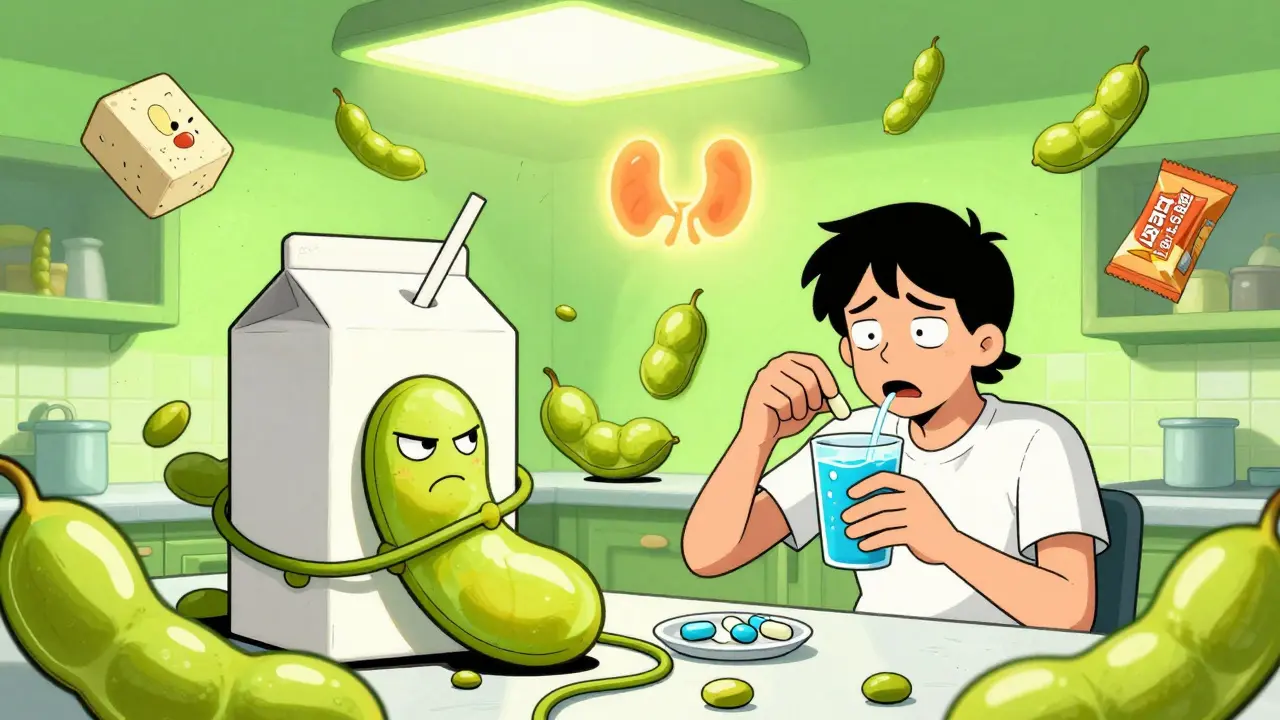
Levothyroxine is a synthetic version of the thyroid hormone your body needs to keep your metabolism, energy, and brain function running right. It’s absorbed in your small intestine. But soy doesn’t just sit there quietly. The isoflavones in soy-mainly genistein and daidzein-bind to the medicine in your gut, blocking about 20 to 40% of it from getting into your bloodstream. That’s not a small drop. That’s enough to leave you feeling tired, cold, or foggy again-even if you’re taking the right dose.Studies using blood tests show that when soy is taken at the same time as levothyroxine, the peak level of hormone in your blood drops by over 22%, and the total amount absorbed over time falls by nearly 19%. This happens with every form of levothyroxine-Synthroid, Levoxyl, Tirosint, generics. It doesn’t matter if it’s a tablet or a capsule. Soy interferes regardless.
Why This Isn’t Just a Myth
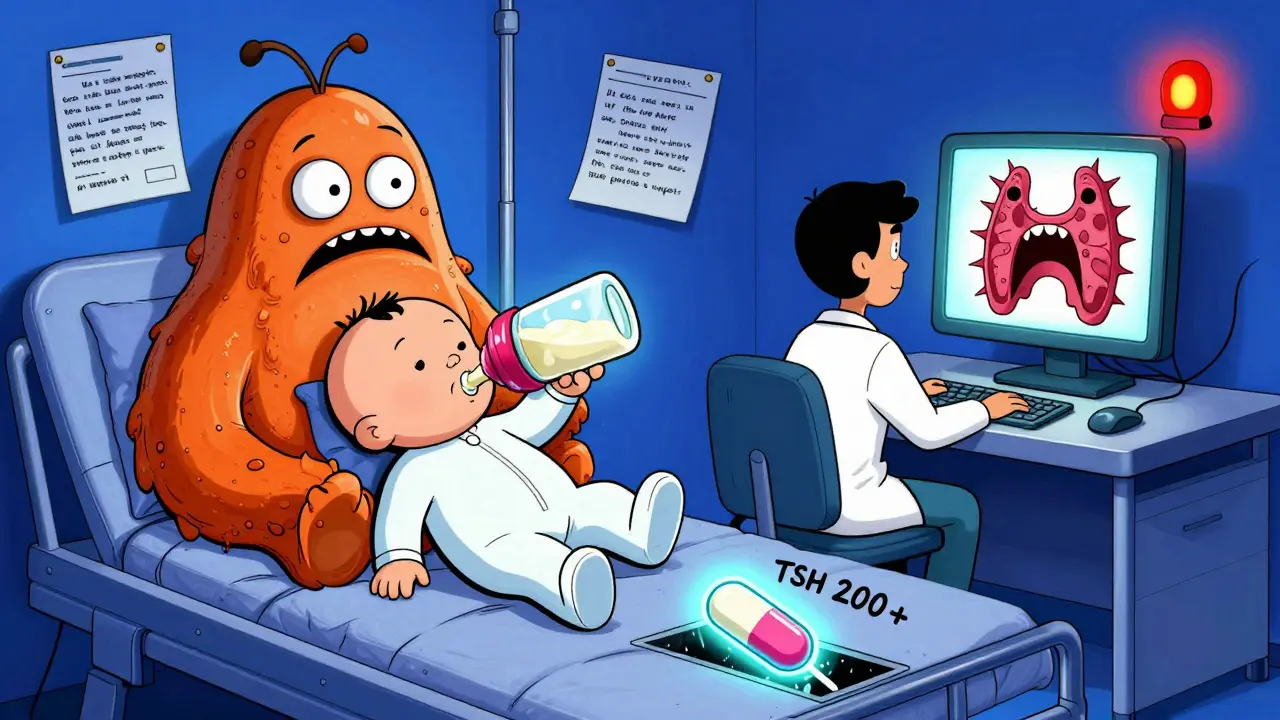
Some people say, “I’ve had soy with my thyroid med for years and my TSH is fine.” And maybe they are. But that doesn’t mean the interaction isn’t real. It means their body might be compensating. Or their soy intake is low. Or their thyroid is more resilient. But for others, the consequences are serious.In 2012, doctors documented two infants with congenital hypothyroidism who were given the right dose of levothyroxine-but their TSH levels soared past 200 µIU/mL because they were also on soy-based formula. Their bodies weren’t absorbing the medicine. One baby’s free thyroxine level dropped below 0.4 ng/dL, which is dangerously low. These aren’t rare cases. They’re documented medical emergencies.
Adults aren’t immune either. A 2023 survey of over 3,200 thyroid patients found that 17% of unexplained TSH spikes were linked to soy consumption. One Reddit user reported their TSH jumped from 2.1 to 8.7 after switching to soy milk for breakfast. Their endocrinologist didn’t even consider soy as a cause. That’s the problem: many doctors don’t bring it up. And patients don’t know to mention it.
Soy Isn’t the Only Culprit-But It’s Everywhere
Calcium and iron supplements are worse, blocking up to 35% of levothyroxine absorption. Coffee and fiber can also interfere. But soy is trickier. You don’t just find it in soy milk or tofu. It’s hidden in 70% of packaged foods as soy lecithin. It’s in veggie burgers, protein bars, canned soups, and even some breads. If you eat plant-based, vegetarian, or vegan meals regularly, you’re likely consuming soy multiple times a day.And soy isn’t the same everywhere. Tempeh has about 45mg of isoflavones per 100g. Tofu has around 25mg. Soy milk can range from 15mg to 50mg depending on the brand. So even if you think you’re being careful, you might still be hitting a threshold that disrupts absorption.
What You Should Do
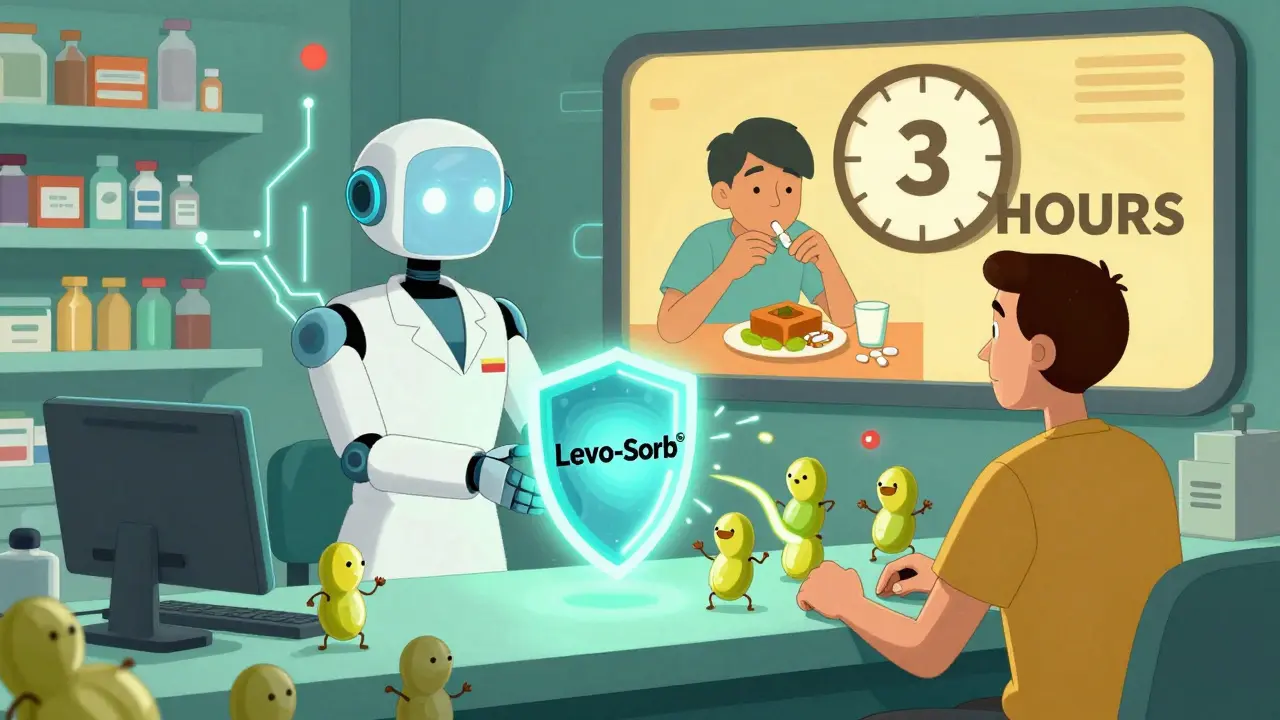
You don’t need to quit soy cold turkey. But you do need to separate it from your medicine.The evidence points to one clear rule: wait at least three hours after eating soy before taking your levothyroxine. Some experts recommend four hours for extra safety. That means:
- If you take your pill first thing in the morning on an empty stomach, don’t have soy milk, tofu scramble, or soy yogurt until after lunch.
- If you take your pill at night, avoid soy-containing dinners or snacks within three hours of bedtime.
For infants with congenital hypothyroidism, the American Academy of Pediatrics says soy formula should be stopped immediately if levothyroxine isn’t working. Switching to a non-soy formula is standard practice.
What About Special Levothyroxine Formulations?
Not all levothyroxine is created equal. The softgel version, Tirosint®, has shown better absorption in the presence of soy. In one study, patients taking Tirosint absorbed 18.3% more hormone when soy was present compared to those on standard tablets. That’s not a cure-but it’s a helpful option for people who struggle to avoid soy entirely.There’s also a new experimental formulation called Levo-Sorb®, currently in Phase III trials, that’s designed to block soy’s interference. Early results show it maintains 92% absorption even with soy present. If approved, this could change the game for plant-based eaters with hypothyroidism.
Who’s Most at Risk?
Some groups are more vulnerable:- Infants with congenital hypothyroidism: Even small amounts of soy formula can cause dangerous hormone drops.
- Elderly patients (65+): Reduced stomach acid makes absorption harder to begin with. Soy makes it worse.
- Vegetarians and vegans: 78% of this group consume soy regularly, per data from 2023.
- Women aged 30-50: This group has the highest soy intake and the highest rate of hypothyroidism.
If you fall into one of these categories, talk to your doctor. Don’t assume your dose is right just because your TSH was normal last time. Diet changes can quietly undo months of stable control.
What About Other Foods?
Soy isn’t alone. Calcium supplements (like Tums or multivitamins), iron pills, and even coffee can interfere. The same rule applies: take your levothyroxine on an empty stomach, wait at least 30 to 60 minutes before eating anything else, and avoid calcium, iron, or coffee for four hours after. Soy fits into that same window-just don’t mix it in.High-fiber foods like oats, bran, and beans can also reduce absorption slightly. Tea and walnuts? Minor effects. But soy? It’s up there with calcium and iron in impact. And unlike those, you can’t just skip your daily cup of coffee. Soy is in your protein powder, your salad dressing, your granola bar. It’s everywhere.
What’s Changing in 2026?
The FDA now requires soy interaction warnings on levothyroxine prescriptions-but only 67% of pharmacies actually include them, according to a 2023 audit. That’s changing. Pharmacy chains have improved education: 89% now train staff to mention soy during counseling, up from 32% in 2018.Research is moving fast. Scientists are looking at genetic differences in how people metabolize soy. About 40% of Caucasians have a gene variant (CYP1A2*1F) that affects how quickly their body breaks down isoflavones. That might explain why some people are more affected than others. Personalized dosing based on genetics could be a reality by 2027.
Meanwhile, the Endocrine Society’s 2024 position statement says this clearly: “Complete avoidance of soy is unnecessary. But systematic patient education about 3-hour separation must become standard of care.”
Final Takeaway
You don’t have to give up tofu, soy milk, or tempeh. But you do need to be smart about timing. Take your levothyroxine first thing in the morning with a full glass of water. Wait three to four hours before eating anything with soy. If you take it at night, avoid soy for three hours before your dose.Track your symptoms. If your TSH suddenly climbs without explanation, ask your doctor: “Could soy be the cause?” Bring your food log. Be specific. Say: “I had soy milk with breakfast.” Most doctors will thank you for bringing it up.
Thyroid health isn’t just about the pill. It’s about how you live. And if you’re eating plant-based, you owe it to yourself to understand how soy fits into that picture.

Comments
Jake Moore
January 18, 2026 AT 21:58 PMJust wanted to say this is one of the clearest explanations I’ve seen on this topic. I’ve been taking levothyroxine for 8 years and switched to soy milk thinking it was ‘healthier’-never connected the dots until now. I started waiting 4 hours after breakfast and my TSH dropped from 6.2 to 2.8 in 6 weeks. Game changer. 🙌
Joni O
January 20, 2026 AT 01:11 AMthank you for this!! i’ve been feeling so sluggish lately and my dr just upped my dose again… now i’m wondering if it’s the soy yogurt i’ve been eating with my granola. gonna try the 3-hour rule and keep a food log. you’re a lifesaver 😊
Eric Gebeke
January 20, 2026 AT 04:49 AMWow. Just wow. People still don’t get it. This isn’t ‘maybe’ or ‘some people.’ This is science. And yet you’ll see commenters saying ‘I eat soy with my med and I’m fine’ like that’s some kind of badge of honor. No. You’re just lucky. Or your thyroid is still in denial. Your TSH being ‘fine’ doesn’t mean your cells aren’t starving for T3. You’re just coasting on residual hormone until your body collapses. And then you’ll be back here begging for answers. Don’t be that person.
Ryan Otto
January 21, 2026 AT 07:24 AMLet me ask you this: if soy is such a threat, why is it still in 70% of processed foods? Why hasn’t the FDA banned it outright? This is clearly a corporate ploy to keep people dependent on pharmaceuticals. Soy is a natural food. Levothyroxine is synthetic. The real issue? The endocrine industry profits from instability. They don’t want you to fix your thyroid-they want you to keep taking pills. And they’ve weaponized ‘soy interference’ to make you feel guilty for eating plants. Wake up.
Max Sinclair
January 21, 2026 AT 08:19 AMHey, I appreciate the warning about soy-but let’s not panic. I’m vegan and I eat tofu daily. I take my med at 6am, then have breakfast at 10am. Been doing this for 3 years. My TSH is rock solid at 1.9. Maybe it’s not about avoiding soy entirely, but about timing and consistency? Not everyone’s body reacts the same. I think the real takeaway is: track your numbers, talk to your doctor, and don’t assume one rule fits all.
Praseetha Pn
January 22, 2026 AT 18:28 PMOkay but have you heard about the glyphosate in soy?? It’s not the isoflavones-it’s the pesticide residue from GMO soy that’s wrecking your thyroid!! The FDA doesn’t test for it in supplements and your doctor is paid by Big Pharma to ignore it. I stopped all soy, switched to organic almond milk, and my hair stopped falling out. Also, I started taking iodine drops and my energy came back. You’re all missing the real enemy: corporate poison. 🌱🧪
Nishant Sonuley
January 24, 2026 AT 02:30 AMLook, I get it-soy interferes. But let’s be real: if you’re eating tofu for protein because you’re vegan, and you’re also taking levothyroxine, you’re already walking a tightrope. The real tragedy isn’t the soy-it’s that the medical system doesn’t offer alternatives. Why isn’t there a soy-safe levothyroxine already on the market? Why do we have to time our meals like we’re preparing for a NASA launch? It’s absurd. And if you’re telling someone to give up their cultural food (hello, Asian communities who’ve eaten soy for centuries), you’re not helping-you’re gatekeeping health.
Emma #########
January 24, 2026 AT 08:21 AMI’m so glad someone finally wrote this. I had no idea my soy protein shakes were sabotaging my meds. I’ve been tired for months and thought it was stress. Now I’m switching to pea protein and waiting 4 hours. Fingers crossed.
Andrew McLarren
January 25, 2026 AT 06:12 AMIt is imperative to emphasize that the pharmacokinetic interference of soy isoflavones with levothyroxine absorption is well-documented in peer-reviewed literature, including multiple randomized controlled trials and pharmacodynamic analyses conducted by the National Institutes of Health. The 22% reduction in Cmax and 19% reduction in AUC are statistically significant (p < 0.01) and clinically relevant. Therefore, the recommendation of a three- to four-hour temporal separation is not merely prudent-it is evidence-based standard of care.
Andrew Short
January 26, 2026 AT 15:12 PMSo you’re telling me the only reason my TSH is high is because I had a soy latte? What a joke. My doctor doesn’t even know what a thyroid is. I bet he’s on the pharma payroll. And now you want me to give up my tofu? You’re part of the problem. Stop scaring people with half-truths and start fighting the real enemy: Big Medicine.
christian Espinola
January 28, 2026 AT 10:45 AMTypical. Another article that blames food instead of the real issue: autoimmune thyroiditis. Soy? Please. I’ve been on levothyroxine for 15 years. I eat soy daily. My TSH is 1.5. My antibodies? Down 80%. You’re missing the forest for the trees. Fix your gut, fix your stress, fix your sleep. Then worry about soy. Until then, this is just fear-mongering dressed up as science.
Naomi Keyes
January 29, 2026 AT 03:47 AMWait-so if I take my levothyroxine at night, and I eat soy for dinner at 7 PM, and I take my pill at 11 PM-am I safe? Or do I need to wait 3 hours after eating? What if I eat edamame at 8 PM? Do I need to wait until 11 PM? What if I snack on soy nuts at 10:30 PM? Is that a problem? I need a flowchart. This is too complicated. Someone please make a printable chart for me. 🙏
Dayanara Villafuerte
January 30, 2026 AT 22:46 PMAs a former vegan who switched to Tirosint after 3 years of TSH chaos… YES. 100%. I went from crying in the shower every morning to hiking on weekends. Also, soy lecithin is everywhere-even in your ‘organic’ granola. Check the label. If it says ‘soy’ anywhere, avoid it within 4 hours. And yes, I use emojis now. 😂💊🌱