When a drug’s patent runs out, something powerful happens: prices don’t just dip-they collapse. For patients paying hundreds of dollars a month for a prescription, that moment can mean the difference between affording treatment and skipping doses. It’s not magic. It’s economics. And it’s happening right now with drugs like Eliquis, Humira, and Ozempic.
How a Patent Expiration Changes Everything
A pharmaceutical patent gives a company exclusive rights to sell a drug for about 20 years. During that time, they’re the only one who can make it. No competition. No price pressure. That’s why brand-name drugs like Eliquis cost $850 a month in the U.S. But once the patent expires, any qualified manufacturer can start making the same drug. These are called generics. And they don’t need to repeat expensive clinical trials. They just have to prove they work the same way. The result? A flood of cheaper options. The first generic usually drops the price by 15% to 20%. The second? Another 30%. By the time five or ten companies are selling it, the price can fall 80% or more. A 2023 study in JAMA Health Forum found that in the U.S., drug prices fell 82% over eight years after patent expiration. That’s not a guess. That’s data from 505 drugs across eight countries.Why the U.S. Sees the Biggest Drops
Not all countries see the same price crash. In Switzerland, prices dropped just 18% over eight years. In the U.S., they dropped 82%. Why the difference? It’s because of how the market works. In the U.S., pharmacies and insurers shop for the lowest price. Generic manufacturers compete hard. They cut margins to the bone to win contracts. In Europe, governments often set fixed prices or use reference pricing-meaning they compare a drug to others in the same category and cap the cost. That slows the drop. The U.S. also has faster generic approval. The FDA approved 870 generic drugs in 2023, up 12% from 2022. On average, generics hit the market 30 months after patent expiry. In Europe, it’s often 12 to 18 months. But here’s the twist: even when generics are approved, they don’t always reach patients right away.The Hidden Delays: Rebates and Formularies
Just because a generic is available doesn’t mean your insurance covers it. Pharmacies and insurers have complex deals called formularies. These are lists of drugs they’ll pay for. If the brand-name drug has a rebate deal with your insurer-even after the patent expires-it might still be the cheapest option on paper. That’s because the manufacturer pays the insurer a kickback to keep the brand on the list. That’s what happened with Humira. The patent expired in 2023, but many patients still paid $7,000 a month. Why? AbbVie, the maker, offered massive rebates to insurers to keep Humira on top of formularies. Biosimilars-generic versions of biologic drugs-were approved, but insurers didn’t switch. Patients didn’t save money. Not right away. A 2023 Kaiser Family Foundation survey found that 68% of insured adults saw lower out-of-pocket costs when generics arrived. But 22% said their insurance changed formularies slowly-or not at all. So even though the price dropped, the savings didn’t always reach the person holding the prescription.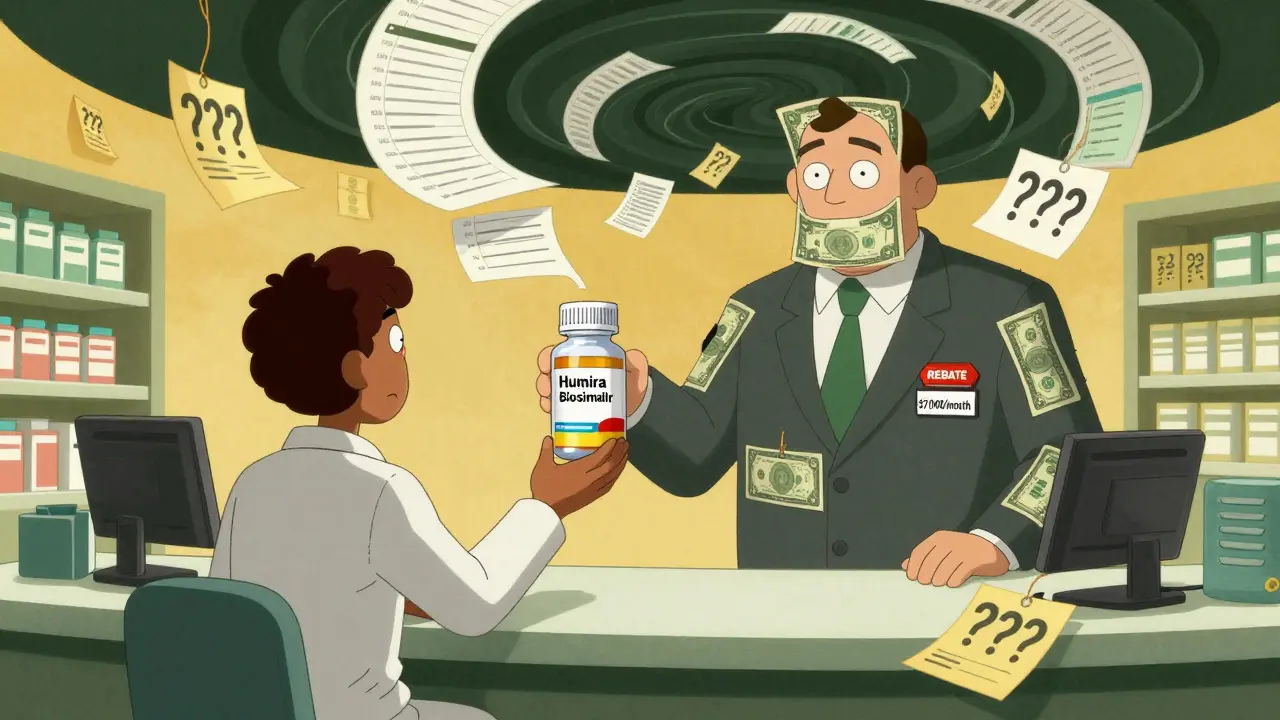
Patent Thickets: The Game of Delay
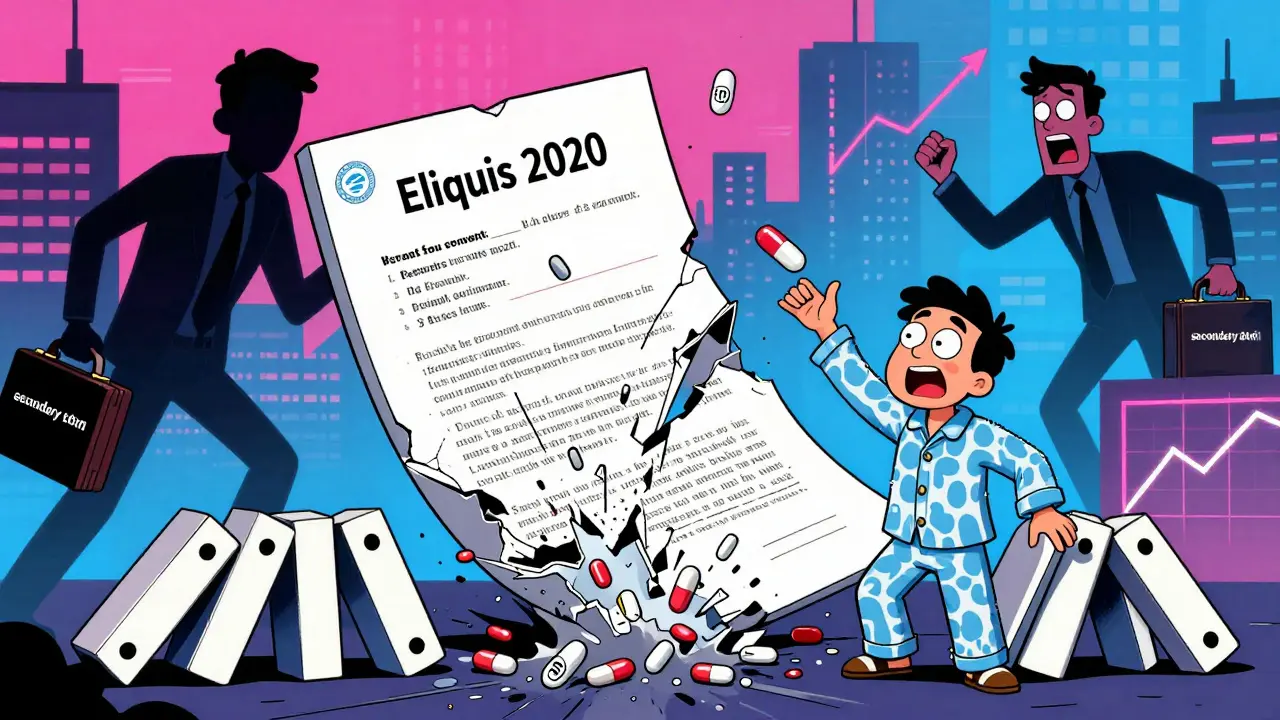
Big drug companies don’t just wait for patents to expire. They play a long game. They file dozens of secondary patents on tiny changes: a new pill coating, a slightly different dose, a new way to deliver the drug. These aren’t new medicines. They’re tweaks. But they extend exclusivity. Take semaglutide-the active ingredient in Ozempic and Wegovy. The original patent expires in 2026. But the company has filed 142 patents around it. Experts say these thickets can delay real competition for another 12 to 14 years. The same thing happened with Eliquis. Even after its patent expired in 2020, some patients paid $850 a month for months because insurers hadn’t updated their formularies. The I-MAK 2025 report found that 78% of new patents filed in the U.S. weren’t for new drugs. They were for old ones. And 70% of the top 100 prescribed drugs had their exclusivity extended at least once. This isn’t innovation. It’s legal strategy.Biosimilars Are Different
Not all drugs are made the same. Small molecule drugs-like aspirin or metformin-are easier to copy. Generic versions are chemically identical. But biologics-like Humira, Enbrel, or insulin-are made from living cells. They’re complex. You can’t just copy them. You have to make a biosimilar. Biosimilars are close, but not exact. They require more testing. More time. More money. The approval process can take 2 to 4 years longer than for regular generics. And the cost to develop one? $2 million to $5 million. That’s why fewer companies make them. Even when they’re approved, they don’t always win. Doctors are cautious. Pharmacists are unsure. Patients are confused. In 2023, when Amgen’s Amjevita (a Humira biosimilar) launched, prices barely moved. Why? Because AbbVie locked in contracts with insurers that made the original drug cheaper to use-on paper-than the biosimilar.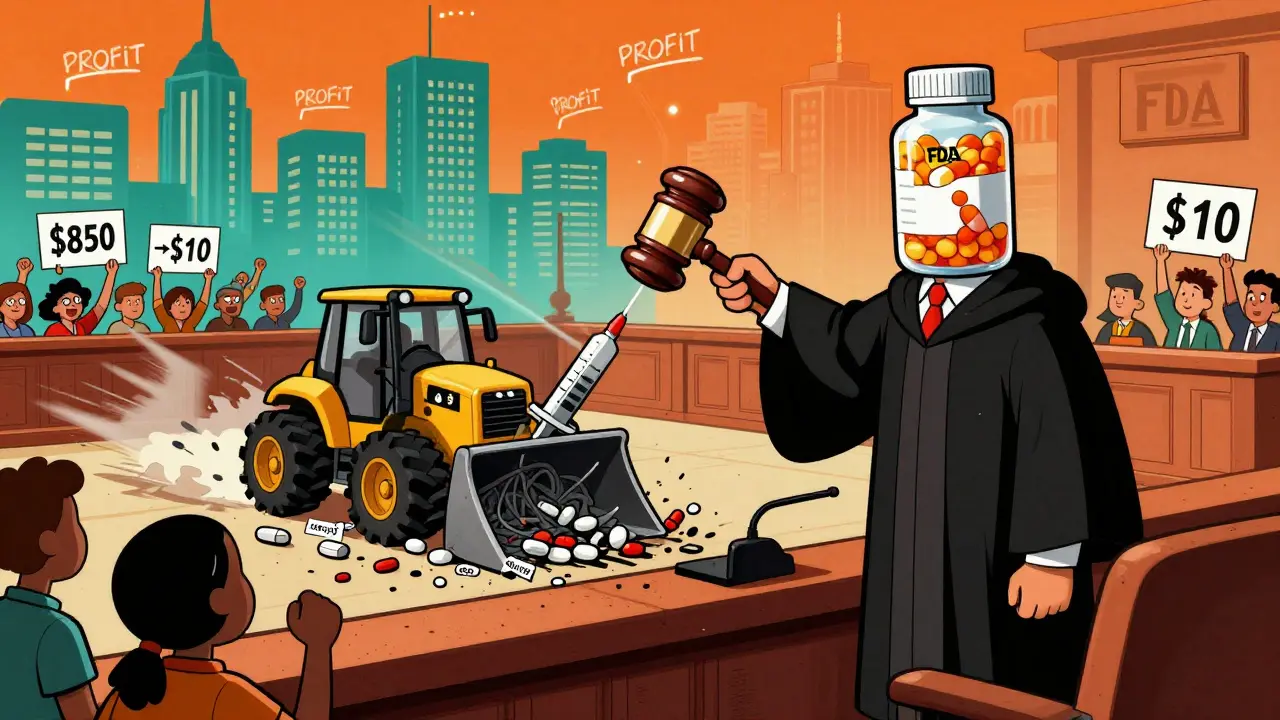
What’s Changing Now?
Regulators are starting to push back. In 2023, the U.S. Patent Office began cracking down on patent thickets. The European Commission proposed limits on how long drug companies can extend protection. And the Inflation Reduction Act now lets Medicare negotiate prices for some high-cost drugs. That’s forcing companies to rethink their strategies. The FDA is also speeding up approvals for complex generics. In 2023, they approved 12% more than the year before. That’s a sign they’re trying to catch up. Meanwhile, the global generic drug market is growing fast. It was worth $407.5 billion in 2023 and is expected to hit $700 billion by 2030. That’s because patents for $220 billion in annual drug sales are expiring between 2020 and 2025. Companies that make generics are betting big.What This Means for You
If you’re taking a brand-name drug, check if the patent has expired. If it has, ask your pharmacist: Is there a generic? Is it covered by my insurance? Don’t assume the brand is still the cheapest. Sometimes, the generic costs $10 a month instead of $850. If you’re on a high-cost drug like Ozempic, Wegovy, or Humira, watch for biosimilar versions. They’re coming. But don’t expect instant savings. The system is still rigged in favor of the brand. You might need to call your insurer, ask for a formulary change, or switch pharmacies. And if you’re a patient who’s been paying hundreds of dollars a month for a drug that’s now generic-you’re not alone. Thousands of people have seen their bills drop overnight. But the system didn’t make that happen automatically. It took time, pressure, and sometimes, a lot of asking.What’s Next?
The next wave of patent expirations will hit hard. Drugs for diabetes, heart disease, and mental health are losing protection in the next two years. The savings could be massive. But only if the system works as intended. Right now, it’s a mix of progress and obstruction. The science is clear: competition drives prices down. The problem isn’t the patent system. It’s how it’s being used. Companies aren’t just protecting innovation. They’re protecting profits. And until that changes, the biggest savings won’t come from the patent clock running out. They’ll come from patients, doctors, and insurers pushing back.What happens to drug prices after a patent expires?
After a patent expires, drug prices typically drop sharply-often by 80% or more within a few years. The first generic competitor usually cuts the price by 15-20%. Each additional manufacturer increases competition, driving prices down further. In the U.S., prices for many drugs fall 82% over eight years after patent expiration, according to a 2023 JAMA Health Forum study.
Why don’t I see lower prices even after a generic is available?
Insurers and pharmacies often have rebate deals with brand-name manufacturers that keep the original drug cheaper on paper-even after generics are approved. These deals are called formulary placement. If your insurance still favors the brand, you might pay the same amount. You may need to request a formulary change or switch to a different pharmacy to get the generic at a lower cost.
What’s the difference between a generic and a biosimilar?
Generics are exact chemical copies of small-molecule drugs like aspirin or metformin. Biosimilars are highly similar but not identical copies of complex biologic drugs like Humira or insulin. They require more testing and cost more to develop-$2-5 million per product. Because they’re not exact, doctors and insurers may be slower to adopt them, even after approval.
How do pharmaceutical companies delay generic competition?
Companies file dozens of secondary patents on minor changes-like a new pill coating or dosage form-to extend exclusivity. This is called a patent thicket. For example, Humira had over 130 secondary patents, delaying biosimilar entry for seven years after the main patent expired. The I-MAK 2025 report found that 78% of new patents in the U.S. were for existing drugs, not new ones.
Will drug prices keep falling after patent expiration?
Yes-until competition stabilizes. Prices usually drop fastest in the first 2-4 years after generic entry. Once 10 or more manufacturers are selling the drug, prices often stabilize at 80-90% below the original brand price. But if new patents are filed or rebate deals lock in the brand, the decline can stall. Regulatory reforms are now targeting these delays to ensure savings reach patients faster.
How can I save money when a drug’s patent expires?
Ask your pharmacist if a generic or biosimilar version is available. Check your insurance formulary-sometimes you need to request a switch. Use price-comparison tools like GoodRx to find the lowest cash price. If your insurer won’t cover the generic, ask your doctor to write a "dispense as written" note only if necessary. Otherwise, opt for the cheaper option. Many patients save hundreds or thousands a year just by switching.